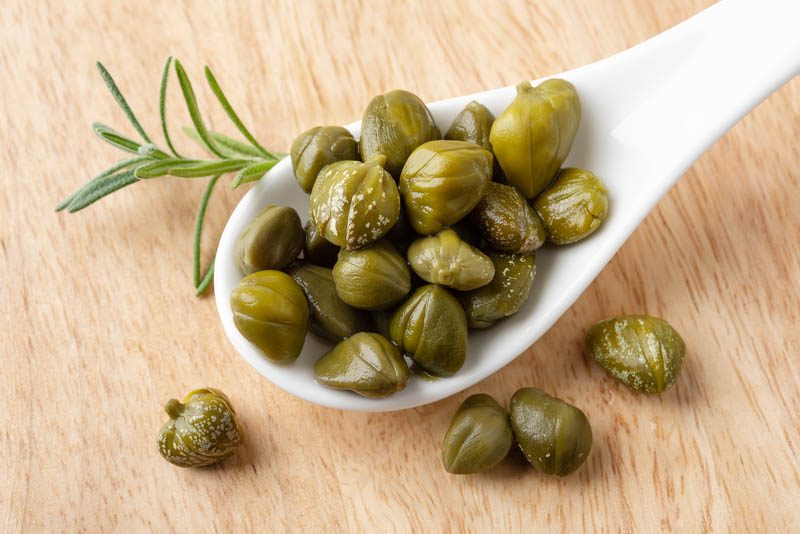
Capers
Capers may be tiny, but they’ve got a seriously big personality—and history to match! Here are some zesty facts you might not know about these punchy little buds:
Not a Fruit (Exactly): What we call “capers” are actually the unopened flower buds of the Capparis spinosa plant. If left to bloom, they produce beautiful, showy flowers—and eventually, caper berries!
Capers Love Tough Love: These hardy plants thrive in rocky, dry, poor soil where most plants would throw in the towel. They’re a Mediterranean native that actually prefers to be a little neglected.
They Go Way Back: Capers have been eaten since ancient times. They were mentioned in the Sumerian Epic of Gilgamesh over 4,000 years ago and were used in ancient Greek and Roman cuisines.
Pickled to Perfection: Fresh capers are bitter and basically inedible. It’s the pickling process—in brine, vinegar, or salt—that gives them their signature punchy flavor.
Size Matters: The smallest capers, called “nonpareils,” are considered the most desirable and flavorful. The bigger they are, the milder they get.
A Natural Preservative: Thanks to their high antioxidant content, capers were traditionally used to help preserve meats and sauces before refrigeration came along.
Culinary World Traveler: While they’re a Mediterranean staple, capers also pop up in Indian, Latin American, and even Southern U.S. cuisine.
Flavors That Pop: That tangy zing capers bring? It’s from mustard oil compounds released during pickling—similar to what you get in horseradish and wasabi.
They’re a Kitchen Secret Weapon: A few chopped capers can bring depth and brightness to salad dressings, sauces, and marinades. Total flavor hack!
Bottom line? Capers may be small, but they’ve got flavor, history, and charm packed into every bite.