Great landscaping is not about filling every empty space with plants. It is about creating an outdoor space that feels inviting, functions well, and becomes more beautiful with time. The best landscape ideas combine structure, planting, circulation, privacy, seasonal interest, and the conditions already present in your garden.
Whether you are working with a large backyard, a narrow side garden, a shaded courtyard, a steep slope, or a small patio, these ideas can help you make better use of the space you have.
Arbors and pergolas create instant structure. They can frame an entrance, define an outdoor room, shade a seating area, or provide support for flowering climbers.
Good climbing plants include:
Design tip: Choose the structure before the climber. Mature plant weight, eventual size, pruning needs, and climate suitability matter as much as flower color.
The most convincing borders are built in layers rather than planted as a flat row of flowers. Combine taller structural plants with mid-height flowering perennials and lower plants along the front, repeating key colors and forms to visually connect the planting.
Popular choices include:
Design tip: Plan for the whole season. Include plants for spring, summer, fall, and winter structure rather than choosing everything for one peak flowering month.
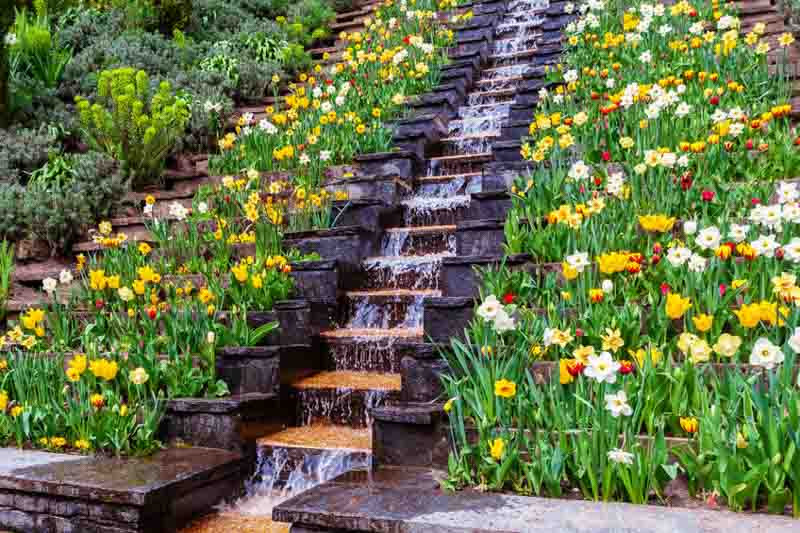
Slopes can be challenging to mow and vulnerable to erosion, but they can also become some of the most attractive parts of a landscape. Use spreading plants, shrubs, terraces, steps, or retaining elements to slow runoff and stabilize the soil.
Plants for suitable sunny slopes include:
Design tip: Groundcovers can help protect exposed soil, but steep or unstable slopes may require structural erosion-control measures in addition to planting.
A clear edge is one of the simplest ways to make a garden look intentional. Stone, brick, steel edging, gravel, or repeated plants can separate lawns, paths, and planting beds while giving the landscape a cleaner structure.
Plants that can create attractive planted edges include:
Hanging baskets are particularly useful where ground space is limited. They can brighten porches, balconies, entrances, and patios while adding another planting layer above beds and containers.
Good choices include:
Design tip: Hanging containers dry much faster than garden soil, so choose plants with compatible water needs and check them frequently in hot weather.
A naturally damp depression can sometimes become an asset rather than a drainage problem. Rain gardens are designed to temporarily collect runoff and allow water to infiltrate gradually while supporting plants adapted to fluctuating moisture.
Possible plants include:
Design tip: A rain garden should drain between storms; it is different from a permanently waterlogged bog garden.
A living privacy screen can feel softer and more natural than a solid fence. Instead of relying on one repeated species, consider combining evergreen trees, shrubs, and smaller plants to create a layered screen with greater seasonal and ecological interest.
Common screening plants include:
Containers let you garden almost anywhere and make it easy to change color, height, and seasonal displays. Combine one structural plant with flowering or trailing companions, but make sure everything in the pot shares similar light and water requirements.
Reliable choices include:
Walls and fences offer valuable growing space, particularly in smaller gardens. Climbers, trellises, espaliered plants, and wall-mounted containers can soften hard surfaces while adding flowers, fragrance, or privacy.
Climbers to consider include:
Even a small water feature can change the atmosphere of a garden. Ponds, fountains, bubbling bowls, and narrow rills reflect light, create movement, and can provide habitat when designed with wildlife in mind.
Plants for water or moist pond margins include:
Small gardens benefit from restraint. Instead of filling the space with many unrelated plants, use a limited palette, repeat key plants, grow vertically, and choose varieties whose mature size matches the available space.
Space-saving ideas include:
Bare soil beneath trees and shrubs can often be transformed into a layered planting, but shade is only part of the challenge. Tree roots may also create dry soil and strong competition for water.
Useful plants for suitable sites include:
Planting beside a wall can turn a hard architectural edge into an attractive garden feature—but first determine what kind of microclimate the wall creates. A sunny south- or west-facing wall may become extremely hot and dry, while a north-facing wall may remain cool and shaded.
For warm, sunny sites, possibilities include:
For cooler or partly shaded walls: Camellias can provide handsome evergreen foliage and spectacular flowers where the climate, soil, and exposure suit them.
The most successful landscapes begin with the conditions already present. Before choosing plants, note your sun exposure, soil type, drainage, available space, climate, water needs, and the mature size of everything you plan to grow.
Then build the garden in layers: establish structure first, add trees and shrubs, fill in with perennials and grasses, and use annuals or containers for flexible seasonal color. Repeating a smaller number of well-chosen plants usually creates a more cohesive landscape than adding one of everything.
A beautiful garden is not simply a collection of attractive plants. It is a community of plants that fit the site, work well together, and still have enough room to succeed as they mature.
Create a membership account to save your garden designs and to view them on any device.
Becoming a contributing member of Gardenia is easy and can be done in just a few minutes. If you provide us with your name, email address and the payment of a modest $25 annual membership fee, you will become a full member, enabling you to design and save up to 25 of your garden design ideas.
Join now and start creating your dream garden!