Alfalfa
Meet alfalfa—farmer workhorse, kitchen sprout, and soil fixer all in one. This long-lived perennial legume powers dairy barns as high-protein forage and brightens sandwiches as crisp sprouts. With a deep taproot and a partnership with beneficial bacteria, the alfalfa plant helps nitrogen-fixing cycles that enrich soil for crops that follow.
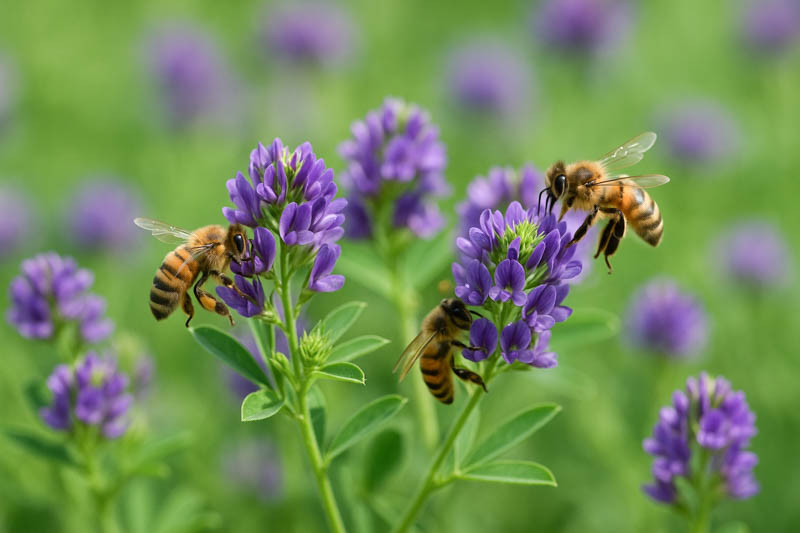
Botanically, alfalfa belongs to the Fabaceae family—the same big, nutritious clan as beans, peas, lentils, chickpeas, soybeans, and peanuts. In the field, you’ll see trifoliate leaves and violet-purple flowers; in the jar, you’ll see pale, crunchy alfalfa sprouts ready in 4–6 days.
Sprouts, safely: Start with food-grade alfalfa seeds. Soak 6–8 hours, then rinse and drain thoroughly twice a day. Keep gear spotless, provide airflow, and refrigerate when fluffy and green-tipped. Raw sprouts are delicious but perishable—handle like any fresh, ready-to-eat produce.
Forage, thoughtfully: Alfalfa hay, cubes, and alfalfa pellets deliver protein, lysine, and minerals for growing or high-performance animals. Balance with grass hay to moderate energy and calcium-phosphorus ratios. To reduce bloat risk on lush pasture, introduce gradually, avoid turnout when plants are wet, and never turn out hungry; after frost or heavy dew, hold off. Ask your vet about poloxalene/ionophore strategies if needed.
Growing essentials: Full sun; deep, well-drained soil (pH ~6.5–7.5). Inoculate alfalfa seeds with the right Rhizobium. Water for establishment, then let those deep roots work. Avoid waterlogging. Cut at bud to ~10% bloom to balance yield and quality. Skip most nitrogen; prioritize P/K/S per soil test. Don’t reseed alfalfa directly into a just-terminated stand (autotoxicity).
Extra good-to-know: Alfalfa flowers feed pollinators; the plant can host larvae of common sulphurs and blues. In stressed or disease-hit stands, coumestans (phytoestrogens) may spike—avoid feeding such forage to breeding animals.