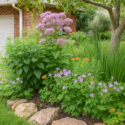
Alfalfa: The Farmer’s Friend, the Sprouter’s Staple
Quick Facts — Alfalfa (Medicago sativa)
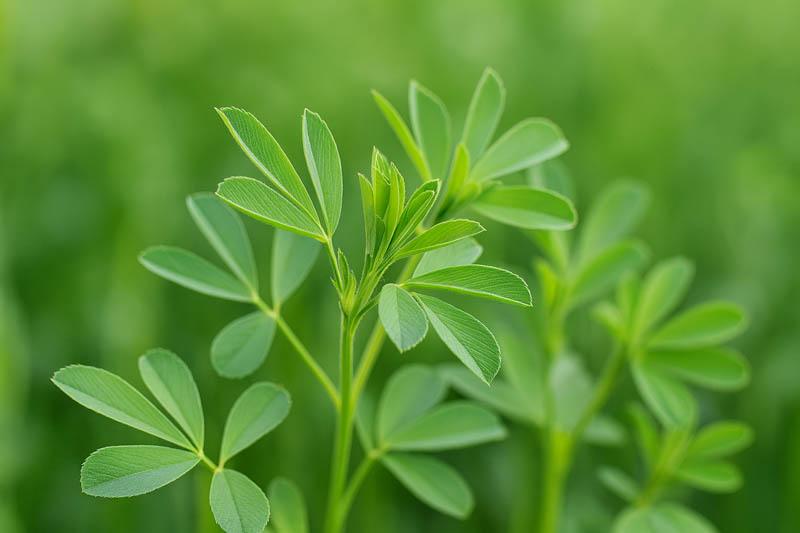
Summary: A deep-rooted perennial legume prized for high-protein forage and sprouting. The alfalfa plant builds soil via nitrogen fixation and feeds everything from dairy cows to home sprouters.
Use: Forage (hay, silage, pasture), small-animal feed (pellets, cubes), cover crop/green manure, edible sprouts, herbal tea.
Safety: Raw sprouted seeds can carry foodborne bacteria—use clean gear and safe sprouting practices. Ruminants may bloat on lush forage; manage diet and access.
| Botanical Name |
Medicago sativa L. |
| Family |
Fabaceae (Legume/pea family) |
| Common Names |
Alfalfa, Lucerne, Purple medick |
| Native Range |
Western Asia to the Mediterranean; now naturalized and cultivated worldwide |
| Plant Type & Habit |
Long-lived perennial legume; upright, clumping crowns; deep taproot |
| Hardiness (USDA) |
3–9 (varies by cultivar dormancy rating and winter hardiness) |
| Size |
2–3 ft (0.6–0.9 m) tall; taproot can reach 10+ ft in deep, well-drained soils |
| Sun & Exposure |
Full sun for yield and persistence |
| Soil |
Deep, well-drained loam or sandy loam; pH ~6.5–7.5; intolerant of prolonged waterlogging |
| Water |
Moderate; drought-tolerant once established thanks to deep roots |
| Toxicity / Cautions |
Raw sprouts can carry pathogens; manage ruminant bloat risk on lush pasture; high calcium/protein—feed alfalfa hay and alfalfa pellets appropriately for species and life stage |
| Primary Uses |
Forage (hay, silage, pasture), small-animal feed (pellets/cubes), cover crop/green manure, edible sprouts and microgreens, pollinator support |
Care (Quick)
- Full sun; sow into a firm, weed-free seedbed. Inoculate alfalfa seeds with the correct Rhizobium for nitrogen fixation.
- Keep evenly moist until established; avoid waterlogging to prevent root rot.
- Do not over-fertilize with nitrogen; the crop makes its own. Maintain pH and supply P/K/S for stand health.
- First cutting at bud to early bloom; thereafter cut on regrowth intervals to balance yield, quality, and crown health.
Curious why the humble alfalfa plant shows up in salad bars as alfalfa sprouts, in barns as alfalfa hay and alfalfa pellets, and in garden catalogs as alfalfa seeds for cover cropping? It’s because this one species wears a lot of hats—soil builder, pollinator magnet, protein powerhouse, and crunchy sandwich topper. Let’s walk through what it is, why farmers and home sprouters love it, and how to grow and use it well.
Why Alfalfa Matters
- Nutrition powerhouse for livestock: High protein, digestible fiber, and minerals make alfalfa hay the gold standard for dairy cows and performance horses when fed appropriately.
- Soil builder: As a legume, the plant fixes atmospheric nitrogen, reducing the need for synthetic fertilizer and leaving fields more fertile for the next crop.
- Deep roots, resilient stands: The taproot mines moisture and nutrients, helping stands ride out moderate drought.
- Edible for people, too: Fresh alfalfa sprouts add crisp texture and a mild, nutty taste to sandwiches and bowls.
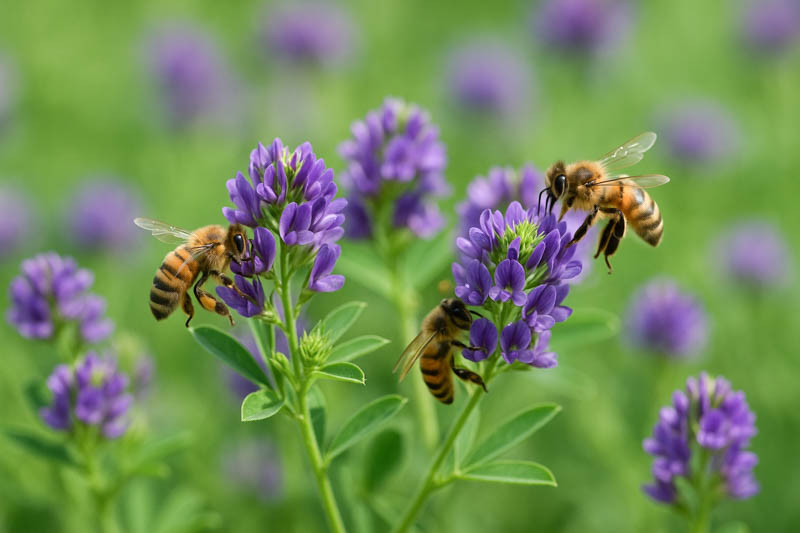
- Pollinator support: Purple pea-flowers feed bees—leafcutter bees especially improve seed set.
What Is Alfalfa?
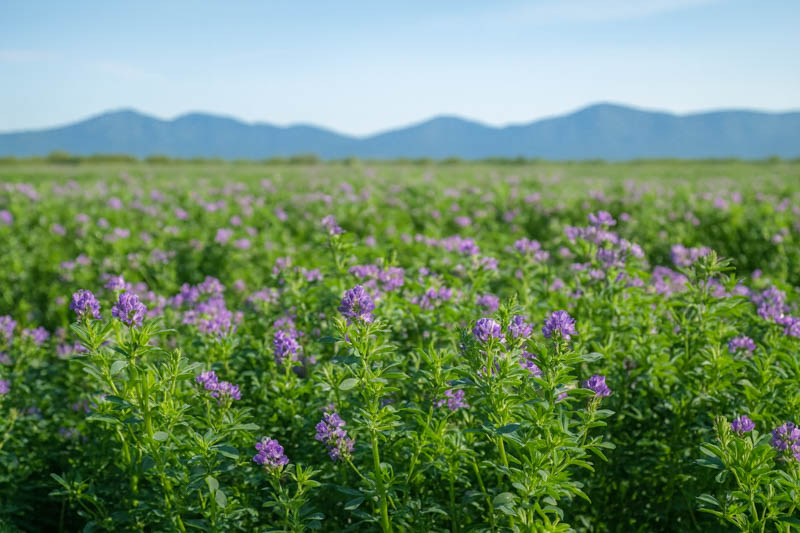
Alfalfa is a perennial legume with trifoliate leaves, a deep taproot, and clusters of purple, sometimes bluish flowers. In fields, it’s cut several times per season, dried into hay, fermented as silage, or grazed in rotation. For home use, seeds are often sprouted indoors for food. The same species powers very different niches: the alfalfa plant in a pasture is all about forage yield and persistence; the jar of alfalfa sprouts on your counter is about freshness, crunch, and safe handling.
- Forage pathway: Plants are seeded thickly and managed for repeated cuttings. Final product: alfalfa hay, cubes, or pellets for convenient feeding and storage.
- Sprout pathway: seeds are cleaned, soaked, and rinsed daily under sanitary conditions, producing ready-to-eat alfalfa sprouts in ~4–6 days.
- Soil pathway: As a cover crop, alfalfa adds organic matter, breaks compaction with its taproot, and supplies slow-release nitrogen after incorporation.
Alfalfa belongs to the Fabaceae family, or legume family, which includes beans, peas, lentils, chickpeas, soybeans, and peanuts.
Botanical Description — Meet the Plant
Habit & Stems
- Form: Crown-forming perennial with many upright, leafy stems, typically 2–3 ft tall.
- Stems: Slender, somewhat angled; regrowth emerges from buds on the crown after each cutting.
- Taproot: Penetrates deeply where soil allows, granting drought tolerance and nutrient access.
Leaves (Easy ID)
- Arrangement: Alternate along the stem; each leaf with three leaflets (trifoliate).
- Leaflets: Oblong with small teeth toward tips; often a tiny notch at the tip.
- Color: Medium green; stands look vibrantly green when healthy and well-fed with potassium and sulfur.
- Alfalfa is a larval host for several butterflies, including Orange Sulphur (Colias eurytheme), Clouded Sulphur (Colias philodice), Eastern Tailed-Blue (Cupido comyntas), and Marine Blue (Leptotes marina); adults also nectar on alfalfa blooms.
Flowers & Seeds
- Flowers: Pea-type blossoms, typically violet-purple in dense racemes; excellent for bees.
- Pollination: Leafcutter bees and honeybees are common visitors; tripping improves seed set.
- Pods & seeds: Coiled, spiraled pods with small tan seeds—these are the seeds you sow for fields and alfalfa sprouts.
Ecology & Site Preferences
- Climate: Cool-season perennial; vigorous from spring through fall, with winter dormancy depending on cultivar class.
- Soils: Best on fertile, well-drained soils with neutralish pH; avoid shallow hardpans that impede rooting.
- Sun: Full sun needed for yield, stand persistence, and disease tolerance.
Safety Snapshot
- Sprout food safety: Raw alfalfa sprouts can carry pathogens if produced with poor hygiene. Use food-grade seed, sanitize equipment, rinse frequently with clean water, and refrigerate when ready.
- Livestock bloat: Lush or wet alfalfa pasture can trigger bloat in ruminants. Introduce gradually, avoid turnout when plants are wet, and provide fiber sources or anti-bloat strategies as advised by your nutritionist. Also avoid turnout when hungry, after frost or heavy dew; consider poloxalene/ionophore per vet guidance.
- Small pets: Alfalfa hay is rich in calcium and protein—great for growing/gestating animals; feed grass hay to healthy adult rabbits/guinea pigs unless otherwise directed.
Alfalfa Forms & Uses (Buyer’s Guide)
| Product |
What It Is |
Best Uses |
Notes |
| Alfalfa sprouts |
Germinated alfalfa seeds grown 4–6 days, eaten fresh |
Sandwiches, salads, bowls; delicate crunch and mild flavor |
Sprout safely: clean gear, frequent rinses, chill when ready |
| Alfalfa hay |
Field-cured stems and leaves, baled |
Dairy cattle, horses (performance/young), goats—protein/minerals |
Quality rises with leafiness and early cut stage; store dry |
| Alfalfa pellets / cubes |
Ground or chopped hay compressed for convenience |
Horses, small ruminants, rabbits (as appropriate); easy storage |
Cubes may be soaked; follow ration guidelines |
| Cover crop / green manure |
Stands grown to add organic matter and fix nitrogen |
Soil structure, weed suppression, long-term fertility |
Needs full sun and drainage; rotate to avoid autotoxicity |

From Kitchen to Barn: Everyday Uses
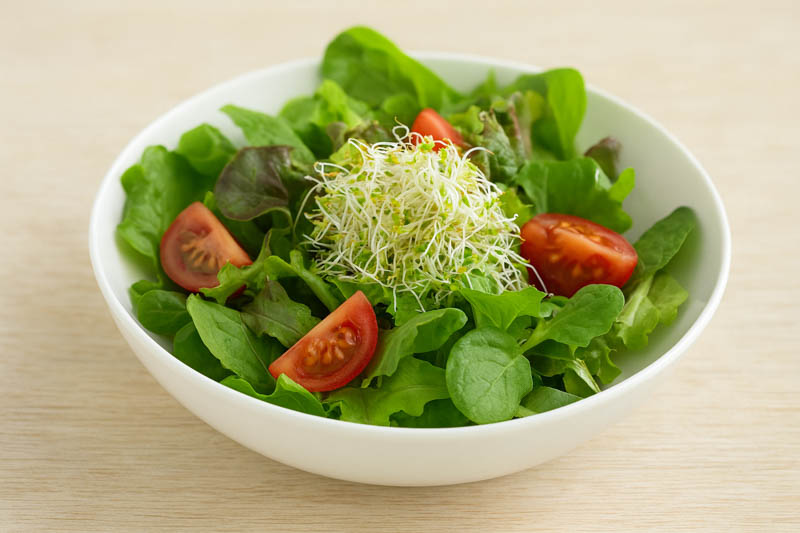
- Sprouting at home: Soak alfalfa seeds 6–8 hours, then rinse/drain twice daily in a jar or tray. Keep at room temp with good airflow and indirect light. Harvest when fluffy and green-tipped; refrigerate in a breathable container.
- Feeding horses: Alfalfa hay offers protein, lysine, and calcium—popular for growing and working horses. Balance with grass hay to manage energy and calcium/phosphorus ratios.
- Dairy and goats: Dense nutrition boosts milk production when rationed correctly. Work with a nutritionist to balance fiber and energy and to manage bloat risk.
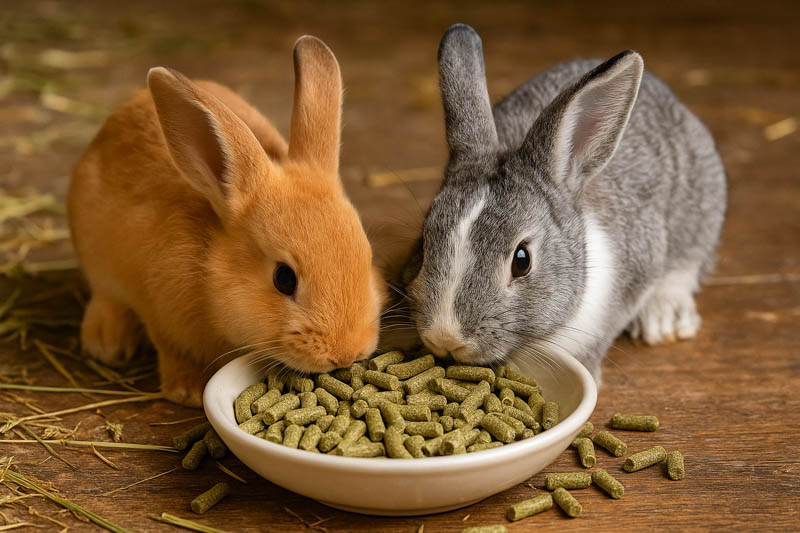
- Small pets: Young rabbits and guinea pigs often thrive on some alfalfa pellets or alfalfa hay; most healthy adults do better on grass hay.
- Gardeners’ hack: A chopped stand tilled under acts as a slow-release fertilizer. The alfalfa plant’s deep root channels improve tilth for the next crop.
Kitchen & Feed Playbook
Simple, Safe Alfalfa Sprouts
- Measure 2–3 tablespoons of alfalfa seeds; soak 6–8 hours.
- Drain, then rinse and drain thoroughly. Place in a tilted jar or ventilated tray.
- Rinse/drain morning and evening for 4–6 days. When green and fluffy, spin off excess water and refrigerate.
Feeding with Confidence
- Introduce alfalfa hay gradually; balance rations with grass hay and appropriate concentrates.
- Soak large alfalfa pellets or cubes for seniors or animals with dental issues.
- Consult your vet or nutritionist for species-specific guidelines, especially for bloat-prone ruminants.
Growing the Alfalfa Plant at Home
Planting
- Site & prep: Choose full sun and well-drained soil. Create a firm, fine seedbed free of weeds.
- Seeding: Broadcast or drill shallowly (~1/8–1/4 in). Inoculate alfalfa seeds with the appropriate Rhizobium strain if your soil lacks recent legume history.
- Timing: Spring or late summer, allowing 6–8 weeks before hard freezes for establishment.
- Autotoxicity: Avoid reseeding alfalfa into an old alfalfa stand immediately; wait a season or rotate to a different crop first.
Soil & Water
- Maintain pH in the 6.5–7.5 range for nutrient availability and nodule function.
- Water to keep seedlings moist; established stands tolerate dry spells but resent saturated soils (risk of root rot).
Fertilizing
- Skip nitrogen except at seeding in low-fertility soils. Focus on phosphorus, potassium, sulfur, and boron based on a soil test.
Harvest
- Cut at bud to 10% bloom for a balance of yield, protein, and stand longevity. Cure quickly to preserve leaves—quality lives in the leaves.
- For backyard patches, hand-cut, dry on clean tarps, and store as mini bales or feed fresh to compost or small stock.
Pests & Diseases (and Simple, Safer Fixes)
Scouting and timing beat crisis spraying every time. Encourage beneficial insects and keep the canopy airy.
Common Pests
- Aphids — curl leaves, exude honeydew; strong water jets, beneficials, and selective soaps can help.
- Whiteflies — uncommon in open fields but possible in sheltered plots; use yellow cards and sanitation.
- Spider mites — thrive in hot, dusty weather; hose undersides, conserve predators, consider oils/soaps.
- Mealybugs — rare outdoors; remove hotspots and treat with alcohol swabs then soaps.
- Leafhoppers & alfalfa weevil — monitor closely; timely cutting often suppresses outbreaks.
Diseases & Physiological Issues
- Anthracnose — dark lesions; plant resistant cultivars and rotate.
- Root rot — improve drainage; avoid over-irrigation and compaction.
- Nutrient imbalance — pale leaves or weak crowns often signal low potassium or sulfur; soil test, then adjust.
- Coumestans & fertility: Stressed or disease-hit stands can be high in coumestans (phytoestrogens); avoid breeding animals on such forage.
Troubleshooting: Sprouting, Feeding & Growing
| What You See |
Likely Cause |
Fix |
| Sprouts smell off or slimy |
Poor drainage/airflow; contaminated gear |
Rinse more; drain fully; sanitize jars/trays; refrigerate when ready |
| Leafless, stemmy hay |
Late cutting or rough handling during curing |
Cut at bud/early bloom; gentle tedding; bale at proper moisture |
| Stand thins out early |
Wet feet, low K, or crown damage from close cutting |
Improve drainage, maintain K, raise cutting height |
| Yellowed, stippled foliage |
Aphids or spider mites |
Hose off; conserve beneficials; apply soaps/oils if needed |
| Brown, collapsing crowns |
Crown/root rots in poorly drained soils |
Fix drainage; rotate crops; avoid over-irrigation |
Alfalfa Use-Case Chooser (Find the Right Fit Fast)
| Your Goal |
Recommended Form |
Why This Choice |
Quick Tip |
| Fresh eating (human food) |
Alfalfa sprouts |
Fast, crunchy, mild; grow from alfalfa seeds on a countertop |
Rinse twice daily; refrigerate when ready |
| Horse or dairy performance ration |
Alfalfa hay or alfalfa pellets |
High-quality protein and minerals support growth and milk |
Balance with grass hay/energy feeds; transition gradually |
| Simple storage & measured feeding |
Alfalfa pellets / cubes |
Consistent bite size; easy to portion and store |
Soak cubes if needed; follow species-specific guidelines |
| Soil improvement / nitrogen fix |
Cover crop stand |
Deep roots, organic matter, N-fixing bacteria boost soil health |
Inoculate alfalfa seeds; allow biomass before incorporation |
| Small pets (young/gestating) |
Alfalfa pellets (age-appropriate) |
Extra protein/minerals support growth and recovery |
Adults often switch to grass hay—follow vet guidance |
Sourcing & Storage Tips
- For sprouts: Choose pathogen-screened alfalfa seeds labeled for sprouting. Store cool and dry; only hydrate what you’ll use in a week.
- Buying hay: Look for leafy flakes with pleasant aroma and minimal dust. Color varies by curing but avoid moldy or musty bales.
- Pellets & cubes: Handy for storage and ration control. Keep in sealed bins to deter moisture and pests; use within manufacturer’s date.
Alfalfa FAQs
What is the alfalfa plant? A perennial legume grown for forage, soil health, and edible sprouts. It fixes nitrogen, has trifoliate leaves, purple flowers, and a deep taproot. Farmers harvest it as alfalfa hay, pellets, or silage; home cooks grow alfalfa sprouts from alfalfa seeds.
Are alfalfa sprouts healthy? They add crunch and mild flavor with vitamins and phytonutrients. Because any raw sprout can harbor bacteria if produced unsafely, use food-grade seed, sanitize gear, rinse often, and refrigerate promptly.
Is alfalfa hay good for all animals? It’s excellent for many growing or high-performance animals thanks to protein and minerals, but adult rabbits and some easy-keeper horses do better on grass hay. Feed according to species and life stage.
What are alfalfa pellets used for? Convenient, consistent nutrition when hay quality or availability varies. Pellets (and cubes) are easy to store, portion, and sometimes soak for seniors.
How do I grow alfalfa sprouts safely? Soak, then rinse/drain twice daily in clean jars or trays at room temperature. Keep equipment sanitized, harvest in 4–6 days, and refrigerate.
Can I plant alfalfa seeds in my vegetable garden? Yes—as a cover crop or small forage patch, if you have full sun and good drainage. Inoculate seeds with Rhizobium and avoid replanting into a just-terminated alfalfa stand due to autotoxicity.
Does alfalfa need lots of fertilizer? Skip most nitrogen. Maintain pH and focus on phosphorus, potassium, sulfur, and boron based on a soil test.
What pests should I watch for? Aphids, spider mites, leafhoppers, and alfalfa weevil are usual suspects. Scouting and timely cutting help. In small plots, soaps or neem can assist (see below).
Alfalfa (Medicago sativa) — References
Bottom Line
Few crops multitask like alfalfa. In the field, the plant feeds herds and heals soil. In the kitchen, its sprouts bring light crunch to everyday meals. In the feed room, alfalfa hay and pellets offer dependable protein and minerals when used thoughtfully. Give it sun, drainage, and a clean start from quality alfalfa seeds, and it gives back—season after season.
Updated: September 2025 • Reviewed by Gardenia Editors
While every effort has been made to describe these plants accurately, please keep in mind that height, bloom time, and color may differ in various climates. The description of these plants has been written based on numerous outside resources.