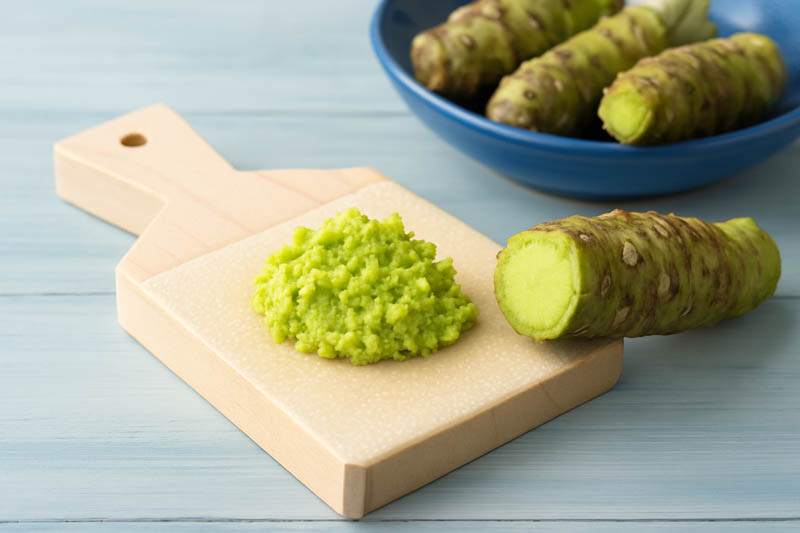
Wasabi
Looking for a little excitement at your next meal? Real wasabi (Eutrema japonicum) is a legendary plant shrouded in culinary mystery and spicy adventure. Here are some surprising, fascinating, and smile-inducing facts about the world’s most coveted “green gold.”
The true wasabi plant is a rarity! Genuine wasabi root is so tricky to grow and so sensitive to heat, light, and water purity that over 95% of the “wasabi paste” outside Japan is actually made from ordinary horseradish (Armoracia rusticana), mustard powder, and green food coloring. Try the real thing, and you’ll never forget its fleeting heat and floral zing!
It’s not a root—technically, it’s a rhizome! The prized wasabi “root” grated for sushi is actually a swollen stem, not a root at all. True wasabi is harvested from the knobby, pale green rhizome, while the plant’s leaves and stems are also edible and delicious.
Wasabi loves luxury living. In nature, wasabi grows wild in cool, shady mountain streams with pure, running water. The best wasabi is farmed “sawa” style in gravel beds with spring water between 50–55°F (10–13°C)—no wonder it’s more costly than many cuts of fish!
Its fiery sensation is fleeting! The spicy punch of freshly grated wasabi only lasts about 10–20 minutes (as its signature compounds quickly evaporate). That’s why authentic sushi chefs grate wasabi right before serving.
Wasabi fights bacteria and has legend status in Japanese lore. Ancient Japanese used fresh wasabi with raw fish not just for taste, but to help suppress microbes and foodborne pathogens.
Bold, beautiful… and nutritious! Wasabi isn’t just spicy—wasabi leaves, stems, and rhizomes are loaded with vitamin C, potassium, and powerful isothiocyanates with potential anti-inflammatory and antimicrobial effects.
Edible from top to bottom. While most praise the rhizome, young wasabi leaves make zesty salad greens, and even the flowers are attractive garnishes.
Wasabi vs. horseradish: Know your “hot” imposters! While they’re both members of the Brassicaceae family, the true differences in flavor, aroma, and intensity set wasabi apart. If you want to geek out, learn about both plants’ unique quirks here: horseradish.
Goes far beyond sushi: Wasabi brings unforgettable zest to peas, burgers, sauces, cocktails, and more. Adventurous cooks even make wasabi ice cream!
A slow but rewarding grow: It can take 18–36 months to harvest a good wasabi rhizome. But if you can provide cool, shady conditions and some patience, you’ll savor true “green gold” from your own garden.
If you’re lucky enough to taste real wasabi, savor its zing—and celebrate this one-of-a-kind, world-famous plant!