Dotseed Plantain, California Plantain, Foothill Plantain, English Plantain, Plantago erecta ssp. rigidior, Plantago hookeriana var. californica, Plantago patagonica var. californica
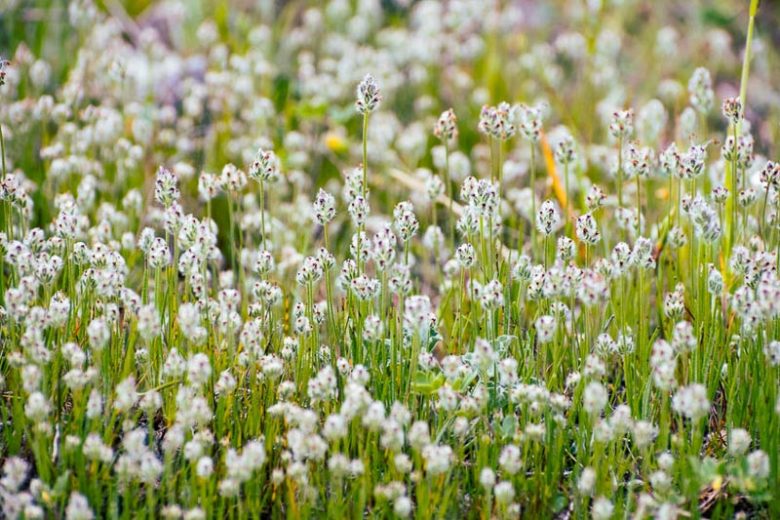
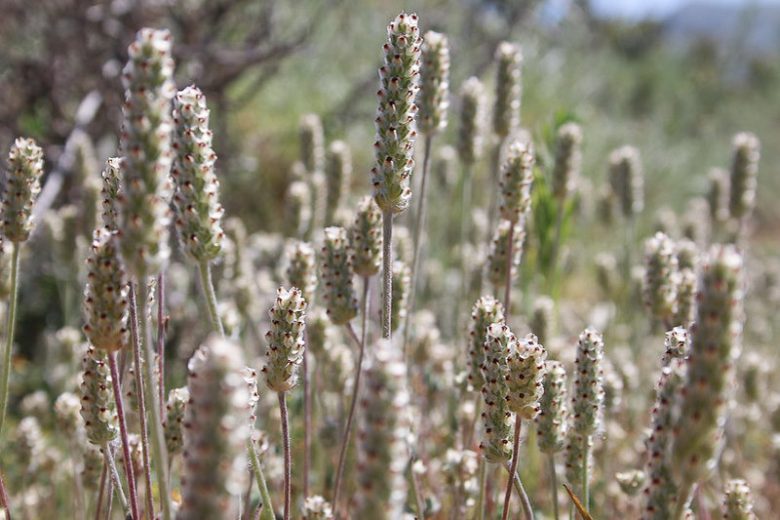
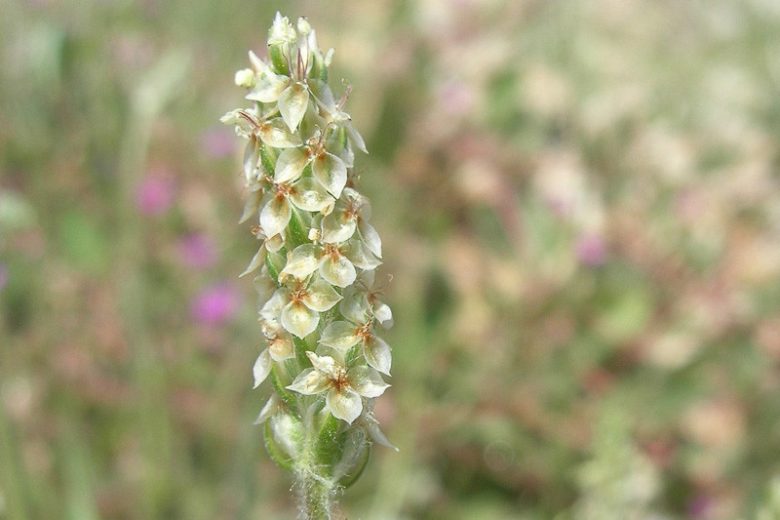


Plantago erecta (California Plantain) is a small annual wildflower native to western North America, forming a low rosette of narrow, grass-like, pale green leaves, typically 1-5 in. long (2-12 cm). The leaves are often sparsely covered with fine, silky hairs. In early to mid-spring, slender leafless stalks rise above the foliage, each topped with a short cylindrical spike of tiny, sessile flowers. The flowers have four translucent, papery petals that range from whitish to tan and are followed by small seed capsules that split open when mature.
California Plantain is well adapted to Mediterranean climates and behaves as a classic drought-avoiding annual. It germinates during the cool, wet winter season, develops quickly as temperatures begin to rise, flowers and sets seed in spring, then usually withers before the onset of the hot, dry summer. This short life cycle allows it to take advantage of seasonal moisture while avoiding prolonged summer drought.
Although modest in appearance, this native annual has important ecological value. California Plantain is a larval host plant for several butterflies. Its foliage may be eaten by caterpillars of the Common Buckeye (Junonia coenia), a widespread butterfly whose larvae use plantains (Plantago spp.) among their host plants. It is also an important host plant for the rare Quino Checkerspot butterfly (Euphydryas editha quino), particularly within parts of its native range in southern California.
The timing of California Plantain’s growth can be especially important for butterfly larvae. Because the plant develops rapidly during the rainy season and may dry out as spring advances, caterpillars depend on suitable host plants remaining green long enough to support their development. For this reason, seasonal rainfall patterns and habitat conditions can influence both plant availability and butterfly success.
In the wild, California Plantain occurs in a variety of open habitats, including grasslands, grassy slopes, flats, coastal scrub openings, and open woodland. It is remarkably adaptable to soil type and can grow in sandy, gravelly, clayey, and serpentine soils, including relatively nutrient-poor sites. It generally performs best where soils drain well and where competition from taller vegetation is limited.
Because it germinates early and grows quickly during the cool season, California Plantain can also be useful in native landscaping and restoration projects. It may provide temporary ground cover before later-emerging native grasses, perennials, and shrubs become dominant, helping reduce exposed soil and contributing to seasonal habitat diversity.
| Hardiness |
4 - 10 |
|---|---|
| Plant Type | Annuals |
| Plant Family | Plantaginaceae |
| Common names | English Plantain |
| Exposure | Full Sun, Partial Sun |
| Season of Interest | Spring (Early, Mid) |
| Height | 6" - 1' (15cm - 30cm) |
| Spread | 2" - 4" (5cm - 10cm) |
| Spacing | 4" (10cm) |
| Maintenance | Low |
| Water Needs | Low |
| Soil Type | Clay, Loam, Sand |
| Soil pH | Acid, Alkaline, Neutral |
| Soil Drainage | Well-Drained |
| Characteristics | Showy |
| Native Plants | United States, California, Pacific Northwest, Oregon |
| Tolerances | Drought, Clay Soil, Erosion |
| Attracts | Butterflies |
| Garden Uses | Beds And Borders |
| Garden Styles | Butterfly Garden, Informal and Cottage, Pollinator Garden, Prairie and Meadow |
| Toxic to Humans | No known toxicity |
| Toxic to Cats | No known toxicity |
| Toxic to Dogs | No known toxicity |
| Toxic to Horses | No known toxicity |


| Hardiness |
4 - 10 |
|---|---|
| Plant Type | Annuals |
| Plant Family | Plantaginaceae |
| Common names | English Plantain |
| Exposure | Full Sun, Partial Sun |
| Season of Interest | Spring (Early, Mid) |
| Height | 6" - 1' (15cm - 30cm) |
| Spread | 2" - 4" (5cm - 10cm) |
| Spacing | 4" (10cm) |
| Maintenance | Low |
| Water Needs | Low |
| Soil Type | Clay, Loam, Sand |
| Soil pH | Acid, Alkaline, Neutral |
| Soil Drainage | Well-Drained |
| Characteristics | Showy |
| Native Plants | United States, California, Pacific Northwest, Oregon |
| Tolerances | Drought, Clay Soil, Erosion |
| Attracts | Butterflies |
| Garden Uses | Beds And Borders |
| Garden Styles | Butterfly Garden, Informal and Cottage, Pollinator Garden, Prairie and Meadow |
| Toxic to Humans | No known toxicity |
| Toxic to Cats | No known toxicity |
| Toxic to Dogs | No known toxicity |
| Toxic to Horses | No known toxicity |
How many Plantago erecta (California Plantain) do I need for my garden?
| Plant | Quantity | |
|---|---|---|
| Plantago erecta (California Plantain) | N/A | Buy Plants |
Create a membership account to save your garden designs and to view them on any device.
Becoming a contributing member of Gardenia is easy and can be done in just a few minutes. If you provide us with your name, email address and the payment of a modest $25 annual membership fee, you will become a full member, enabling you to design and save up to 25 of your garden design ideas.
Join now and start creating your dream garden!