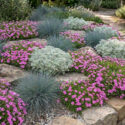
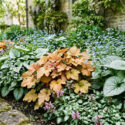
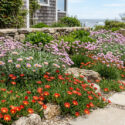
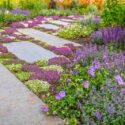
Create a beautiful perennial garden with three complementary plants. Hemerocallis lilioasphodelus produces fragrant lemon-yellow flowers in late spring and early summer, while Geranium pratense 'Plenum Violaceum' adds double violet blooms in early to midsummer. Creeping Juniper 'Bar Harbor' provides blue-green evergreen foliage, creating lasting contrast around the colorful perennial flowers.
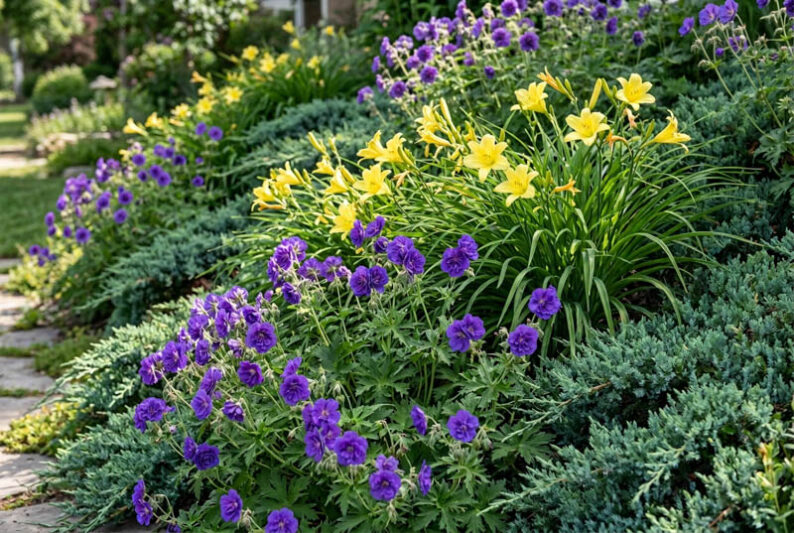


Few flower combinations are as cheerful as golden-yellow Daylilies paired with rich violet Geraniums. Add sweeping carpets of blue-green Juniper, and you have a beautiful perennial garden with color, texture, and year-round structure.
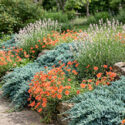
This inviting planting brings together three complementary plants: Hemerocallis lilioasphodelus, Geranium pratense ‘Plenum Violaceum’, and Juniperus horizontalis ‘Bar Harbor’. Their contrasting shapes and colors create a wonderfully natural border beside a winding stone pathway.
The Daylilies rise above the lower Geraniums, while Creeping Juniper spreads between them, softening the stones and connecting the planting.
Main plants used: Hemerocallis lilioasphodelus (Lemon Lily), Geranium pratense ‘Plenum Violaceum’ (Double Meadow Cranesbill), and Juniperus horizontalis ‘Bar Harbor’ (Creeping Juniper).
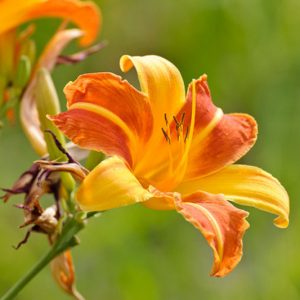
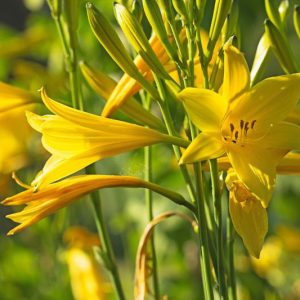
The secret is contrast. Lemon Lily produces elegant, trumpet-shaped yellow flowers above graceful fountains of narrow green leaves. Their bright color immediately draws attention and brings warmth to the planting.
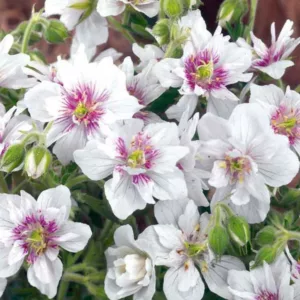
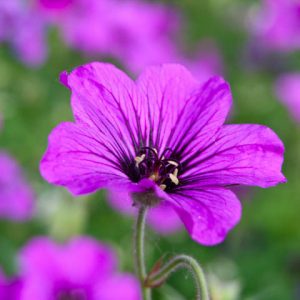
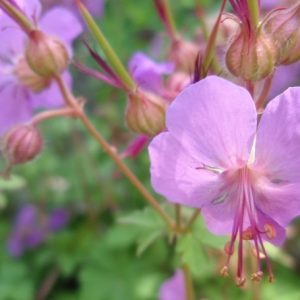
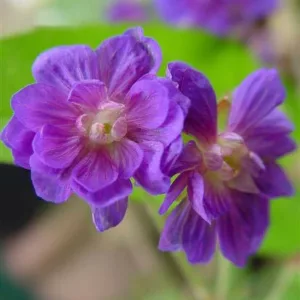
Geranium ‘Plenum Violaceum’ provides a dramatic counterpoint. Its double violet-purple flowers resemble miniature roses, rising above deeply divided foliage. The rich purple makes the yellow Daylilies appear even more luminous.
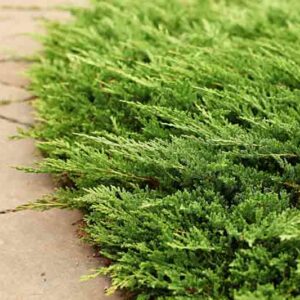
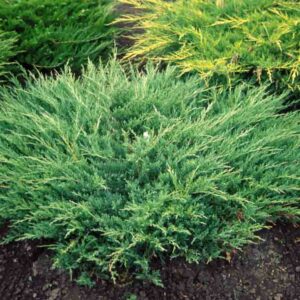
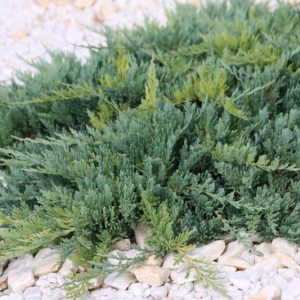
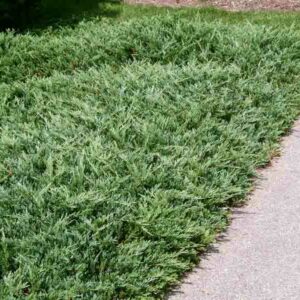
‘Bar Harbor’ Juniper introduces a quieter element. Its finely textured, blue-green evergreen foliage spreads across the ground, creating a beautiful background for the flowering perennials.
The natural stone edging adds another layer of interest. Plants approach the irregular edges without completely hiding them, giving the garden a relaxed, established character.
Hemerocallis lilioasphodelus, commonly called Lemon Lily, is a graceful perennial with fragrant, lemon-yellow flowers in late spring and early summer. Its slender, arching leaves form attractive clumps even after flowering.
Geranium pratense ‘Plenum Violaceum’ is a double-flowered Meadow Cranesbill with rich violet-purple blooms in early to midsummer. Its deeply divided foliage creates a soft, natural appearance. It prefers reasonably fertile, well-drained soil.
Juniperus horizontalis ‘Bar Harbor’ is a low-growing evergreen conifer with blue-green foliage that may develop purplish tones in winter. It spreads widely, providing valuable groundcover and year-round texture in sunny, well-drained locations.
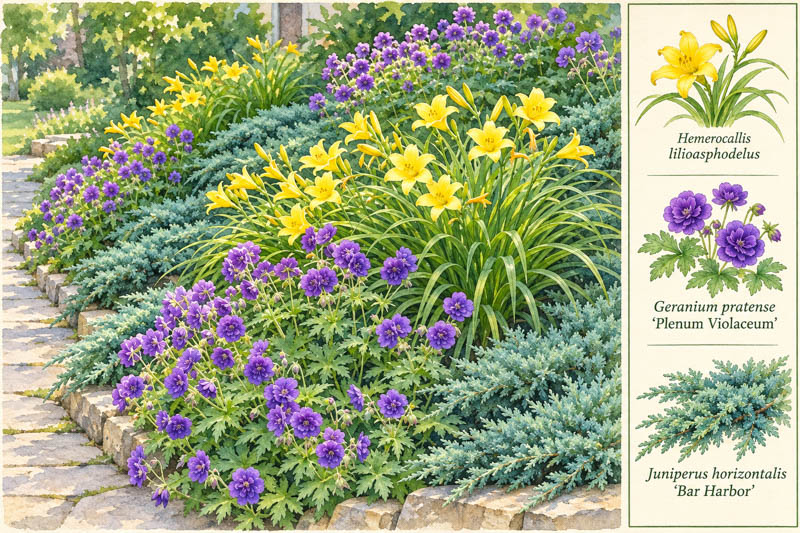
Create a colorful perennial border with fragrant yellow Daylilies, double violet Geraniums, and sweeping blue-green evergreen groundcover.
Begin with a gently curving stone path or a low, raised planting bed. Position Daylilies in generous clusters through the middle and back of the border, where their yellow flowers provide height. Repeat violet Geraniums in informal groups toward the front. Allow Juniper to spread through larger open spaces, keeping sufficient distance from the perennials to prevent overcrowding.
Spring: Fresh Daylily and Geranium foliage emerges above the evergreen Juniper. Lemon Lily begins flowering in late spring.
Summer: Violet Geranium flowers create a beautiful contrast with the remaining yellow Daylilies, although peak flowering may not coincide perfectly.
Autumn and winter: The herbaceous perennials die back, leaving Creeping Juniper to provide structure and attractive blue-green foliage.
These plants have slightly different moisture requirements. Daylilies and Geraniums appreciate more regular watering than established Juniper, which prefers well-drained soil and tolerates some drought.
Give Creeping Juniper adequate room to mature. Its spreading branches can eventually overwhelm smaller plants if positioned too closely.
Most importantly, repeat the three plants in relaxed, irregular groups. Their contrasting flowers, foliage, and heights create an inviting garden without needing a complicated planting palette.
| Hardiness |
4 - 9 |
|---|---|
| Heat Zones |
2 - 8 |
| Climate Zones | 2, 2A, 2B, 3, 3A, 3B, 4, 5, 6, 7, 14, 15, 16, 17, 18, 19, 20, 21, 22, 23, 24 |
| Exposure | Full Sun, Partial Sun |
| Season of Interest | Spring (Late), Summer (Early, Mid) |
| Maintenance | Low |
| Water Needs | Average |
| Soil Type | Chalk, Clay, Loam |
| Soil pH | Acid, Neutral, Alkaline |
| Soil Drainage | Well-Drained |
| Characteristics | Showy |
| Tolerances | Clay Soil, Drought |
| Attracts | Butterflies, Hummingbirds |
| Landscaping Ideas | Banks And Slopes, Beds And Borders, Ground Covers |
| Garden Styles | Informal and Cottage |

| Hardiness |
4 - 9 |
|---|---|
| Heat Zones |
2 - 8 |
| Climate Zones | 2, 2A, 2B, 3, 3A, 3B, 4, 5, 6, 7, 14, 15, 16, 17, 18, 19, 20, 21, 22, 23, 24 |
| Exposure | Full Sun, Partial Sun |
| Season of Interest | Spring (Late), Summer (Early, Mid) |
| Maintenance | Low |
| Water Needs | Average |
| Soil Type | Chalk, Clay, Loam |
| Soil pH | Acid, Neutral, Alkaline |
| Soil Drainage | Well-Drained |
| Characteristics | Showy |
| Tolerances | Clay Soil, Drought |
| Attracts | Butterflies, Hummingbirds |
| Landscaping Ideas | Banks And Slopes, Beds And Borders, Ground Covers |
| Garden Styles | Informal and Cottage |
Recreate this garden. Specify the percentages you would like to have of each plant and input the dimensions of your garden space.We'll give you a shopping list so you know how many plants you need.
| Plant | Quantity | |
|---|---|---|
| Hemerocallis lilioasphodelus (Lemon Lily) | N/A | Buy Plants |
| Geranium pratense 'Plenum Violaceum' (Meadow Cranesbill) | N/A | Buy Plants |
| Juniperus horizontalis 'Bar Harbor' (Creeping Juniper) | N/A | Buy Plants |
Create a membership account to save your garden designs and to view them on any device.
Becoming a contributing member of Gardenia is easy and can be done in just a few minutes. If you provide us with your name, email address and the payment of a modest $25 annual membership fee, you will become a full member, enabling you to design and save up to 25 of your garden design ideas.
Join now and start creating your dream garden!