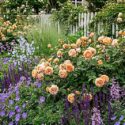
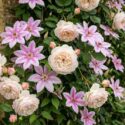
Create a colorful Mediterranean garden with three sun-loving plants. California Poppies produce brilliant golden flowers from spring into summer, Creeping Thyme creates crimson-pink flower carpets in early to midsummer, and dwarf Lavender 'Little Lottie' adds fragrant pale pink summer spikes. Perfect for sunny slopes, rock gardens, and gravel borders.
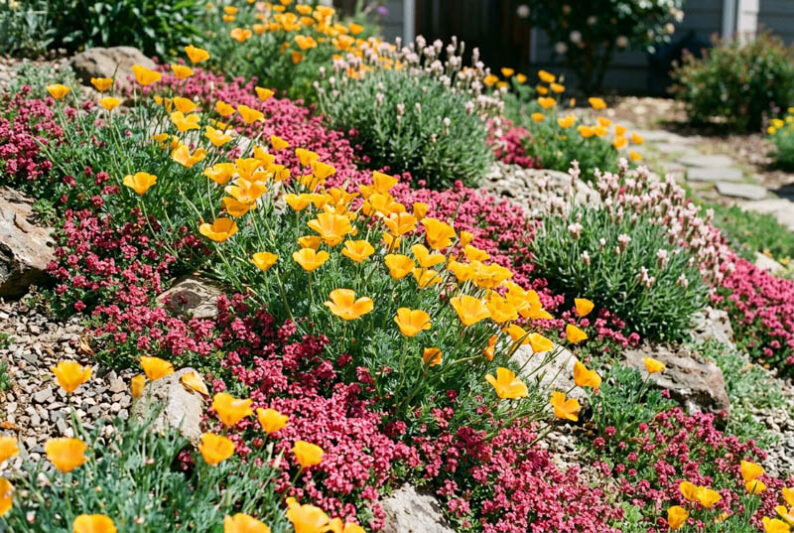


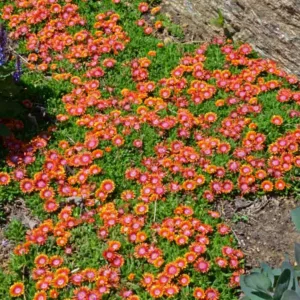
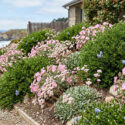
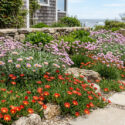
Imagine a sunny hillside glowing with golden California Poppies, surrounded by carpets of crimson-pink Creeping Thyme and fragrant pale pink Lavender. This cheerful Mediterranean-style garden proves that a simple combination of flowers, silver-green foliage, and natural stones can create a spectacular display.
Three sun-loving plants make it work: Eschscholzia californica, Thymus Coccineus Group, and Lavandula angustifolia ‘Little Lottie’. Their contrasting heights and flower shapes create a relaxed, naturalistic planting that feels perfectly at home among gravel and weathered rocks.
Main plants used: Eschscholzia californica (California Poppy), Thymus Coccineus Group (Red Creeping Thyme), and Lavandula angustifolia ‘Little Lottie’ (Dwarf English Lavender).
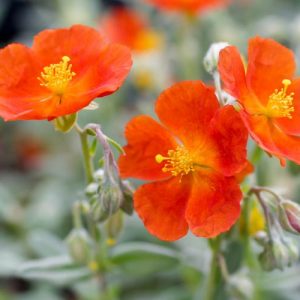
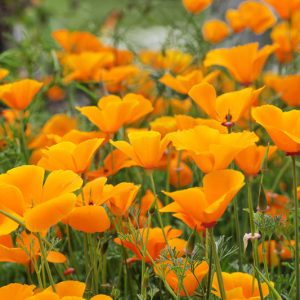
The first impression is all about color. California Poppies produce masses of brilliant golden-orange flowers above finely divided, blue-green foliage. Their delicate stems add movement and an informal, meadow-like quality.
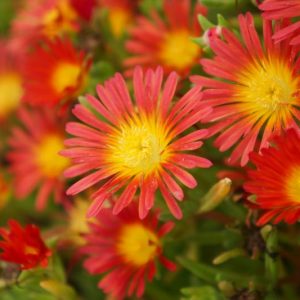
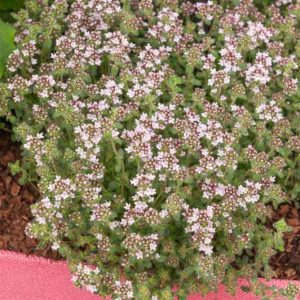
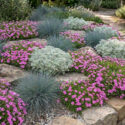
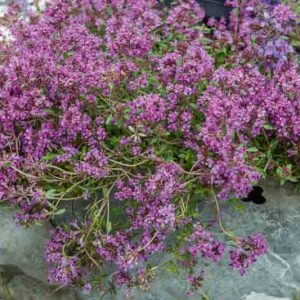
Creeping Thyme provides a striking contrast. Its tiny crimson-pink flowers cover low, spreading mats, creating colorful ribbons that weave between stones and soften the edges of the planting.
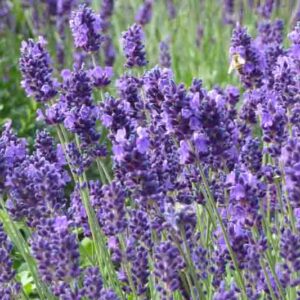
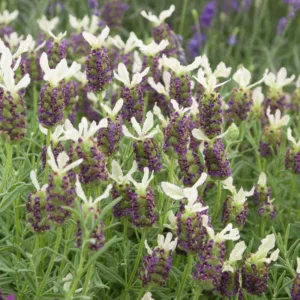
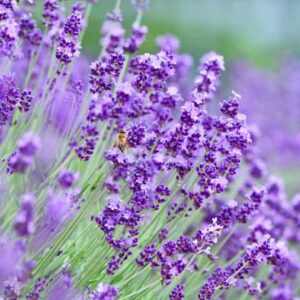
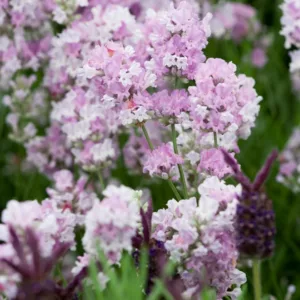
Lavender ‘Little Lottie’ introduces a gentler note. Its fragrant, pale pink flower spikes rise above compact gray-green foliage, providing height and structure without overwhelming the lower plants.
The natural rocks and gravel are equally important. They separate the colorful drifts, highlight the different textures, and reinforce the garden’s sunny Mediterranean character.
Eschscholzia californica is a drought-tolerant California native with silky golden-orange flowers and finely cut, blue-green foliage. Often grown as an annual or short-lived perennial, it flowers from spring into summer and frequently self-seeds in suitable conditions. Flowers open in sunshine and close during dull weather.
Thymus Coccineus Group is a low-growing, aromatic Creeping Thyme valued for its dense mats of small green leaves and brilliant reddish-pink flowers in early to midsummer. It thrives in sunny, well-drained soil and is particularly attractive between rocks and along gravel edges.
Lavandula angustifolia ‘Little Lottie’ is a compact evergreen Lavender with fragrant, pale pink summer flowers above narrow gray-green foliage. Its neat mounding habit makes it especially useful in smaller gardens and informal Mediterranean borders.
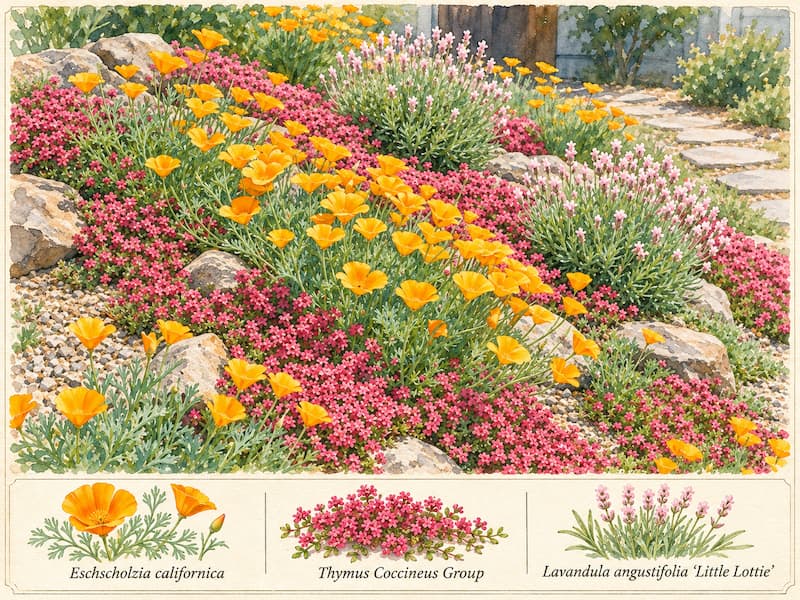
Create a colorful, naturalistic Mediterranean slope with golden Poppies, crimson flowering groundcover, fragrant pink Lavender, and weathered stones.
Begin with a sunny, gently sloping bed containing natural stones and free-draining gravelly soil. Position Lavender in loose groups through the middle and upper sections, leaving room for its mature spread. Plant Creeping Thyme between rocks and along the lower edges, allowing it to form continuous flowering mats. Sow California Poppies in generous, irregular patches between the established plants, leaving open soil where seedlings can emerge naturally.
Spring: California Poppies begin producing brilliant golden flowers, particularly in mild climates.
Summer: Creeping Thyme creates crimson-pink carpets, while ‘Little Lottie’ Lavender produces fragrant pale pink spikes. Poppies may continue where conditions remain favorable.
Autumn and winter: Lavender and Thyme retain foliage in suitable conditions, while California Poppies may die back or regenerate from seed.
California Poppies are seasonal plants, so their brilliant display will not necessarily return in exactly the same position each year. Allow some flowers to set seed for natural regeneration.
All three plants appreciate good drainage, but avoid overcrowding Lavender or allowing Thyme to cover emerging Poppy seedlings. On erosion-prone slopes, additional stabilization may be necessary.
The beauty of this garden lies in its simplicity. Three complementary plants, repeated generously among natural stones, create a memorable display of color, fragrance, and texture.
| Hardiness |
5 - 9 |
|---|---|
| Heat Zones |
1 - 8 |
| Climate Zones | 2, 2A, 2B, 3, 3A, 3B, 4, 5, 6, 7, 8, 9, 10, 11, 12, 13, 14, 15, 16, 17, 18, 19, 20, 21, 22, 23, 24 |
| Exposure | Full Sun |
| Season of Interest | Spring (Late), Summer (Early, Mid, Late) |
| Maintenance | Low, Average |
| Water Needs | Low, Average |
| Soil Type | Loam, Sand |
| Soil pH | Alkaline, Neutral |
| Soil Drainage | Well-Drained |
| Characteristics | Showy |
| Tolerances | Drought, Dry Soil, Deer, Rabbit |
| Attracts | Bees, Butterflies |
| Landscaping Ideas | Banks And Slopes, Ground Covers |
| Garden Styles | Gravel and Rock Garden, Mediterranean Garden |

| Hardiness |
5 - 9 |
|---|---|
| Heat Zones |
1 - 8 |
| Climate Zones | 2, 2A, 2B, 3, 3A, 3B, 4, 5, 6, 7, 8, 9, 10, 11, 12, 13, 14, 15, 16, 17, 18, 19, 20, 21, 22, 23, 24 |
| Exposure | Full Sun |
| Season of Interest | Spring (Late), Summer (Early, Mid, Late) |
| Maintenance | Low, Average |
| Water Needs | Low, Average |
| Soil Type | Loam, Sand |
| Soil pH | Alkaline, Neutral |
| Soil Drainage | Well-Drained |
| Characteristics | Showy |
| Tolerances | Drought, Dry Soil, Deer, Rabbit |
| Attracts | Bees, Butterflies |
| Landscaping Ideas | Banks And Slopes, Ground Covers |
| Garden Styles | Gravel and Rock Garden, Mediterranean Garden |
Recreate this garden. Specify the percentages you would like to have of each plant and input the dimensions of your garden space.We'll give you a shopping list so you know how many plants you need.
| Plant | Quantity | |
|---|---|---|
| Eschscholzia californica (California Poppy) | N/A | Buy Plants |
| Thymus Coccineus Group (Red Creeping Thyme) | N/A | Buy Plants |
| Lavandula angustifolia 'Little Lottie' (Lavender) | N/A | Buy Plants |
Create a membership account to save your garden designs and to view them on any device.
Becoming a contributing member of Gardenia is easy and can be done in just a few minutes. If you provide us with your name, email address and the payment of a modest $25 annual membership fee, you will become a full member, enabling you to design and save up to 25 of your garden design ideas.
Join now and start creating your dream garden!