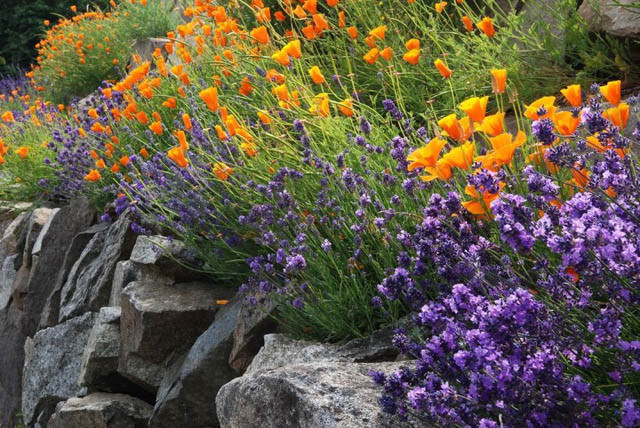
Gravel and Rock Gardens
Gravel and rock gardens combine strong structure with plants that thrive in lean, well-drained conditions. Stone, gravel, open space, and carefully placed plants work together to create a landscape that feels natural, low-water, and visually striking.
The best designs balance hardscape and planting. Use rocks to create structure, gravel to unify the space, and plants of different heights and forms to soften the composition without hiding it.
Start with Drainage & Site Conditions
Before choosing plants, assess sun, slope, soil, drainage, rainfall, and winter moisture. Many classic rock-garden plants tolerate dry conditions but struggle in heavy or persistently wet soil.
Place Rocks Before Plants
Use a few substantial stones rather than many unrelated small rocks. Partially bury them so they appear anchored in the landscape, and arrange them to follow the natural contours of the site.
Use Gravel to Unify the Design
Gravel can connect paths, planting pockets, and open areas while reinforcing the dry-garden character. Choose a material that complements nearby stone and architecture rather than mixing too many colors and textures.
Layer Plants by Height & Form
Combine creeping plants around stone edges, compact flowering perennials in pockets, and a few taller or architectural plants for structure. Repeating key species helps the garden feel intentional rather than scattered.
Create Interest Beyond Summer
Plan for spring flowers, summer texture, fall color, evergreen foliage, seed heads, and strong winter forms. Gravel and stone are visible year-round, so the planting should contribute across more than one season.