Create a beautiful coastal hillside with three evergreen shrubs. Ceanothus 'Yankee Point' produces blue spring flowers, Cistus creticus adds delicate pink blooms in late spring and early summer, and Seaside Buckwheat contributes soft pink and white flower clusters from late spring into autumn. Perfect for sunny, well-drained coastal gardens.
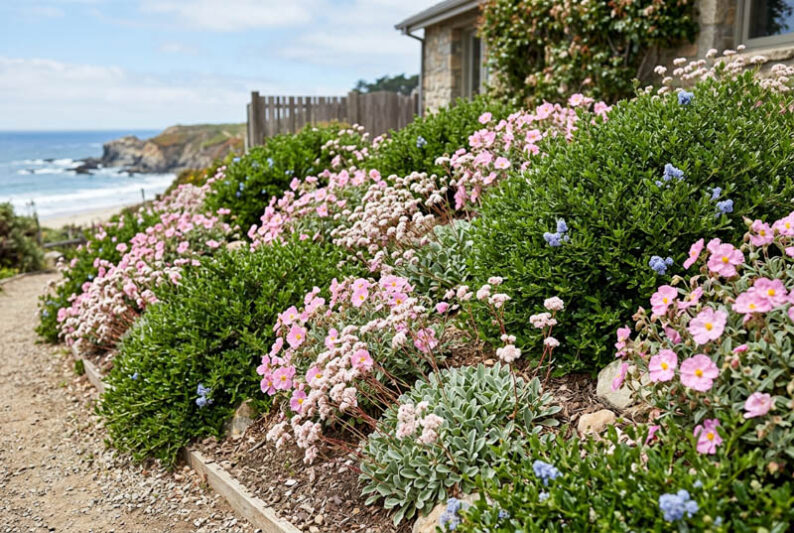


Imagine a garden where soft pink flowers mingle with delicate blue blossoms, evergreen shrubs tumble across a sunny hillside, and the ocean provides a breathtaking backdrop. This beautiful coastal planting captures the relaxed charm of a seaside landscape with just three carefully chosen plants.
Ceanothus griseus var. horizontalis ‘Yankee Point’, Cistus creticus, and Eriogonum latifolium combine flowering interest with attractive evergreen foliage. Their contrasting habits create a naturalistic garden that feels perfectly at home among gravel, stones, and coastal scenery.
Main plants used: Ceanothus griseus var. horizontalis ‘Yankee Point’ (Californian Lilac), Cistus creticus (Cretan Rockrose), and Eriogonum latifolium (Seaside Buckwheat).
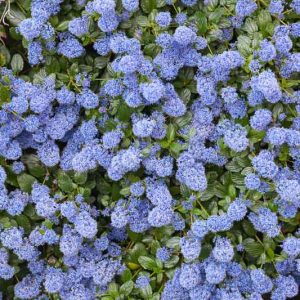
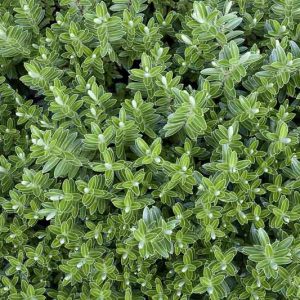
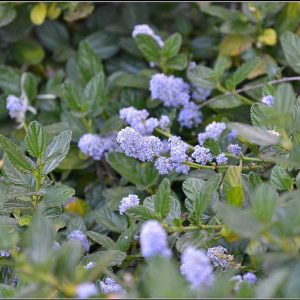
The beauty of this combination comes from the contrast between flowers and foliage. ‘Yankee Point’ forms broad, spreading evergreen mounds with glossy green leaves. In spring, clusters of blue flowers create a beautiful backdrop for the softer colors surrounding them.
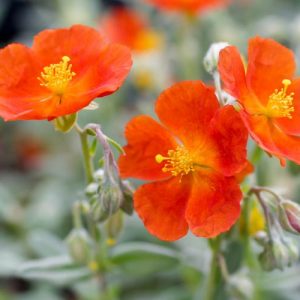
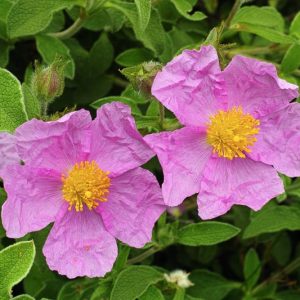
Cretan Rockrose introduces a romantic touch. Its delicate, pink, crinkled petals resemble tissue paper, each flower brightened by a yellow center. The gray-green foliage provides attractive texture between flowering periods.
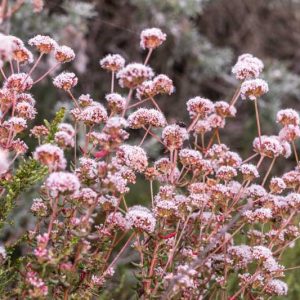
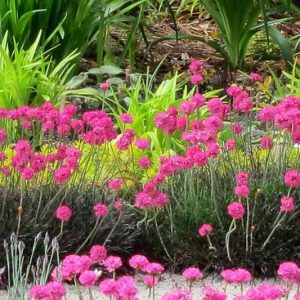
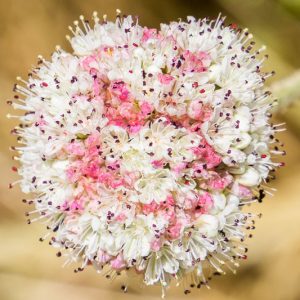
Seaside Buckwheat adds a different flower shape. Small white to pink flowerheads rise above compact, silvery-green leaves, bringing lightness to the planting. As the flowers age, they often develop deeper rosy or rust-colored tones.
The sloping ground creates natural layers, allowing the plants to overlap without appearing crowded. Gravel and weathered stones reinforce the coastal atmosphere.
Ceanothus griseus var. horizontalis ‘Yankee Point’ is a vigorous, spreading evergreen shrub with glossy leaves and blue spring flowers. It can reach 8-12 ft (2.4-3.6 m) across, making it useful for covering substantial areas of well-drained ground. Allow generous room for its mature spread.
Cistus creticus is a Mediterranean evergreen shrub producing papery pink flowers in late spring and early summer. Individual blooms are short-lived, but successive flowers provide an extended display. It thrives in sunny, well-drained conditions.
Eriogonum latifolium, or Seaside Buckwheat, is a compact evergreen perennial or subshrub with attractive gray-green leaves and rounded white to pink flower clusters. Native to western North American coastal habitats, it provides nectar for pollinating insects.
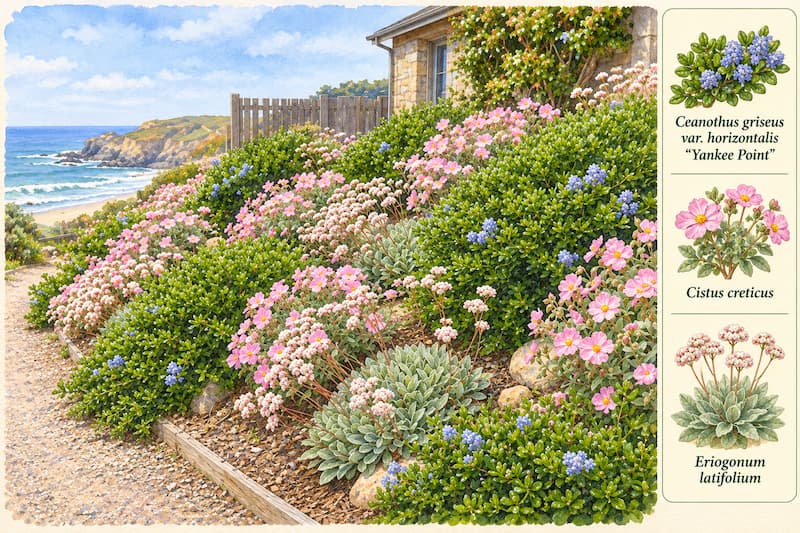
Create a naturalistic coastal hillside with spreading evergreen shrubs, soft pink flowers, blue spring blooms, and silvery foliage.
Begin with a sunny, gently sloping bank and excellent drainage. Position Ceanothus in spacious pockets, allowing its branches to spread across the incline. Arrange Cistus in informal groups between the larger shrubs, where its pink flowers remain visible. Place Buckwheat toward the front and along gravel edges, repeating its soft flowerheads throughout the planting. Leave room for mature growth and keep access paths clear.
Spring: Ceanothus produces masses of blue flowers, followed by the first pink Cistus blooms.
Summer: Rock Roses continue flowering where conditions permit, while Seaside Buckwheat produces delicate white and pink clusters.
Autumn and winter: Evergreen foliage maintains the planting’s structure. Aging Buckwheat flowerheads may provide warm russet tones.
These plants are particularly suited to mild coastal climates. Poor drainage and excessive summer irrigation can cause problems, especially for established Ceanothus.
Most importantly, allow the shrubs enough space to develop naturally. Their contrasting shapes, flowers, and foliage create a beautiful coastal garden without complicated maintenance.
| Hardiness |
8 - 10 |
|---|---|
| Climate Zones | 5, 14, 15, 16, 17, 22, 23, 24 |
| Exposure | Full Sun, Partial Sun |
| Season of Interest | Spring (Mid, Late), Summer (Early, Mid, Late) |
| Maintenance | Low |
| Water Needs | Low |
| Soil Type | Loam, Sand |
| Soil pH | Acid, Neutral, Alkaline |
| Soil Drainage | Well-Drained |
| Characteristics | Showy, Evergreen |
| Tolerances | Drought |
| Attracts | Bees, Butterflies, Birds |
| Landscaping Ideas | Banks And Slopes, Ground Covers |
| Garden Styles | Coastal Garden, Informal and Cottage |
| Hardiness |
8 - 10 |
|---|---|
| Climate Zones | 5, 14, 15, 16, 17, 22, 23, 24 |
| Exposure | Full Sun, Partial Sun |
| Season of Interest | Spring (Mid, Late), Summer (Early, Mid, Late) |
| Maintenance | Low |
| Water Needs | Low |
| Soil Type | Loam, Sand |
| Soil pH | Acid, Neutral, Alkaline |
| Soil Drainage | Well-Drained |
| Characteristics | Showy, Evergreen |
| Tolerances | Drought |
| Attracts | Bees, Butterflies, Birds |
| Landscaping Ideas | Banks And Slopes, Ground Covers |
| Garden Styles | Coastal Garden, Informal and Cottage |
Recreate this garden. Specify the percentages you would like to have of each plant and input the dimensions of your garden space.We'll give you a shopping list so you know how many plants you need.
| Plant | Quantity | |
|---|---|---|
| Ceanothus griseus var. horizontalis 'Yankee Point' (Californian Lilac) | N/A | Buy Plants |
| Eriogonum latifolium (Seaside Buckwheat) | N/A | Buy Plants |
| Cistus creticus (Cretan Rockrose) | N/A | Buy Plants |
Create a membership account to save your garden designs and to view them on any device.
Becoming a contributing member of Gardenia is easy and can be done in just a few minutes. If you provide us with your name, email address and the payment of a modest $25 annual membership fee, you will become a full member, enabling you to design and save up to 25 of your garden design ideas.
Join now and start creating your dream garden!