Boston Fern 'Fluffy Ruffles', Sword Fern 'Fluffy Ruffles'

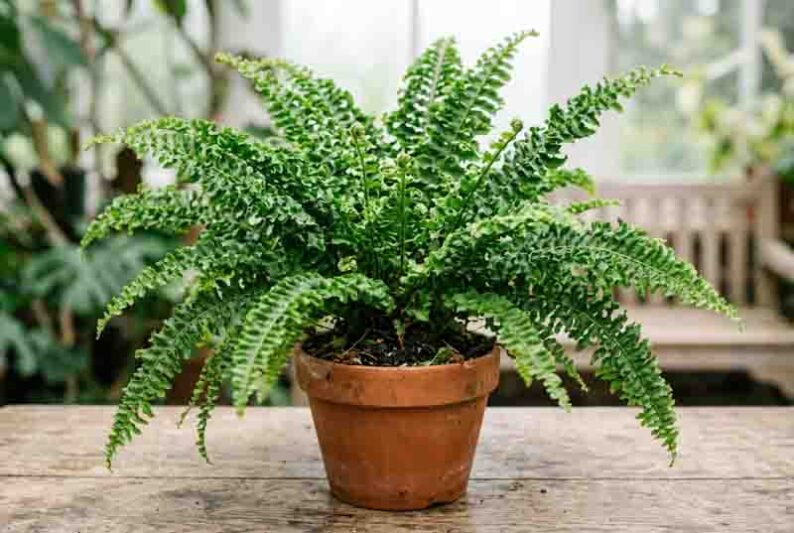


Love the look of Boston Ferns but don’t have room for their long, cascading fronds? Nephrolepis exaltata ‘Fluffy Ruffles’ offers something different. Its short, upright fronds are crowded with wavy, crinkled leaflets, creating a wonderfully full little fern that looks almost pleated.
This compact Boston Fern is particularly attractive on tabletops, shelves, and small plant stands. It needs the same essentials as its larger relatives: filtered light, an evenly moist but well-drained potting mix, and protection from dry indoor air. Give it those conditions, and its ruffled greenery can remain attractive throughout the year.
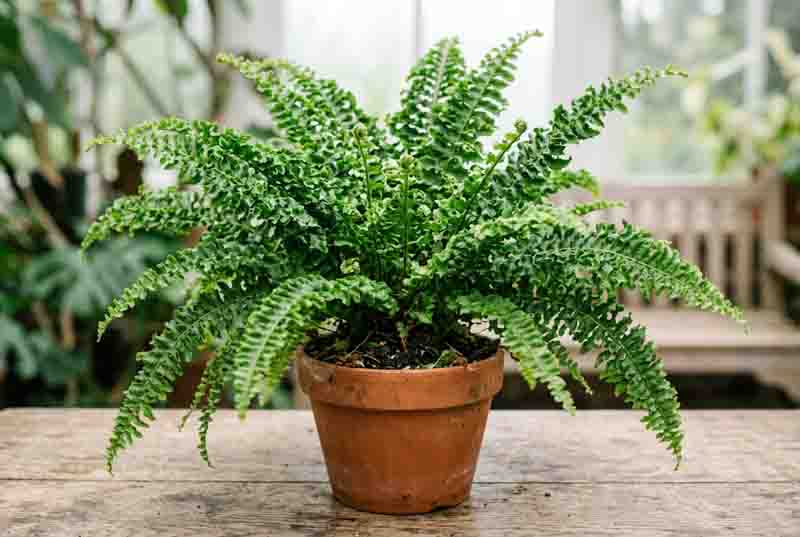
Summary: Compact evergreen Boston Fern cultivar with dense, upright, ruffled green fronds.
Use: Ideal for tabletops, small containers, plant stands, bright bathrooms, and conservatories.
Highlight: Sturdy, closely packed fronds with distinctively wavy, incised leaflets.
Botanical interest: A sterile cultivar propagated vegetatively to preserve its characteristics.
| Botanical Name | Nephrolepis exaltata ‘Fluffy Ruffles’ |
|---|---|
| Family | Lomariopsidaceae (RHS); Polypodiaceae (NCSU) |
| Common Names | Fluffy Ruffles Fern, Fluffy Ruffles Boston Fern, Ruffled Boston Fern |
| Origin | Cultivated selection of N. exaltata, native to tropical and subtropical America |
| Plant Type and Habit | Evergreen perennial fern; compact, clump-forming, bushy, upright |
| Hardiness | USDA Zones 10-13 for the species; ‘Fluffy Ruffles’ is best protected from frost |
| Size | Typically 8-12 in. (20-30 cm) tall in containers; RHS lists up to 20 in. (50 cm) tall and 20-40 in. (50-100 cm) wide at maturity under favorable conditions |
| Exposure | Bright indirect light indoors; partial shade outdoors |
| Soil | Humus-rich, moist but well-drained potting mix; acidic to neutral pH |
| Foliage | Dark green, short, erect fronds with dense, wavy-edged, finely incised leaflets |
| Flowers | None; sterile fern cultivar |
| Pet Safety | Specifically listed by ASPCA as non-toxic to cats, dogs, and horses |
‘Fluffy Ruffles’ is a distinctive cultivated selection of Nephrolepis exaltata, the Boston Fern species. Unlike the familiar long-fronded forms, it was selected for its compact proportions, sturdy upright growth, and ruffled foliage.
Short fronds rise closely together from a dense crown. UF/IFAS reports fronds up to about 12 in. (30 cm), explaining its popularity in small pots. RHS gives a broader potential mature size, particularly in width, so allow established plants room to expand.
The dark green leaflets have wavy, irregularly cut edges and overlap densely along each frond. This produces the cultivar’s characteristic crinkled texture. The foliage is noticeably firmer and more upright than that of a traditional cascading Boston Fern.
Like all true ferns, ‘Fluffy Ruffles’ produces no flowers or seeds. Although the species reproduces through spores, University of Wisconsin Extension identifies ‘Fluffy Ruffles’ as a sterile selection. Garden plants are therefore propagated by division or rooted runners rather than spores.
Fluffy Ruffles has earned the presitigous Award of Garden Merit of the Royal Horticultural Society.
NCSU lists USDA Zones 10-13 for N. exaltata, while RHS rates ‘Fluffy Ruffles’ H1B, indicating protected cultivation and possible summer outdoor use. Keep it indoors or frost-free for dependable year-round foliage, moving outdoor containers inside before cold weather.
As a cultivated foliage plant, ‘Fluffy Ruffles’ has limited documented wildlife value. Ferns provide no floral nectar or pollen, although their foliage may offer some shelter for small organisms outdoors.
NCSU lists the parent species as deer resistant, but cultivar-specific resistance and rabbit-browsing data are limited. Protect exposed outdoor containers where browsing occurs.
The Boston Fern species tolerates occasional drying better than many cultivated ferns, but ‘Fluffy Ruffles’ looks best with regular moisture. In a small pot, prolonged drying can quickly cause crispy leaflets and brown frond tips.
The ASPCA specifically lists ‘Fluffy Ruffles’ as non-toxic to cats, dogs, and horses. This makes it a suitable ornamental for homes with pets, although eating substantial amounts of plant material can still cause digestive upset. It is not grown as an edible plant.
Some Boston Fern forms spread readily in warm climates, but ‘Fluffy Ruffles’ is a compact, sterile selection. This reduces concern about spore-based spread, though vegetative runners may still establish new plants. Avoid releasing unwanted ornamental ferns into natural habitats.
Not every compact Boston Fern with unusual foliage is ‘Fluffy Ruffles’. The names are easy to confuse, but the shapes provide useful clues.
| Feature | Fluffy Ruffles | Traditional Boston Fern | Fluffy Duffy |
|---|---|---|---|
| Fronds | Short, stiff, upright | Long, arching or cascading | Short, densely divided |
| Leaflet texture | Wavy-edged, crinkled | More regular, relatively flat | Finely cut, overlapping, feathery |
| Overall shape | Compact, upright mound | Broad, cascading fountain | Small, very finely textured mound |
| Best use | Tabletop, small planter | Large basket, plant stand | Small foliage display |
Fluffy Ruffles: Short, fairly stiff fronds with strongly wavy leaflet edges.
Fluffy Duffy: More finely divided leaflets overlap to create a softer, feathery appearance.
Traditional Boston Fern: Longer, arching fronds with a more open outline.
For the most reliable identification, compare mature fronds close-up rather than relying on overall plant size or the word “fluffy” on a nursery label.
Choose bright, indirect light near an east- or north-facing window. Strong midday sun may scorch the leaflets. In dim conditions, new growth may become sparse and less compact.
Use a moisture-retentive but well-drained potting mix, with added perlite for aeration. Water when the surface begins to dry, letting excess water drain away. Avoid prolonged drought and permanently saturated soil.
Temperatures around 60-75°F (16-24°C) suit indoor cultivation. Humid air encourages healthy foliage, particularly during winter heating. Keep plants away from hot vents and cold drafts, and maintain gentle air circulation.
The dense ruffles can trap water. Apply water to the potting mix rather than repeatedly soaking the fronds, and avoid stagnant, humid conditions. Drying leaf surfaces and good airflow help reduce the risk of decay.
Choose a container with drainage holes, only slightly larger than the root ball. Repot in spring when roots become crowded or the growing medium breaks down. Keep the crown at its existing planting depth.
Remove old or damaged fronds at the base and rotate the pot occasionally. Feed lightly with diluted balanced fertilizer during active growth. Excess fertilizer can cause brown tips.
Propagate by dividing established clumps or separating rooted runners in spring. Each division should have healthy roots and growing points. Because ‘Fluffy Ruffles’ is sterile, spore propagation is not a practical method for this cultivar.
Examine the affected tissue before changing care. Crispy tips, soft crown tissue, and pest damage point to different problems.
| What You See | Possible Cause | Check First |
|---|---|---|
| Crispy brown tips | Dry soil, low humidity, or fertilizer salts | Pot moisture and feeding history |
| Yellow, limp fronds | Waterlogging or root stress | Drainage and root condition |
| Soft browning near crown | Possible crown decay | Wet foliage and airflow |
| Pale or scorched areas | Excessive direct sun | Window exposure |
| Fine stippling or webbing | Spider mites | Undersides of fronds |
| Brown raised bumps | Possible scale insects | Attached bumps and sticky residue |
Scale insects, mealybugs, and spider mites can affect indoor ferns. Isolate affected plants and use treatments labeled for ornamental ferns.
Crispy leaflets and a dry, light pot: Water thoroughly and reassess frequency.
Soft brown tissue at the crown: Check for trapped moisture, poor ventilation, and decay.
Raised brown bumps: Inspect for scale insects. Unlike fertile Boston Ferns, ‘Fluffy Ruffles’ is considered sterile, so don’t automatically identify the bumps as normal spore clusters.
Group ‘Fluffy Ruffles’ with foliage plants that share its preference for filtered light and moist but well-drained growing media. Separate containers make it easier to accommodate different root systems and mature sizes.
Set ‘Fluffy Ruffles’ in a low container with a larger Bird’s Nest Fern behind it. The broad, smooth-looking leaves make the smaller fern’s crinkled texture stand out. Allow enough space for both plants to mature and for air to circulate.
Fluffy Ruffles is a compact cultivar of Nephrolepis exaltata, the Boston Fern species. It has short, stiff, upright fronds with dense, wavy-edged leaflets, unlike the long cascading fronds of traditional Boston Ferns.
UF/IFAS describes fronds about 12 inches (30 cm) long. RHS lists a potential mature height of up to 20 inches (50 cm) and spread of 20-40 inches (50-100 cm) under favorable conditions.
Crispy tips commonly result from dry soil, low humidity, or fertilizer buildup. Soft browning near the crown may indicate excessive moisture or decay. Check the soil and affected tissue before changing care.
Yes. ASPCA specifically lists Fluffy Ruffles as non-toxic to cats, dogs, and horses. It is an ornamental fern and should not be treated as food.
University of Wisconsin Extension describes Fluffy Ruffles as a sterile cultivar. Propagate it by division or rooted runners rather than spores to maintain its distinctive ruffled foliage.
Royal Horticultural Society – Nephrolepis exaltata ‘Fluffy Ruffles’: Size, Hardiness, and Care.
University of Florida IFAS – Boston Fern Cultivars, Including ‘Fluffy Ruffles’.
University of Wisconsin Extension – Boston Fern Cultivars and Sterility of ‘Fluffy Ruffles’.
ASPCA – Fluffy Ruffles: Non-Toxic to Cats, Dogs, and Horses.
Updated: October 2026
| Hardiness |
10 - 13 |
|---|---|
| Plant Type | Houseplants, Ferns |
| Plant Family | Nephrolepidaceae |
| Common names | Fern |
| Exposure | Partial Sun |
| Season of Interest | Spring (Early, Mid, Late), Summer (Early, Mid, Late), Fall, Winter |
| Height | 1' - 2' (30cm - 60cm) |
| Spread | 1' - 3' (30cm - 90cm) |
| Spacing | 20" - 40" (50cm - 100cm) |
| Maintenance | Average |
| Water Needs | Average |
| Soil Type | Loam, Sand |
| Soil pH | Acid, Neutral |
| Soil Drainage | Moist but Well-Drained |
| Characteristics | Showy, Evergreen, Plant of Merit |
| Tolerances | Full Shade, Deer, Wind, Humidity |
| Garden Uses | Beds And Borders, Ground Covers, Hanging Baskets, Patio And Containers |
| Garden Styles | Informal and Cottage, Woodland Garden |
| Toxic to Humans | No known toxicity |
| Toxic to Cats | Not toxic |
| Toxic to Dogs | Not toxic |
| Toxic to Horses | Not toxic |


| Hardiness |
10 - 13 |
|---|---|
| Plant Type | Houseplants, Ferns |
| Plant Family | Nephrolepidaceae |
| Common names | Fern |
| Exposure | Partial Sun |
| Season of Interest | Spring (Early, Mid, Late), Summer (Early, Mid, Late), Fall, Winter |
| Height | 1' - 2' (30cm - 60cm) |
| Spread | 1' - 3' (30cm - 90cm) |
| Spacing | 20" - 40" (50cm - 100cm) |
| Maintenance | Average |
| Water Needs | Average |
| Soil Type | Loam, Sand |
| Soil pH | Acid, Neutral |
| Soil Drainage | Moist but Well-Drained |
| Characteristics | Showy, Evergreen, Plant of Merit |
| Tolerances | Full Shade, Deer, Wind, Humidity |
| Garden Uses | Beds And Borders, Ground Covers, Hanging Baskets, Patio And Containers |
| Garden Styles | Informal and Cottage, Woodland Garden |
| Toxic to Humans | No known toxicity |
| Toxic to Cats | Not toxic |
| Toxic to Dogs | Not toxic |
| Toxic to Horses | Not toxic |
How many Nephrolepis exaltata ‘Fluffy Ruffles’ (Boston Fern) do I need for my garden?
| Plant | Quantity | |
|---|---|---|
| Nephrolepis exaltata ‘Fluffy Ruffles’ (Boston Fern) | N/A | Buy Plants |
Create a membership account to save your garden designs and to view them on any device.
Becoming a contributing member of Gardenia is easy and can be done in just a few minutes. If you provide us with your name, email address and the payment of a modest $25 annual membership fee, you will become a full member, enabling you to design and save up to 25 of your garden design ideas.
Join now and start creating your dream garden!