7 Methods to Get Rid of Mealybugs on Plants
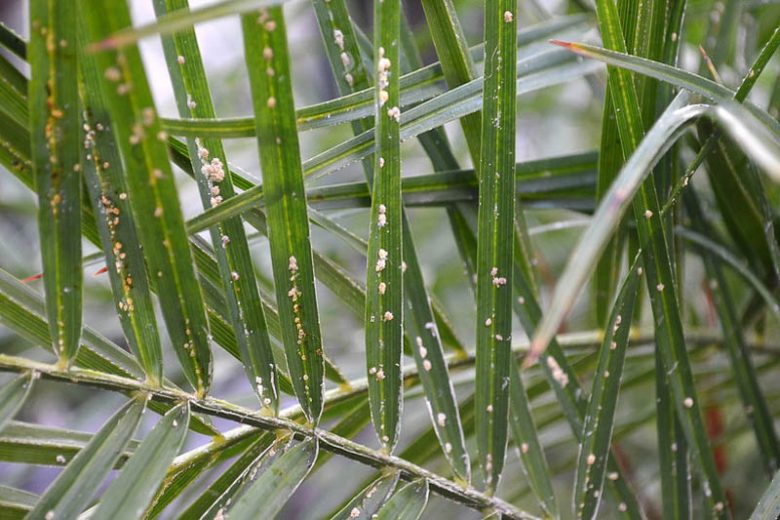
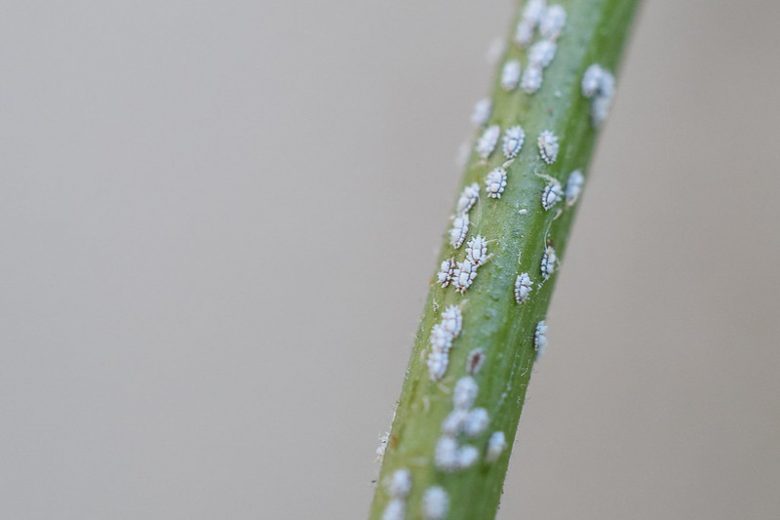


If you’ve ever spotted a little “cotton ball” tucked into a leaf joint, or wondered why your plant looks tired even though you’re watering correctly, there’s a good chance you’re dealing with mealybugs. These sneaky sap-suckers are one of the most common house plant pest problems, and one of the most frustrating, because they hide well, reproduce steadily, and often return if you don’t break their life cycle.
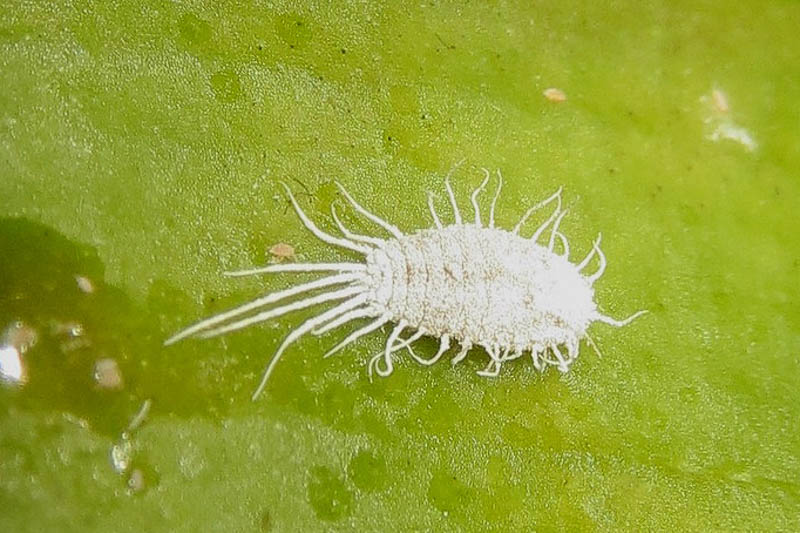
Summary: Mealybugs are sap-sucking pests that weaken plants, excrete sticky honeydew, and hide in leaf joints, stems, and sometimes soil.
Common ID clue: White cottony clusters that can smear pink when crushed; sticky leaves or pots from honeydew.
Most active: Year-round indoors; warm seasons outdoors and in greenhouses.
Plant risk: Moderate to high – heavy infestations can stunt growth, cause leaf drop, and kill young plants.
Best approach: Confirm ID, isolate the plant, remove pests manually, then repeat soap or neem sprays until eliminated.
| Common Name | Mealybugs (cottony scale insects, root mealybugs) |
|---|---|
| Scientific Name | Pseudococcidae (family) |
| Where Found | Leaf axils, stem joints, undersides of leaves, roots, and sometimes indoor plant soil |
| Key Signs | White cottony clusters, sticky honeydew, sooty mold, stunted growth, yellowing leaves |
| Life Stages | Egg – crawler (nymph) – older nymph – adult (overlapping generations indoors) |
| Human Safety | Low – they do not bite or sting; the main impacts are plant stress and mess from honeydew |
Mealybugs are cottony, sap-sucking insects that hide in plant crevices and weaken plants by draining sap; the fastest way to stop them is to isolate the plant, remove visible bugs with 70% (or less) isopropyl alcohol, and repeat a soap or neem spray on a schedule until the life cycle is broken.
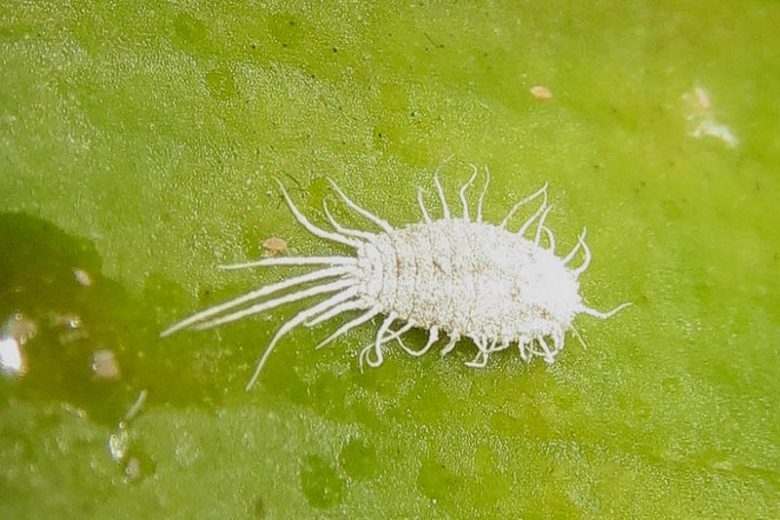
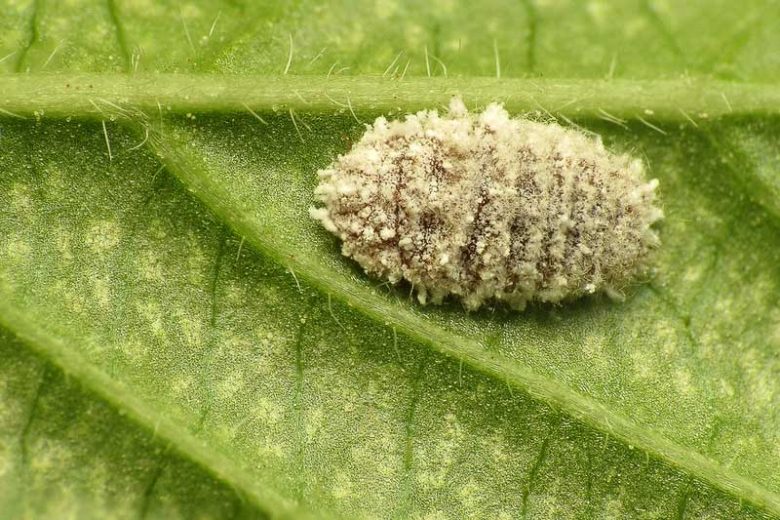
Mealybugs are small, soft-bodied insects in the family Pseudococcidae. They’re closely related to other sap-feeders like scale insects, aphids, and whiteflies, but mealybugs stand out because they look like they’ve been dusted with flour or wrapped in cotton.
They feed by inserting needle-like mouthparts into plant tissue and drinking sap. That sap loss weakens growth, causes yellowing, and can lead to leaf drop. And because they excrete a sugary waste called honeydew, they also create a second problem: sticky leaves, sticky pots, and sooty mold that grows on the sugar coating.
Mealybugs show up in outdoor gardens, greenhouses, and especially indoors where temperatures are stable. If you’re dealing with pests on houseplants, mealybugs belong at the top of the suspect list.
Mealybugs prefer tender stems and protected plant nooks. Common targets include:
Mealybugs hide, wax up, and stagger their generations. That means a single treatment can kill adults while eggs and tiny crawlers survive, so the infestation “mysteriously” returns unless you treat on a repeat schedule.
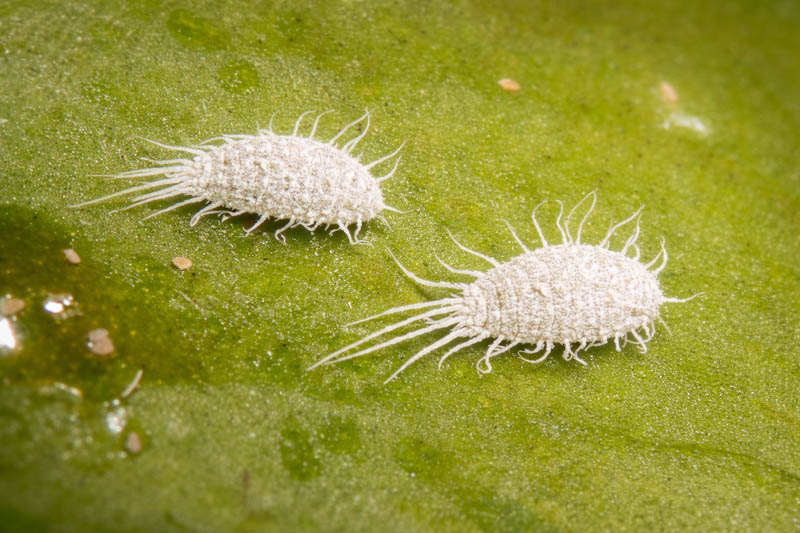
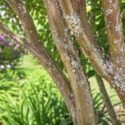
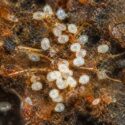
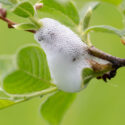
People often ask, what do mealybugs look like? In plain language: they look like tiny bits of cotton or white lint stuck to your plant.
Mineral deposits wipe off cleanly and don’t move. Powdery mildew spreads like a film across leaf surfaces. Mealybugs cluster in crevices and leave sticky honeydew, and you’ll often find them tucked where a cloth doesn’t naturally rub.
Mealybugs harm plants in two main ways: they steal sap and they foul surfaces with honeydew. In mild cases, you’ll see little cosmetic damage. In heavy infestations, plants can decline fast, especially small plants, cuttings, and succulents.
Mealybugs spread more easily than most people expect. Indoors, the #1 cause is simply bringing home an infested plant. Outdoors, they can move between plants and hitchhike on tools and hands.
Most indoor mealybug infestations begin when an infested plant is brought inside and placed near other plants; the tiny crawler stage then spreads through leaf contact, shared tools, or handling.
If you’re searching for tiny bugs in indoor plant soil, you might be dealing with root mealybugs, but not always. Soil can host fungus gnat larvae, springtails, and other harmless decomposers. The key is matching the bug to the symptoms.
Not every “tiny bug in indoor plant soil” is a pest – root mealybugs look like white waxy clumps on roots and usually cause decline, while many soil insects are harmless decomposers that appear when soil stays consistently moist.
If you only remember one strategy, make it this: mealybugs control works best when you combine physical removal + contact sprays + repeat timing. One treatment rarely ends the problem because eggs and crawlers keep appearing.
To get rid of mealybugs, isolate the plant, remove visible insects with 70% (or less) isopropyl alcohol, then spray insecticidal soap or neem thoroughly (including leaf undersides) every 7 – 10 days until no mealybugs appear for at least 3 – 4 weeks.
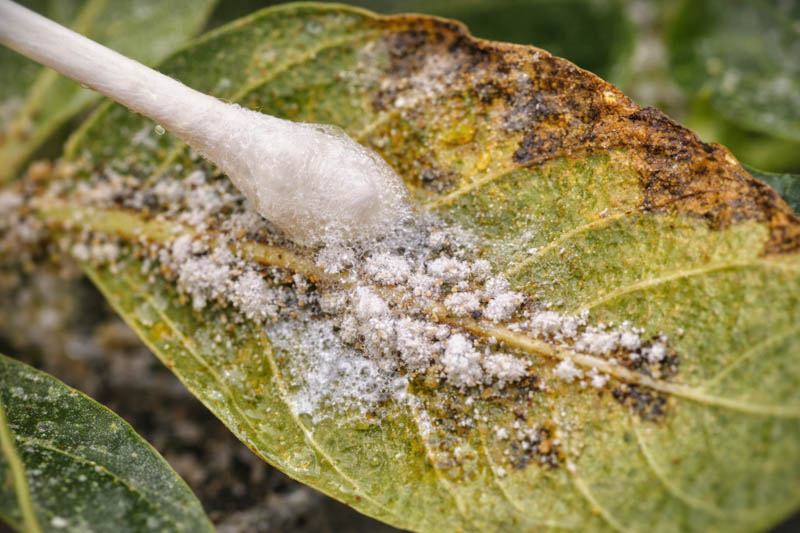
Manual removal is the fastest way to reduce an infestation, especially on houseplants where you can get close and be thorough. This is also one of the most effective answers to what kills mealy bugs quickly.
Pro tip: Alcohol works best as a targeted treatment. For some sensitive plants (especially thin-leaved varieties), spot-test first.
A strong spray of water can remove a surprising number of mealybugs, especially outdoors or in a shower/tub setup for indoor plants. Washing is most useful as a “reset” before you apply a spray.
Insecticidal soap is a classic spray for mealy bugs because it works on contact and is widely considered one of the safer options for indoor use when applied correctly.
Important: Soap works when it touches the insect. If you spray lightly and miss crevices, mealybugs survive.
Neem oil is a common answer to pesticide for mealybugs searches because it’s plant-based and widely used in integrated pest management. Neem-based products can help suppress mealybugs, but they still require thorough coverage and repeat applications.
Safety note: Avoid spraying open blooms and avoid direct hot sun immediately after application to reduce leaf stress.
Natural predators can be excellent long-term allies, especially for persistent infestations in greenhouses. Options may include ladybugs, lacewings, and parasitic wasps, though results are best when the environment supports them (and when pesticides aren’t wiping them out).
If mealybugs are concentrated on a few stems, pruning can remove a huge portion of the population quickly. Discard pruned material in a sealed bag.
Systemics can be effective in severe cases because the plant takes up the product and insects ingest it while feeding. That said, systemics are not a casual first step, especially around pollinators outdoors and edible plants.
Mealybugs are killed most reliably by direct contact treatments – 70% isopropyl alcohol dabs for visible bugs, plus thorough insecticidal soap sprays repeated on a schedule to kill newly hatched crawlers.
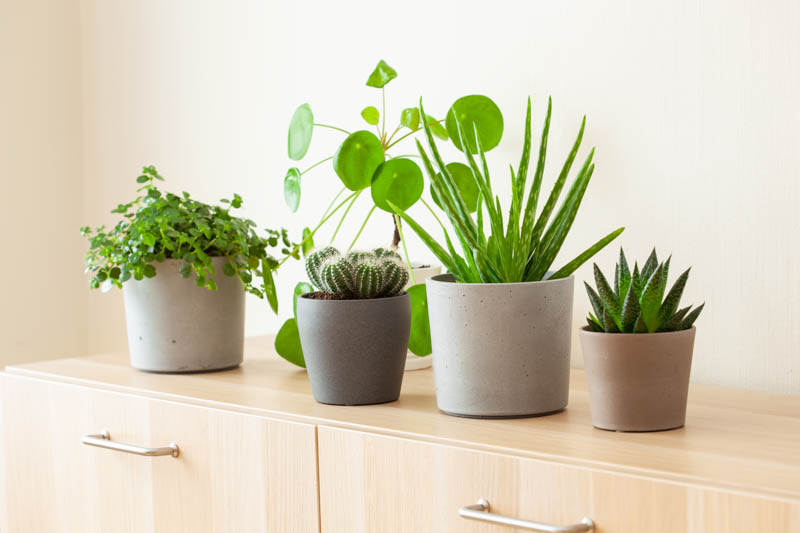
If you want a straightforward checklist to get rid of bugs on indoor plants (specifically mealybugs), here’s a proven routine that works because it matches their biology.
The most effective indoor plant bug control for mealybugs is isolation plus repetition: remove visible insects by hand, then use a contact spray like insecticidal soap every 7 – 10 days until multiple inspections show zero pests.
When people search for a spray for mealybugs, they usually want something that works quickly without harming the plant. The best spray depends on your plant type, infestation level, and how consistent you’ll be.
| Option | Best For | What to Know |
|---|---|---|
| Insecticidal soap | Most houseplants, light – moderate infestations | Kills on contact; requires thorough coverage; repeat weekly. |
| Neem oil | Ongoing management; combined approach | Can disrupt feeding/development; repeat; avoid spraying blooms and hot sun. |
| Alcohol dabs | Quick knockdown of visible clusters | Best as a targeted tool; spot-test sensitive plants first. |
| Systemic insecticide | Severe infestations on ornamentals | Use cautiously; follow label; consider pollinators and edibles. |
For most houseplants, the best “pesticide for mealybugs” is a contact approach – alcohol for spot killing plus insecticidal soap or neem sprays repeated weekly – because mealybugs hide and new crawlers hatch over time.
The goal isn’t just to treat mealybugs, it’s to keep them from coming back. Prevention is especially important for anyone with multiple houseplants, where pests can quietly hop from pot to pot.
To get rid of bugs on indoor plants, you have to match the method to the pest – mealybugs require isolation, physical removal of cottony clusters, and repeated contact sprays because a single treatment rarely reaches eggs and hidden crawlers.
Mealybugs are small, soft-bodied insects that feed on plant sap and appear as white, cottony clusters on stems, leaves, and roots.
Common signs include white fluffy residue, sticky honeydew on leaves, yellowing foliage, stunted growth, and ants crawling on the plant.
Yes. Mealybugs weaken plants by sucking sap and can eventually cause leaf drop, poor growth, and plant death if left untreated.
Mealybugs usually arrive on new plants, contaminated soil, pots, or gardening tools and spread easily between nearby plants.
Yes. Mealybugs spread rapidly, especially indoors, as they move between plants and reproduce quickly in warm conditions.
Yes. Some mealybugs live on roots, making infestations harder to detect until the plant shows stress symptoms.
Mealybugs commonly infest houseplants like succulents, orchids, ficus, hibiscus, citrus, and many tropical plants.
Mealybugs can be removed by dabbing them with rubbing alcohol, washing plants with soapy water, or using neem oil regularly.
Yes. Rubbing alcohol dissolves the protective coating of mealybugs and kills them on contact.
Insecticidal soap kills mealybugs on contact when it wets the insect; DIY dish-soap mixes can sometimes damage foliage, so spot-test..
Treatments should be repeated every 7–10 days until no signs of mealybugs remain, as eggs may hatch after initial treatment.
Yes. Mealybugs easily move to nearby plants, so infected plants should be isolated immediately.
Yes. Mealybugs infest both indoor and outdoor plants, especially in warm climates.
No. Mealybugs rarely disappear without intervention and usually worsen over time.
No. Mealybugs are not harmful to humans or pets, but they are destructive to plants.
Directly applying rubbing alcohol to visible mealybugs is the fastest and most effective immediate solution.
Yes, if treated early and consistently, many plants recover fully from mealybug infestations.
Prevent mealybugs by inspecting new plants, cleaning leaves regularly, avoiding over-fertilizing, and maintaining good airflow.
The key to mealybugs control is consistency: isolate the plant, physically remove cottony clusters, and repeat contact sprays every 7 – 10 days long enough to outlast eggs and crawlers.
References
Updated: February 2026 • Reviewed by Gardenia Editors
Scot Nelson, Katja Schulz, David Short, Flickr
Create a membership account to save your garden designs and to view them on any device.
Becoming a contributing member of Gardenia is easy and can be done in just a few minutes. If you provide us with your name, email address and the payment of a modest $25 annual membership fee, you will become a full member, enabling you to design and save up to 25 of your garden design ideas.
Join now and start creating your dream garden!
Create a membership account to save your garden designs and to view them on any device.
Becoming a contributing member of Gardenia is easy and can be done in just a few minutes. If you provide us with your name, email address and the payment of a modest $25 annual membership fee, you will become a full member, enabling you to design and save up to 25 of your garden design ideas.
Join now and start creating your dream garden!