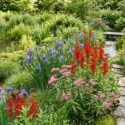
Bring romance to your garden with vivid pink Dahlia 'Fascination', lavender-blue New York Asters, and airy purple Tall Verbena. These flowering perennials create a beautiful, pollinator-friendly border, with striking bronze foliage, delicate daisy-like flowers, and blooms from summer through autumn, adding color and movement to sunny cottage gardens.
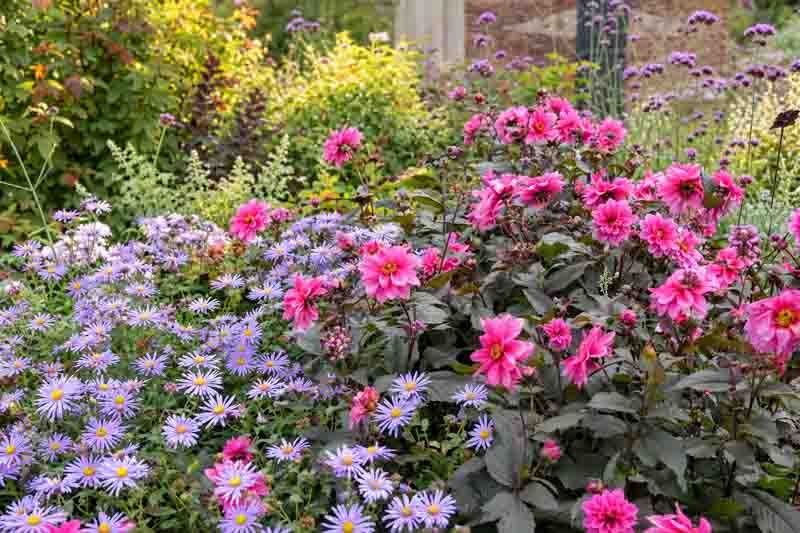


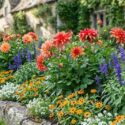
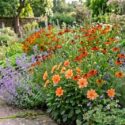
Imagine stepping into a garden overflowing with vivid pink dahlias, delicate lavender-blue daisies, and airy purple flowerheads dancing above the border. Dark bronze foliage adds depth, while softer flowers weave between the taller stems. This romantic planting celebrates the beauty of summer, with generous blooms and contrasting textures creating a colorful display from midsummer well into autumn.
Three plants create the combination: Dahlia ‘Fascination’, Symphyotrichum novi-belgii (New York Aster), and Verbena bonariensis (Tall Verbena). Together, their contrasting flower shapes, overlapping bloom periods, and graceful growth habits create a lively, pollinator-friendly garden with an informal, naturalistic character.
Main plants used: Dahlia ‘Fascination’, Symphyotrichum novi-belgii, and Verbena bonariensis.
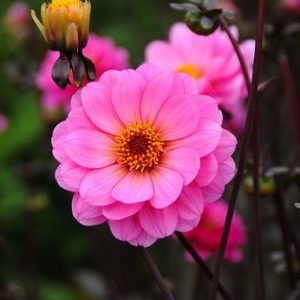
The combination of vibrant pink dahlias and soft lavender-blue asters gives this border its romantic character. Dahlia ‘Fascination’ produces striking, semi-double rose-pink flowers with golden centers above dark bronze foliage. Flowering from midsummer until frost, its open-centered blooms attract pollinating insects, while the dark leaves provide a beautiful contrast even between flowering flushes.
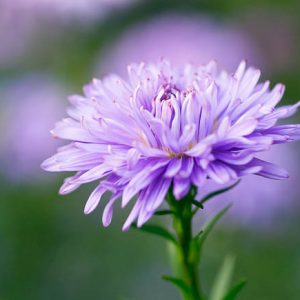
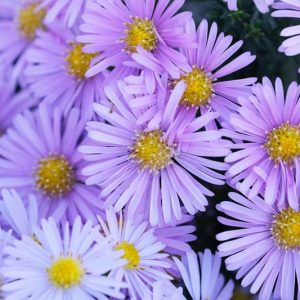
Symphyotrichum novi-belgii, commonly known as New York Aster, contributes masses of small, daisy-like flowers with golden-yellow centers. Lavender-blue selections create a softer foreground beneath the bolder dahlias. Depending on the cultivar and climate, flowering can begin in midsummer, with the main display often continuing through late summer and autumn. These asters provide valuable nectar and pollen for bees, butterflies, and other late-season pollinators.
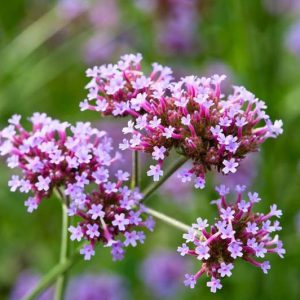
Rising above them, Verbena bonariensis adds tall, slender stems topped with small clusters of violet-purple flowers from summer into autumn. Its open, transparent habit allows the dahlias and asters to remain visible, while the flowers attract butterflies, bees, and other pollinators.
The three plants complement one another beautifully throughout the season: Dahlias provide vivid color and dark foliage, asters create generous flowering drifts, and Verbena adds height and movement without making the planting feel heavy.
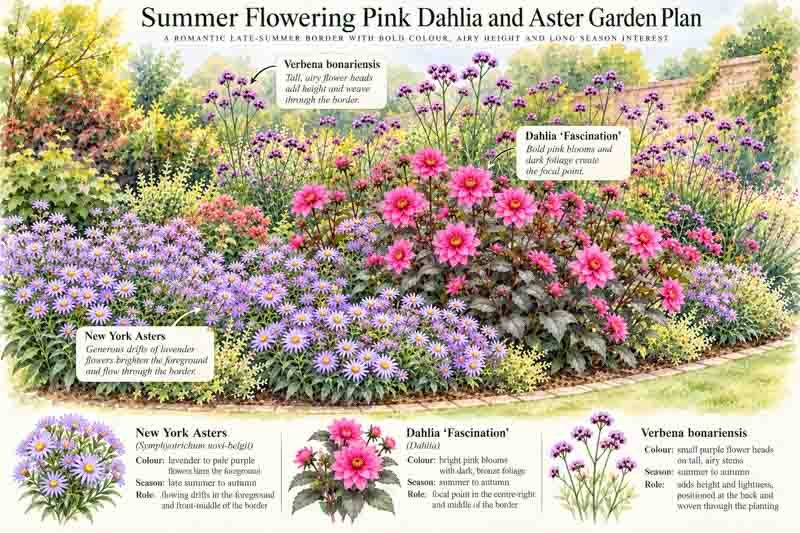
Create a romantic, long-flowering summer border with vibrant pink dahlias, generous drifts of lavender-blue asters, and airy purple Verbena flowerheads, combining bold color and delicate movement from midsummer through autumn.
Approximate visual proportions, not exact plant quantities.
Position Dahlia ‘Fascination’ in repeated groups through the middle of the border, allowing its pink flowers and dark foliage to become the focal points. Surround the dahlias with generous drifts of lavender-blue New York Asters, bringing compact selections toward the foreground. Weave Verbena bonariensis through the middle and rear, where its tall, delicate stems can rise above the other flowers without blocking the view. Repeat the three plants in loose, informal groups rather than rigid rows.
By midsummer, Dahlia ‘Fascination’ begins producing its vivid pink flowers, while Verbena bonariensis adds airy violet-purple flowerheads above the planting. Early-flowering selections of New York Aster may also begin opening their lavender-blue daisies during midsummer. As the season progresses, the asters become increasingly abundant, creating a beautiful contrast with the pink dahlias and purple Verbena. The overlapping flowers provide a generous display through late summer and autumn, often continuing until frost.
| Hardiness |
7 - 8 |
|---|---|
| Heat Zones |
7 - 8 |
| Climate Zones | 8, 9, 10, 12, 13, 14, 15, 16, 17, 18, 19, 20, 21, 22, 23, 24 |
| Exposure | Full Sun |
| Season of Interest | Summer (Mid, Late), Fall |
| Maintenance | Average |
| Water Needs | Average |
| Soil Type | Clay, Loam, Sand |
| Soil pH | Acid, Neutral, Alkaline |
| Soil Drainage | Moist but Well-Drained |
| Characteristics | Cut Flowers, Showy |
| Tolerances | Clay Soil |
| Attracts | Bees, Butterflies, Hummingbirds, Birds |
| Landscaping Ideas | Beds And Borders |
| Garden Styles | Butterfly Garden, Informal and Cottage, Pollinator Garden |


| Hardiness |
7 - 8 |
|---|---|
| Heat Zones |
7 - 8 |
| Climate Zones | 8, 9, 10, 12, 13, 14, 15, 16, 17, 18, 19, 20, 21, 22, 23, 24 |
| Exposure | Full Sun |
| Season of Interest | Summer (Mid, Late), Fall |
| Maintenance | Average |
| Water Needs | Average |
| Soil Type | Clay, Loam, Sand |
| Soil pH | Acid, Neutral, Alkaline |
| Soil Drainage | Moist but Well-Drained |
| Characteristics | Cut Flowers, Showy |
| Tolerances | Clay Soil |
| Attracts | Bees, Butterflies, Hummingbirds, Birds |
| Landscaping Ideas | Beds And Borders |
| Garden Styles | Butterfly Garden, Informal and Cottage, Pollinator Garden |
Recreate this garden. Specify the percentages you would like to have of each plant and input the dimensions of your garden space.We'll give you a shopping list so you know how many plants you need.
| Plant | Quantity | |
|---|---|---|
| Dahlia 'Fascination' | N/A | Buy Plants |
| Aster novi-belgii (New York Aster) | N/A | Buy Plants |
| Verbena bonariensis (Purpletop Vervain) | N/A | Buy Plants |
Create a membership account to save your garden designs and to view them on any device.
Becoming a contributing member of Gardenia is easy and can be done in just a few minutes. If you provide us with your name, email address and the payment of a modest $25 annual membership fee, you will become a full member, enabling you to design and save up to 25 of your garden design ideas.
Join now and start creating your dream garden!