Woodland Gardens
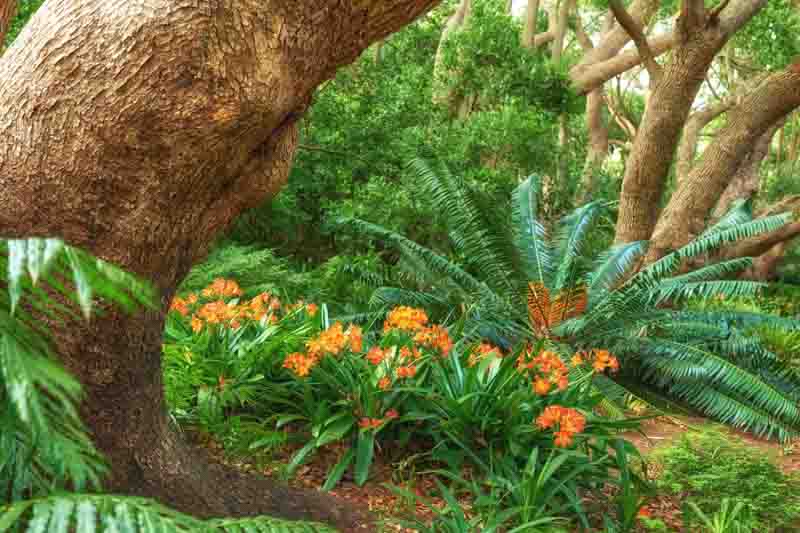
A woodland garden can turn a shady corner into one of the most atmospheric parts of the landscape. The key is to work with the site rather than against it, using layered planting, winding paths, textured foliage, flowering shrubs, woodland perennials, ferns, ground covers, and wildflowers to create a garden that feels natural, calm, and established.
The best woodland garden designs are not simply collections of shade plants. They combine structure, repetition, seasonal interest, and contrasting foliage so the garden remains attractive even when little is in bloom. Whether you are planting beneath mature trees or creating a woodland-inspired border from scratch, start with the light, soil, and moisture you already have.
Create Layers for a Natural Woodland Look
Woodland gardens look convincing because plants occupy different levels. Use small trees and tall shrubs as the upper layer, medium shrubs and perennials through the middle, and ferns, bulbs, ground covers, and low-growing plants beneath them.
Repeat favorite plants in loose groups rather than spacing everything evenly. This creates depth and a more natural rhythm. Gardenia’s shade garden design guide offers more ideas for combining plants and building attractive low-light layers.
Use Foliage, Texture, and Color to Add Interest
In a woodland garden, foliage often matters more than flowers. Mix large leaves with finely divided ferns, glossy evergreens, grassy textures, and variegated or silver foliage to keep shaded areas from looking flat.
Flowers can then provide seasonal highlights. Pale pink, white, blue, lavender, and soft yellow are especially effective in lower light. Explore Gardenia’s guide to shade plants for lush garden design and these wildflowers for full shade.
Match Your Design to the Type of Shade
A successful woodland design begins with understanding the light. Dappled shade beneath deciduous trees offers more planting options than dense shade beneath evergreens or buildings. Dry shade beneath mature trees is another distinct challenge because plants must compete with established roots for moisture.
If your soil is naturally acidic, consider these shade- and acid-loving plants for woodland gardens. Choosing plants that already suit the site’s conditions is usually more successful than repeatedly trying to alter an unsuitable location.
Build a Woodland Garden for Your USDA Zone
Your climate will determine which shrubs and perennials can provide the structure and seasonal interest you want. In USDA Zone 6, explore these Zone 6 shade shrubs and Zone 6 woodland perennials.
Gardeners in Zone 7 can combine these Zone 7 shade shrubs with Zone 7 shade perennials. For warmer Zone 8 landscapes, see the best Zone 8 shade shrubs and Zone 8 woodland perennials.
Keep the Garden Natural – Without Letting It Look Messy
The relaxed character of a woodland garden does not mean abandoning structure. Repetition, defined paths, a few strong shrubs, and clear planting groups keep the design readable.
A curving gravel or bark path, stepping stones, a bench, or a simple birdbath can make the space more inviting without making it feel formal. Let plants soften the edges, and allow fallen leaves to remain where practical as natural mulch, while removing invasive seedlings, overcrowded growth, and plants that overwhelm their neighbors.
The goal is a garden that feels as though it has evolved naturally over time – while still being deliberately designed.