White-Striped Cretan Brake, Silver Brake Fern, Pteris albolineata

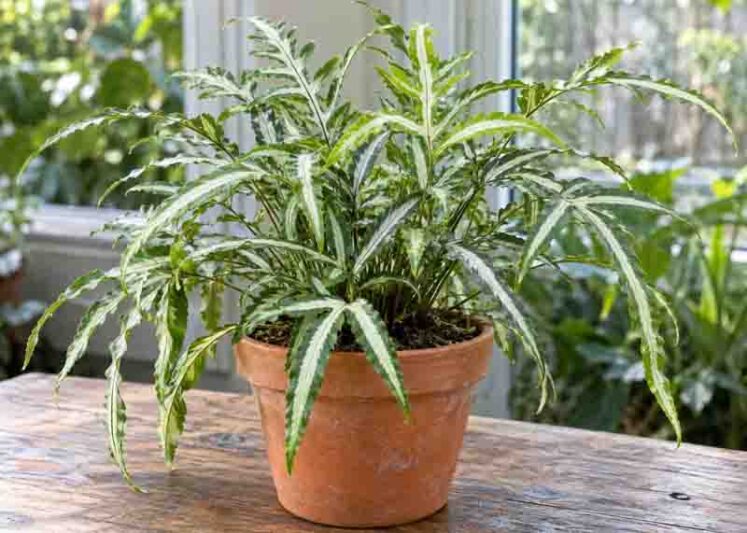


With creamy-white stripes running along its slender green leaflets, Pteris cretica var. albolineata has a freshness that few houseplants can match. Its graceful fronds rise upright before arching outward, bringing light and texture to a shaded windowsill, bright bathroom, or sheltered patio.
Known as White-Striped Cretan Brake, this evergreen fern is attractive without being demanding, provided its roots stay evenly moist and its delicate foliage is protected from harsh sunlight. It is especially effective beside solid green plants, where the pale stripes make a striking contrast.
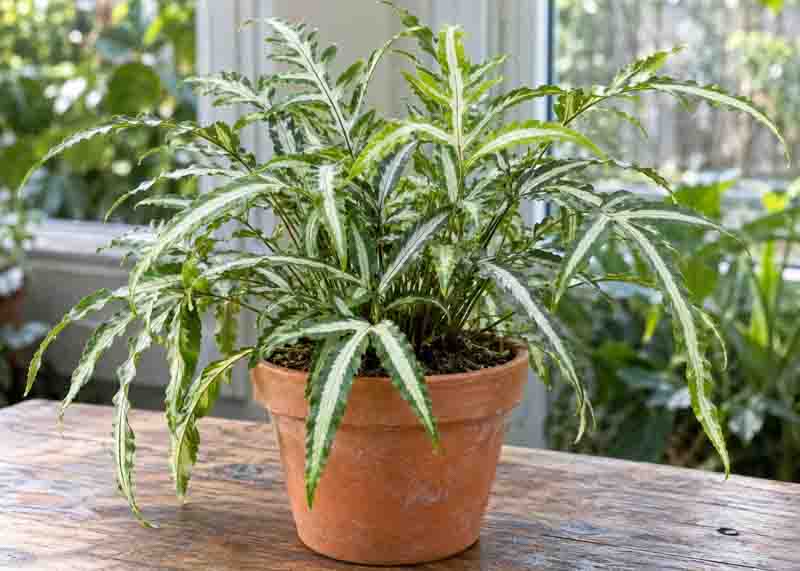
Summary: Elegant evergreen fern with narrow green leaflets marked by broad creamy-white central stripes.
Use: Excellent for houseplant collections, bright bathrooms, shaded patios, and conservatories.
Highlight: Distinctive white-centered foliage that brings contrast to shady planting schemes.
Botanical interest: A variegated form of Cretan Brake, also encountered under the name Pteris albolineata.
| Botanical Name | Pteris cretica var. albolineata |
|---|---|
| Alternative Name | Pteris albolineata; sometimes sold as Pteris cretica ‘Albolineata’ |
| Family | Pteridaceae |
| Common Names | White-Striped Cretan Brake, Variegated Cretan Brake, Ribbon Fern |
| Origin | Japan, South Korea, and Taiwan |
| Plant Type and Habit | Evergreen perennial fern; clump-forming, upright to arching |
| Hardiness | USDA Zones 9-12; reliably winter-hardy in frost-free Zones 10-12. RHS H1C |
| Size | 1-2 ft. tall and wide (30-60 cm), depending on growing conditions |
| Exposure | Bright indirect light indoors; partial to full shade outdoors |
| Soil | Humus-rich, evenly moist but well-drained; neutral to alkaline conditions tolerated |
| Foliage | Long, narrow green pinnae with broad creamy-white central stripes |
| Flowers | None; reproduces by spores |
| Pet Safety | No verified variety-specific ASPCA toxicity classification |
This white-striped form belongs to Pteris cretica, the Cretan Brake Fern. Missouri Botanical Garden recognizes the varietal name P. cretica var. albolineata, while RHS also records the horticultural synonym Pteris albolineata. The variety is associated with East Asia, although the species has a much wider distribution.
Fronds emerge from a short rhizome, forming a neat, slowly expanding clump. They stand upright when young and arch gracefully with age. The plant has a mature size of approximately 1-2 ft. (30-60 cm) tall and wide.
Each frond carries several pairs of long, narrow pinnae with green margins and broad creamy-white centers. The simple, ribbon-like leaflets distinguish it from ferns with more finely divided, feathery foliage.
Like other true ferns, White-Striped Cretan Brake produces no flowers or seeds. Fertile fronds form spore-producing structures along their leaflet margins. These can appear as regular brown lines and should not automatically be mistaken for pests.
White-Striped Cretan Brake has earned the prestigious Award of Merit of the Royal Horticultural Society.
Missouri Botanical Garden lists USDA Zones 9-12 but identifies frost-free Zones 10-12 as reliably winter-hardy. RHS rates the plant H1C, favoring protected cultivation. Where winters are cold, grow it indoors or move shaded summer containers inside before frost. Its evergreen foliage offers year-round interest.
As a foliage fern, it produces no nectar or pollen. Detailed wildlife relationships are not well documented, although its fronds can provide limited shelter for small organisms outdoors.
Missouri Botanical Garden lists rabbit tolerance for P. cretica at species level, but the variety has not been separately assessed. Reliable deer-resistance information is limited.
This fern is not suited to prolonged drought. Its roots need regular moisture, especially in containers. Allowing the potting mix to dry completely may result in brittle leaflets and permanent brown tips.
No authoritative, variety-specific ASPCA assessment was established for Pteris cretica var. albolineata. Avoid describing it as definitively non-toxic or poisonous to cats, dogs, or horses. It is an ornamental plant, not intended for consumption.
The parent species occurs beyond parts of its native range, but an invasive classification specifically for var. albolineata has not been established here. Avoid introducing unwanted ferns into natural areas, particularly in warm climates where garden plants may naturalize.
Variegated Pteris ferns are sometimes confused in nurseries. Look at the structure of the fronds, not just their white markings.
| Fern | Foliage | Identification Clue |
|---|---|---|
| Pteris cretica var. albolineata | Green with creamy-white centers | Broad pale stripe on long, ribbon-like pinnae |
| Green-leaved Pteris cretica | Mostly green | Similar simple or forked pinnae without the broad white stripe |
| Pteris ensiformis ‘Evergemiensis’ | White-and-green variegation | More finely divided, delicate-looking fronds |
If the frond has long, relatively simple leaflets with a broad pale center, White-Striped Cretan Brake is a strong possibility. More finely divided foliage suggests Pteris ensiformis ‘Evergemiensis’. An all-green Cretan Brake has similar leaflet shapes but lacks the central band. Compare mature fronds rather than relying on nursery labels.
Bright indirect light is ideal indoors. An east-facing window or filtered light behind a sheer curtain works well. Outdoor plants prefer dappled to full shade. Strong direct sun can scorch the pale leaf tissue.
Use an organic-rich, evenly moist but well-drained medium. RHS lists neutral to alkaline growing conditions, while recommending chalk-free outdoor soil enriched with leaf mould or a glasshouse mix containing limestone chips. These are alternative cultivation recommendations, not instructions to add lime to every pot. For houseplants, good drainage and reliable moisture matter most. Water before the root ball dries completely.
Temperatures around 60-75°F (16-24°C) and humid air suit indoor growth. Keep the fern away from heaters, cold drafts, and drying air-conditioning vents. A humidifier can help in dry rooms, provided air circulation remains adequate.
Healthy creamy-white stripes are uniform and follow the center of each leaflet. Irregular brown patches on the brightest side of the plant suggest sunlight damage. Before changing fertilizer or watering, check where the damaged fronds face.
Choose a container with drainage holes and fresh, airy potting mix. Repot in spring when roots become crowded, keeping the rhizome at its previous depth. Avoid excessively large pots that retain moisture around a small root system.
Remove brown or damaged fronds at their bases. Fertilize lightly during active growth with a diluted balanced houseplant fertilizer. Reduce watering slightly during slower winter growth without allowing the roots to dry out.
Divide healthy rhizomes in spring, ensuring each section has roots and growing points. Spores can also be sown when ripe, although resulting plants may not faithfully reproduce the same variegation.
Start by examining the location and texture of the damage. A scorched white stripe, a dry frond tip, and a regular row of spores require very different responses.
| What You See | Likely Cause | Check First |
|---|---|---|
| Brown patches in white stripes | Sun scorch | Direct light exposure |
| Dry, crispy tips | Low moisture or dry air | Soil and humidity |
| Yellowing, limp fronds | Waterlogged roots | Drainage and root condition |
| Sticky leaves, raised bumps | Scale insects | Stalks and leaf undersides |
| Regular brown lines at margins | Normal sori | Pattern and position |
Aphids, mealybugs, scale insects, rust, and leaf spots are possible problems.
Regular brown marginal lines: Usually examine for normal spore-bearing sori first.
Scattered raised bumps or sticky residue: Investigate scale insects.
Dry, irregular brown patches: Check sunlight, moisture, and humidity before treating for disease.
Pair White-Striped Cretan Brake with green ferns that enjoy filtered light and moisture-retentive, well-drained growing media. Separate containers accommodate differences in size and soil preferences.
Place White-Striped Cretan Brake in front of a larger Bird’s Nest Fern. The broad, solid green leaves emphasize the white-centered pinnae without creating a busy display. Keep the pots separate and allow room for their different mature sizes.
These names are used for the same white-striped horticultural fern. Missouri Botanical Garden uses Pteris cretica var. albolineata, while RHS lists Pteris albolineata among its synonyms.
Missouri Botanical Garden lists USDA Zones 9-12 but describes frost-free Zones 10-12 as reliably winter-hardy. Elsewhere, grow it as a houseplant or move containers indoors before frost.
Direct sunlight is one possible cause, particularly if exposed fronds develop irregular brown patches. Dry soil, low humidity, and fertilizer buildup can also cause damage. Check the pattern and growing conditions.
Water regularly to maintain evenly moist but well-drained soil. Reduce watering slightly during slower winter growth, but do not allow the entire root ball to dry out.
A verified variety-specific ASPCA toxicity classification was not established. Do not assume the plant is edible or definitively non-toxic, and discourage pets from chewing it.
Royal Horticultural Society – Pteris albolineata: Synonyms, Hardiness, and Cultivation.
Royal Horticultural Society – How to Grow Ferns.
Updated: October 2026
| Hardiness |
9 - 12 |
|---|---|
| Plant Type | Houseplants, Ferns |
| Plant Family | Pteridaceae |
| Common names | Fern |
| Exposure | Partial Sun, Shade |
| Season of Interest | Spring (Early, Mid, Late), Summer (Early, Mid, Late), Fall, Winter |
| Height | 1' - 2' (30cm - 60cm) |
| Spread | 1' - 2' (30cm - 60cm) |
| Spacing | 12" - 24" (30cm - 60cm) |
| Maintenance | Low |
| Water Needs | Average |
| Soil Type | Chalk, Loam, Sand |
| Soil pH | Alkaline, Neutral |
| Soil Drainage | Moist but Well-Drained |
| Characteristics | Showy, Evergreen, Plant of Merit |
| Garden Uses | Hanging Baskets, Patio And Containers |
| Garden Styles | Woodland Garden |
| Toxic to Humans | No known toxicity |
| Toxic to Cats | No known toxicity |
| Toxic to Dogs | No known toxicity |
| Toxic to Horses | No known toxicity |


| Hardiness |
9 - 12 |
|---|---|
| Plant Type | Houseplants, Ferns |
| Plant Family | Pteridaceae |
| Common names | Fern |
| Exposure | Partial Sun, Shade |
| Season of Interest | Spring (Early, Mid, Late), Summer (Early, Mid, Late), Fall, Winter |
| Height | 1' - 2' (30cm - 60cm) |
| Spread | 1' - 2' (30cm - 60cm) |
| Spacing | 12" - 24" (30cm - 60cm) |
| Maintenance | Low |
| Water Needs | Average |
| Soil Type | Chalk, Loam, Sand |
| Soil pH | Alkaline, Neutral |
| Soil Drainage | Moist but Well-Drained |
| Characteristics | Showy, Evergreen, Plant of Merit |
| Garden Uses | Hanging Baskets, Patio And Containers |
| Garden Styles | Woodland Garden |
| Toxic to Humans | No known toxicity |
| Toxic to Cats | No known toxicity |
| Toxic to Dogs | No known toxicity |
| Toxic to Horses | No known toxicity |
How many Pteris cretica var. albolineata (White-Striped Cretan Brake) do I need for my garden?
| Plant | Quantity | |
|---|---|---|
| Pteris cretica var. albolineata (White-Striped Cretan Brake) | N/A | Buy Plants |
Create a membership account to save your garden designs and to view them on any device.
Becoming a contributing member of Gardenia is easy and can be done in just a few minutes. If you provide us with your name, email address and the payment of a modest $25 annual membership fee, you will become a full member, enabling you to design and save up to 25 of your garden design ideas.
Join now and start creating your dream garden!