Ground Cherry
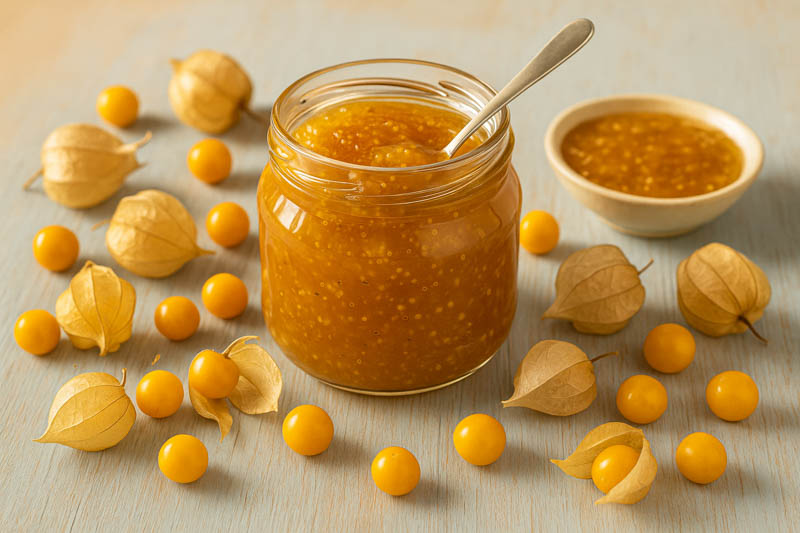
Meet the Physalis clan’s sweetest snack: the ground cherry! These bite-size, sun-gold berries grow inside their own paper lanterns, making harvest feel like a treasure hunt. Close cousins include cape gooseberry (P. peruviana), Chinese lantern (P. alkekengi), tomatillo (P. philadelphica), and ground cherry (P. pruinosa).
Presents you can eat: Each berry inflates a papery husk (a “lantern”) that protects it from pests and sun—no gift wrap needed.
Built-in ripeness alarm: When the husk turns tan and papery, the berry often drops. Just stroll and scoop—nature’s snack dispenser.
Flavor fireworks: Expect notes of pineapple, vanilla, honey, and caramel with less acidity than cape gooseberry. Kids call them “garden candy.”
Kitchen chameleons: Toss into salads, fold into muffins, simmer into jam or chutney, or dehydrate halves into tangy “raisins.”
Little space, big yield: Compact, mounding plants thrive in beds or 5–10 gal containers and can produce dozens (even hundreds) of berries.
Self-reliant fruiting: Ground cherries are self-fertile; a single plant can set fruit—though bees boost both size and numbers.
Storage superpower: Keep berries in the husk in a cool, dry spot for weeks. Husked fruit chills well for short stints in the fridge.
Know your cousins: Tomatillos wear similar lanterns but stay savory, starring in salsa verde. Chinese lantern is mostly ornamental—don’t snack on those pods.
Sun lovers, easy keepers: Full sun and well-drained soil are the ticket. A low cage keeps fruit clean and picking effortless.
Eat them ripe only: Enjoy fully golden berries after removing husks; leaves, husks, and unripe green fruit are not edible.
Tip: Check under plants daily in peak season—your future jam is probably hiding in plain sight.