Cape Gooseberry, Goldenberry, Peruvian Groundcherry, Poha, Husk Cherry, Strawberry Tomato, Ground Cherry, Gooseberry Tomato, Peruvian Cherry, Peruvian Tomato, Love Apple, Wild Gooseberry, Winter Cherry, Bladderberry, Barbados Gooseberry, Harankash, Physalis Edulis, Physalis Tomentosa, Physalis Puberula, Physalis Latifolia.
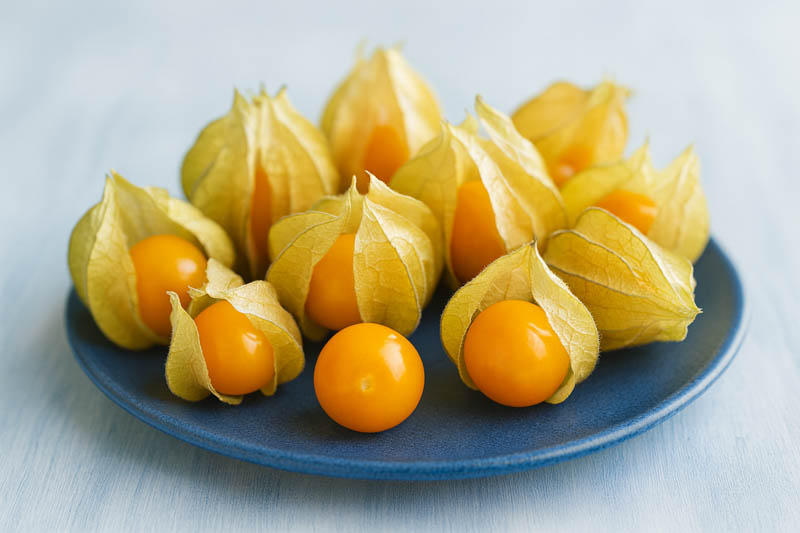

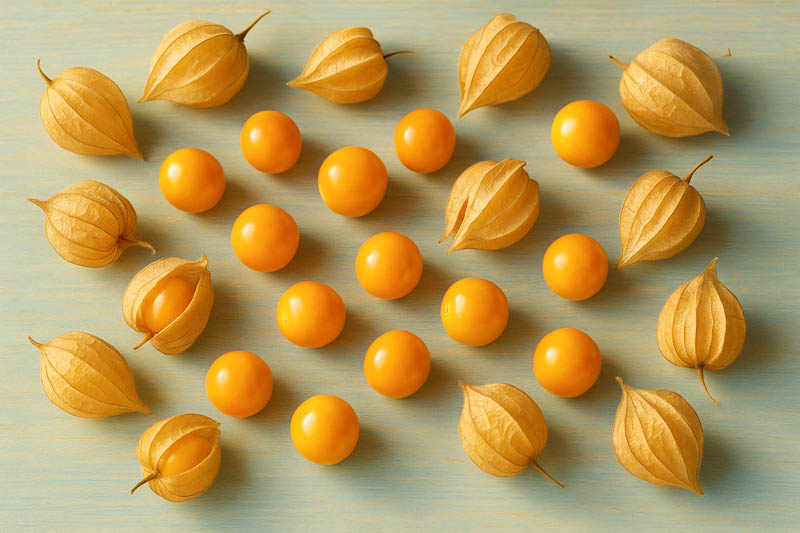


Summary: A sun-loving fruiting Physalis with paper lantern husks that protect a sweet-tart golden berry. Easy to grow, generous yield, long season.
Taste: Tropical notes of pineapple, mango, and tomato with a citrusy snap.
Use: Fresh snacking, jams, pies, compotes, salads, chutneys, dehydrated snacks, chocolate-dipped treats.
Safety: Eat ripe fruit only. Husks, leaves, and unripe green berries are not edible.
| Botanical Name | Physalis peruviana |
|---|---|
| Family | Solanaceae – nightshade family |
| Common Names | Cape gooseberry, goldenberry, Peruvian groundcherry, poha berry |
| Native Range | Andean highlands of western South America (Peru, Ecuador, Colombia, Chile); now grown widely in warm-temperate and subtropical regions |
| Plant Type & Habit | Tender perennial (subshrub) grown as an annual in cool climates; bushy, branching, naturally self-supporting |
| Hardiness (USDA) | Perennial in Zones 10–12 (sometimes 9b with protection); grown as a warm-season annual elsewhere |
| Size | 3–5 ft tall and wide (90–150 cm); larger with rich soil and long seasons |
| Sun & Exposure | Full sun for best flavor and yield; light afternoon shade tolerated in hot summers |
| Soil | Well-drained, fertile soil with compost; pH 6.0–7.0 ideal |
| Bloom & Fruit | Yellow flowers with dark spots in summer; each enclosed by a papery husk that turns tan as berries ripen |
| Days to Maturity | ~75–100 days from transplant to first pick; continues setting until frost |
| Yield | Often 2–7 lb (1–3 kg) per plant with steady moisture and sun |
| Primary Uses | Fresh fruit, baking, preserves, salsas, chutneys, drying, garnishes |
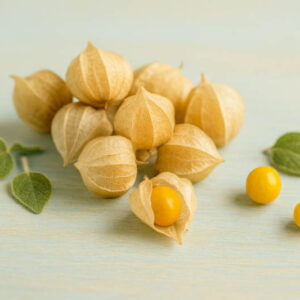
Imagine a fruit that unwraps itself. Each golden globe sits inside a paper lantern that dries to straw, then loosens to reveal a candy-bright berry with tropical tang. That is the charm of the cape gooseberry. Grow a couple of plants, and you will snack in the garden. Then, you will still have bowls for jam and tarts.
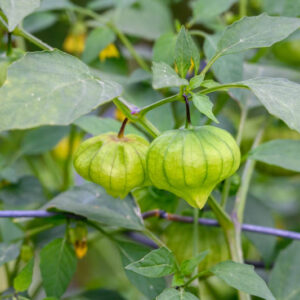
Physalis peruviana is a tender perennial subshrub (grown as an annual in cool regions) with heart-shaped leaves and nodding yellow flowers marked by small chocolate speckles inside the petals. After pollination, a papery husk forms and inflates around the developing fruit. Ripe berries turn a rich golden orange and taste like pineapple met tomato in a sunlit orchard.
Cape gooseberry hails from the Andean highlands of western South America—Peru, Ecuador, Colombia, and Chile. It thrives in mild, elevated climates with warm days and cool nights, which is why it performs so well in coastal gardens and warm-temperate areas with gentle summers.
Expect a bush 3–5 ft (90–150 cm) tall with an equal spread. In long growing seasons and fertile beds, plants can become shrub-like. Stems arch under the weight of fruiting clusters, so a tomato cage or a few bamboo stakes will keep berries clean and easy to pick.
Here’s when the show starts and how to know they’re ready. About 6–8 weeks after transplant, you will see nodding yellow blooms roughly 0.4–0.8 in (1–2 cm) wide, repeating in waves until frost. After pollination, the calyx puffs into a 1.2–2 in (3–5 cm) paper lantern. Inside, berries swell to 0.6–1.0 in (1.5–2.5 cm), ripen golden-orange and aromatic, and often twist free with a gentle turn. From flower to ripe fruit usually takes ~6–10 weeks under warm, steady conditions.
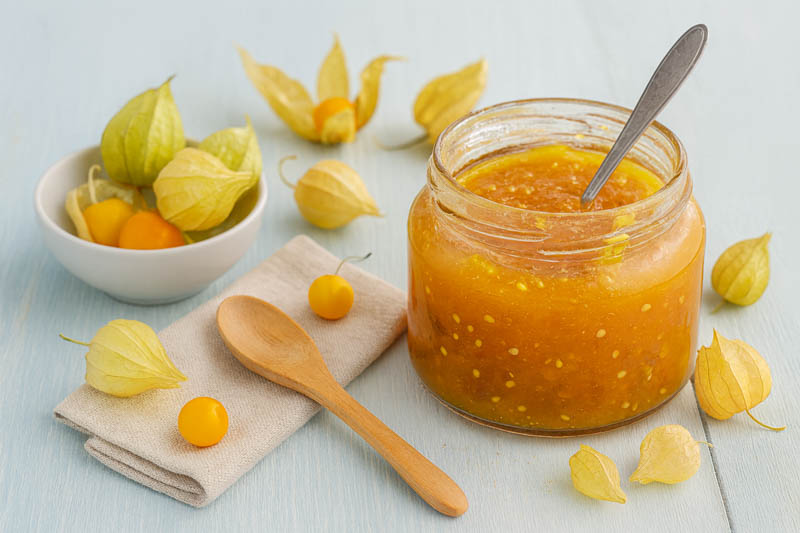
Fresh berries burst with sweet-tart juice. Toss a handful into fruit salads, salsa for grilled fish, or green salads with goat cheese and toasted seeds. Simmer with sugar and lemon for jam, or cook with onion, vinegar, and warm spices for a glossy chutney that flatters roast chicken. Dehydrate halves for a chewy snack. Dip whole berries in chocolate for party-worthy treats with zero fuss.
| Edibility | Eat only fully ripe, de-husked berries. Husks, leaves, and green, unripe berries are not edible. |
|---|---|
| Toxic Principle | Solanaceous glycoalkaloids occur in green parts and unripe fruit. |
| Symptoms if non-edible parts are eaten | Gastrointestinal upset and related signs. Treat the plant like tomatoes or potatoes before ripeness—use caution. |
| Handling | Remove husks before eating. Rinse to remove any sticky film. Keep unripe fruit away from kids and pets. |
This information is educational. If ingestion of non-edible parts is suspected, seek professional advice.
Cape gooseberry is self-fertile, so a single plant can fruit. You will harvest more with two or three plants and good pollinator traffic. Plant bee-friendly companions nearby and avoid broad-spectrum sprays during bloom.
Rinse, pat dry, and pop into a saucepan with 1.5 cups sugar and zest of 1 lemon.
Stir often for 12 to 18 minutes until glossy bubbles and a light sheet from the spoon.
Stir in 2 tablespoons lemon juice. Cook 1 to 2 minutes more, then jar and chill.
Toast, yogurt, cheese boards, and thumbprint cookies all say thank you.
| Issue | Likely Cause | Quick Fix |
|---|---|---|
| Green, sticky film on berries | Natural husk residue | Rinse in warm water and dry before eating or cooking |
| Plants flop to the ground | Heavy fruit load and soft stems | Add a cage or stakes and tie branches gently |
| Slow ripening | Cool weather or too much shade | Choose the sunniest spot and use black mulch to warm soil |
It is a tender perennial that behaves like a long-season annual in cool climates. In frost-free zones, it can fruit for more than one year with light pruning.
No, it is self-fertile, although two or more plants and good pollinator activity often increase yield.
Ripe fruit is deep golden, aromatic, and slightly soft. The flavor is sweet-tart with pineapple and mango notes and a clean citrus finish.
Yes. Use a 15 to 20 liter container – 4 to 5 gallons – with rich potting mix. Stake early and water consistently for steady fruit set.
No. The husks and leaves are not edible. Remove husks and rinse berries before eating.
Updated: October 2025 • Reviewed by Garden Editors
| Hardiness |
9 - 12 |
|---|---|
| Plant Type | Perennials |
| Plant Family | Solanaceae |
| Genus | Physalis |
| Exposure | Full Sun |
| Season of Interest | Summer (Early, Mid, Late), Fall |
| Height | 3' - 5' (90cm - 150cm) |
| Spread | 3' - 5' (90cm - 150cm) |
| Spacing | 36" - 60" (90cm - 150cm) |
| Maintenance | Low, Average |
| Water Needs | Average |
| Soil Type | Loam, Sand |
| Soil pH | Acid, Alkaline, Neutral |
| Soil Drainage | Moist but Well-Drained, Well-Drained |
| Characteristics | Showy, Fruit & Berries |
| Garden Uses | Patio And Containers |
| Garden Styles | Informal and Cottage |


| Hardiness |
9 - 12 |
|---|---|
| Plant Type | Perennials |
| Plant Family | Solanaceae |
| Genus | Physalis |
| Exposure | Full Sun |
| Season of Interest | Summer (Early, Mid, Late), Fall |
| Height | 3' - 5' (90cm - 150cm) |
| Spread | 3' - 5' (90cm - 150cm) |
| Spacing | 36" - 60" (90cm - 150cm) |
| Maintenance | Low, Average |
| Water Needs | Average |
| Soil Type | Loam, Sand |
| Soil pH | Acid, Alkaline, Neutral |
| Soil Drainage | Moist but Well-Drained, Well-Drained |
| Characteristics | Showy, Fruit & Berries |
| Garden Uses | Patio And Containers |
| Garden Styles | Informal and Cottage |
How many Physalis peruviana (Cape Gooseberry) do I need for my garden?
| Plant | Quantity | |
|---|---|---|
| Physalis peruviana (Cape Gooseberry) | N/A | Buy Plants |
Create a membership account to save your garden designs and to view them on any device.
Becoming a contributing member of Gardenia is easy and can be done in just a few minutes. If you provide us with your name, email address and the payment of a modest $25 annual membership fee, you will become a full member, enabling you to design and save up to 25 of your garden design ideas.
Join now and start creating your dream garden!
Create a membership account to save your garden designs and to view them on any device.
Becoming a contributing member of Gardenia is easy and can be done in just a few minutes. If you provide us with your name, email address and the payment of a modest $25 annual membership fee, you will become a full member, enabling you to design and save up to 25 of your garden design ideas.
Join now and start creating your dream garden!