Chinese Lantern, Bladder Cherry, Japanese Lantern, Strawberry Groundcherry, Winter Cherry, Alchechengi Berry, Klabuster Cherry, Lantern Plant, Devil's Berry, Devil's Bladder, Red Nightshade, Red Winter Cherry, Strawberry Tomato, Strawberry-And-Tomato, Ground Cherry, Alkekengi Officinarum, Physalis Franchetii



Summary: A cold-hardy perennial grown for its vivid orange lantern-like calyces that dry beautifully for arrangements. Spreads fast by rhizomes, so plant with a plan.
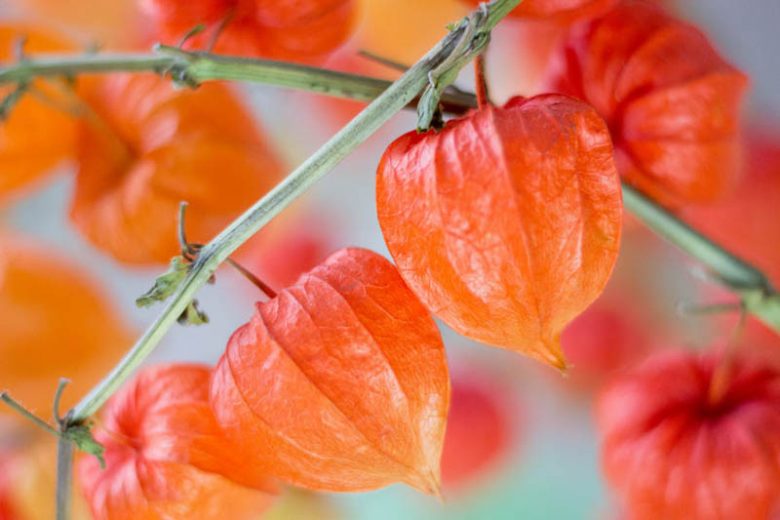
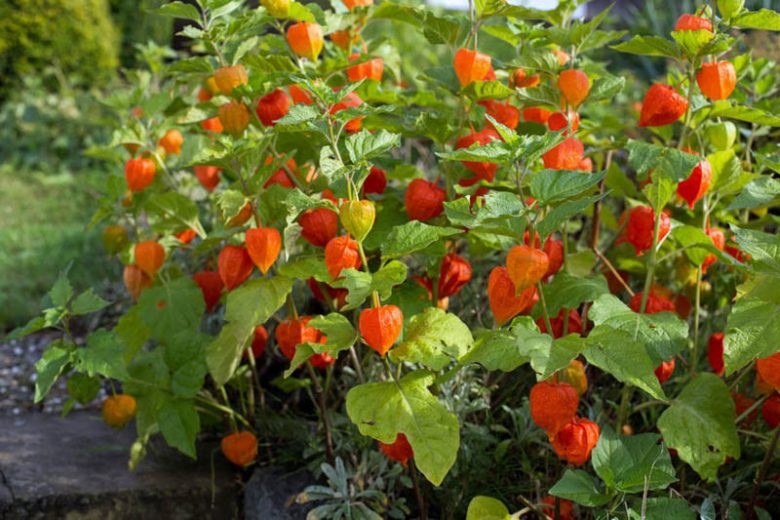
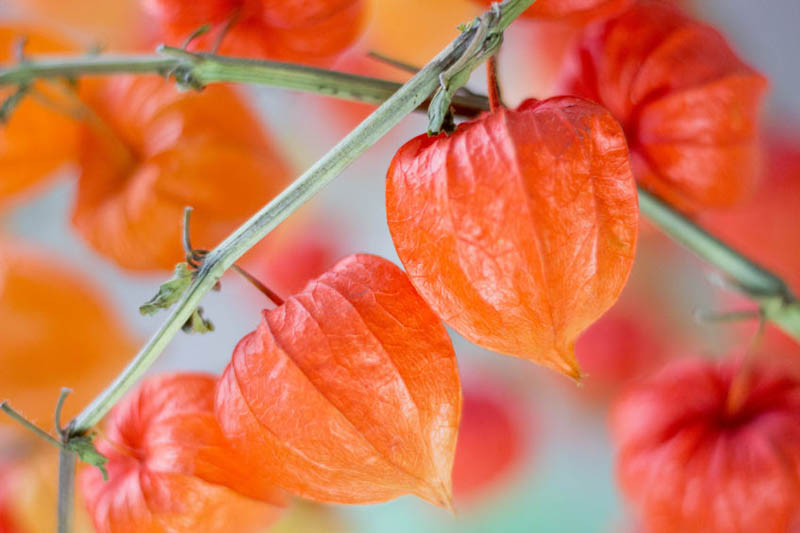
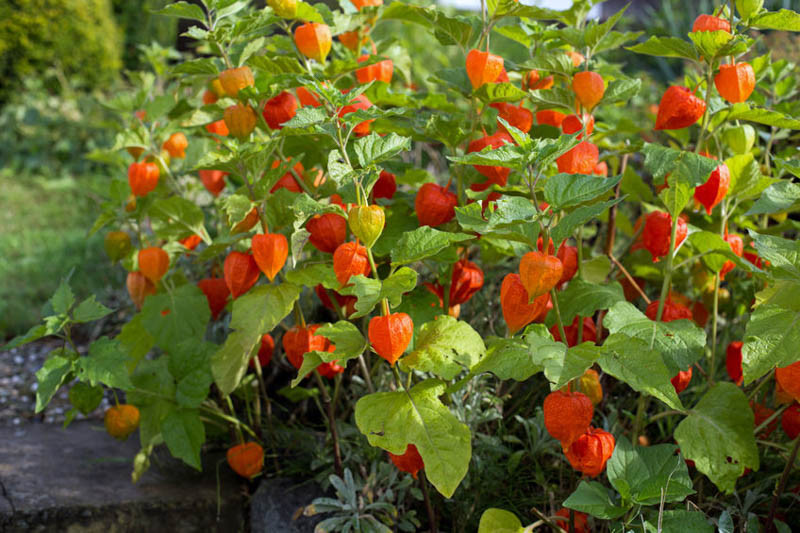
Look: Green, heart-shaped leaves, small white summer flowers, then papery orange lanterns that persist into winter.
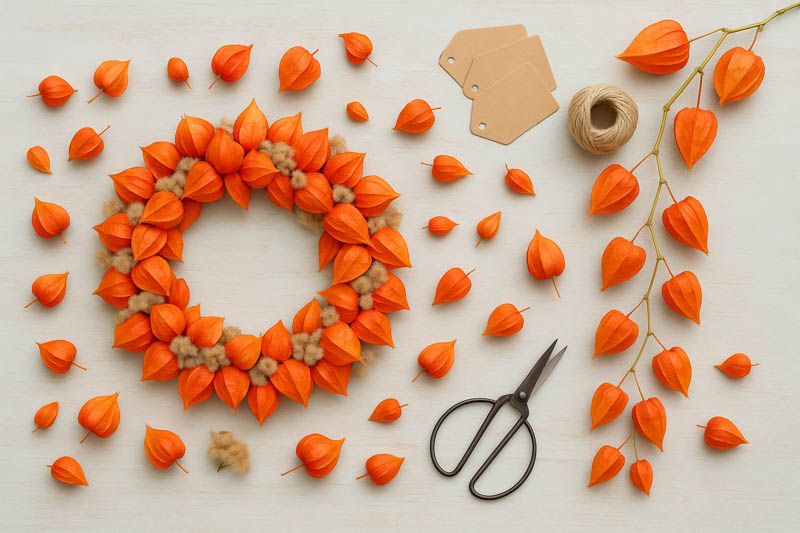
Use: Fall borders, cut stems, wreaths, dried bouquets, containers.
Safety: Harmful if eaten except for the fully ripe berry. All other parts – including the husk – are toxic. Handle with care.
| Botanical Name | Physalis alkekengi var. franchetii (syn. often sold as P. alkekengi) |
|---|---|
| Family | Solanaceae (nightshade) |
| Common Names | Chinese lantern, bladder cherry, Japanese lantern, winter cherry |
| Native Range | Native to East Asia; widely cultivated and naturalized in Europe and North America |
| Plant Type & Habit | Herbaceous perennial with running rhizomes and upright stems |
| Hardiness (USDA) | Zones 3 – 9. Very cold-tolerant. |
| Size | 2 – 3 feet tall and wide (60-90 cm), sometimes more in rich soil. |
| Sun & Exposure | Full sun for best color; light shade tolerated |
| Soil | Average, well-drained soil; adaptable to many garden soils |
| Bloom & Fruit | Small white summer flowers followed by bright orange inflated calyces in late summer – fall. |
| Invasiveness | Spreads by rhizomes and seed – can be invasive without barriers. |
| Primary Uses | Borders, cottage gardens, groundcover in contained spaces, cut & dried arrangements |
If autumn had a mascot, the Chinese lantern would be it. Those vivid orange pods glow like tiny paper lamps along the stems, then dry into delicate skeletons that look like lace. Plant a clump once, and you will have armfuls of stems for vases, wreaths, and fall table decor – as long as you keep its roots in check.
Chinese lantern is a clump-forming perennial with soft green, heart-shaped leaves and slender, upright stems. Small, white, nodding flowers bloom quietly under the foliage in early to midsummer. The real show starts later when each flower gives way to an inflated papery calyx that swells and ripens to glowing orange. These lanterns persist on the stem long after frost, and when weather and time thin the tissue, a fine network of veins remains wrapped around a bright red berry like a little filigree cage.
Physalis alkekengi var. franchetii is native to the region spanning China to Korea. This variety is adapted to temperate climates of East Asia and has been cultivated there for ornamental and medicinal purposes.
This plant grows 2 – 3 feet (60-90 cm) tall on average, forming a colony over time by sending shallow rhizomes outward. In fertile soil it can wander more quickly, popping up where you did not plan. Think of it like mint – delightful when contained, a handful when free to roam.
Color that does not quit. Easy care. Deer walk past it. Cut stems last for months in a dry vase. Even after the orange fades outdoors, those delicate skeleton lanterns glow like holiday ornaments on bare branches. It is the definition of a big seasonal impact with minimal fuss.
| Poisonous to Humans & Pets | Yes, it is harmful if eaten, except for fully ripe fruit. |
|---|---|
| Toxic Principle | Solanaceae alkaloids are present in the unripe fruit and green parts |
| Symptoms | Nausea, vomiting, diarrhea; systemic effects possible from unripe fruit/green parts. Treat as ornamental.
Pets: Also harmful if eaten. Keep stems and berries out of reach. |
| Handling | Wear gloves when cutting. Keep stems away from curious kids and pets. |
This information is for education only. If ingestion is suspected, contact a medical professional or poison control.
Chinese lanterns travel by underground stems and by seed. That is a feature for fast coverage and a bug if you like tidy borders. If you garden near natural areas, keep it contained and deadhead before seed drops. Many gardeners tuck it into a sunken pot or dedicate a confined bed near paving for easy control.
Chinese lantern is famously tough. It is often listed as disease-free, with deer browsing rarely an issue. Slugs and snails may nibble soft spring growth – a sprinkle of sharp grit or evening hand picking keeps them honest.
| Issue | Likely Cause | Quick Fix |
|---|---|---|
| Few or pale lanterns | Too much shade or poor soil | Move to a sunnier spot and feed with compost in spring |
| Plants spreading everywhere | Rhizomes and self-seeding | Install a barrier or grow in a pot; deadhead before seeds drop |
| Floppy stems | Overly rich soil or shade | Add a discreet support ring; reduce nitrogen |
Treat it as ornamental. Major gardening references list it as harmful if eaten except the fully ripe berry. If you do not have expert guidance, do not eat it.
It can. The plant spreads by rhizomes and can self-sow. Use containers, buried pots, or barriers to keep it where you want it.
Leave some stems outside over winter or soak harvested lanterns briefly in water, then gently brush away softened tissue to reveal the natural vein network. Patience is the main trick.
Yes in many regions. The foliage is generally unpalatable and is often listed as deer-resistant, which makes it useful at woodland edges.
Light shade works, but you will see the strongest color and most lanterns in full sun.
Updated: October 2025 • Reviewed by Garden Editors
| Hardiness |
3 - 9 |
|---|---|
| Heat Zones |
1 - 8 |
| Plant Type | Perennials |
| Plant Family | Solanaceae |
| Common names | Chinese Lantern |
| Exposure | Full Sun, Partial Sun |
| Season of Interest | Summer (Mid, Late), Fall, Winter |
| Height | 2' - 3' (60cm - 90cm) |
| Spread | 2' - 3' (60cm - 90cm) |
| Spacing | 36" (90cm) |
| Maintenance | Low, Average |
| Water Needs | Average |
| Soil Type | Chalk, Loam, Sand |
| Soil pH | Acid, Alkaline, Neutral |
| Soil Drainage | Moist but Well-Drained |
| Characteristics | Dried Arrangements, Showy, Fruit & Berries |
| Tolerance | Deer |
| Garden Uses | Banks And Slopes, Beds And Borders, Ground Covers, Patio And Containers |
| Garden Styles | Informal and Cottage |


| Hardiness |
3 - 9 |
|---|---|
| Heat Zones |
1 - 8 |
| Plant Type | Perennials |
| Plant Family | Solanaceae |
| Common names | Chinese Lantern |
| Exposure | Full Sun, Partial Sun |
| Season of Interest | Summer (Mid, Late), Fall, Winter |
| Height | 2' - 3' (60cm - 90cm) |
| Spread | 2' - 3' (60cm - 90cm) |
| Spacing | 36" (90cm) |
| Maintenance | Low, Average |
| Water Needs | Average |
| Soil Type | Chalk, Loam, Sand |
| Soil pH | Acid, Alkaline, Neutral |
| Soil Drainage | Moist but Well-Drained |
| Characteristics | Dried Arrangements, Showy, Fruit & Berries |
| Tolerance | Deer |
| Garden Uses | Banks And Slopes, Beds And Borders, Ground Covers, Patio And Containers |
| Garden Styles | Informal and Cottage |
How many Physalis alkekengi var. franchetii (Chinese Lantern) do I need for my garden?
| Plant | Quantity | |
|---|---|---|
| Physalis alkekengi var. franchetii (Chinese Lantern) | N/A | Buy Plants |
Create a membership account to save your garden designs and to view them on any device.
Becoming a contributing member of Gardenia is easy and can be done in just a few minutes. If you provide us with your name, email address and the payment of a modest $25 annual membership fee, you will become a full member, enabling you to design and save up to 25 of your garden design ideas.
Join now and start creating your dream garden!
Create a membership account to save your garden designs and to view them on any device.
Becoming a contributing member of Gardenia is easy and can be done in just a few minutes. If you provide us with your name, email address and the payment of a modest $25 annual membership fee, you will become a full member, enabling you to design and save up to 25 of your garden design ideas.
Join now and start creating your dream garden!