Tomatillo
Short, zippy bites of trivia about the papery husk superstar. Perfect for impressing dinner guests while your salsa verde cools.
- Not a tomato: Tomatillos are Physalis philadelphica in the nightshade family, cousins to ground cherry (P. pruinosa) and cape gooseberry (P. peruviana).
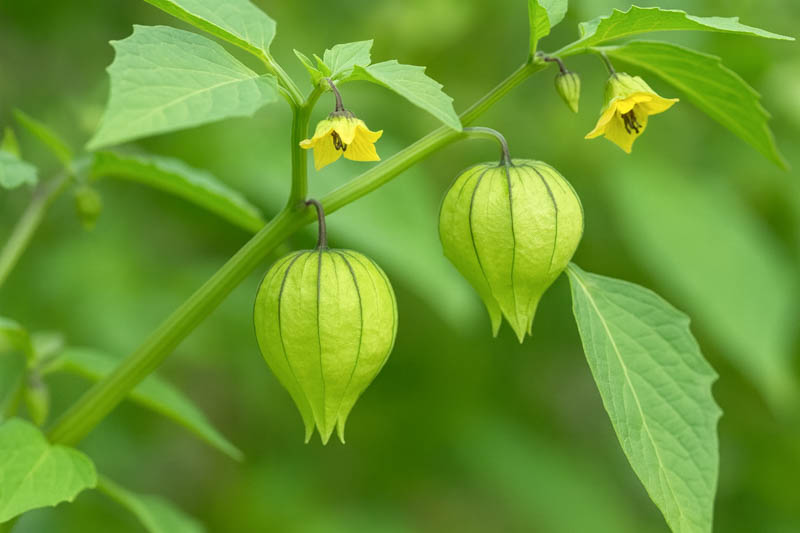
- Built-in wrapper: That lantern-like husk forms first, then the fruit swells inside it like a little paper balloon. Ornamental cousin Chinese lantern (P. alkekengi) shows off the idea with glowing orange pods.
- Sticky on purpose: A natural film coats the fruit under the husk. Rinse with warm water for a squeaky clean shine.
- Two is better than one: Many tomatillo plants set more fruit with a neighbor. Plant at least two for a reliable harvest.
- Color play: Most stay bright green when ripe, while purple varieties blush plum and pick up a gentle berry-like sweetness.
- Name game: Spanish “tomatillo” means little tomato. From Nahuatl, you may see “miltomate” for the husked kind.
- Bee magnets: Yellow flowers often show dark freckles that act like nectar road signs for pollinators.
- Harvest cue: The husk turns papery and often splits at the base. That is the eat me signal.
- Crunch vs roast: Raw tomatillos taste crisp and lemony. Roasting softens the edges and adds gentle sweetness.
- Weight check: About 8 to 10 medium tomatillos make a pound. Translation: one solid batch of salsa.
- Kitchen MVP: Salsa verde, green enchilada sauce, perky soups, and skillet sauces all start with tomatillos.
- Nutrition perk: Low-calorie, a source of vitamin C and fiber, with pectin that gives sauces a silky body.
- Support helps: Plants sprawl. A simple cage keeps fruit clean and speeds airflow for healthier leaves.
- Seed saver friendly: Scoop, rinse, and dry seeds from fully ripe fruit. Label your envelope for next spring.
- Cool storage: Keep in a breathable bag in the fridge for a week or two. Use soft ones first.
- Safety note: Eat ripe fruit only. Husks, leaves, and other green parts are not for the plate.