Phomopsis cane and leaf spot is a fungal disease affecting grapevine plants, especially during wet spring growth. It damages shoots, leaves, and fruiting canes, weakening vines and reducing harvest quality. Understanding symptoms, disease cycles, and prevention strategies helps growers protect grape crops and maintain healthy vineyards with vigorous flowering and fruit production.


Phomopsis cane and leaf spot is one of the earliest fungal diseases to appear in the grapevine growing season, often infecting vines before severe damage is obvious. It is a fungal disease of grapevines caused by Diaporthe ampelina (formerly Phomopsis viticola) that infects young shoots, leaves, canes, and sometimes fruit clusters during cool, wet spring conditions.
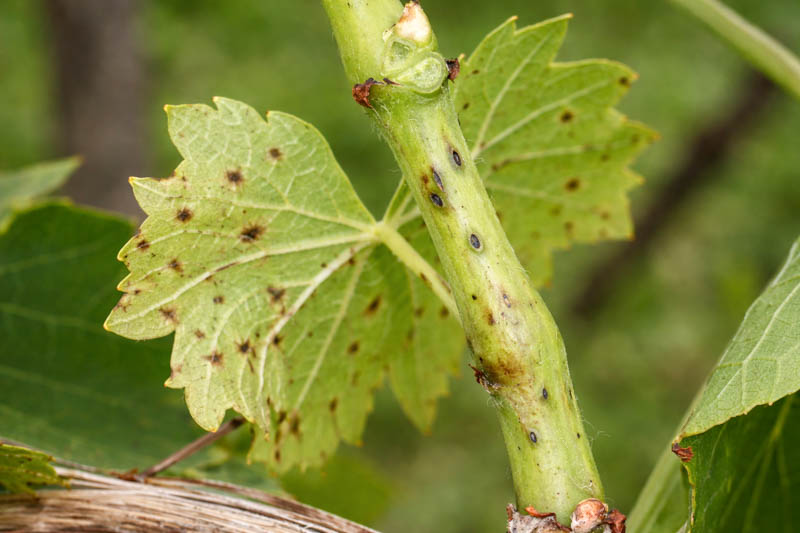
The disease is especially damaging because it attacks tender grapevine tissue early in the season, when shoots are actively expanding and highly vulnerable. Growers often first notice tiny black spots on young grape shoots or irregular lesions on leaves. As the disease progresses, these spots enlarge into elongated lesions that weaken canes, reduce vine vigor, and create entry points for other pathogens. Over time, severe infections can damage fruiting wood, lower yields, and increase the risk of winter injury.
Phomopsis cane and leaf spot is particularly problematic in vineyards that experience rainy spring weather. The fungus releases spores during rainfall events and spreads mainly through rain splash, infecting tender grapevine tissue during the earliest stages of shoot growth. Because infection starts so early, the disease can quietly reduce vine health long before symptoms become severe.
Phomopsis cane and leaf spot occurs in grape-growing regions worldwide, but it is usually most severe in areas where early-season rainfall is frequent. Regions with prolonged spring moisture provide ideal conditions for the fungus to infect young grape tissues before shoots harden and become less susceptible.
Vineyards located in cool temperate climates, coastal regions, or areas prone to repeated spring storms are especially vulnerable. Even vineyards in warmer climates may experience outbreaks when spring weather remains unusually wet.
Phomopsis cane and leaf spot is caused by the fungus Diaporthe ampelina. This pathogen survives the winter in infected grape canes, pruning debris, and dead plant tissue left in the vineyard. During spring rains, the fungus produces spores from tiny fruiting structures embedded in infected wood.
These spores spread mainly through rain splash. When raindrops strike infected cane tissue, spores are splashed onto nearby shoots, leaves, and developing grape clusters. Once spores land on young tissue, infection can occur quickly if surfaces remain wet long enough.
Young shoots are most vulnerable when they are about 1 to 5 inches long (2.5-12 cm), although infection may continue until tissues harden. As shoots mature and outer tissues thicken, susceptibility declines. Because of this narrow window of vulnerability, early-season weather patterns have a major effect on disease severity.
Understanding the disease cycle of Phomopsis cane and leaf spot is essential for effective vineyard management. The fungus survives winter in infected cane lesions, where it forms microscopic fruiting bodies. The most important early-season structures are pycnidia, which produce large numbers of conidia that are released during rain events. In some situations, sexual spores may also be produced, but rain-splashed conidia are usually the main source of early infections.
When spring rainfall occurs, spores are released and splashed onto new vine growth. Infection begins when leaves, shoots, or cluster stems remain wet for several hours. The fungus then colonizes the tissue and produces new lesions that can later develop additional fruiting bodies, allowing the disease cycle to continue during wet weather.
Although early-season infections cause the most damage, the pathogen may continue producing spores throughout the growing season whenever moisture is present. This is why vineyards with repeated spring and early summer rainfall often experience more severe disease pressure.
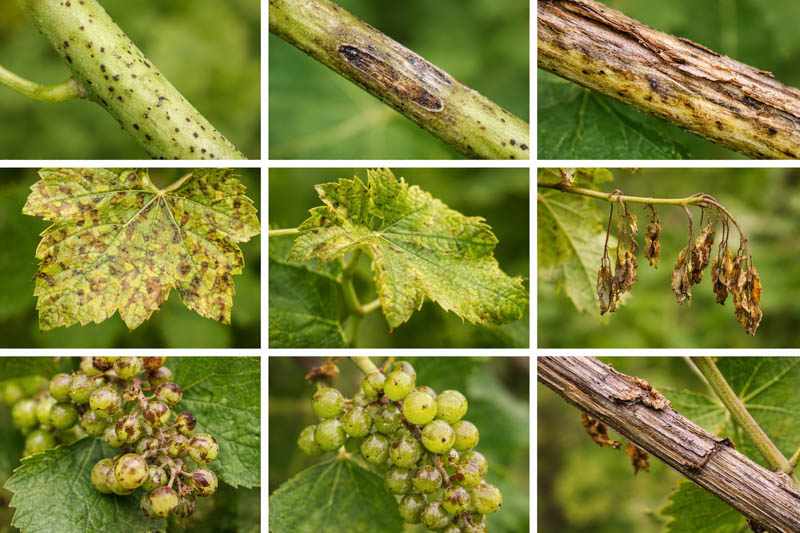
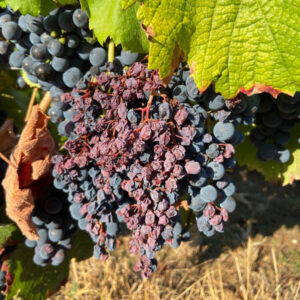
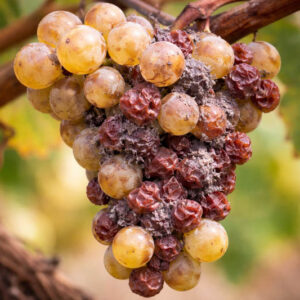
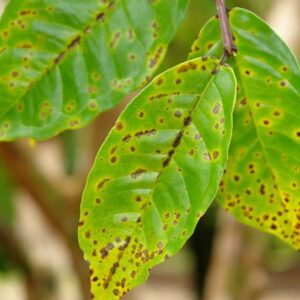
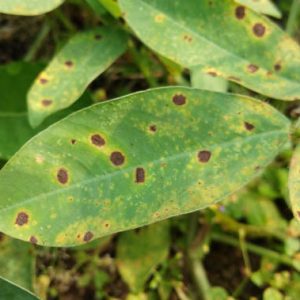
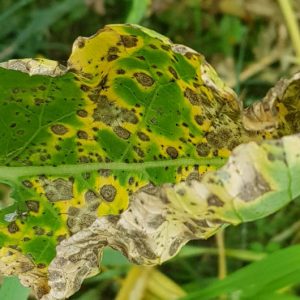
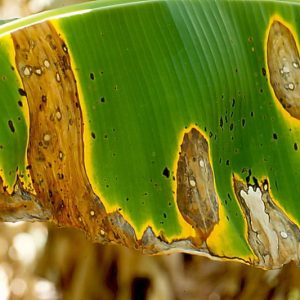
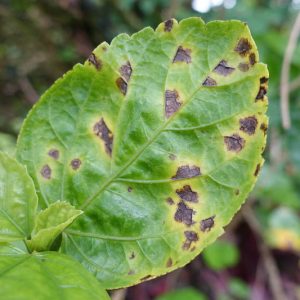
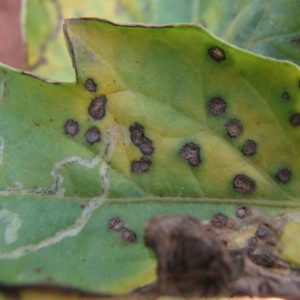
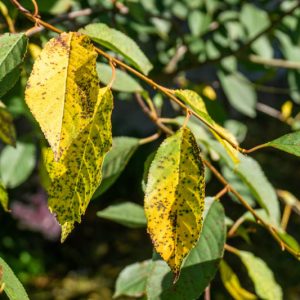
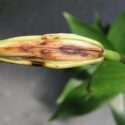
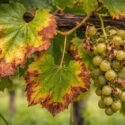
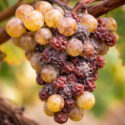
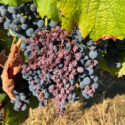
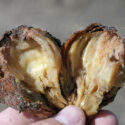
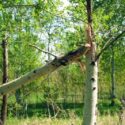
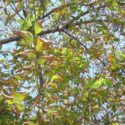
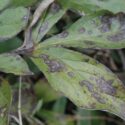
Phomopsis cane and leaf spot symptoms on grapevine shoots and leaves, including characteristic black lesions, cane damage, and early tissue spotting.
Symptoms of Phomopsis cane and leaf spot can appear on several parts of the grapevine. Early detection is critical because infections that occur during spring shoot growth often lead to long-term damage to vine structure and fruiting wood.
Early symptoms usually begin as tiny black specks on the lower portions of young shoots and basal leaves. As the disease progresses, these spots enlarge into elongated lesions that may crack and weaken the shoot or cane. On leaves, lesions are often irregular and may develop pale centers with darker margins.
On mature canes, lesions often appear as sunken, bleached areas dotted with black fruiting bodies. These infected sections weaken vine structure and may reduce the quality of fruiting wood needed for next season’s growth.
In severe infections, fruit clusters may also be affected. Lesions on the rachis or cluster stems can interfere with normal fruit development, sometimes leading to shriveled berries, poor cluster fill, or premature berry drop.
Phomopsis cane and leaf spot is more than a cosmetic disease. Severe infections can significantly weaken grapevines and reduce productivity. Damaged shoots may produce fewer clusters, while weakened canes may fail to survive winter conditions or may not provide strong fruiting wood for the following season.
In commercial vineyards, the disease can lead to lower yields, uneven fruit development, increased pruning losses, and higher management costs. When clusters are infected, growers may also see reduced fruit quality and berry loss.
Because infections occur early in the growing season, the disease can reduce vine vigor long before harvest. Preventive management is therefore essential for maintaining vine structure, fruiting capacity, and long-term vineyard productivity.
Effective control of Phomopsis cane and leaf spot requires an integrated disease management strategy. Combining sanitation, canopy management, and preventive fungicide applications provides the most reliable protection.
Commonly used protective materials may include mancozeb, captan, copper-based products, and certain strobilurin or premix fungicides, depending on local regulations and production systems. Product selection and spray intervals should always follow regional extension guidance, label directions, and resistance management recommendations.
Infected tissue does not recover once lesions form. However, grapevines can continue growing and remain productive if disease pressure is reduced and new shoots are protected from additional infection.
When infections are detected early, growers can limit damage by pruning infected shoots or canes, improving canopy ventilation, and applying preventive fungicides to protect healthy new growth. Over time, vigorous vines may replace damaged wood with healthy growth and regain productivity.
Nevertheless, severe infections that damage fruiting wood or clusters may affect vine performance for more than one season, making early prevention far more effective than trying to respond after symptoms are widespread.
The disease spreads primarily through rain-splashed spores. When rainfall hits infected cane lesions, spores are released and carried onto nearby grapevine tissues. Wind-driven rain can move spores farther within a vineyard, especially when repeated storms occur during early shoot growth.
The fungus survives winter in infected wood, allowing the disease to reappear each year if sanitation measures are not implemented. Vineyard debris, infected canes, and pruning residues are important sources of inoculum. Spread is usually greatest when wet weather coincides with the brief period when new grape tissue is highly susceptible.
Preventing Phomopsis infections begins with proactive vineyard management. Sanitation, canopy structure, and early-season protection play the most important roles in reducing disease pressure.
Start by removing infected wood during dormant pruning and destroying debris that may harbor fungal spores. Maintain balanced vine growth through proper pruning and training systems that improve airflow and sunlight penetration. Avoid leaving heavily infected canes in the vineyard, since they serve as a major source of spores the following spring.
Monitoring weather patterns is equally important. When prolonged rainfall occurs during early shoot growth, preventive fungicide applications can protect susceptible tissues and stop infections before they begin. Vineyards with a history of Phomopsis should be monitored especially closely from bud break through early shoot elongation.
Bottom line: Phomopsis cane and leaf spot is a fungal disease of grapevines caused by Diaporthe ampelina. It infects young shoots, leaves, canes, and sometimes fruit clusters during cool, wet spring weather. The disease spreads mainly by rain-splashed spores from infected cane tissue and is most damaging early in the season, when shoots are still tender. Effective management depends on sanitation, pruning infected wood, maintaining an open canopy, monitoring spring weather, and applying preventive fungicides at the right time.
Create a membership account to save your garden designs and to view them on any device.
Becoming a contributing member of Gardenia is easy and can be done in just a few minutes. If you provide us with your name, email address and the payment of a modest $25 annual membership fee, you will become a full member, enabling you to design and save up to 25 of your garden design ideas.
Join now and start creating your dream garden!
Create a membership account to save your garden designs and to view them on any device.
Becoming a contributing member of Gardenia is easy and can be done in just a few minutes. If you provide us with your name, email address and the payment of a modest $25 annual membership fee, you will become a full member, enabling you to design and save up to 25 of your garden design ideas.
Join now and start creating your dream garden!