Pierce's disease is a devastating bacterial infection of grapevines that blocks water transport and causes leaf scorch, poor fruit development, and vine decline. Caused by Xylella fastidiosa and spread by sharpshooters, it threatens vineyards worldwide. Understanding symptoms, vectors, and prevention is essential for protecting wine grapes and maintaining healthy vineyard production.
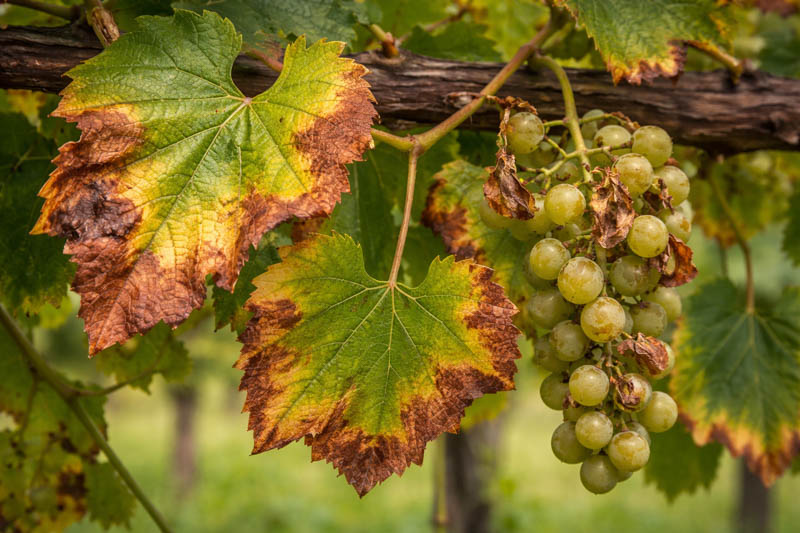


Pierce’s disease is one of the most serious bacterial diseases of grapevines. It is caused by Xylella fastidiosa, a xylem-inhabiting bacterium that interferes with the vine’s ability to move water from the roots to the leaves, shoots, and fruit. As the bacterium spreads through the water-conducting vessels, the vine begins to show drought-like stress even when the soil is moist and irrigation is adequate.
Pierce’s disease is especially destructive in Vitis vinifera grapes, including many wine grape cultivars, although susceptibility varies by variety and some grape species and hybrids are more tolerant than others. Once infection becomes established, the vine weakens progressively. Leaves scorch, fruit shrivels, canes fail to mature properly, and the plant may eventually decline beyond recovery.
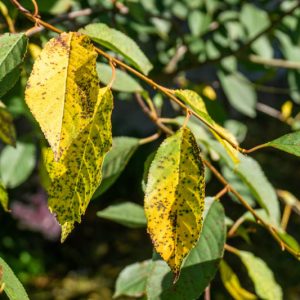
Growers often first notice marginal leaf scorch, irregular leaf drop, and poor fruit development. Later, the disease becomes more distinctive. Petioles may remain attached after the leaf blades fall, creating the classic matchstick effect, and canes may mature unevenly, showing patchy green and brown tissue. These symptoms are highly characteristic and make Pierce’s disease one of the most recognizable vascular diseases in vineyards.
Pierce’s disease is most common in warm grape-growing regions where xylem-feeding insect vectors remain active for long periods. It is especially important in parts of California, the southern United States, Mexico, and other warm areas where vector pressure is high and alternate host plants are common.
Vineyards located near rivers, creeks, riparian vegetation, citrus plantings, unmanaged landscapes, or ornamental host plants often face greater risk. These habitats provide food sources and shelter for vector insects, allowing them to move between wild hosts and cultivated grapes. In regions where the glassy-winged sharpshooter is established, the risk can increase sharply because this insect flies farther and feeds on a broader range of plants than many native sharpshooters.
Pierce’s disease is caused by the bacterium Xylella fastidiosa. Unlike fungi that infect leaf surfaces or fruit tissues, this bacterium lives inside the xylem vessels – the plant’s internal water transport system. Once inside, it multiplies, spreads upward through the vine, and forms bacterial aggregates and biofilms that interfere with water movement.
The result is chronic water stress. Leaves begin to dry at the margins, clusters may fail to ripen properly, and shoots can become weak and unevenly matured. Symptoms are often most obvious in late summer and early fall, when hot weather increases the vine’s demand for water and the damaged vascular system can no longer keep up.
The bacterium does not spread by wind or rain. Instead, it depends on xylem-feeding insects such as sharpshooters and certain spittlebugs. These insects acquire the bacterium while feeding on infected plants, then transmit it when they move to healthy vines and feed again.
The disease cycle of Pierce’s disease begins when a sharpshooter or spittlebug feeds on an infected host plant. The bacterium adheres to the insect’s mouthparts. When the insect later feeds on a healthy grapevine, it introduces the bacterium directly into the xylem.
Once inside the vine, Xylella fastidiosa multiplies and gradually colonizes the vascular network. As bacterial populations increase, they interfere with normal water transport. This is why infected vines show symptoms that resemble drought stress, even though the underlying problem is bacterial blockage inside the plant.
Unlike fungal grape diseases, Pierce’s disease does not rely on spores, fruiting bodies, or splashing rain. Its movement depends on infected host plants serving as bacterial reservoirs and on insect vectors carrying the pathogen from plant to plant. This vector-driven biology is what makes disease management so dependent on habitat awareness, scouting, and timely intervention.
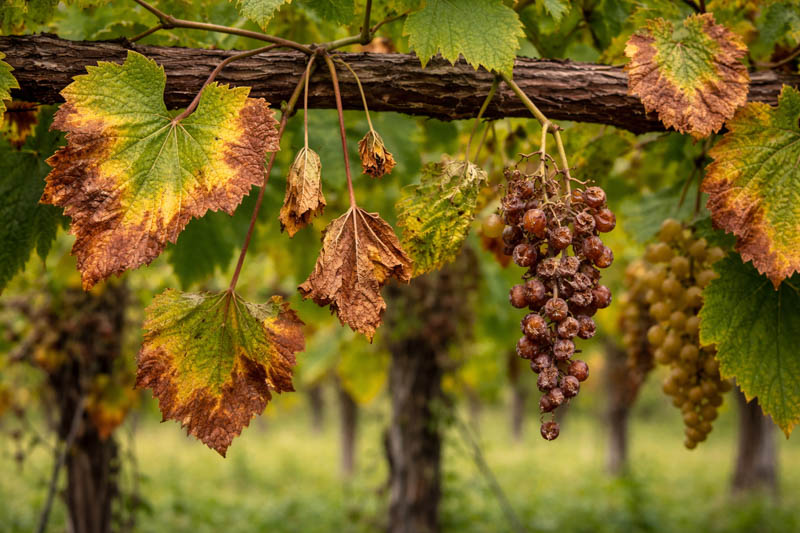
Pierce’s disease symptoms usually become most obvious from mid- to late summer into early fall. Because the disease disrupts water transport, symptom expression often intensifies during hot, dry weather when transpiration demand is high.
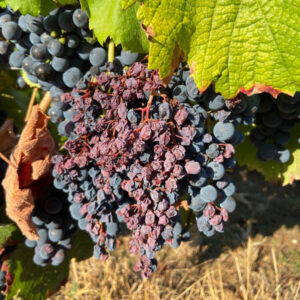
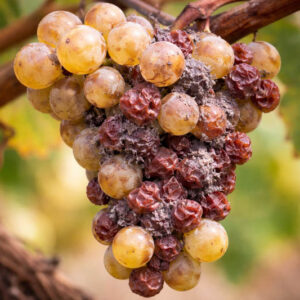
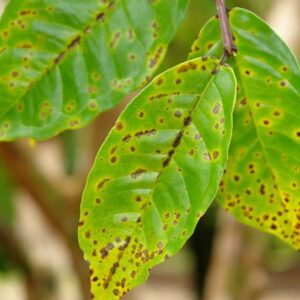
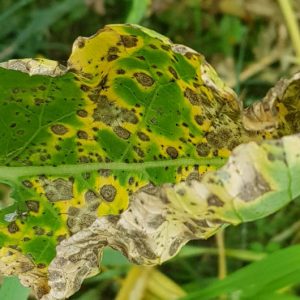
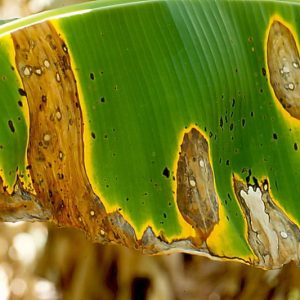
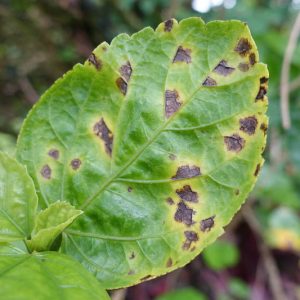
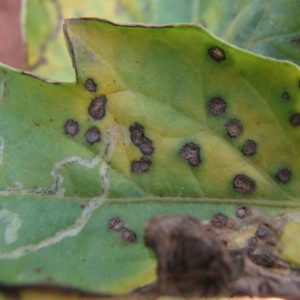
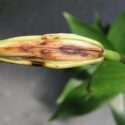
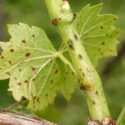
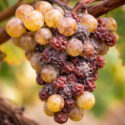
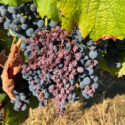
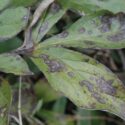
In white cultivars, affected leaves often develop yellow bands between healthy tissue and scorched margins. In red cultivars, these areas may appear reddish instead. Fruit symptoms can include poor set, raisining, shrivel, and reduced sugar accumulation. Infected canes often fail to harden off normally and may show irregular, patchy bark maturity, with islands of green tissue mixed with brown mature wood.
One of the most recognizable signs is the matchstick effect. As infected leaves dry and detach, the petioles remain attached to the cane, leaving a row of short stalks that resemble burnt matchsticks. This, together with green islands and cluster shrivel, makes Pierce’s disease more distinguishable from simple drought stress.
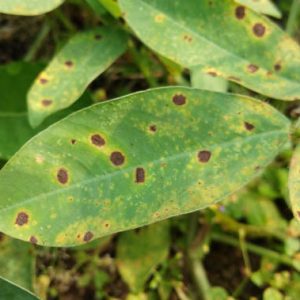
Pierce’s disease is often confused with drought stress, salt injury, or nutrient-related leaf burn because all can cause scorched leaf margins. The difference is that Pierce’s disease usually appears vine by vine rather than uniformly across an entire block, and it is more likely to be accompanied by matchsticks, fruit shrivel, and irregular cane maturation.
Drought stress and salinity problems often affect many vines in a pattern related to irrigation, soil, or exposure. Pierce’s disease tends to appear more irregularly, especially near edges, vector habitats, or individual infection points. When symptoms are suspicious, laboratory confirmation is the best way to separate Pierce’s disease from lookalikes.
Pierce’s disease is far more than a cosmetic disorder. It can reduce cluster number, berry size, fruit quality, cane maturity, and winter survival. In heavily affected vines, the combination of chronic water stress and vascular dysfunction leads to rapid decline.
In commercial vineyards, the economic impact can be severe. Growers may lose both the current crop and future production because infected vines often need to be removed and replaced. Replanting costs, reduced uniformity, and lost time during vine establishment can make outbreaks especially expensive.
The disease is also a long-term vineyard management issue. Even when only a few vines show symptoms initially, vector movement and nearby host plants can allow new infections to appear over time if the source problem is not addressed.
Effective management of Pierce’s disease focuses on prevention, vector suppression, and reduction of infection sources. There is no dependable curative treatment for a vine once systemic infection is established, so management is built around limiting spread and protecting healthy plants.
Control programs are most effective when they combine vineyard scouting, insect monitoring, regional awareness, and sanitation. In some regions, success depends as much on understanding the surrounding landscape as on what happens inside the vine rows themselves.
Not all grapes respond to Pierce’s disease in the same way. Many Vitis vinifera cultivars are highly susceptible, which is why the disease is such a serious threat in wine grape production. Some cultivars may decline rapidly, while others show slightly slower symptom development or better odds of temporary recovery.
Certain hybrids and non-vinifera grape types may show greater tolerance, which is one reason cultivar selection matters in high-risk areas. For vineyards in regions with persistent vector pressure, choosing less susceptible material can be one of the most important long-term management decisions.
Some grapevines may appear to recover temporarily, but reliable recovery is uncommon in highly susceptible cultivars once infection is well established. Symptom severity can vary with infection timing, vine age, environment, and winter conditions. A vine may look better for a period and then decline again if the bacterium persists.
For practical vineyard management, symptomatic vines should be treated seriously. Waiting for obvious collapse can allow the vine to remain a source of inoculum for vectors. In commercial settings, confirmed infected vines are often removed to protect the rest of the planting.
Pierce’s disease spreads mainly through xylem-feeding insect vectors. Sharpshooters and certain spittlebugs acquire Xylella fastidiosa while feeding on infected plants and then inoculate healthy vines when they move and feed again. This makes vector movement the central driver of disease spread within and between vineyards.
Spread can also occur through infected planting material, which is why certified disease-free nursery stock is so important. In established vineyards, however, vector-mediated transmission remains the dominant concern, especially where abundant host vegetation surrounds the planting.
Preventing Pierce’s disease requires a vineyard strategy that begins before symptoms appear. The most successful programs combine clean plant material, regular scouting, vector monitoring, habitat awareness, and rapid response when suspicious vines are found.
Start by planting certified clean vines and selecting cultivars appropriate for the disease pressure in your region. Monitor for sharpshooters and spittlebugs throughout the growing season, especially near vineyard edges, riparian areas, and ornamental plantings. Train workers to recognize matchsticks, leaf scorch, cluster shrivel, and irregular cane maturity so suspicious vines are flagged early.
Where Pierce’s disease is established, prevention also means thinking beyond the vineyard block. Nearby host plants, unmanaged vegetation, and regional vector pressure can all shape risk. In other words, prevention is not a single spray or single action – it is an ongoing management system.
Bottom line: Pierce’s disease is a destructive bacterial disease of grapevines caused by Xylella fastidiosa. It spreads through sharpshooters and spittlebugs, blocks xylem function, causes leaf scorch, fruit shrivel, matchsticks, and irregular cane maturation, and can eventually kill susceptible vines. The best protection comes from early detection, vector management, clean planting stock, thoughtful cultivar choice, and fast removal of infected plants.
Create a membership account to save your garden designs and to view them on any device.
Becoming a contributing member of Gardenia is easy and can be done in just a few minutes. If you provide us with your name, email address and the payment of a modest $25 annual membership fee, you will become a full member, enabling you to design and save up to 25 of your garden design ideas.
Join now and start creating your dream garden!
Create a membership account to save your garden designs and to view them on any device.
Becoming a contributing member of Gardenia is easy and can be done in just a few minutes. If you provide us with your name, email address and the payment of a modest $25 annual membership fee, you will become a full member, enabling you to design and save up to 25 of your garden design ideas.
Join now and start creating your dream garden!