Black rot is a serious plant disease that can devastate crops and garden plants if left unchecked. This expert guide explains how to identify black rot early, understand what causes it, and apply proven prevention strategies to protect your plants, improve plant health, and stop the disease before it spreads.
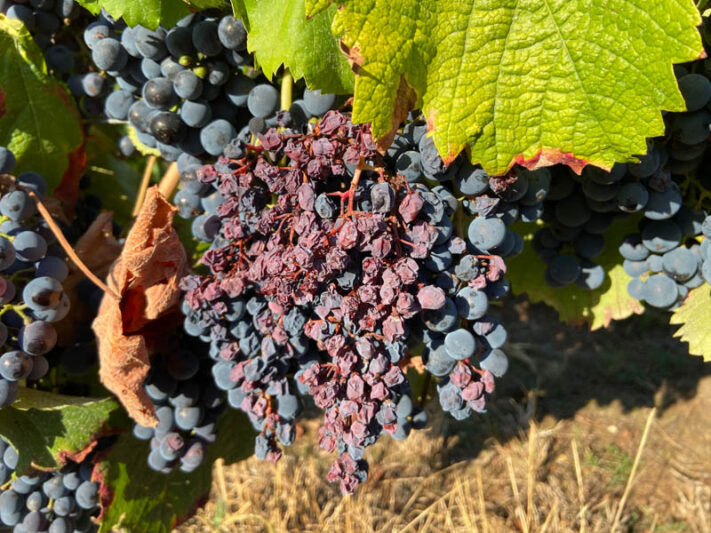


Black rot is not one single plant disease. It is a broad term used for several serious fungal or bacterial diseases that cause dark lesions, tissue decay, and plant decline. Depending on the host plant, it may affect leaves, stems, roots, fruits, bulbs, or vascular tissue. That is why accurate diagnosis matters – the right treatment for grapes may not work for brassicas, sweet potatoes, or citrus.
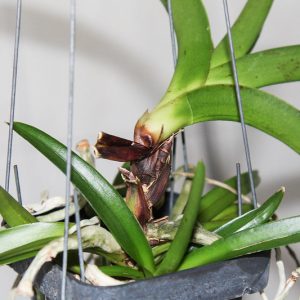
In most cases, the disease starts with small dark spots, yellowing, blackened veins, or sunken lesions. As the disease progresses, tissues collapse, fruit shrivels, roots rot, and plants lose vigor. If you are trying to identify it quickly, start with the host plant and the exact symptom pattern. For related crop-specific pages, see grapevine guides, brassica guides, sweet potato guides, and citrus guides.
Black rot is a common name for several plant diseases caused by fungi or bacteria. It usually causes black or dark brown lesions, decay, shriveling, blackened veins, fruit rot, or plant collapse. It spreads through infected plant material, water splash, contaminated debris, tools, and wounds.
The cause of black rot depends on the crop involved. In brassica crops, the disease is bacterial and caused by Xanthomonas campestris pv. campestris. Grapevine infections are caused by the fungus Guignardia bidwellii. Sweet potato black rot is caused by Ceratocystis fimbriata. In citrus, the term often refers to internal fungal decay associated with Alternaria species.
These pathogens spread through infected seeds, slips, fruit, crop residue, soil contact, splashing water, contaminated tools, and wounds created during pruning, harvesting, or handling. In many gardens and fields, the disease becomes worse when infected plant debris is left in place or when susceptible crops are grown repeatedly in the same bed.
This disease develops fastest when a susceptible plant, a pathogen source, and moisture are present at the same time. Reducing any one of these can lower disease pressure.
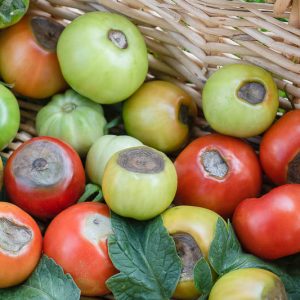
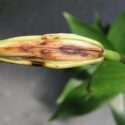
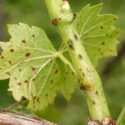
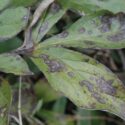
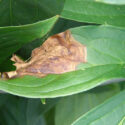
The most common symptoms are dark brown or black lesions, yellowing around infected tissue, blackened veins, fruit or root decay, shriveled tissue, and plant collapse. Symptoms vary by crop, but the dark, expanding damage is the most consistent warning sign.
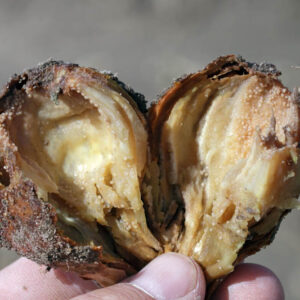
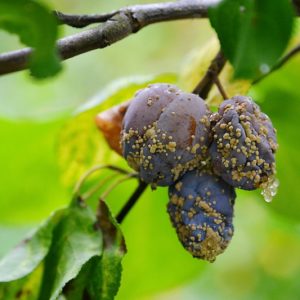
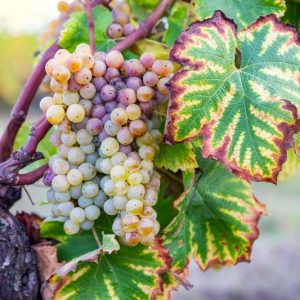
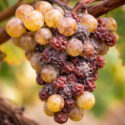
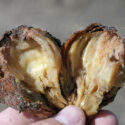
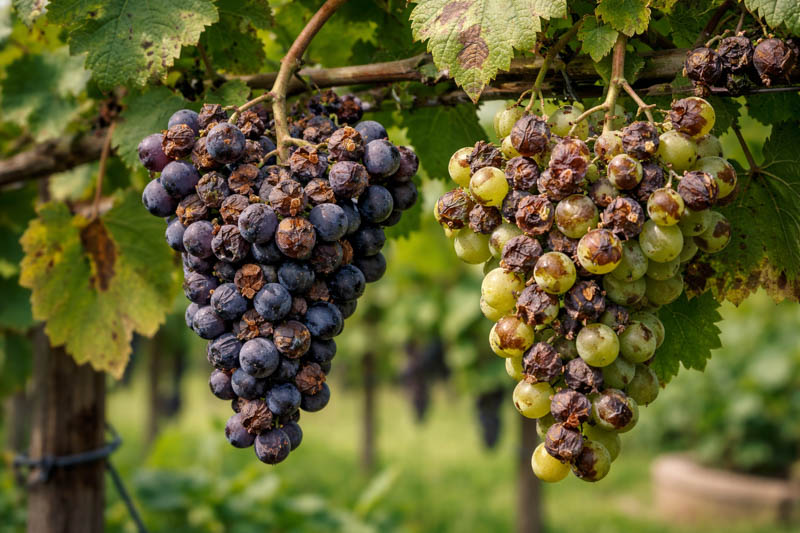
Some signs are especially useful for diagnosis. Brassicas often develop yellow V-shaped lesions that start at the leaf edge and point inward along a vein. In grapes, infected berries turn into hard black mummies. Sweet potatoes usually show dark, dry, well-defined lesions. Citrus fruit may have severe internal decay even when the skin still looks fairly normal.
Because black rot is an umbrella term, the easiest way to identify it is by matching the disease to the host plant. Below are the most important types gardeners and growers encounter.
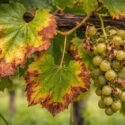
It is caused by Guignardia bidwellii. It affects leaves, shoots, and fruit, but the classic symptom is the formation of hard black mummified berries. Learn more in our grapevine growing guides.
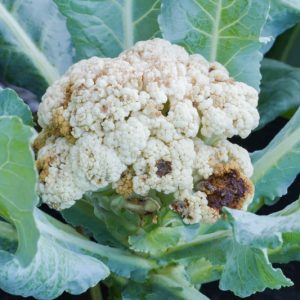
This is a bacterial disease caused by Xanthomonas campestris pv. campestris. It commonly affects cabbage, kale, broccoli, Brussels sprouts, cauliflower, and related crops. The most recognizable symptom is a yellow V-shaped lesion with blackened veins. Explore related crops in our brassica plant guides.
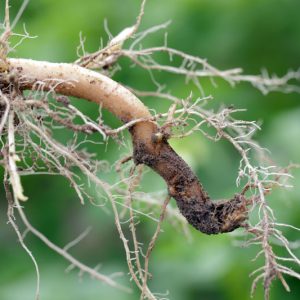
It is caused by Ceratocystis fimbriata. It typically appears as dark lesions on roots and stems and can make harvested roots unmarketable. For crop-specific advice, visit our sweet potato guide.
It often refers to internal fungal decay linked to Alternaria species. The fruit may look healthy outside but show dark internal decay, especially near the stylar or navel end. See related care advice in our citrus guides.
If you match the host plant with one standout symptom – mummified berries in grapes, V-shaped lesions in brassicas, dark root lesions in sweet potato, or internal stylar-end decay in citrus – you are much closer to the correct diagnosis.
It occurs worldwide and is most common in wet, humid growing conditions. It is especially damaging in areas with frequent rainfall, overhead irrigation, dense planting, and poor airflow. Warm temperatures and long periods of leaf wetness create ideal conditions for infection.
The best treatment is early action and crop-specific prevention. Once it is well established, it is much harder to control. The most effective strategy is to remove infection sources, keep foliage dry when possible, and start with clean planting material.
Control also varies by host. Grape black rot management often depends on sanitation and well-timed fungicide programs. Brassica black rot control relies heavily on clean seed, water management, crop rotation, and preventing spread through contaminated tools or transplants. Sweet potato black rot is best managed with disease-free slips, careful sanitation, and gentle handling of roots. Citrus black rot control focuses on preventing infection in the grove and reducing postharvest losses.
Plants can sometimes survive early infections, but badly infected tissue usually does not recover. Recovery depends on the crop, the pathogen, and how early the disease is detected. Mild infections may be contained if infected material is removed quickly and growing conditions are improved. Severe infections often lead to crop loss, poor storage quality, or ongoing spread to nearby plants.
It can be fungal or bacterial depending on the plant. Grapevine black rot and sweet potato black rot are fungal diseases. Brassica black rot is bacterial. That is one reason it should always be diagnosed by host plant and symptom pattern, not by name alone.
It spreads through infected plant material, splashing water, contaminated tools, wounds, and crop debris. Some pathogens also survive between seasons in residue, seed, fruit, slips, or volunteer plants. Wet conditions and poor sanitation make spread much more likely.
Prevention is easier than cure. Start with clean seeds or plants, rotate crops, improve airflow, avoid overhead watering when possible, and remove infected residue at the end of the season. For related prevention strategies, browse our guides on crop rotation, host-specific care, and disease-resistant planting choices.
Bottom line: It is one of the most important plant disease groups affecting vegetables, fruits, and stored crops. The fastest way to manage it is to identify the host plant, confirm the symptom pattern, remove infection sources quickly, and use crop-specific prevention methods before the disease becomes established.
Create a membership account to save your garden designs and to view them on any device.
Becoming a contributing member of Gardenia is easy and can be done in just a few minutes. If you provide us with your name, email address and the payment of a modest $25 annual membership fee, you will become a full member, enabling you to design and save up to 25 of your garden design ideas.
Join now and start creating your dream garden!
Create a membership account to save your garden designs and to view them on any device.
Becoming a contributing member of Gardenia is easy and can be done in just a few minutes. If you provide us with your name, email address and the payment of a modest $25 annual membership fee, you will become a full member, enabling you to design and save up to 25 of your garden design ideas.
Join now and start creating your dream garden!