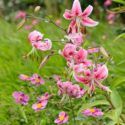
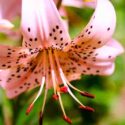
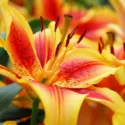
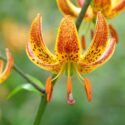
Species lilies bring the wild diversity of Lilium into gardens, from compact rock-garden plants to towering woodland natives. Discover how habitat, soil, moisture, climate, and flower form differ by species, explore standout lilies from Asia, Europe, and North America, and choose wild lilies that truly fit your garden conditions well.
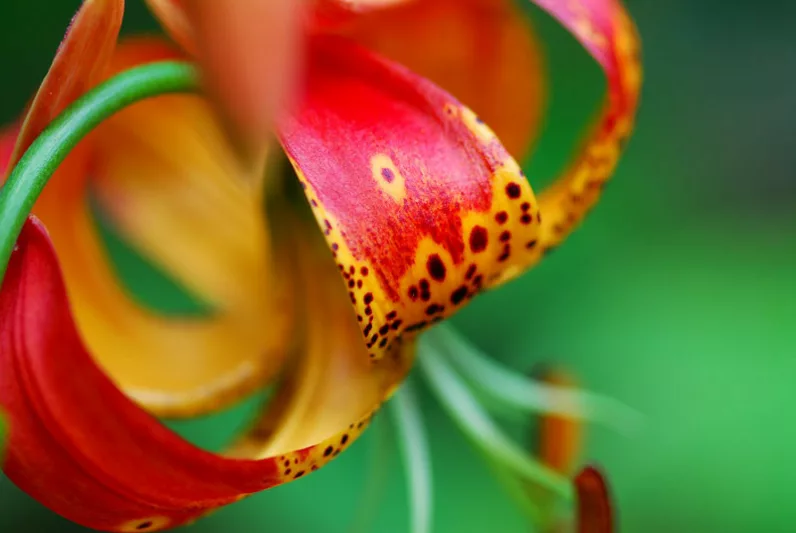


Species lilies are the wild members of the genus Lilium – the plants from which generations of breeders created many of today’s Asiatic lilies, Martagon lilies, Trumpet lilies, Oriental lilies, and Orienpet lilies.
They are also far more diverse than those familiar garden groups. Wild Lilium species occur across much of the temperate Northern Hemisphere, from North America and Europe through the Himalayas, China, Korea, Japan, and neighboring parts of Asia. Some inhabit sunny meadows and mountain slopes. Others grow at woodland edges, beside streams, in moist prairies, or in cool forest soils.
That diversity explains both their fascination and their reputation. Some species lilies are adaptable, rewarding garden plants. Others perform well only when a garden reproduces important features of their native habitat.
There is therefore no single recipe for growing “species lilies.” A soil that suits one species may be unsuitable for another. Some prefer acidic conditions, some tolerate neutral or alkaline soils, some appreciate reliable summer moisture, and others need excellent drainage during dormancy. Mature size ranges from compact lilies barely 1-2 ft. (30-60 cm) tall to imposing species capable of reaching 8-9 ft. (240-270 cm) in favorable conditions.
Gardenia’s shortcut: choose a species lily by ecology first and flower color second. A beautiful wild lily planted in the wrong habitat is still the wrong lily.
Gardenia compares 21 species lilies below to show how dramatically they can differ in mature size, flower character, light requirements, and garden use. The table is a starting point rather than a substitute for the individual plant profile, because soil chemistry, moisture, drainage, climate, and planting requirements can differ substantially from one species to another.
| Species | Height | Flower Character | Light | Garden Fit |
|---|---|---|---|---|
| L. candidum | 4-6 ft. | White trumpets, strongly fragrant | Sun / part shade | Borders, fragrance gardens, historic gardens |
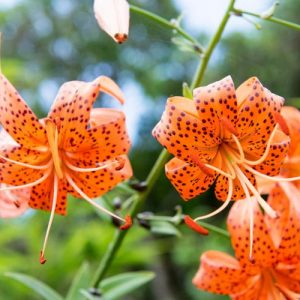
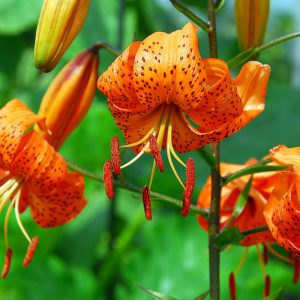
| L. lancifolium | 2-5 ft. | Orange, spotted, recurved | Sun / part shade | Borders, naturalistic planting, containers |
| L. pumilum | 1-2 ft. | Scarlet, strongly recurved | Sun / part shade | Rock gardens, front of borders, containers |
| L. formosanum var. pricei | 1-2 ft. | Large white trumpets, fragrant | Sun / light shade | Rock gardens, small gardens, containers |
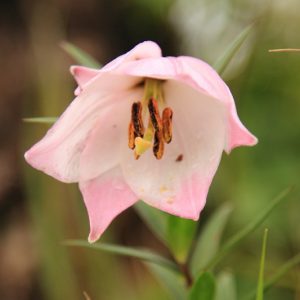
| L. mackliniae | 2-3 ft. | Pale pink, bell-shaped | Light shade / sun | Woodland-style borders, containers |
| L. nepalense | 2-3 ft. | Greenish funnel, burgundy throat | Part shade | Cool woodland-style sites, specialist gardens |
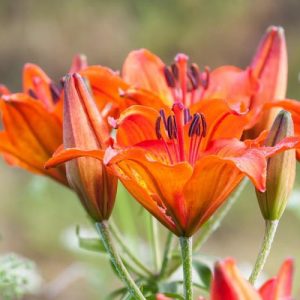
| L. philadelphicum | 1-3 ft. | Red-orange, upward-facing | Sun / part shade | Native gardens, meadows, woodland edges |
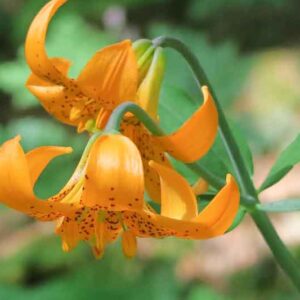
| L. columbianum | 2-4 ft. | Yellow-orange, nodding, recurved | Sun / part shade | Western native gardens, meadows, forest edges |
| L. leichtlinii | 3-4 ft. | Golden yellow, recurved, spotted | Sun / part shade | Perennial borders, naturalistic planting |
| L. bulbiferum var. croceum | 3-4 ft. | Bright orange, open, upward-facing | Sun / part shade | Borders, containers, cottage gardens |
| L. hansonii | 3-4 ft. | Yellow-orange, recurved | Light shade | Woodland borders |
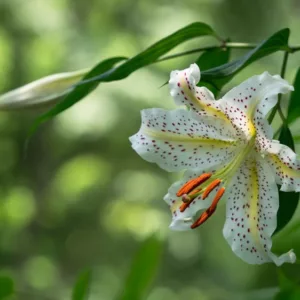
| L. auratum | 3-4 ft. | Huge white bowls, gold band, fragrant | Sun / light shade | Borders, fragrance gardens, cutting gardens |
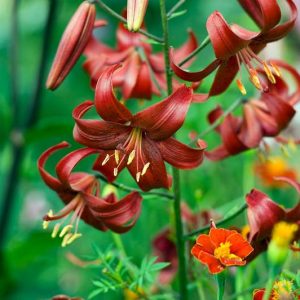
| L. davidii | 3-4 ft. | Orange-red Turk’s cap, spotted | Sun / part shade | Borders, naturalistic gardens |
| L. lankongense | 3-5 ft. | Soft pink Turk’s cap, fragrant | Sun / part shade | Borders, cottage gardens, containers |
| L. canadense | 3-5 ft. | Nodding bells, yellow to red | Sun / part shade | Native meadows, woodland edges |
| L. michiganense | 2-5 ft. | Orange-red Turk’s cap | Sun / light shade | Moist prairie, meadow, rain gardens |
| L. speciosum var. rubrum | 4-5 ft. | Raspberry-white, recurved, fragrant | Sun / part shade | Late borders, fragrance and cutting gardens |
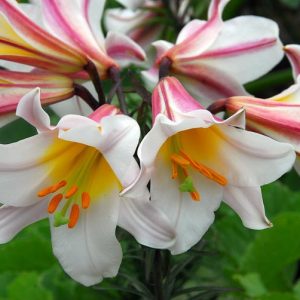
| L. regale | 4-6 ft. | White trumpets, intensely fragrant | Sun / part shade | Tall borders, fragrance gardens, containers |
| L. henryi | 4-8 ft. | Orange, recurved, spotted | Part shade / sun | Tall borders, architectural planting |
| L. pardalinum | 6-8 ft. | Yellow-orange-red, spotted, recurved | Sun / part shade | Moist woodland, streamside planting |
| L. superbum | 6-9 ft. | Orange Turk’s cap, spotted | Sun / part shade | Moist meadow, pond or streamside planting |
Gardenia species insight: “Species lily” is a botanical category, not a growing prescription. Gardenia’s species records range from compact rock-garden lilies to towering woodland and wet-meadow plants, and from acid-loving species to lilies adapted to neutral or alkaline soils. Choose the habitat first, then the flower.
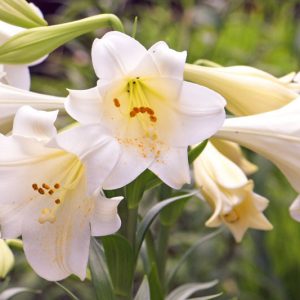
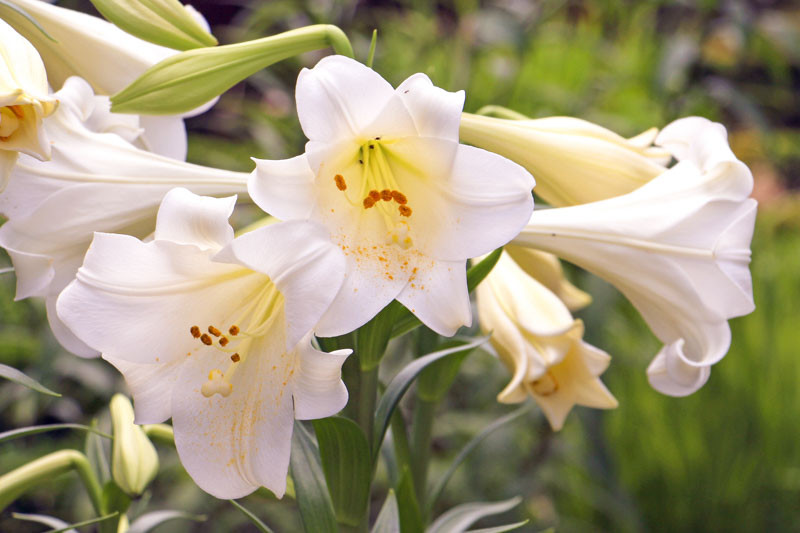 Lilium candidum – Madonna Lily
A species lily is a naturally occurring wild member of the genus Lilium, rather than a complex hybrid produced through horticultural breeding. Species lilies include familiar plants such as Lilium regale, L. candidum, L. auratum, and L. lancifolium, as well as much less familiar lilies from mountain, woodland, meadow, and streamside habitats.
Horticultural classification is slightly more specific than the everyday botanical meaning. Division IX contains species and their subspecies, varieties, forms, and cultivars selected from them, with exclusions for lilies derived from L. formosanum, L. longiflorum, L. philippinense, and L. wallichianum, which are classified elsewhere. A plant can therefore be a true botanical species without necessarily being treated as a Division IX lily in horticultural classification.
This makes species lilies fundamentally different from hybrid divisions such as Asiatic, Oriental, Trumpet, and Orienpet lilies. Those groups were created by crossing selected species and hybrids to combine characteristics such as flower size, color, fragrance, stature, vigor, hardiness, or garden performance.
Species lilies retain characteristics shaped by evolution in particular habitats. Their flowers may be smaller, less standardized, or less deliberately exaggerated than those of highly bred hybrids, but they often have a graceful, naturalistic quality especially suited to meadows, woodland gardens, native plantings, and informal borders.
Their diversity is remarkable. Leaves may be scattered along the stem or arranged in conspicuous whorls. Flowers can face upward, outward, or downward and range from narrow trumpets and nodding bells to strongly recurved Turk’s cap forms and enormous open blooms.
Several distinctive wild lilies are associated with woodland edges, forest openings, or lightly shaded habitats. But “woodland lily” does not automatically mean a plant for any shady position. Moisture, soil chemistry, drainage, summer climate, and competition from tree roots still matter.
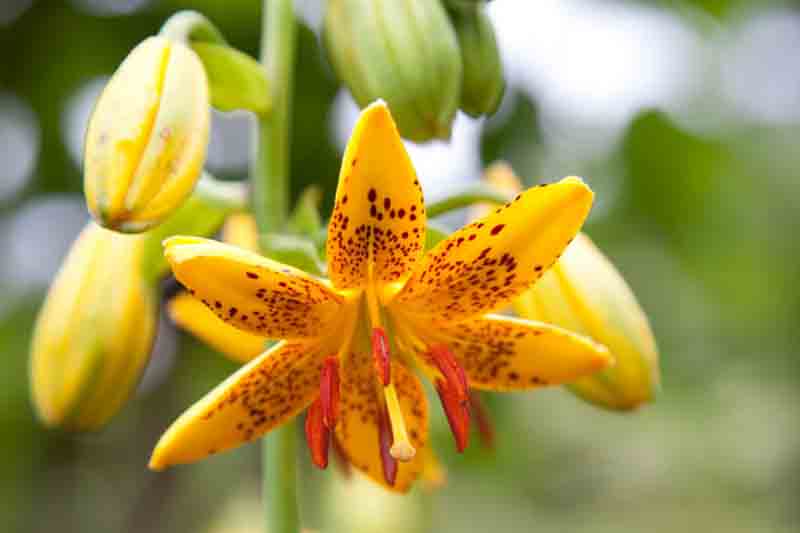
Lilium hansonii is an excellent woodland-style species, growing about 3-4 ft. (90-120 cm) tall. Its conspicuous whorls of foliage create an elegant structure even before flowering, while the stems carry yellow-orange recurved blooms marked with purplish-brown spots.
It performs well in light shade with organic, well-drained soil and adequate moisture. Its whorled leaves and Turk’s cap flowers also hint at its relationship to species involved in the development of Martagon hybrids.
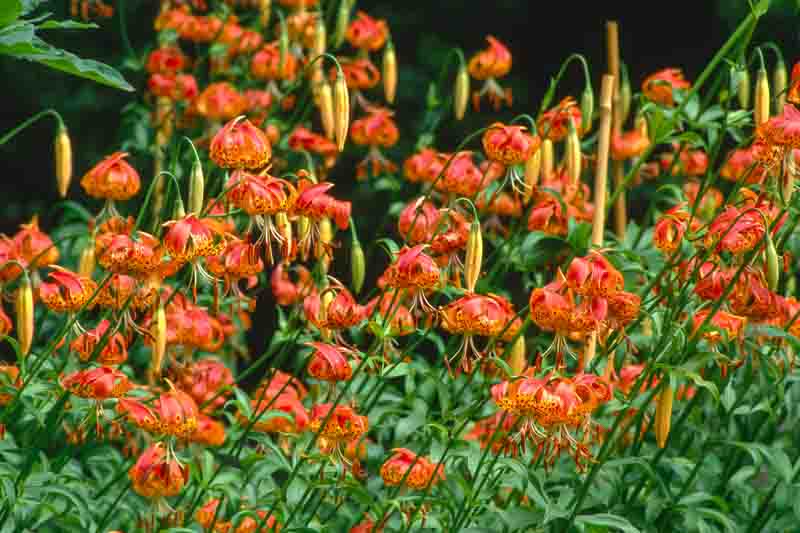
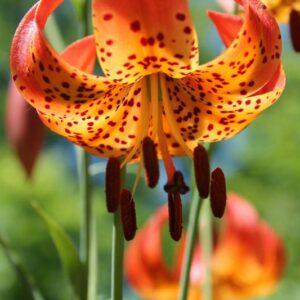
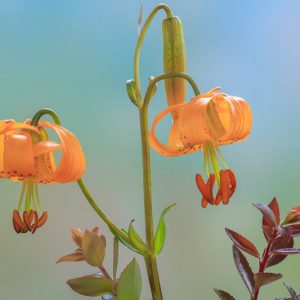
Native to western North America, Lilium pardalinum is a dramatic lily of moist woodland, forest edges, and streamside habitats. Its nodding flowers combine yellow, orange, and red with prominent spotting, creating the leopard-like pattern behind its common name.
This is no miniature woodland plant. It can become a substantial vertical feature where conditions suit it. Moist, fertile, well-drained soil with organic matter is a much better match than dry shade beneath mature trees.
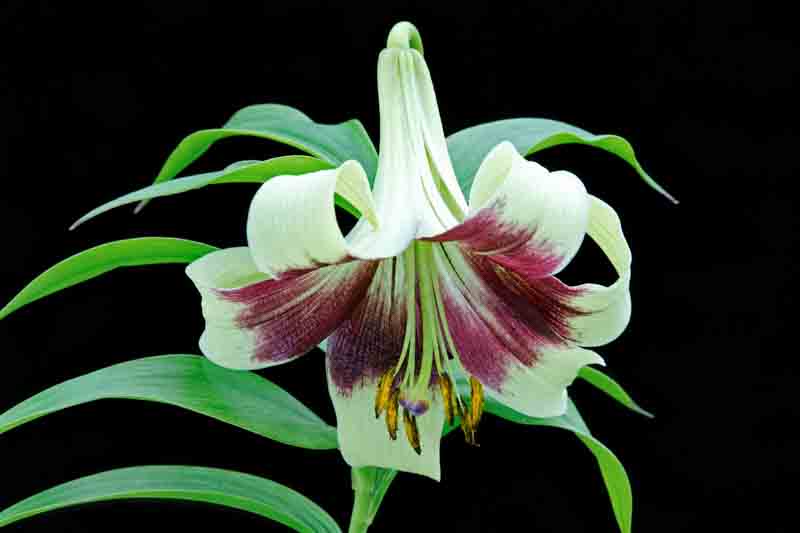
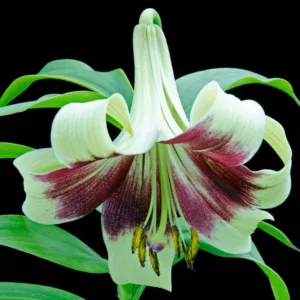
Lilium nepalense demonstrates how specialized a species lily can be. Its extraordinary downward-facing flowers are greenish-white to greenish-yellow with a deep burgundy throat, creating one of the most unusual color combinations in the genus.
This Himalayan species grows about 2-3 ft. (60-90 cm) tall and favors part shade, acidic loam, and moisture during active growth. It also benefits from protection against excessive fall and winter wet, making it a more site-specific choice than many common garden hybrids.
Woodland does not mean dry shade. A species adapted to moist woodland edges or streamside habitats may struggle beneath mature trees where dense roots leave the soil chronically dry.
Other wild lilies are better suited to brighter, more open conditions. These species can be excellent choices for perennial borders, meadow-style plantings, rock gardens, and informal naturalistic schemes.
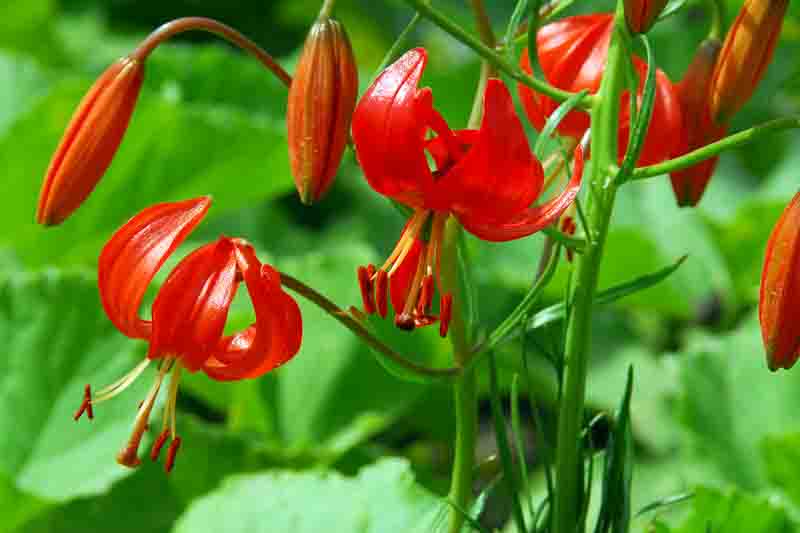
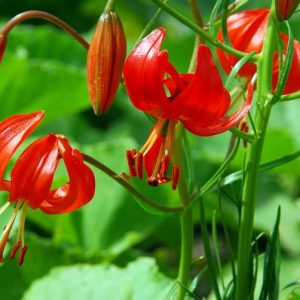
Compact Lilium pumilum is almost the opposite of a towering Trumpet lily. At only about 1-2 ft. (30-60 cm), it carries glossy scarlet, strongly recurved flowers on slender stems.
Its scale makes it particularly useful in rock gardens, near the front of borders, or in containers. It performs in full sun or partial shade with well-drained soil and adequate moisture during growth.
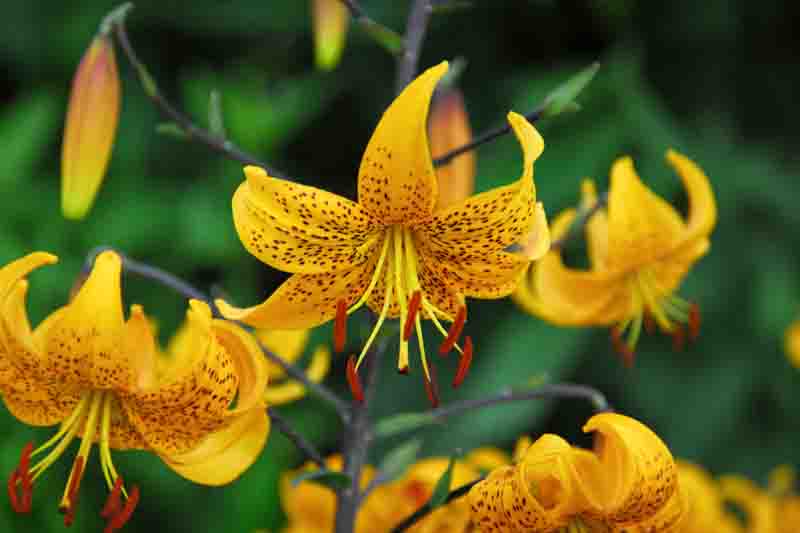
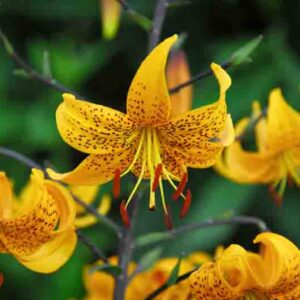
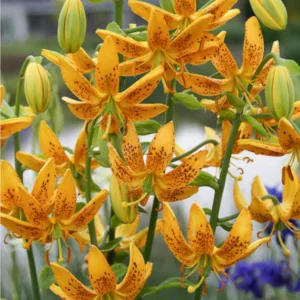
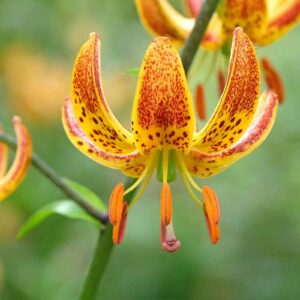
Lilium leichtlinii produces golden-yellow, downward-facing flowers with strongly recurved tepals liberally marked with dark speckles. Mature plants carry their flowers on stems around 3-4 ft. (90-120 cm) tall.
It can grow in full sun or part shade in humus-rich, well-drained soil, making it one of the species lilies that can integrate naturally into a conventional perennial border.
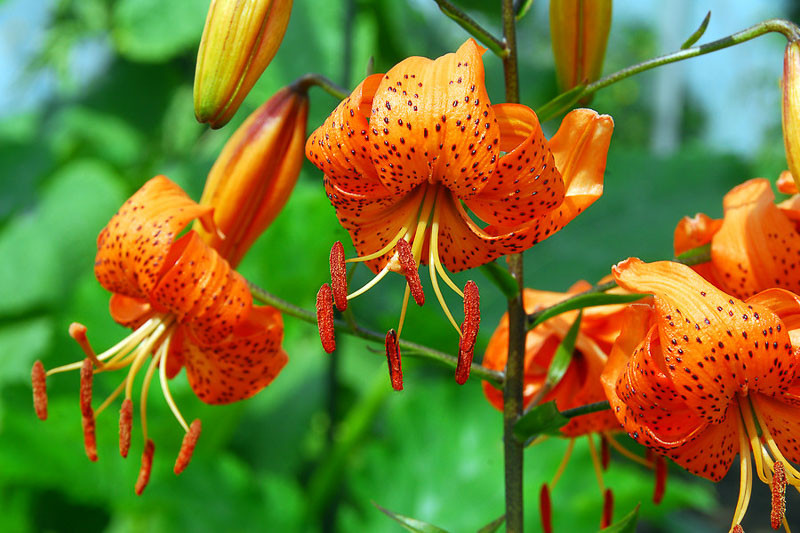
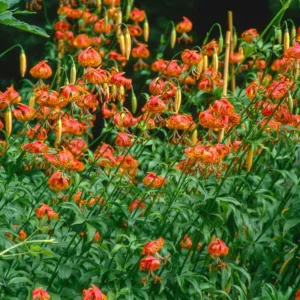
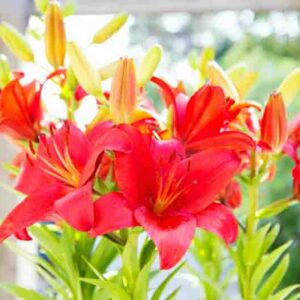
Native to China, Lilium davidii carries red to reddish-orange Turk’s cap flowers marked with darker spots. The recurved flowers give it unmistakable wild-lily character.
It is notably cold-hardy and performs in full sun or partial shade in fertile, moist but well-drained soil. It is also one of the Asian species represented in the ancestry of modern Asiatic lilies.
North America has a remarkable diversity of native lilies, from eastern wet meadows and woodland edges to western forest openings and Pacific Coast stream corridors.
For gardeners interested in native planting, geography is only the beginning. A species may be native to a state or region but naturally occupy a very specific habitat within that range. Matching those ecological conditions is often more useful than relying on a “native” label alone.
Native range is only the first filter: Gardenia recommends matching native lilies to their natural habitat as well as geography. A native wet-meadow lily and a native open-ground lily may need very different conditions even where their ranges overlap.
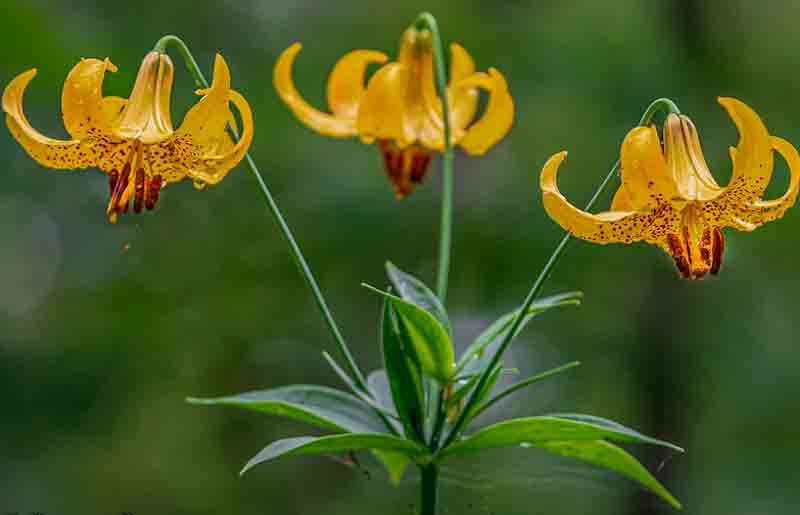
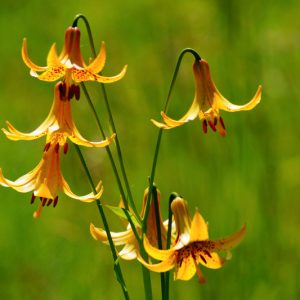
Lilium canadense carries clusters of graceful nodding flowers in yellow, orange, or red, often spotted within. Mature plants generally reach about 3-5 ft. (90-150 cm).
Its tall stems and naturalistic flowers are particularly appropriate for meadow plantings and woodland edges. It performs in sun or part shade in deep, acidic to neutral soil with suitable moisture and drainage.
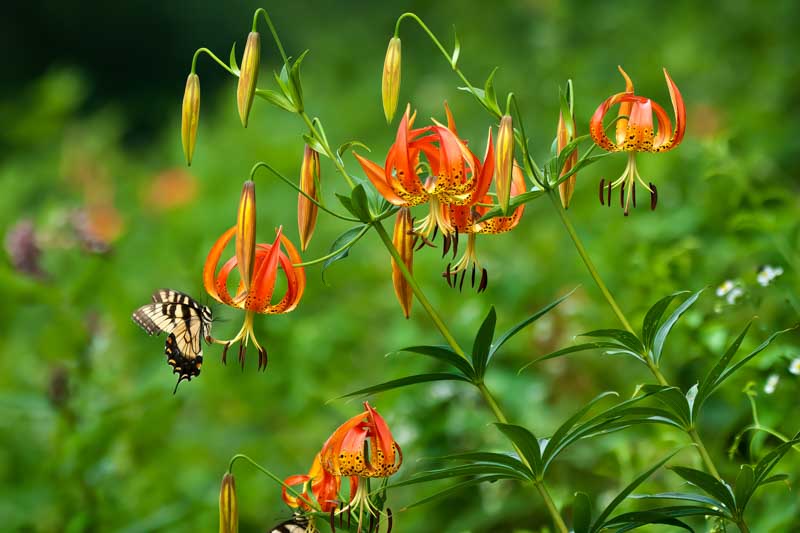
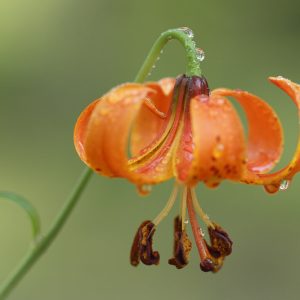
If scale is the goal, Lilium superbum is exceptional. In favorable conditions, this eastern North American native can rise 6-9 ft. (180-270 cm) and carry numerous nodding orange Turk’s cap flowers above surrounding vegetation.
Unlike species adapted to dry or rocky ground, L. superbum appreciates rich soil with reliable moisture. It is particularly effective in moist meadows and naturalistic plantings near ponds or streams where moisture is available without stagnant, airless conditions around the bulb.
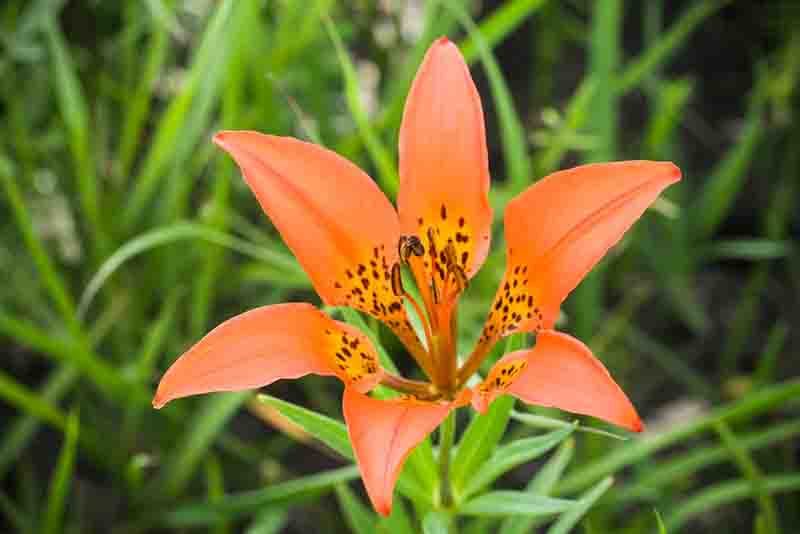
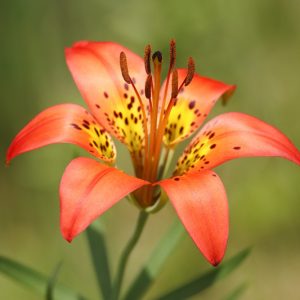
Lilium philadelphicum offers an important contrast to many nodding wild lilies. Its brilliant red-orange flowers face upward, openly displaying their dark spotting.
Usually around 1-3 ft. (30-90 cm) tall, Wood Lily is considerably more compact than Canada Lily or Turk’s Cap Lily. It can fit naturally into native plant gardens, meadow-style schemes, prairies, and open woodland edges.
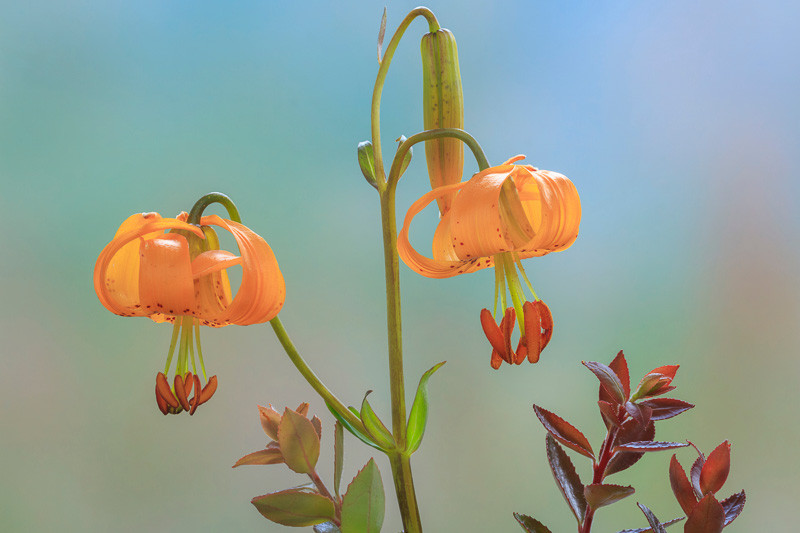
Western North America’s Lilium columbianum occurs naturally in habitats including meadows, forest openings, forest edges, and prairies. Its yellow to orange or reddish flowers are nodding, strongly recurved, and richly spotted.
Growing around 2-4 ft. (60-120 cm), its relatively airy stature and wild appearance make it particularly convincing in naturalistic western plantings. It favors moist, fertile, acidic to neutral, well-drained soil.
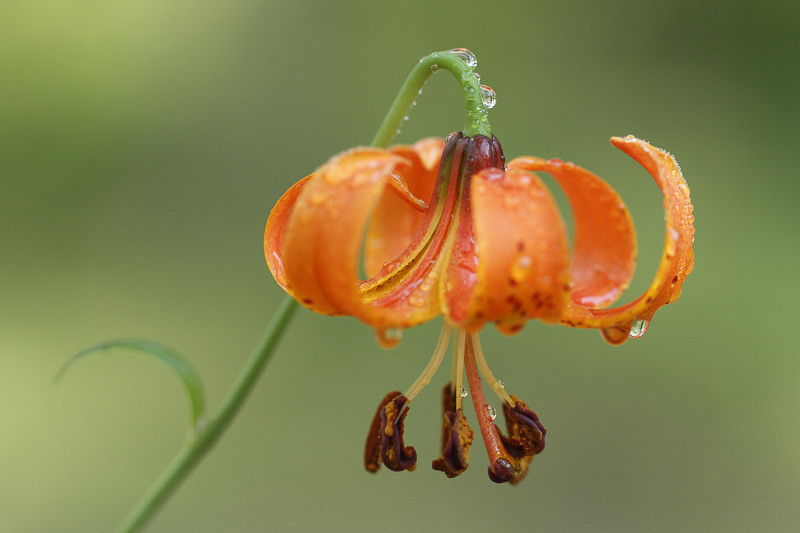
Lilium michiganense produces graceful orange-red Turk’s cap flowers above stems with distinctive whorled leaves. Mature plants may reach approximately 2-5 ft. (60-150 cm).
It is particularly appropriate for moist prairie and meadow settings, rain gardens, and other naturalistic plantings where soil remains adequately moist during active growth.
Already featured among woodland lilies, Lilium pardalinum is also an important western North American native. Its streamside and moist-woodland ecology is a useful reminder that even a geographically appropriate native plant must still be matched to the right garden conditions.
Wild lilies are sometimes imagined as delicate plants with modest flowers. Several species prove otherwise, combining imposing stature or exceptional flower size with unmistakably wild character.
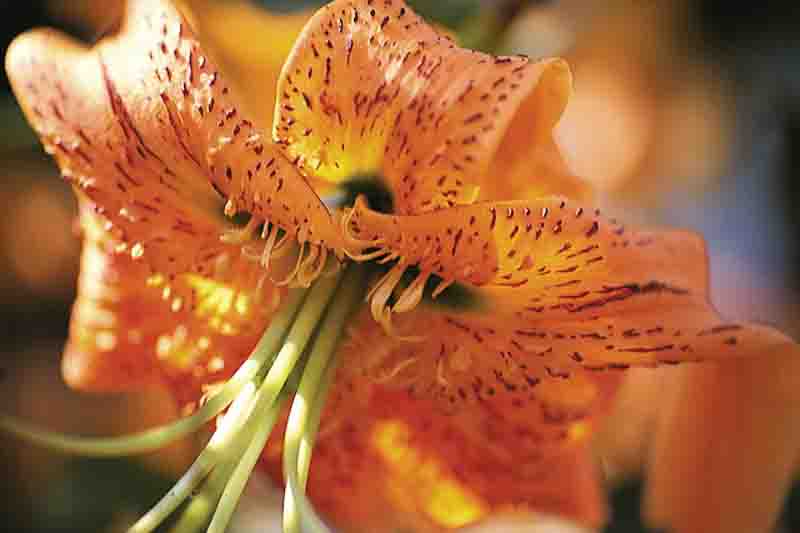
One of the most architectural wild lilies, Lilium henryi can reach approximately 4-8 ft. (120-240 cm). Its nodding orange flowers have strongly recurved, spotted tepals and appear on tall, commanding stems.
Unlike several acid-loving Asian lilies, Henry’s Lily is comfortable in soils tending toward neutral or alkaline conditions. Its scale makes it especially useful toward the back of a border or among substantial perennial companions.
It is also historically important to lily breeding. The introduction of L. henryi into Trumpet lines helped broaden the range of flower forms associated with many Aurelian lilies.
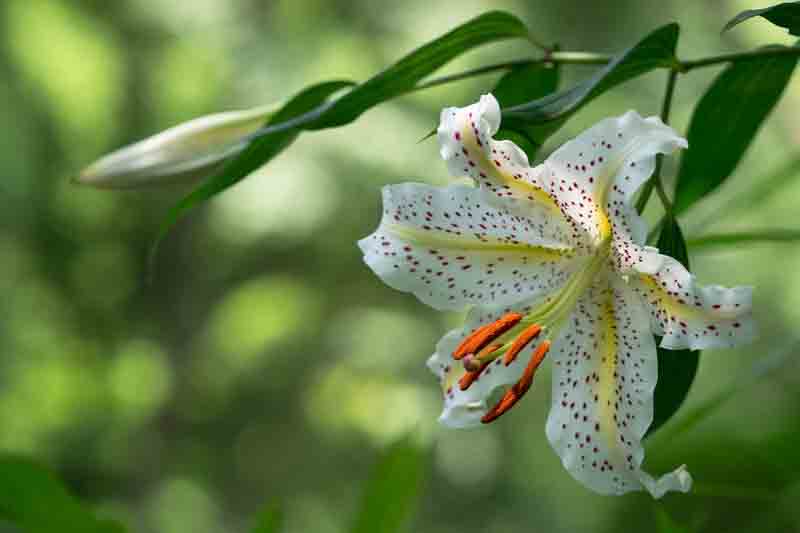
Lilium auratum shows just how spectacular a wild lily can be. Its enormous white flowers may reach about 10 in. (25 cm) across and are marked with a central golden band and crimson spotting. They are also richly fragrant.
This Japanese species grows around 3-4 ft. (90-120 cm) and favors well-drained acidic to neutral soil with adequate moisture. It is one of the important species behind modern Oriental lilies.
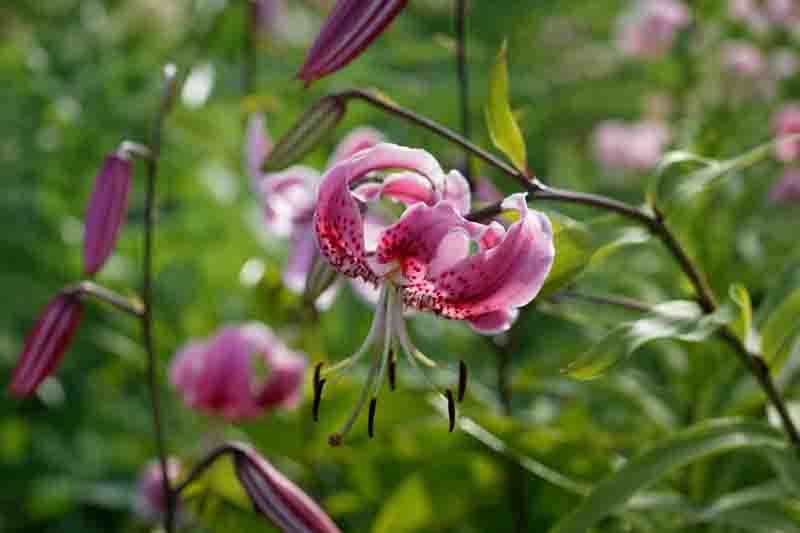
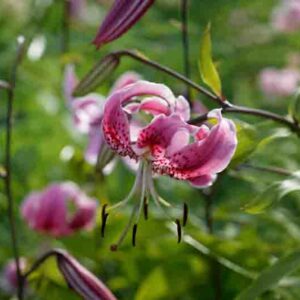
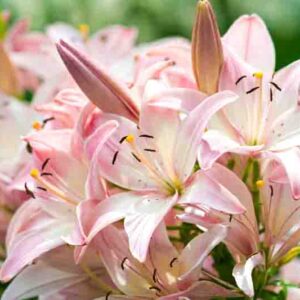
Late-flowering Lilium speciosum var. rubrum combines wild-lily grace with considerable flower drama. Its nodding, fragrant blooms have recurved white tepals flushed raspberry and spotted crimson.
Growing about 4-5 ft. (120-150 cm), it prefers fertile, acidic, well-drained soil with adequate moisture during growth. Together with L. auratum and related East Asian species, it contributed important traits to Oriental hybrid breeding.
Not every important species needs a full profile in the main narrative. Several others in Gardenia’s species collection illustrate additional forms, habitats, and breeding histories.
Species lilies are not simply botanical curiosities. Wild Lilium species provided the genetic foundation for the horticultural divisions that dominate modern gardens and the cut-flower trade.
Growing a species lily therefore offers a glimpse of characteristics that breeders later amplified, combined, or adapted into modern hybrids.
Neither is inherently better. Species and hybrid lilies simply answer different gardening priorities.
Choose species lilies when you value botanical interest, naturalistic character, native plants, unusual flower forms, historical breeding significance, or the challenge of matching a plant closely to its preferred habitat.
Choose hybrid lilies when you want more predictable traits such as a particular color, flower form, bloom season, compact size, strong fragrance, or garden performance deliberately selected through breeding.
Some species lilies are remarkably adaptable, while others are demanding. Some hybrids can also have specific requirements. The practical difference is that wild species often retain ecological preferences shaped directly by their native habitats, so the species name frequently matters more than the broad label “species lily.”
There is no universal species-lily soil, exposure, or watering schedule. The individual species profile should always take priority over broad genus-level advice.
Do not average away the differences. If one species favors acidic mountain soil and another is comfortable in neutral or alkaline conditions, a generic “species lily soil” recommendation is less useful than the individual plant profile.
For the fundamentals that apply across the genus, see Gardenia’s How to Grow and Care for Lilies.
Spring and fall are common planting periods for many lilies, but planting time and depth can vary among species. This is another area where one universal measurement can be misleading.
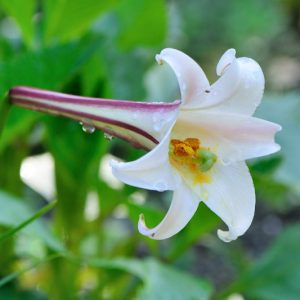
Lilium candidum, for example, is planted much more shallowly than many familiar garden lilies. Other species naturally position their bulbs more deeply or have different rooting and growth habits. Check the individual plant before planting rather than applying the same rule to every wild lily.
Gardenia’s Lily Planting Depth and Spacing Guide provides more specific examples across different lily groups and species.
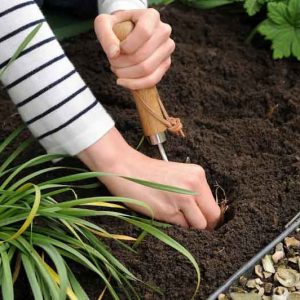
Whatever the planting depth, prepare the site before bulbs arrive. Lily bulbs lack a protective tunic and are generally better planted promptly than stored until their fleshy scales lose excessive moisture.
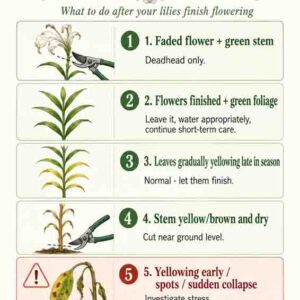
After flowering, remove spent flowers if seed is not required, but keep healthy stems and foliage intact. The leaves continue photosynthesizing and replenishing the bulb for future growth.
If seed is wanted, leave selected capsules to mature. Seed propagation is particularly interesting with species lilies because it can preserve and increase a species rather than attempting to reproduce the characteristics of a complex hybrid cultivar.
Do not cut healthy green stems to ground level simply because flowering has finished. Wait until the foliage yellows or browns naturally.
For complete seasonal advice, see Gardenia’s What to Do With Lilies After They Bloom.
Species lilies can be propagated by seed, offsets, bulb scales, and, depending on the species, division of naturally spreading bulbs or rhizomatous structures.
Seed is especially valuable for maintaining species, but patience may be required. Germination behavior differs among lilies, and some have delayed or multi-stage germination. Seedlings may then take several years to reach flowering size.
Offsets are usually simpler where established bulbs have multiplied naturally. Stolons, rhizomatous growth, bulbils, and other reproductive strategies occur in different species, another reason to understand the plant rather than applying one propagation method to the entire group.
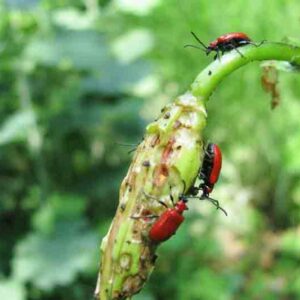
Species lilies remain true Lilium and can suffer from many of the same pests and diseases as hybrid lilies.
With species lilies, environmental mismatch should also be considered when a plant declines. Poor growth may result from unsuitable summer heat, winter wet, soil chemistry, moisture, or light rather than a pest or pathogen.
Yes. True lilies in the genus Lilium are extremely dangerous to cats. Flowers, leaves, stems, pollen, and even water from a vase containing lilies can present a serious risk, and exposure can cause acute kidney injury.
If exposure is suspected, seek urgent veterinary attention rather than waiting for symptoms. See Gardenia’s Lilies and Cats Safety Guide for more information.
For a rock garden or smaller space: consider Lilium pumilum or compact Lilium formosanum var. pricei.
For light woodland shade: try Lilium hansonii or, where its more particular requirements can be met, Lilium nepalense.
For a dramatic western North American native: consider Lilium pardalinum or Lilium columbianum.
For a tall moisture-loving North American native: look at Lilium superbum.
For an upward-facing native flower: Lilium philadelphicum offers a very different effect from nodding Turk’s cap lilies.
For exceptional height: Lilium henryi can become an imposing architectural plant.
For enormous fragrant flowers: consider Lilium auratum.
For a classic fragrant trumpet-flowered species: consider Lilium regale.
For a late-flowering fragrant species: try Lilium speciosum var. rubrum.
For an unusual specialist: Lilium nepalense rewards gardeners who can provide its preferred cool, acidic, moisture-balanced conditions.
The term “species lily” tells you where a plant came from botanically. It does not tell you whether that lily will thrive in your garden.
Use Gardenia’s Lilium Comparison Tool to compare lilies by height, hardiness, bloom season, flower color, soil, drainage, pH, light, and other garden characteristics.
You can also browse Gardenia’s complete Lilium plant collection or explore the Lilium guide library.
Start with the habitat, then compare the plants. Gardenia’s individual species records let you move from a broad recommendation such as “woodland lily” or “North American native lily” to the species whose hardiness, light, soil, moisture, pH, mature size, and garden role actually fit your site.
Browse the species lilies below to compare flower form, height, native range, hardiness, light, soil, moisture, bloom season, and garden use. Open each Gardenia profile for detailed growing requirements before deciding which wild lily best fits your garden.
| Hardiness |
3 - 9 |
|---|---|
| Plant Type | Bulbs, Perennials |
| Genus | Lilium |
| Exposure | Full Sun, Partial Sun |
| Season of Interest | Summer (Early, Mid, Late) |
| Maintenance | Low |
| Water Needs | Average |
| Soil Type | Chalk, Clay, Loam, Sand |
| Soil pH | Acid, Alkaline, Neutral |
| Soil Drainage | Moist but Well-Drained, Well-Drained |
| Characteristics | Cut Flowers, Fragrant, Showy |
| Landscaping Ideas | Beds And Borders, Patio And Containers |
| Garden Styles | City and Courtyard, Cutting Garden, Informal and Cottage |
A species lily is a naturally occurring wild member of the genus Lilium rather than a complex garden hybrid. Most species and their directly selected forms and cultivars fall within Horticultural Division IX, with specific ancestry-based exclusions classified elsewhere.
Some species lilies are adaptable and relatively easy, while others have specific requirements for soil, moisture, drainage, summer temperature, or winter conditions. The individual species should be matched to the garden rather than treated as one uniform group.
It depends on the species. Some wild lilies perform best in sunny meadows or open ground, while others favor woodland edges or light shade. Check the natural habitat and individual plant profile before choosing a site.
There is no single soil requirement for all species lilies. Some favor acidic soil, others tolerate neutral or alkaline conditions, and moisture and drainage requirements also vary. Match the soil to the individual species.
North America has many native Lilium species, including Lilium canadense, Lilium superbum, Lilium philadelphicum, Lilium michiganense, Lilium columbianum, and Lilium pardalinum. Their habitats and growing requirements differ considerably.
Lilium pumilum is one useful compact option, generally growing about 1 to 2 feet tall. Lilium formosanum var. pricei is another compact species choice with large fragrant trumpet-shaped flowers.
Height varies greatly among wild lilies. Gardenia records Lilium henryi at about 4 to 8 feet and Lilium superbum at about 6 to 9 feet under suitable conditions, making both impressive architectural species.
Yes. Many species lilies can be propagated from seed, but germination behavior differs among species and seedlings may take several years to flower. Offsets and bulb scales can provide alternative methods of propagation.
Yes. Wild Lilium species provided the genetic foundation for the major horticultural lily divisions. Different species contributed to Asiatic, Martagon, Candidum, American, Longiflorum, Trumpet, Oriental, and later interdivisional hybrid groups.
Yes. True lilies in the genus Lilium are extremely dangerous to cats. Flowers, leaves, stems, pollen, and water from a vase containing lilies can present a serious risk. Seek urgent veterinary attention if exposure is suspected.
Species lilies are not one uniform garden group. They range from compact plants suited to rock gardens to towering woodland and wet-meadow lilies, with major differences in light, soil chemistry, moisture, climate, flower direction, fragrance, and mature size.
The key to growing them successfully is therefore not finding a generic species-lily care formula. It is understanding where the individual species came from and reproducing the conditions that matter most.
Choose the habitat first, then the flower. When a species and garden are well matched, wild lilies can offer natural beauty, botanical history, and ecological character quite different from the deliberately selected qualities of modern hybrids.
Updated: August 2026 • Reviewed by Gardenia Editors
| Hardiness |
3 - 9 |
|---|---|
| Plant Type | Bulbs, Perennials |
| Genus | Lilium |
| Exposure | Full Sun, Partial Sun |
| Season of Interest | Summer (Early, Mid, Late) |
| Maintenance | Low |
| Water Needs | Average |
| Soil Type | Chalk, Clay, Loam, Sand |
| Soil pH | Acid, Alkaline, Neutral |
| Soil Drainage | Moist but Well-Drained, Well-Drained |
| Characteristics | Cut Flowers, Fragrant, Showy |
| Landscaping Ideas | Beds And Borders, Patio And Containers |
| Garden Styles | City and Courtyard, Cutting Garden, Informal and Cottage |
Create a membership account to save your garden designs and to view them on any device.
Becoming a contributing member of Gardenia is easy and can be done in just a few minutes. If you provide us with your name, email address and the payment of a modest $25 annual membership fee, you will become a full member, enabling you to design and save up to 25 of your garden design ideas.
Join now and start creating your dream garden!
Create a membership account to save your garden designs and to view them on any device.
Becoming a contributing member of Gardenia is easy and can be done in just a few minutes. If you provide us with your name, email address and the payment of a modest $25 annual membership fee, you will become a full member, enabling you to design and save up to 25 of your garden design ideas.
Join now and start creating your dream garden!