Bold, easy, and remarkably versatile, Asiatic lilies bring brilliant color to the early-summer garden. Discover how to choose the best cultivars, plant bulbs correctly, grow lilies in borders or pots, manage soil and water, handle after-bloom care, avoid common problems, and create a spectacular display year after year.
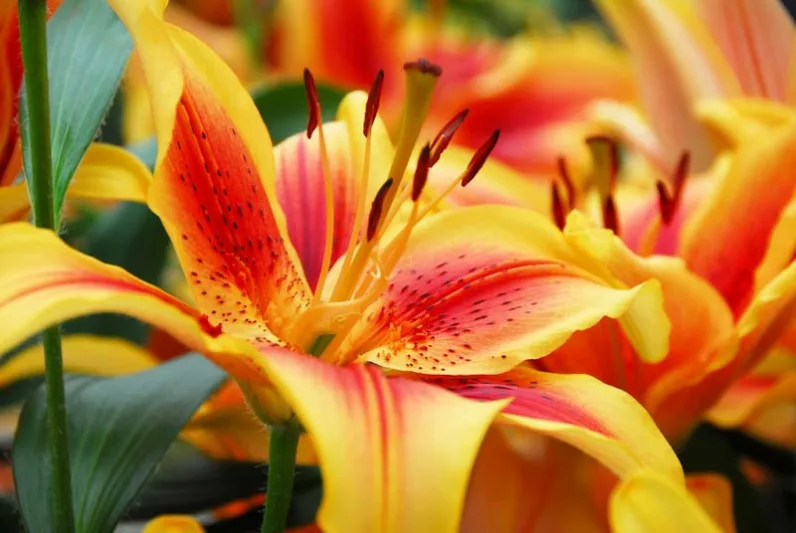


Few summer bulbs deliver as much color with as little fuss as Asiatic lilies. These true lilies in the genus Lilium are among the earliest hybrid lilies to flower, bringing brilliant color to the garden from early to midsummer.
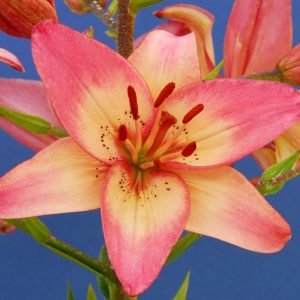
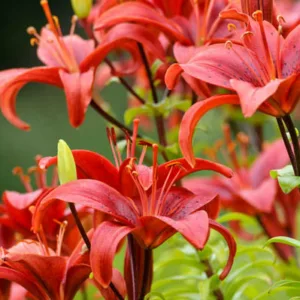
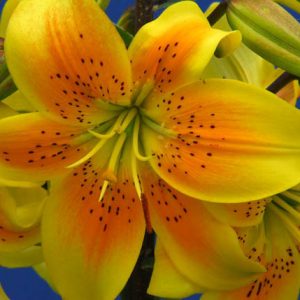
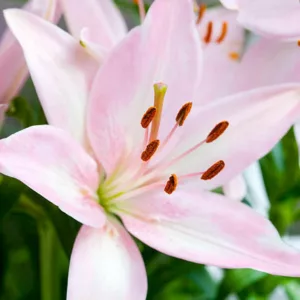
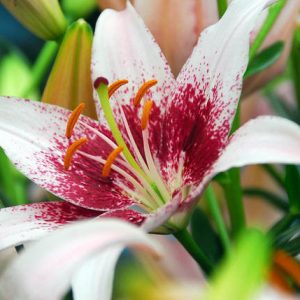
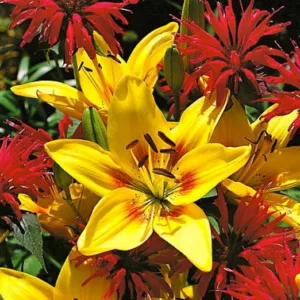
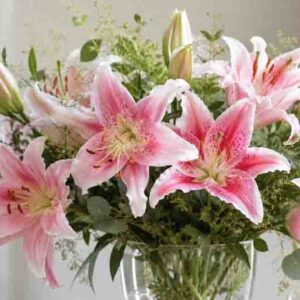
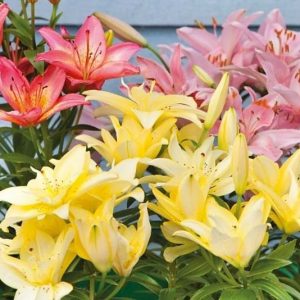
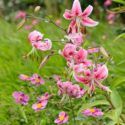
Asiatic lilies are famous for their extraordinary range of colors – white, cream, yellow, gold, orange, salmon, pink, scarlet, crimson, burgundy, and dramatic bicolors. They are also among the easiest lilies to grow, combining good cold hardiness, adaptability, sturdy stems, and excellent performance in borders, cutting gardens, and containers.
Most Asiatic lilies have little or no fragrance, which clearly separates them from strongly scented Oriental lilies and Trumpet lilies. But beyond those broad traits, this is an exceptionally diverse group. Individual cultivars differ greatly in height, flower size, markings, flower direction, hardiness, and garden use.
That diversity is important. A dwarf Asiatic lily may stay below 2 ft. (60 cm), while another cultivar reaches 4-5 ft. (120-150 cm). Some produce relatively modest flowers, while selections such as ‘Dot Com’ and ‘Brunello’ can carry flowers around 8 in. (20 cm) across.
Gardenia’s shortcut: choose Asiatic lilies for early color, reliability, and easy cultivation – then choose the cultivar for the height, flower size, color, and garden role you actually need.
| Feature | Asiatic Lily Profile |
|---|---|
| Botanical group | Lilium Asiatic Hybrids – Horticultural Division I |
| Plant type | Bulbous perennial |
| Bloom season | Early to midsummer |
| Typical height | Often 2-5 ft. (60-150 cm), with dwarf cultivars below this range |
| Flower size | Often 4-6 in. (10-15 cm), with some cultivars reaching about 8 in. (20 cm) |
| Fragrance | Usually little or none; occasional cultivars may be lightly scented |
| Light | Full sun to partial shade |
| Soil | Fertile, moist but well-drained; broadly pH-flexible, often performing particularly well in slightly alkaline soil |
| Hardiness | Many cultivars USDA Zones 4-8; check the individual cultivar |
| Best uses | Beds, borders, containers, cutting gardens, cottage gardens, and mass plantings |
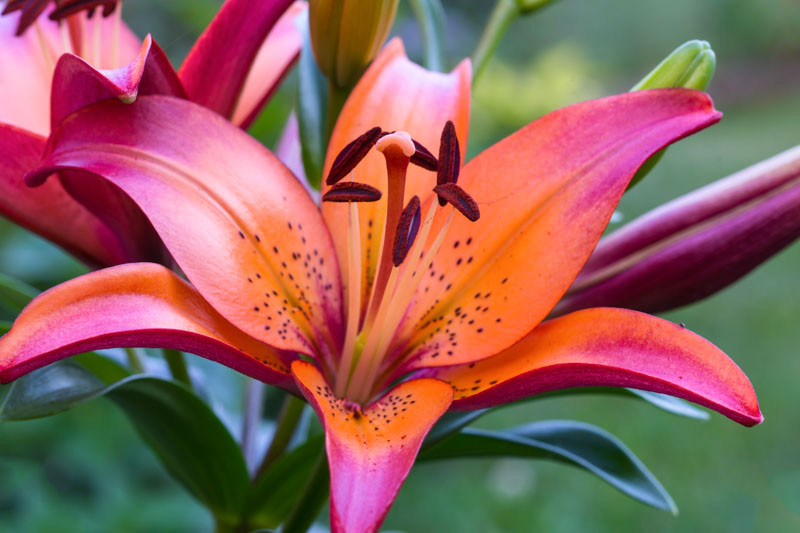
Asiatic lilies belong to Lilium Horticultural Division I. Their ancestry includes several Asian lily species and interspecific hybrids, and decades of breeding have produced one of the most colorful and garden-friendly groups within the genus.
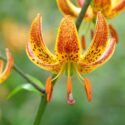
They generally form upright stems clothed with narrow green leaves, with flower buds developing toward the upper part of the stem. Flowers may be upward-facing, outward-facing, or pendant, depending on the cultivar.
The flowers themselves are remarkably varied. Asiatic lilies may have:
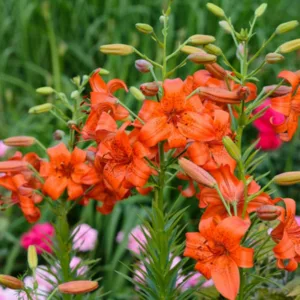
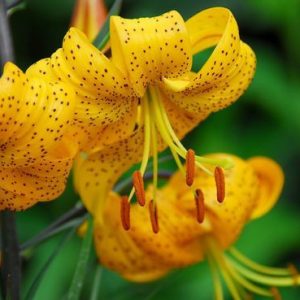
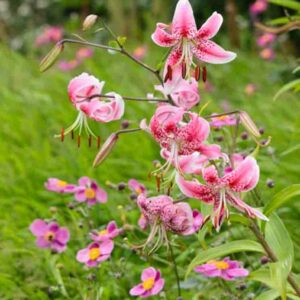
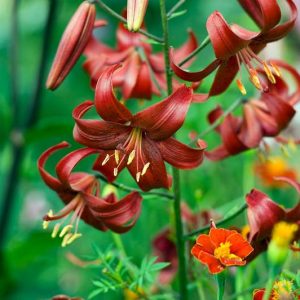
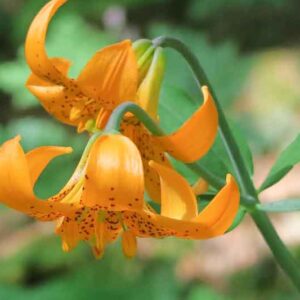
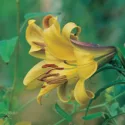
Many modern Asiatics hold their flowers upward, making their color highly visible from across the garden. Others, such as ‘Citronella’, produce pendant, recurved flowers and demonstrate just how varied the group can be.
Asiatic lilies are among the earliest hybrid lilies to flower, generally opening from early to midsummer. Exact bloom time depends on the cultivar, climate, spring temperatures, and planting time.
An individual cultivar may flower for several weeks, but gardeners can extend the display much longer by combining different lily groups. Asiatic lilies typically begin the sequence before many Trumpet, Oriental, and Orienpet lilies reach their peak.
For a longer lily season: begin with Asiatics, then continue with later-flowering lily groups. Gardenia’s Lilies for Long Summer Blooms explains how to create a longer succession.
For an even broader look at how lilies fit into summer planting, explore Gardenia’s 26 Must-Grow Summer Bulbs for Gardens and Pots.
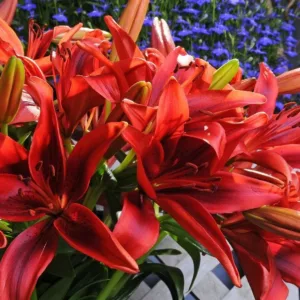
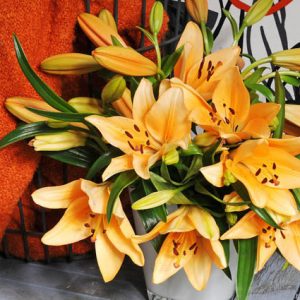
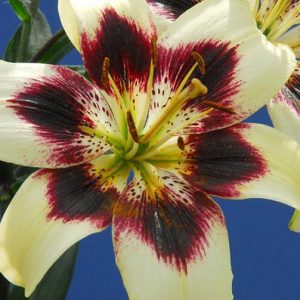
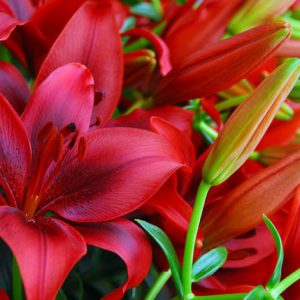
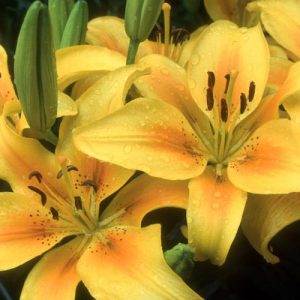
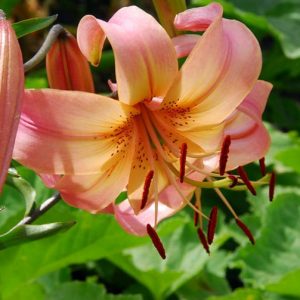
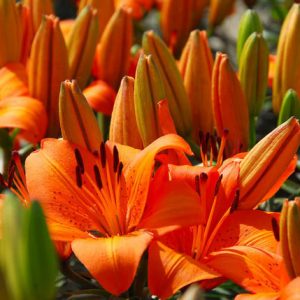
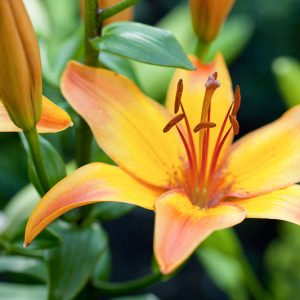
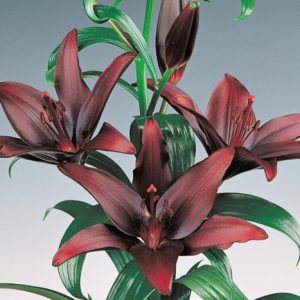
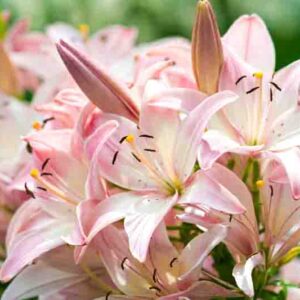
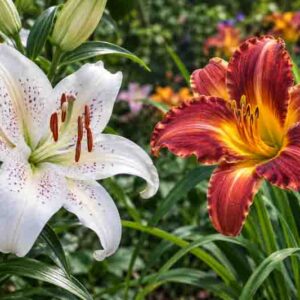
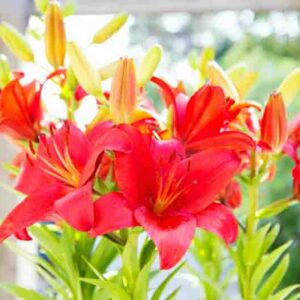
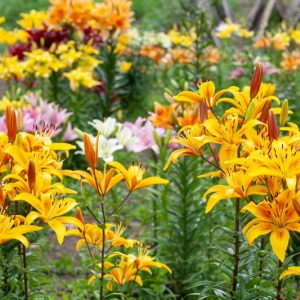
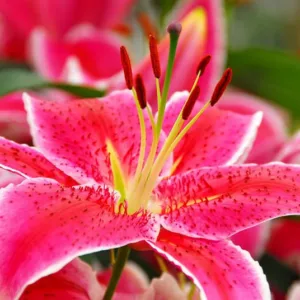
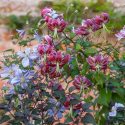
Color range is one of the greatest strengths of Asiatic lilies. Flowers may be white, cream, pale yellow, gold, apricot, orange, salmon, pink, scarlet, red, burgundy, or almost black-red.
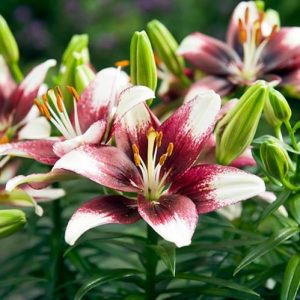
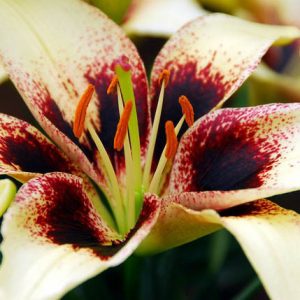
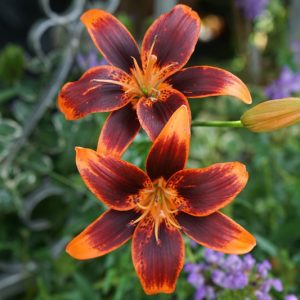
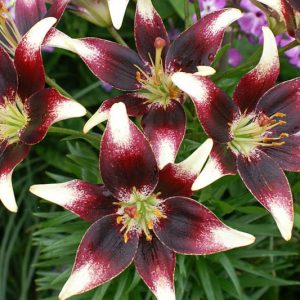
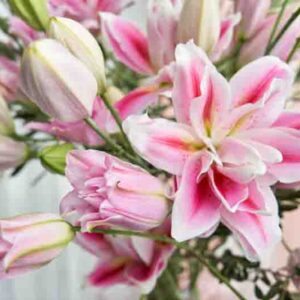
Bicolors are especially valuable because they create complex color combinations without requiring several different plants. ‘Forever Susan’, for example, combines dark burgundy with brilliant orange and gold, while ‘Netty’s Pride’ pairs a dark maroon-purple center with creamy white tips.
There are no true blue Asiatic lilies. If a design calls for blue or violet, use neighboring perennials in those colors to contrast with yellow, orange, red, or pink lilies.
Most Asiatic lilies have little or no fragrance. Gardenia’s wider Lilium selection guide likewise distinguishes Asiatics from strongly scented Oriental and Trumpet lilies.
Lack of fragrance can actually be useful. Asiatic lilies are excellent choices for small patios, outdoor dining areas, cutting gardens, and indoor arrangements where heavy floral perfume might be overwhelming.
There are occasional exceptions. Gardenia’s record for ‘Tiny Todd’, for example, describes its flowers as slightly fragrant. This is another reason to check individual cultivars rather than treating every characteristic of the group as absolute.
If fragrance is your priority, explore Gardenia’s Most Fragrant Lilies.
Asiatic lilies are often summarized as plants about 2-5 ft. (60-150 cm) tall, but cultivar differences are substantial.
Dwarf lilies can stay around 18-24 in. (45-60 cm), making them ideal for containers and the front of borders. Many popular cultivars fall around 2-3 ft. (60-90 cm), while selections such as ‘Giraffe’ can reach 4-5 ft. (120-150 cm).
Gardenia cultivar insight: “Asiatic” does not describe one fixed size or flower type. Gardenia’s records include dwarf ‘Tiny Todd’ at about 18-24 in. (45-60 cm), 4-5 ft. ‘Giraffe’, giant-flowered ‘Dot Com’ and ‘Brunello’, and even lightly scented exceptions. The group gives you the general character – the cultivar determines the plant you actually grow.
Asiatic lilies grow best in full sun to partial shade. Good light encourages strong stems and abundant flowering, although some afternoon shade can be useful where summers are particularly hot.
A useful design principle is to keep the upper stems and flowers in good light while allowing neighboring plants to shade the soil around the bulbs. Low-growing perennials, grasses, and groundcovers can help cool the root zone without hiding the flowers.
Avoid deep shade. Plants grown with too little light may stretch, become weaker, and flower less generously.
Asiatic lilies are especially useful in:
Good drainage is one of the most important requirements for healthy Asiatic lilies. Their bulbs are fleshy and can rot when left for long periods in saturated, poorly aerated soil.
Asiatic lilies are relatively flexible in soil pH. Many Gardenia cultivar records list acidic, neutral, and alkaline soil, while broader horticultural guidance notes that Asiatic hybrids often perform especially well under slightly alkaline conditions.
Site-fit priority: get the drainage right first. A cultivar with perfect flower color is still a poor choice if its bulb will spend winter sitting in water.
Plant Asiatic lily bulbs in fall or early spring. Lily bulbs lack the dry protective tunic found on bulbs such as tulips, so they should be planted reasonably promptly rather than left exposed to dry out.
Most Asiatic lilies are basal-rooting. Planting depth therefore differs from the recommendations used for stem-rooting lilies, and exact depth can also vary with bulb size and growing conditions.
Because lily type matters, use Gardenia’s Lily Planting Depth and Spacing Guide for detailed instructions rather than relying on one universal depth.
For complete seasonal care, see Gardenia’s How to Grow Lilies: Planting, Care and Troubleshooting.
Asiatic lilies are among the easiest lilies to grow in containers because many cultivars remain relatively compact and their lack of strong perfume suits small patios and balconies.
Choose a deep, stable pot with generous drainage holes. The container must hold enough compost to support the bulbs and flowering stems without becoming waterlogged.
Gardenia’s Lilium selection hub specifically recommends compact Asiatic and Oriental hybrids for containers. See Best Lilies for Pots and Containers for suitable cultivars and detailed advice.
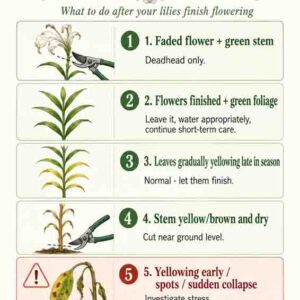
When the flowers fade, remove the spent blooms if you are not saving seed, but leave healthy green leaves and stems intact.
The foliage continues to photosynthesize after flowering, helping replenish the bulb for the following year’s growth.
Gardenia’s after-bloom rule: Flowers Off, Foliage On. Removing spent flowers is fine; removing healthy green foliage too early reduces the bulb’s opportunity to recharge.
Healthy Asiatic lilies gradually form larger clumps as bulbs produce offsets. They do not need annual division, but older clumps can eventually become crowded.
Offsets can be separated when foliage has died down and plants are dormant. Replant them promptly because lily bulbs lack a protective tunic and can lose moisture quickly.
Lilies can also be propagated from bulb scales. Seed propagation is possible, but seedlings from hybrid cultivars may not reproduce the parent plant exactly.
Asiatic lilies are generally dependable, but several pests and diseases can affect them.
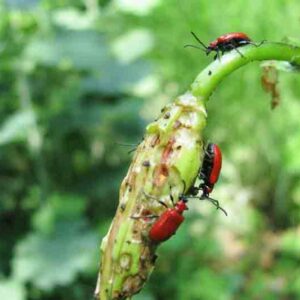
Problems can include gray mold or Botrytis, lily diseases, viruses, and bulb or basal rots. Poor drainage is especially damaging because weakened or waterlogged bulbs are much more vulnerable to decay.
Start with healthy bulbs, avoid overcrowding, provide good air circulation, and remove badly diseased plant material. For bulb problems, see Gardenia’s Bulb Rot: Identification, Prevention and Treatment.
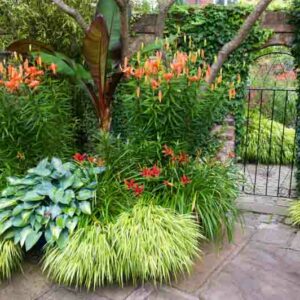
Asiatic lilies are most effective when they look intentionally planted rather than scattered randomly through a border. Groups of several bulbs create enough flower mass to compete visually with established perennials.
Neighboring plants can also disguise the lower stems and take over visually after the lilies finish blooming. The best companions share similar light, moisture, and drainage requirements without smothering the bulbs.
Gardenia’s Great Companion Plants for Asiatic Hybrid Lilies provides specific combinations, while Great Companion Plants for Lilies explains the broader companion-selection principles. Both pages are live.
Choose Asiatic lilies when you want early flowering, vivid color, easy cultivation, and little fragrance. Other lily groups offer different strengths.
For a full comparison, use Gardenia’s How to Choose Lilies and browse the Lilium plant-selection hub. Gardenia’s lily hub specifically identifies Asiatics as the easiest group, the earliest flowering, and the group offering the widest color range.
For a container: choose a dwarf cultivar such as ‘Tiny Todd’.
For dramatic dark color: try ‘Black Out’, ‘Landini’, or ‘Netty’s Pride’.
For large flowers: consider ‘Dot Com’ or ‘Brunello’.
For bold bicolor: choose ‘Forever Susan’.
For softer color: ‘Rosella’s Dream’ brings cream and cherry-pink tones.
For height: ‘Giraffe’ can reach about 4-5 ft. (120-150 cm).
For naturalizing character: ‘Citronella’ is especially useful because its vigorous bulbs multiply into clumps and produce pendant recurved flowers.
Knowing that you want an Asiatic lily is only the first decision. Cultivars differ enough in height, flower size, color, bloom timing, hardiness, soil fit, and container suitability that the final choice should be made plant by plant.
Know you want an Asiatic lily but not which one? Use Gardenia’s Lilium Comparison Tool to compare plants by height, hardiness, bloom season, flower color, soil, drainage, pH, light, and other garden characteristics – then narrow the list to lilies that actually fit your site.
You can also browse Gardenia’s complete Lilium plant collection or explore the Lilium guide library for more growing, selection, and design advice.
An AI can tell you that Asiatic lilies are early, colorful, and easy to grow. Gardenia helps you decide which actual lily belongs in your garden.
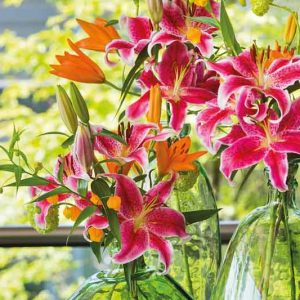
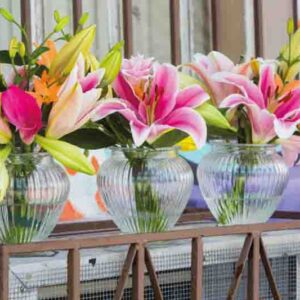
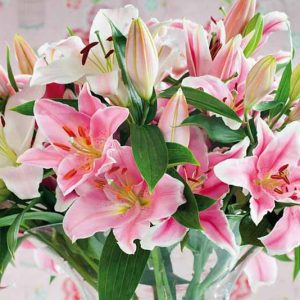
Asiatic lilies make excellent cut flowers because their sturdy stems, bright colors, and low fragrance work well in bouquets and mixed arrangements.
When cutting flowers from plants you want to keep in the garden, leave plenty of stem and foliage behind so the bulb can continue photosynthesizing after bloom.
For ideas beyond the garden border, explore Gardenia’s Lily Flowers: Types, Colors, Meaning and Uses, which covers lilies from garden selections to floral arrangements.
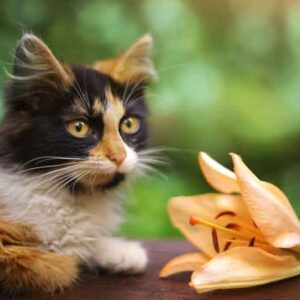
Yes. Asiatic lilies are true lilies in the genus Lilium and are extremely dangerous to cats. Flowers, leaves, stems, and pollen can all present a serious risk, and water from a vase containing true lilies can also be dangerous.
If exposure is suspected, seek veterinary attention immediately rather than waiting for symptoms to appear. Be particularly careful with cut lilies indoors, where fallen pollen and vase water may be accessible.
Once you know the conditions Asiatic lilies need, the fun begins: choosing the cultivar. The selections below illustrate the extraordinary range within the group – from dwarf container lilies and giant-flowered cultivars to fiery reds, near-black burgundy, pastels, bicolors, and recurved pendant flowers.
| Hardiness |
4 - 8 |
|---|---|
| Heat Zones |
1 - 7 |
| Climate Zones | 1, 2, 3, 4, 5, 6, 7, 8, 9, 14, 15, 16, 17, 18, 19, 20, 21, 22, 23 |
| Plant Type | Bulbs, Perennials |
| Genus | Lilium |
| Exposure | Full Sun, Partial Sun |
| Season of Interest | Summer (Early, Mid) |
| Height | 2' - 5' (60cm - 150cm) |
| Spread | 1' - 2' (30cm - 60cm) |
| Maintenance | Low |
| Water Needs | Average |
| Soil Type | Chalk, Clay, Loam, Sand |
| Soil pH | Acid, Alkaline, Neutral |
| Soil Drainage | Moist but Well-Drained, Well-Drained |
| Characteristics | Cut Flowers, Fragrant, Showy |
| Landscaping Ideas | Beds And Borders, Patio And Containers |
| Garden Styles | City and Courtyard, Cutting Garden, Informal and Cottage, Traditional Garden |
Yes. Asiatic lilies are bulbous perennials and return year after year where the cultivar is hardy and the bulbs are grown in suitable, well-drained conditions.
Asiatic lilies are among the earliest hybrid lilies to flower and generally bloom from early to midsummer. Exact timing varies with cultivar, climate, spring temperatures, and planting time.
Most Asiatic lilies have little or no fragrance, although occasional cultivars may be lightly scented. Gardeners seeking strongly fragrant lilies should usually consider Oriental, Trumpet, or some Orienpet lilies instead.
Many Asiatic lilies grow about 2 to 5 feet tall, but cultivar variation is substantial. Dwarf cultivars can stay below 2 feet, while taller selections may reach 4 to 5 feet.
Asiatic lilies grow in full sun or partial shade. Good light encourages strong growth and flowering, although some afternoon shade can be useful in hotter climates.
Asiatic lilies perform best in fertile, moist but well-drained soil. They are relatively adaptable in soil pH, but good drainage is essential because lily bulbs can rot in waterlogged conditions.
Plant Asiatic lily bulbs in fall or early spring. Plant healthy bulbs reasonably promptly after purchase because lily bulbs lack a dry protective tunic and can lose moisture in storage.
Yes. Asiatic lilies are excellent container plants, especially dwarf and medium-height cultivars. Use a deep, stable container with good drainage and a fertile, free-draining growing medium.
Deadhead faded flowers if you are not saving seed, but leave healthy green foliage in place. Cut stems back only after the leaves and stems have yellowed or browned naturally.
Yes. Asiatic lilies are true lilies in the genus Lilium and are extremely dangerous to cats. Flowers, leaves, stems, pollen, and even water from a vase containing lilies can present a serious risk. Seek urgent veterinary attention if exposure is suspected.
Asiatic lilies deserve their reputation as some of the easiest and most versatile true lilies. They begin the summer lily season with brilliant color, grow successfully in a wide range of gardens, and include cultivars suited to everything from small patio containers to substantial perennial borders.
The real strength of the group is its diversity. Choose by flower color alone and you may miss the cultivar that best fits your space. Compare height, flower form, bloom timing, hardiness, and intended use, and Asiatic lilies become far more useful garden plants.
Updated: August 2026 • Reviewed by Gardenia Editors
| Hardiness |
4 - 8 |
|---|---|
| Heat Zones |
1 - 7 |
| Climate Zones | 1, 2, 3, 4, 5, 6, 7, 8, 9, 14, 15, 16, 17, 18, 19, 20, 21, 22, 23 |
| Plant Type | Bulbs, Perennials |
| Genus | Lilium |
| Exposure | Full Sun, Partial Sun |
| Season of Interest | Summer (Early, Mid) |
| Height | 2' - 5' (60cm - 150cm) |
| Spread | 1' - 2' (30cm - 60cm) |
| Maintenance | Low |
| Water Needs | Average |
| Soil Type | Chalk, Clay, Loam, Sand |
| Soil pH | Acid, Alkaline, Neutral |
| Soil Drainage | Moist but Well-Drained, Well-Drained |
| Characteristics | Cut Flowers, Fragrant, Showy |
| Landscaping Ideas | Beds And Borders, Patio And Containers |
| Garden Styles | City and Courtyard, Cutting Garden, Informal and Cottage, Traditional Garden |
Create a membership account to save your garden designs and to view them on any device.
Becoming a contributing member of Gardenia is easy and can be done in just a few minutes. If you provide us with your name, email address and the payment of a modest $25 annual membership fee, you will become a full member, enabling you to design and save up to 25 of your garden design ideas.
Join now and start creating your dream garden!
Create a membership account to save your garden designs and to view them on any device.
Becoming a contributing member of Gardenia is easy and can be done in just a few minutes. If you provide us with your name, email address and the payment of a modest $25 annual membership fee, you will become a full member, enabling you to design and save up to 25 of your garden design ideas.
Join now and start creating your dream garden!