Cardinal Flower, Water Gladiole, Red Bay, Scarlet Lobelia, Slinkweed, Bog Sage, Hog's Physic, Indian Pink, Lobelia fulgens, Lobelia splendens
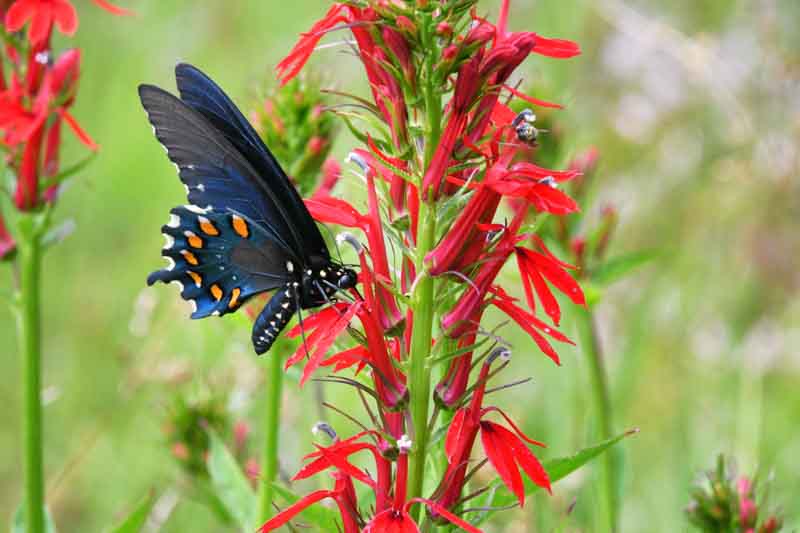
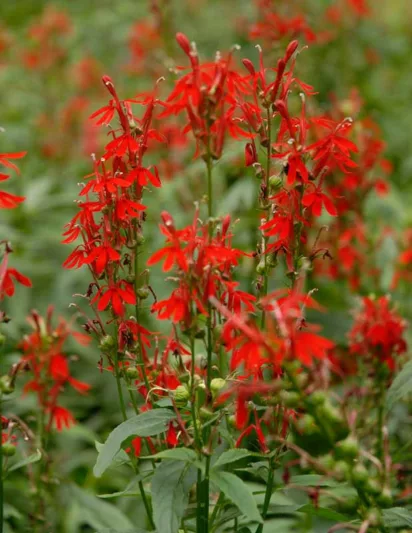
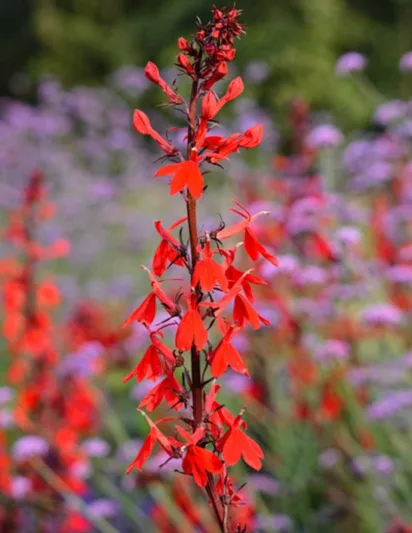


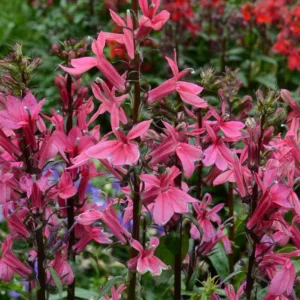
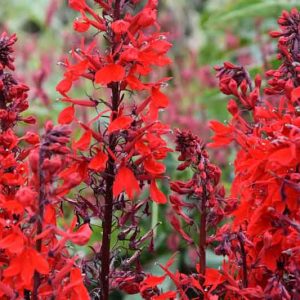
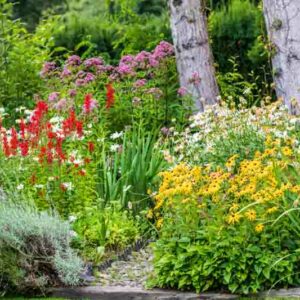
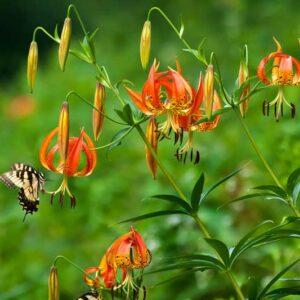
If you’re dreaming of a late-summer garden that absolutely glows, Lobelia cardinalis, commonly known as Cardinal Flower, is one of the most breathtaking native perennials you can grow. With its tall, upright spikes packed with brilliant cardinal-red flowers, this moisture-loving beauty puts on a performance that hummingbirds and gardeners never forget. Those vivid red blooms look almost electric in the landscape, especially when sunlight filters through them at dusk. The effect is nothing short of magical.
Cardinal Flower naturally thrives along streams, pond edges, marshes, damp meadows, and rain gardens, where soil stays consistently moist. If you have a wet spot where most plants struggle, this is a native star that will reward you with vertical drama, rich color, intense wildlife activity, and a surprisingly easygoing nature. Give it moist to wet soil, full sun to partial shade, and a little afternoon shade in hot climates, and you’ll enjoy bloom spikes from midsummer into early fall.
Summary: Striking native perennial with upright flower spikes covered in vivid red, two-lipped blooms that attract hummingbirds like magnets.
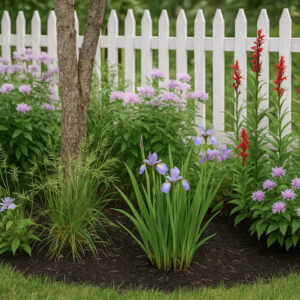
Use: Perfect for rain gardens, wet beds and borders, ponds and stream edges, wild gardens, cottage gardens, and butterfly gardens.
Highlight: Long bloom season from midsummer to fall, unmatched hummingbird attraction, and beautiful vertical structure.
Note: Prefers consistently moist to wet soil. Short-lived but reliably self-seeds in ideal conditions.
| Botanical Name | Lobelia cardinalis |
|---|---|
| Family | Campanula family (Campanulaceae) |
| Common Names | Cardinal Flower, Scarlet Lobelia, Red Lobelia |
| Native Range | Native to North America, found in wetlands, streamsides, moist forests, and meadows from Canada through the United States. |
| Plant Type and Habit | Upright, clump-forming herbaceous perennial with tall flower spikes rising above basal rosettes of bright green foliage. |
| Hardiness (approx. USDA) | Zones 3 to 9, thriving in moist, cool-to-warm climates and tolerant of cold winters. |
| Size | Typically 2 to 4 ft. tall (60 to 120 cm) and 1 to 2 ft. wide (30 to 60 cm). |
| Sun and Exposure | Full sun to partial shade. Appreciates some afternoon shade in hot climates. |
| Soil | Prefers rich, moist to wet soils. Tolerates poor drainage and shallow standing water up to about 3 in. (7 cm). |
| Seasonal Interest | Bold red flower spikes from midsummer through early fall and lush green foliage throughout the growing season. |
| Primary Uses | Rain gardens, pond edges, moist borders, wildlife and native gardens, wet meadows, cottage gardens. |
Lobelia cardinalis is a striking upright perennial treasured for its tall spikes of vivid scarlet flowers, each around 2 inches long (5 cm). The blooms have a distinctive two-lipped structure that makes them irresistible to hummingbirds, which can easily access their nectar. These flowers rise on sturdy stems above lush basal foliage made of lance-shaped, glossy green leaves.
The plant’s vertical form brings contrast to softer or lower-growing neighbors. Whether used as a focal point or woven through wet, naturalistic plantings, Cardinal Flower commands attention with its flaming-red blossoms and elegant habit.
Cardinal Flower is a widespread North American native, occurring from southeastern Canada across the eastern and central United States and into parts of the Southwest and Mexico. In the wild, it thrives in:
This preference for saturated or consistently moist conditions makes it one of the best perennials for challenging wet sites. Best Plants for Clay Soil and Poor Drainage
Cardinal Flower forms low, leafy rosettes that send up flowering spikes in midsummer. Plants typically reach 2–4 ft. tall. Though short-lived (often 2–4 years), the plant will self-seed politely and maintain a long-term presence in suitable conditions. New seedlings help keep stands fresh and vigorous.
Few flowers are as vividly red as Lobelia cardinalis. Its midsummer bloom coincides with peak hummingbird activity, and it is one of the most reliable perennials for feeding them. Blooms last well into early fall, especially when deadheaded. Each spike can hold dozens of blossoms, creating a pillar of saturated color in the garden.
The bright green leaves form an appealing base throughout spring and early summer. After flowering, plants can be cut back, and the foliage regrows fresh and clean. While the foliage is not as showy as the blooms, it provides lush texture and contrast to grasses and coarse-leaved perennials in moist areas.
Cardinal Flower thrives in USDA Zones 3–9 and handles cold winters exceptionally well. The key to success is preventing the crown from drying out—moist soil is more important than temperature for survival.
You can use Cardinal Flower in a variety of moisture-rich settings:
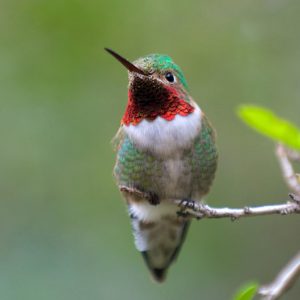
This plant is beloved by pollinators. The tubular shape is adapted perfectly for hummingbirds, while butterflies and bees also visit frequently. Its late-season bloom makes it valuable when nectar sources begin declining.
Cardinal Flower is noted as deer and rabbit resistant, a welcome bonus for gardeners in high-browse areas.
Cardinal Flower is not drought tolerant. Dry soil is the quickest way to lose it. It must be planted where moisture is reliable—ideally a naturally damp site.
The plant contains compounds that may cause discomfort if ingested. It is listed as toxic to dogs, cats, and horses. Avoid planting where curious animals might chew foliage.
As a native species, Cardinal Flower is not invasive. It may self-seed modestly in optimal wet conditions, but it rarely becomes problematic.
Gardeners value Lobelia cardinalis for:
Cardinal Flower thrives in:
Generally pest-free, though occasional aphids may appear.
Low disease risk. Crown rot may occur in stagnant water; provide loose, organic soil.
Decline or death: Usually from drought or poor moisture retention.
Sparse bloom: Caused by too much shade or nutrient-poor soil.
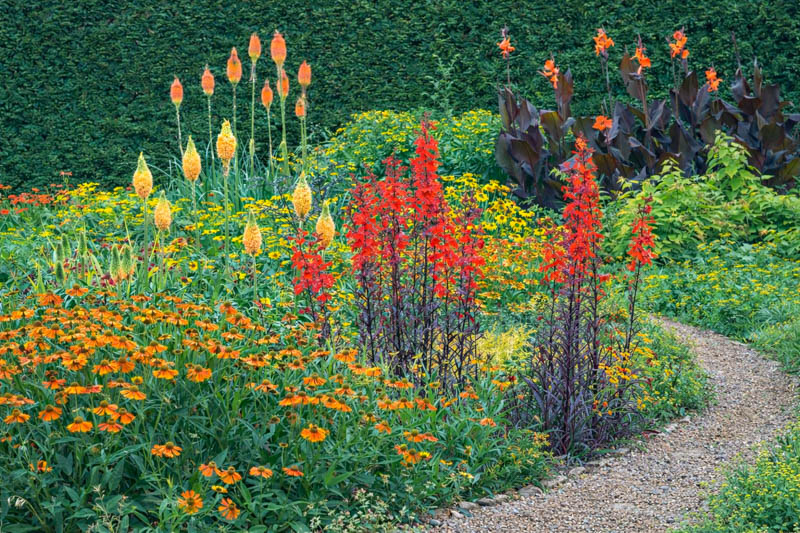
Cardinal Flower is easy to grow in the right conditions—consistently moist to wet soil and sun to partial shade. It fails quickly in dry soil, so reliable moisture is essential.
The most common cause is drought. Cardinal Flower has shallow roots and cannot tolerate dry soil. Increasing irrigation, adding organic mulch, or relocating to a wetter area often solves the issue.
Yes, it is a perennial, though often short-lived. However, it typically self-seeds in suitable conditions, maintaining a long-term presence in the garden.
No. It is a native species that spreads slowly and typically stays where planted. It may self-seed modestly in wet sites but is not considered invasive.
No. It is considered toxic to dogs, cats, and horses if ingested. Symptoms may include vomiting or digestive irritation. Avoid planting where animals may chew the foliage.
Provide full sun, rich soil, and steady moisture. Deadheading spent blooms also encourages additional flowering.
Yes. It tolerates shallow standing water up to about 3 inches deep (7 cm), making it ideal for pond margins and bog gardens.
USDA NRCS – Plant Profile for Lobelia cardinalis
https://plants.usda.gov/home/plantProfile?symbol=LOCA2
Lady Bird Johnson Wildflower Center – Native Plant Database
https://www.wildflower.org/plants/result.php?id_plant=LOCA2
University of Wisconsin Extension – Cardinal Flower Profile
https://hort.extension.wisc.edu/articles/cardinal-flower-lobelia-cardinalis/
Updated: December 2025 • Reviewed by Gardenia Editors
| Hardiness |
3 - 9 |
|---|---|
| Heat Zones |
1 - 8 |
| Climate Zones | 1, 1A, 1B, 2, 2A, 2B, 3, 3A, 3B, 4, 5, 6, 7, 14, 15, 16, 17 |
| Plant Type | Perennials |
| Plant Family | Campanulaceae |
| Genus | Lobelia |
| Common names | Cardinal Flower, Lobelia |
| Exposure | Full Sun, Partial Sun |
| Season of Interest | Summer (Mid, Late), Fall |
| Height | 2' - 4' (60cm - 120cm) |
| Spread | 1' - 2' (30cm - 60cm) |
| Spacing | 12" - 24" (30cm - 60cm) |
| Maintenance | Low |
| Water Needs | High |
| Soil Type | Loam, Clay, Sand |
| Soil pH | Acid, Alkaline, Neutral |
| Soil Drainage | Moist but Well-Drained, Moisture Retentive |
| Characteristics | Showy |
| Native Plants | United States, Pennsylvania, Rhode Island, Vermont, Connecticut, Delaware, Maine, Massachusetts, Maryland, New Hampshire, New Jersey, New York, California, Northeast, Midwest, Southeast, Southwest, Rocky Mountains, Illinois, Indiana, Iowa, Kansas, Michigan, Minnesota, Missouri, Nebraska, Ohio, Wisconsin, Louisiana, Mississippi, North Carolina, South Carolina, Tennessee, Virginia, West Virginia, Alabama, Arkansas, Florida, Georgia, Kentucky, Texas, Arizona, Nevada, New Mexico, Oklahoma, Colorado, Utah |
| Tolerance | Deer, Clay Soil, Rabbit, Wet Soil |
| Attracts | Birds, Butterflies, Hummingbirds |
| Garden Uses | Beds And Borders, Bog Gardens, Ponds And Streams, Rain Gardens, Water Gardens |
| Garden Styles | Informal and Cottage, Traditional Garden |


| Hardiness |
3 - 9 |
|---|---|
| Heat Zones |
1 - 8 |
| Climate Zones | 1, 1A, 1B, 2, 2A, 2B, 3, 3A, 3B, 4, 5, 6, 7, 14, 15, 16, 17 |
| Plant Type | Perennials |
| Plant Family | Campanulaceae |
| Genus | Lobelia |
| Common names | Cardinal Flower, Lobelia |
| Exposure | Full Sun, Partial Sun |
| Season of Interest | Summer (Mid, Late), Fall |
| Height | 2' - 4' (60cm - 120cm) |
| Spread | 1' - 2' (30cm - 60cm) |
| Spacing | 12" - 24" (30cm - 60cm) |
| Maintenance | Low |
| Water Needs | High |
| Soil Type | Loam, Clay, Sand |
| Soil pH | Acid, Alkaline, Neutral |
| Soil Drainage | Moist but Well-Drained, Moisture Retentive |
| Characteristics | Showy |
| Native Plants | United States, Pennsylvania, Rhode Island, Vermont, Connecticut, Delaware, Maine, Massachusetts, Maryland, New Hampshire, New Jersey, New York, California, Northeast, Midwest, Southeast, Southwest, Rocky Mountains, Illinois, Indiana, Iowa, Kansas, Michigan, Minnesota, Missouri, Nebraska, Ohio, Wisconsin, Louisiana, Mississippi, North Carolina, South Carolina, Tennessee, Virginia, West Virginia, Alabama, Arkansas, Florida, Georgia, Kentucky, Texas, Arizona, Nevada, New Mexico, Oklahoma, Colorado, Utah |
| Tolerance | Deer, Clay Soil, Rabbit, Wet Soil |
| Attracts | Birds, Butterflies, Hummingbirds |
| Garden Uses | Beds And Borders, Bog Gardens, Ponds And Streams, Rain Gardens, Water Gardens |
| Garden Styles | Informal and Cottage, Traditional Garden |
How many Lobelia cardinalis (Cardinal Flower) do I need for my garden?
| Plant | Quantity | |
|---|---|---|
| Lobelia cardinalis (Cardinal Flower) | N/A | Buy Plants |
Create a membership account to save your garden designs and to view them on any device.
Becoming a contributing member of Gardenia is easy and can be done in just a few minutes. If you provide us with your name, email address and the payment of a modest $25 annual membership fee, you will become a full member, enabling you to design and save up to 25 of your garden design ideas.
Join now and start creating your dream garden!
Create a membership account to save your garden designs and to view them on any device.
Becoming a contributing member of Gardenia is easy and can be done in just a few minutes. If you provide us with your name, email address and the payment of a modest $25 annual membership fee, you will become a full member, enabling you to design and save up to 25 of your garden design ideas.
Join now and start creating your dream garden!