English Oak, Common Oak, Black Oak, French Oak, Pedunculate Oak, Polish Oak, Slavonian Oak, Quercus pedunculata


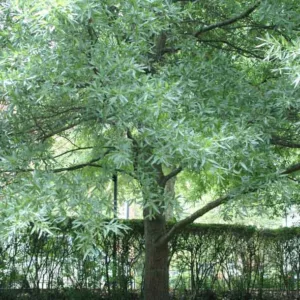
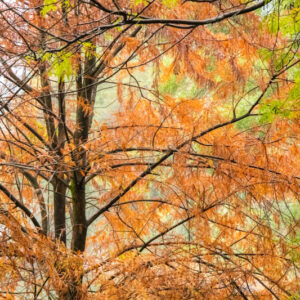
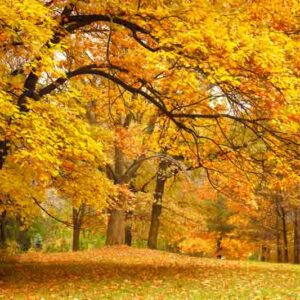
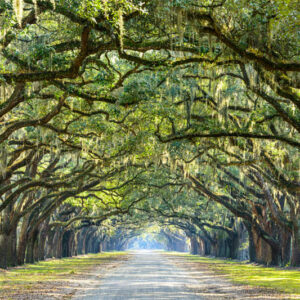
Quercus robur (English Oak) is a majestic, long-lived deciduous tree with a broad, spreading crown and a powerful architectural presence. Its rich blue-green leaves are divided into 3-7 rounded lobes and turn reddish-brown in fall. Inconspicuous yellow-green catkins appear in spring as the new foliage emerges. The short trunk and strong upright branches are clothed in dark gray bark that becomes deeply ridged and furrowed with age, adding strong winter interest.
The oval acorns provide an important food source for birds and small mammals. English Oak may take many years before producing its first substantial acorn crop, but mature trees can become major wildlife resources. Robust and sturdy, it is best suited to large landscapes where its broad crown and massive structure can develop fully.
The oak genus includes many beloved trees, such as Live Oak, White Oak, Red Oak, Blue Oak, Bur Oak, and Pin Oak.
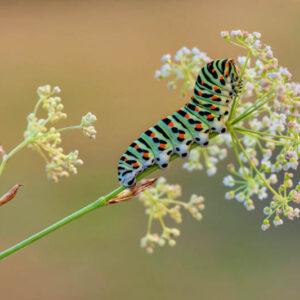
Oaks support an exceptionally wide range of butterfly and moth larvae. Species associated with oaks include the Banded Hairstreak (Satyrium calanus), Edward’s Hairstreak (Satyrium edwardsii), Gray Hairstreak (Strymon melinus), White-M Hairstreak (Parrhasius m-album), Horace’s Duskywing (Erynnis horatius), and Juvenal’s Duskywing (Erynnis juvenalis). Its acorns also provide valuable food for wildlife, including birds and mammals.
| Hardiness |
5 - 8 |
|---|---|
| Heat Zones |
3 - 8 |
| Plant Type | Trees |
| Plant Family | Fagaceae |
| Genus | Quercus |
| Common names | English Oak, French Oak, Oak |
| Exposure | Full Sun |
| Season of Interest | Spring (Early, Mid, Late), Summer (Early, Mid, Late), Fall, Winter |
| Height | 40' - 60' (12.2m - 18.3m) |
| Spread | 40' - 60' (12.2m - 18.3m) |
| Spacing | 480" - 720" (12.2m - 18.3m) |
| Maintenance | Low |
| Water Needs | Average |
| Soil Type | Chalk, Clay, Loam, Sand |
| Soil pH | Acid, Alkaline, Neutral |
| Soil Drainage | Moist but Well-Drained, Well-Drained |
| Characteristics | Showy |
| Native Plants | United Kingdom |
| Tolerances | Drought, Clay Soil |
| Garden Styles | Prairie and Meadow |
| Toxic to Humans | Low severity |
| Toxic to Cats | Not toxic |
| Toxic to Dogs | Not toxic |
| Toxic to Horses | Toxic |


| Hardiness |
5 - 8 |
|---|---|
| Heat Zones |
3 - 8 |
| Plant Type | Trees |
| Plant Family | Fagaceae |
| Genus | Quercus |
| Common names | English Oak, French Oak, Oak |
| Exposure | Full Sun |
| Season of Interest | Spring (Early, Mid, Late), Summer (Early, Mid, Late), Fall, Winter |
| Height | 40' - 60' (12.2m - 18.3m) |
| Spread | 40' - 60' (12.2m - 18.3m) |
| Spacing | 480" - 720" (12.2m - 18.3m) |
| Maintenance | Low |
| Water Needs | Average |
| Soil Type | Chalk, Clay, Loam, Sand |
| Soil pH | Acid, Alkaline, Neutral |
| Soil Drainage | Moist but Well-Drained, Well-Drained |
| Characteristics | Showy |
| Native Plants | United Kingdom |
| Tolerances | Drought, Clay Soil |
| Garden Styles | Prairie and Meadow |
| Toxic to Humans | Low severity |
| Toxic to Cats | Not toxic |
| Toxic to Dogs | Not toxic |
| Toxic to Horses | Toxic |
How many Quercus robur (English Oak) do I need for my garden?
| Plant | Quantity | |
|---|---|---|
| Quercus robur (English Oak) | N/A | Buy Plants |
Create a membership account to save your garden designs and to view them on any device.
Becoming a contributing member of Gardenia is easy and can be done in just a few minutes. If you provide us with your name, email address and the payment of a modest $25 annual membership fee, you will become a full member, enabling you to design and save up to 25 of your garden design ideas.
Join now and start creating your dream garden!