Flower of Stone, False Rose of Jericho, Rose of Jericho, Resurrection Plant, Resurrection Moss, Dinosaur Plant, Siempre Viva, Stone Flower
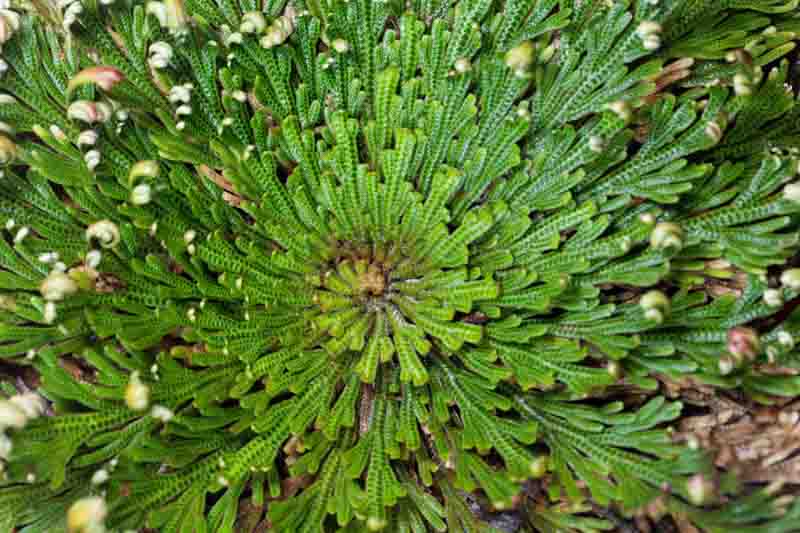
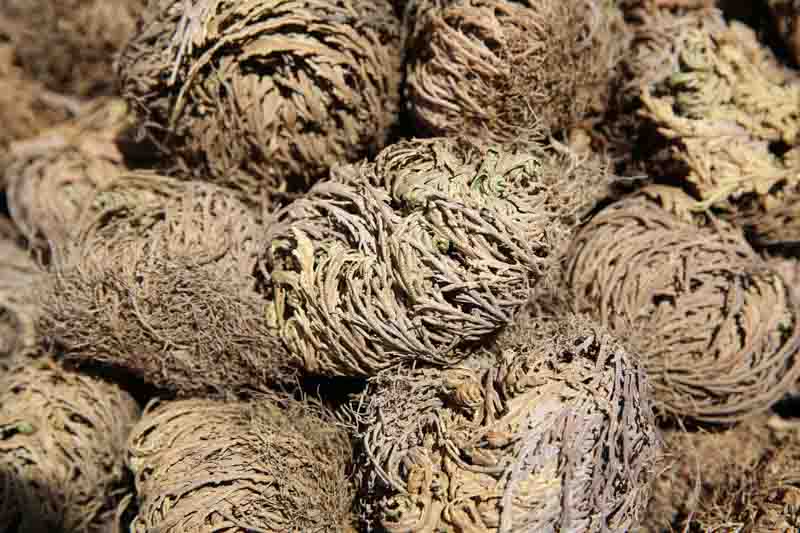
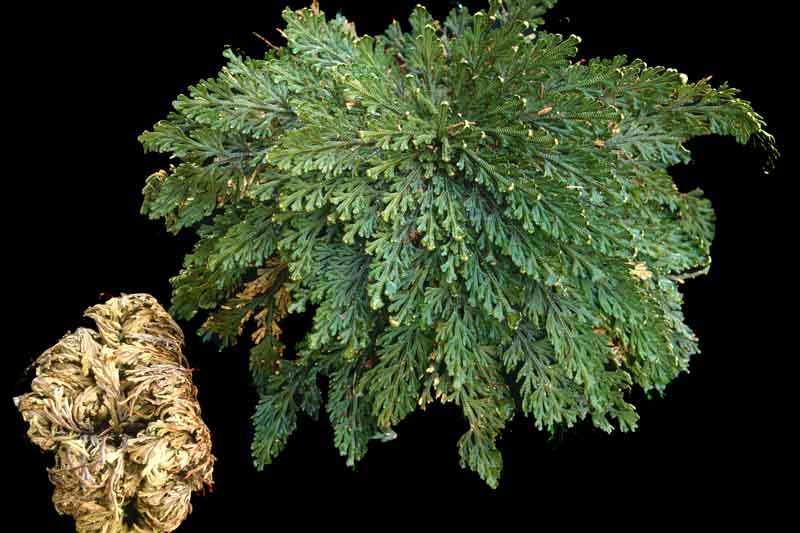


Meet the Rose of Jericho—a tiny spikemoss with a big party trick. In dry weather it curls into a tight, tumbleweed-like ball and appears completely lifeless; add water and, within hours, it unfurls into a soft green rosette. This on-off survival mode isn’t magic, it’s smart biology: specialized tissues tolerate extreme dehydration, then rehydrate and restart photosynthesis when moisture returns.
Native to the Chihuahuan Desert, Selaginella lepidophylla is tough, low-maintenance, and irresistibly interactive—perfect as a curiosity on a dish of pebbles, a classroom demo, or a minimalist windowsill accent.
Despite the nickname “resurrection plant,” it isn’t a true fern and it isn’t the biblical Anastatica hierochuntica. It’s a member of the ancient Selaginellaceae family (spikemosses), valued for its drought-defying physiology, neat architecture, and hassle-free care indoors.
| Botanical Name | Selaginella lepidophylla |
| Family | Selaginellaceae (spikemosses) |
| Common Names | Rose of Jericho, Resurrection Plant, Dinosaur Plant |
| Native Range | Chihuahuan Desert (U.S.–Mexico) |
| Plant Type | Evergreen spikemoss (vascular cryptogam); soil-optional display |
| Size | Rosette typically 3–6 in (7–15 cm); mats to ~6–12 in (15–30 cm) |
| Hardiness | Outdoors in USDA 8–10 (dry climates); widely grown indoors |
| Light | Bright, indirect light; avoid harsh, prolonged midday sun indoors |
| Water | Set on pebbles with water just below/at pebble line; give dry rest days |
| Soil | Optional; if potted, use sandy, very well-drained mix |
| Special Features | Extreme desiccation tolerance, rapid “resurrection,” spore-bearing |
| Toxicity | Non-toxic to people and pets |
| Main Uses | Decorative curiosity, educational display, symbolic/ritual use |
Selaginella lepidophylla is native to the Chihuahuan Desert, an arid region spanning parts of the United States and Mexico. It thrives in sandy, well-drained soils and open, sunlit habitats. The extreme conditions of its native environment—characterized by long periods of drought and intense heat—have shaped its remarkable survival mechanisms.
This small, fern-like plant features delicate green stems and leaves that form a low, spreading mat, 6-12 inches tall (15-30 cm), of small and scale-like leaves.
The plant’s most striking feature is its physiological strategy to conserve water during desiccation. In the absence of moisture, this Resurrection Plant curls inward, forming a tight, ball-like structure. This allows it to lose up to 95% of its water content, protecting its tissues from damage and enabling it to survive for years in a dormant state. During this phase, its leaves turn leathery and dark brown, blending with its arid surroundings. However, once exposed to moisture, the plant unfurls within hours, regains its green hue, and resumes photosynthesis and growth.
A critical factor in its resilience is the synthesis of trehalose, a crystallized sugar that replaces evaporating water within its tissues, preventing salt-induced damage. The plant also utilizes betaines, compounds that enhance its drought resistance. These adaptations allow the resurrection plant to recover metabolic activity even after prolonged dormancy, making it one of nature’s most remarkable examples of survival under extreme conditions.
Even if roots are partially damaged, the plant can revive and continue its life cycle. Its leaves’ unique biological structure ensures the ability to imbibe water and unfold itself, even many years after apparent death. The visual transformation from a dry, brown ball to a vibrant green plant highlights its extraordinary resilience, solidifying its status as a botanical marvel and a symbol of life’s enduring tenacity.
The most striking feature of the Rose of Jericho is its ability to survive desiccation:
This remarkable adaptation has earned it the nickname Resurrection Plant.
The curling and uncurling movements of Selaginella lepidophylla are governed by:
These movements are not just survival tactics but also enhance its ornamental appeal when used as a novelty plant.
The Rose of Jericho is highly regarded for its symbolic, medicinal, and cultural applications, which have contributed to its enduring appeal across the centuries.
The Rose of Jericho is a powerful symbol of resilience, rebirth, and renewal. It is often used in religious rituals and ceremonies, representing life’s ability to overcome adversity. In Christian traditions, the plant is associated with resurrection, reflecting its ability to come back to life when exposed to water. Many people keep it in their homes as a symbol of prosperity, good fortune, and protection from negative energy.
The plant has been used in traditional medicine for its purported health benefits. When steeped in water, the Rose of Jericho releases a liquid that is believed to possess cleansing, detoxifying, and healing properties. It has been used to treat colds, fevers, and digestive issues. Some cultures use its water as a tonic to improve general health or as a skin cleanser.
In many cultures, the plant is believed to absorb negative energy, making it a popular item for cleansing rituals. Its water is sometimes sprinkled around homes or workplaces to purify spaces and invite positive energy. In Mexico, it is associated with facilitating childbirth, where women drink the water used to rehydrate the plant to ease labor.
The Rose of Jericho is commonly sold as a novelty or ornamental plant. Its ability to dry out completely and revive repeatedly fascinates both adults and children. This plant is often displayed in bowls of water as a symbol of vitality and endurance.
Selaginella lepidophylla is non-toxic to humans and pets, making it a safe choice for homes and gardens.
This plant is not considered invasive, as it does not aggressively spread in its native or cultivated habitats. Its ability to remain dormant prevents it from becoming a nuisance.
Selaginella lepidophylla can be cultivated indoors or outdoors under specific conditions.
Bright, indirect light is ideal for Resurrection Plants. An east or west-facing window provides optimal light. Avoid Intense direct sunlight, which may stress or scorch the plant, especially when grown indoors.
Resurrection Plants can grow without soil by placing them on pebbles in a shallow bowl with water. If planted in soil, use a well-draining potting mix, such as sandy soil, to mimic natural desert conditions.
Hydration Process: Place the dry plant on pebbles with water just above the stones. The plant unfurls within hours and fully revives in a day or two. Use distilled, rainwater, or dechlorinated tap water for best results.
Apply diluted, water-soluble houseplant fertilizer (1/10 strength) twice yearly—once in early spring and again in midsummer. Over-fertilizing is unnecessary and may harm the plant.
Trim dead fronds or areas that fail to rehydrate to keep the plant neat. Use sharp, sterilized scissors for best results.
Division:
Spores: Like ferns, the plant reproduces via spores, though propagation this way is less common for home gardeners.
Pests
Diseases
Common Problems
It tolerates near-total dehydration by producing protective compounds (like trehalose) and curling into a tight ball. When rehydrated, tissues re-inflate, unfolding the fronds and restarting photosynthesis within hours.
Give it water for 1–3 days, then let it dry for at least 1 day (and fully dry every couple of weeks). Constant submersion can cause rot; keep water just at or below the pebble line.
Yes. Many people display it on pebbles in a shallow dish. If you do plant it, use a very sandy, fast-draining mix and avoid staying wet for long periods.
Old or heavily desiccated fronds may not fully green up. Give several hydration/dry cycles with bright, indirect light. Trim sections that never rehydrate.
No. The biblical ‘rose of Jericho’ is usually Anastatica hierochuntica. The popular houseplant is Selaginella lepidophylla, a different species with a similar dormancy trick.
For months to years under dry, cool storage. Its desiccation-tolerant tissues allow repeated dry–rehydrate cycles.
Rarely. If desired, use a very dilute (about 1/10 strength) balanced, water-soluble fertilizer once or twice during active growth. Overfeeding is unnecessary.
Yes—Selaginella lepidophylla is considered non-toxic. As with any plant, avoid ingestion and supervise young children.
Divide a small, healthy section and hydrate it on pebbles or loose, sandy mix. Spore propagation is possible but uncommon for home growers.
Bright, indirect light (east or west window). Avoid prolonged, harsh midday sun behind glass, which can scorch hydrated fronds.
| Hardiness |
8 - 10 |
|---|---|
| Plant Type | Perennials |
| Plant Family | Selaginellaceae |
| Exposure | Partial Sun |
| Height | 6" - 1' (15cm - 30cm) |
| Spread | 3" - 6" (8cm - 15cm) |
| Maintenance | Low |
| Water Needs | Low |
| Soil Type | Loam, Sand |
| Soil pH | Neutral, Alkaline |
| Soil Drainage | Well-Drained |
| Native Plants | United States, Southwest, Texas, New Mexico |


| Hardiness |
8 - 10 |
|---|---|
| Plant Type | Perennials |
| Plant Family | Selaginellaceae |
| Exposure | Partial Sun |
| Height | 6" - 1' (15cm - 30cm) |
| Spread | 3" - 6" (8cm - 15cm) |
| Maintenance | Low |
| Water Needs | Low |
| Soil Type | Loam, Sand |
| Soil pH | Neutral, Alkaline |
| Soil Drainage | Well-Drained |
| Native Plants | United States, Southwest, Texas, New Mexico |
How many Selaginella lepidophylla (Rose of Jericho) do I need for my garden?
| Plant | Quantity | |
|---|---|---|
| Selaginella lepidophylla (Rose of Jericho) | N/A | Buy Plants |
Create a membership account to save your garden designs and to view them on any device.
Becoming a contributing member of Gardenia is easy and can be done in just a few minutes. If you provide us with your name, email address and the payment of a modest $25 annual membership fee, you will become a full member, enabling you to design and save up to 25 of your garden design ideas.
Join now and start creating your dream garden!
Create a membership account to save your garden designs and to view them on any device.
Becoming a contributing member of Gardenia is easy and can be done in just a few minutes. If you provide us with your name, email address and the payment of a modest $25 annual membership fee, you will become a full member, enabling you to design and save up to 25 of your garden design ideas.
Join now and start creating your dream garden!