A tallgrass prairie garden with Echinacea, Liatris, and native grasses—drought-tolerant, pollinator-rich, and stunning in every season.
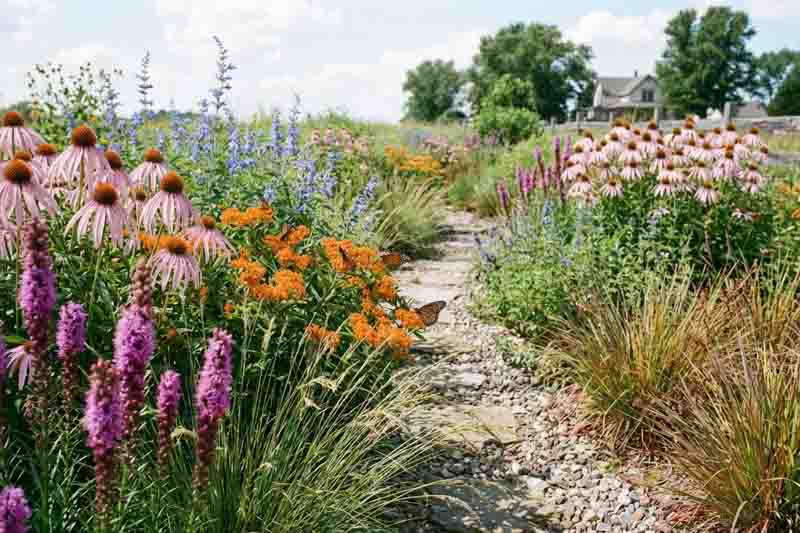


This sunny prairie border follows a narrow path through a loose mixture of grasses and summer wildflowers. Echinacea pallida rises through the left side with pale pink, strongly drooping petals, while tall spikes of Liatris pycnostachya stand prominently through the middle. Lower clusters of Asclepias tuberosa bring vivid orange near the front and farther down the border, and Salvia azurea contributes softer blue flowers between them.
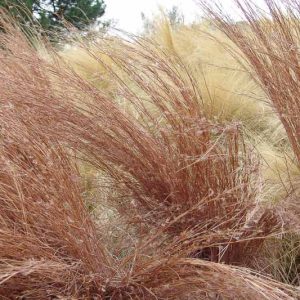
The two grasses provide most of the permanent structure. Sporobolus heterolepis forms fine, rounded clumps through the foreground and middle, while Schizachyrium scoparium is more upright and is already beginning to show the copper and reddish tones that become stronger in fall. The plants repeat along both sides of the path rather than forming separate blocks, which gives the garden the relaxed character of an established prairie planting.
Main plants used: Schizachyrium scoparium, Sporobolus heterolepis, Echinacea pallida, Liatris pycnostachya, Salvia azurea, and Asclepias tuberosa
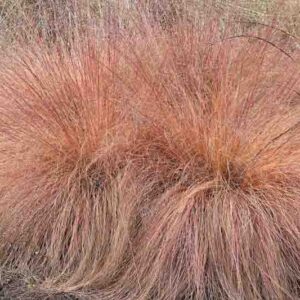
The grasses keep the planting coherent even though the flowers are very different. Prairie Dropseed forms low fountains of narrow foliage, while Little Bluestem is taller and more vertical. Their repeated clumps prevent the border from becoming a loose collection of unrelated wildflowers.
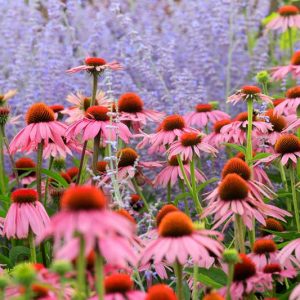
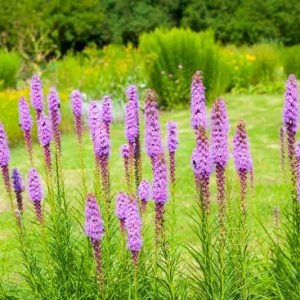
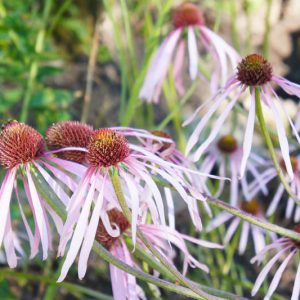
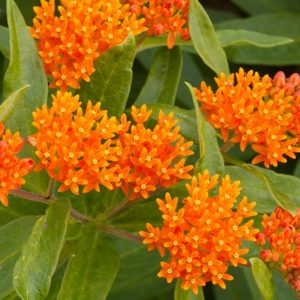
The flower shapes provide plenty of contrast. Pale Coneflower carries long drooping petals around prominent cones, Prairie Blazing Star forms dense upright spikes, Azure Blue Sage has lighter branching stems, and Butterfly Milkweed produces broad clusters of orange flowers.
The photograph also shows why the flowering plants should not all be used in the same way. Coneflowers appear in loose groups, Liatris rises in stronger vertical clusters, Milkweed forms lower patches of orange, and Salvia is more scattered. That variation makes the planting look established rather than patterned.
Echinacea pallida, or Pale Coneflower, brings height without creating a heavy mass. Its narrow pale pink petals droop noticeably below the central cones, giving the plant a lighter appearance than many other coneflowers. It performs best in full sun and well-drained soil and tolerates dry periods once established.
Liatris pycnostachya, or Prairie Blazing Star, provides the most obvious vertical flower form. Tall purple spikes rise above the grasses in midsummer and attract butterflies, bees, and other pollinators. Groups of several plants have more impact than isolated stems.
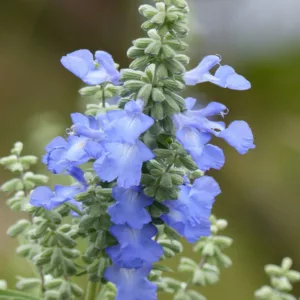
Salvia azurea, or Azure Blue Sage, extends the flowering season with clear blue flowers from late summer into fall. Its stems can become loose or sprawling in rich soil, so leaner conditions and support from neighboring grasses suit the naturalistic character of this planting.
Asclepias tuberosa, or Butterfly Milkweed, supplies the strongest warm color. Its orange flower clusters are rich in nectar, and the plant is also a larval host for monarch butterflies. Because mature plants develop a substantial taproot, avoid unnecessary transplanting once they are established.
Schizachyrium scoparium, or Little Bluestem, provides one of the main structural layers. Its blue-green summer foliage gradually develops copper, orange, and reddish tones as autumn approaches. Leave the stems standing through winter for color, texture, and wildlife cover.
Sporobolus heterolepis, or Prairie Dropseed, forms dense rounded tufts of very fine foliage. Airy flower panicles rise above the leaves in summer and are often pleasantly fragrant. Mature clumps are long-lived and generally require little division.
Create a sunny prairie border where two long-lived grasses form the permanent framework and flowering perennials appear in irregular groups from early summer into fall.
These percentages describe the overall balance of the planting rather than six separate blocks or equal numbers of plants.
Begin with repeated clumps of Little Bluestem and Prairie Dropseed through both the front and middle of the planting. Do not restrict one grass entirely to the back and the other to the front.
Add Pale Coneflower in loose groups, then place Prairie Blazing Star in slightly denser clusters where its vertical spikes will remain visible. Repeat Butterfly Milkweed in lower orange patches and weave Azure Blue Sage more loosely between the grasses.
Keep the path open enough for comfortable access, but allow some stems and grass leaves to lean naturally toward the edge.
This planting is drought tolerant once established, but it is not a no-water garden. Newly planted perennials and grasses need regular moisture while their roots develop, and even mature plants may flower less heavily during prolonged severe drought.
Nor do these prairie plants require poor soil. Average garden soil is suitable provided drainage is reasonable. Excess fertilizer is more likely to cause problems by producing overly lush grasses and floppy flowering stems.
Finally, resist cutting the entire garden down in fall. Little Bluestem, Prairie Dropseed, coneflower seedheads, and Liatris stems remain attractive well beyond flowering and provide useful winter habitat. Cut the old growth back in late winter or early spring before fresh shoots appear.
| Hardiness |
5 - 9 |
|---|---|
| Exposure | Full Sun |
| Season of Interest | Spring (Late), Summer (Early, Mid, Late), Fall |
| Maintenance | Low |
| Water Needs | Low, Average |
| Soil Type | Loam, Sand |
| Soil pH | Acid, Neutral |
| Soil Drainage | Well-Drained |
| Characteristics | Cut Flowers, Showy |
| Native Plants | Illinois, Indiana, Iowa, Kansas, Midwest, Minnesota, Missouri, United States, Wisconsin |
| Tolerances | Drought, Dry Soil |
| Attracts | Bees, Butterflies, Hummingbirds, Birds |
| Landscaping Ideas | Beds And Borders |
| Garden Styles | Butterfly Garden, Informal and Cottage, Pollinator Garden, Prairie and Meadow |

| Hardiness |
5 - 9 |
|---|---|
| Exposure | Full Sun |
| Season of Interest | Spring (Late), Summer (Early, Mid, Late), Fall |
| Maintenance | Low |
| Water Needs | Low, Average |
| Soil Type | Loam, Sand |
| Soil pH | Acid, Neutral |
| Soil Drainage | Well-Drained |
| Characteristics | Cut Flowers, Showy |
| Native Plants | Illinois, Indiana, Iowa, Kansas, Midwest, Minnesota, Missouri, United States, Wisconsin |
| Tolerances | Drought, Dry Soil |
| Attracts | Bees, Butterflies, Hummingbirds, Birds |
| Landscaping Ideas | Beds And Borders |
| Garden Styles | Butterfly Garden, Informal and Cottage, Pollinator Garden, Prairie and Meadow |
Recreate this garden. Specify the percentages you would like to have of each plant and input the dimensions of your garden space.We'll give you a shopping list so you know how many plants you need.
| Plant | Quantity | |
|---|---|---|
| Echinacea pallida (Pale Purple Coneflower) | N/A | Buy Plants |
| Liatris pycnostachya (Prairie Blazing Star) | N/A | Buy Plants |
| Asclepias tuberosa (Butterfly Milkweed) | N/A | Buy Plants |
| Schizachyrium scoparium (Little Bluestem) | N/A | Buy Plants |
| Sporobolus heterolepis (Prairie Dropseed) | N/A | Buy Plants |
| Salvia azurea (Blue Sage) | N/A | Buy Plants |
Create a membership account to save your garden designs and to view them on any device.
Becoming a contributing member of Gardenia is easy and can be done in just a few minutes. If you provide us with your name, email address and the payment of a modest $25 annual membership fee, you will become a full member, enabling you to design and save up to 25 of your garden design ideas.
Join now and start creating your dream garden!