Brown-spotted leaves, yellowing stems, rotting bulbs, or distorted flowers can signal very different lily diseases. Learn how to identify Botrytis blight, Fusarium basal rot, root rots, and virus problems, distinguish disease from environmental stress, and take the right action before damage spreads or weakened bulbs are lost.


Few things are more disappointing than watching vigorous lilies develop brown-spotted leaves, yellow prematurely, fail to flower, or collapse before the season is over. The difficult part is that several unrelated lily diseases can produce similar symptoms – and the correct response depends on whether the problem is on the leaves, in the roots and bulb, or throughout the entire plant.
True lilies (Lilium) can suffer from Botrytis blight, Fusarium basal rot, other root and bulb rots, and viral diseases. Some problems are primarily cosmetic and leave the bulb alive underground. Others progressively destroy the bulb or cannot be cured at all. Learning to distinguish them is the first step toward saving plants and preventing disease from spreading.
Most important foliar disease: Lily disease or Botrytis blight, caused by Botrytis elliptica.
Major bulb disease: Fusarium basal rot caused by Fusarium oxysporum f. sp. lilii.
Other root and bulb diseases: May involve Rhizoctonia solani, Pythium, Fusarium, and other soil-borne pathogens.
Virus problems: Lilies can be infected by Tulip breaking virus and other mosaic- and streak-inducing viruses.
Typical warning signs: Brown leaf spots, premature yellowing, stunting, rotting roots or bulbs, mosaic patterns, streaks, twisted foliage, malformed flowers, and weak flowering.
Conditions that increase risk: Prolonged leaf wetness, poor air circulation, poorly drained soil, infected bulbs, contaminated soil, and aphid transmission of some viruses.
Best protection: Healthy planting stock, good drainage, appropriate watering, sanitation, rapid removal of badly diseased material, and correct diagnosis before treatment.
Quick diagnostic rule: Brown-spotted foliage after wet weather points toward Botrytis. Premature yellowing combined with decayed roots or bulb tissue suggests a root or bulb rot. Mosaic, streaking, distorted leaves, or malformed flowers raise suspicion of a virus.
The term lily disease is commonly used for Botrytis blight caused by Botrytis elliptica, but this is only one of several important diseases of garden lilies. The major problems fall into three practical groups:
This distinction matters because their management is very different. Removing spotted foliage can reduce Botrytis inoculum, but it will not cure a virus or restore a bulb whose basal plate has already rotted.
The disease traditionally called “lily disease” is caused by Botrytis elliptica. Lilies can also be infected by the more generalist gray mold fungus Botrytis cinerea, although B. elliptica is the pathogen most closely associated with classic lily disease.
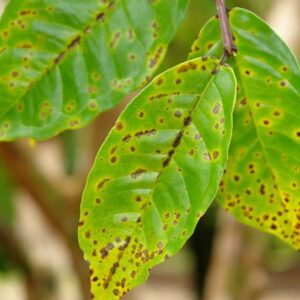
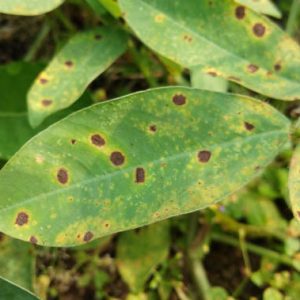
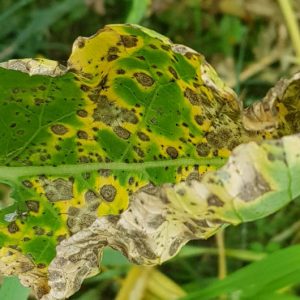
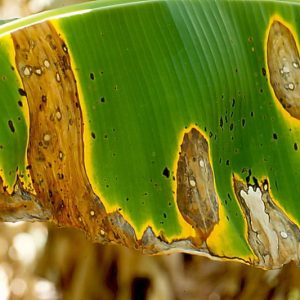
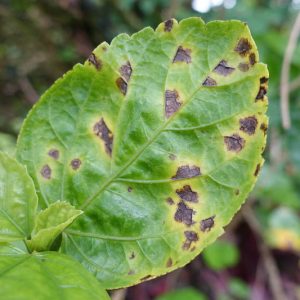
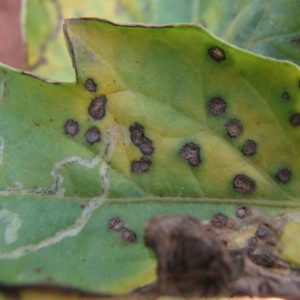
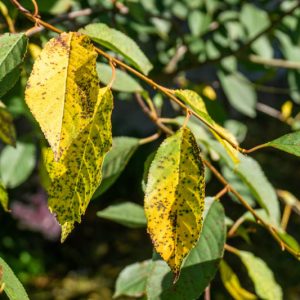
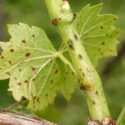
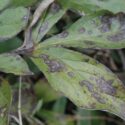
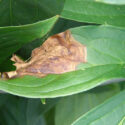
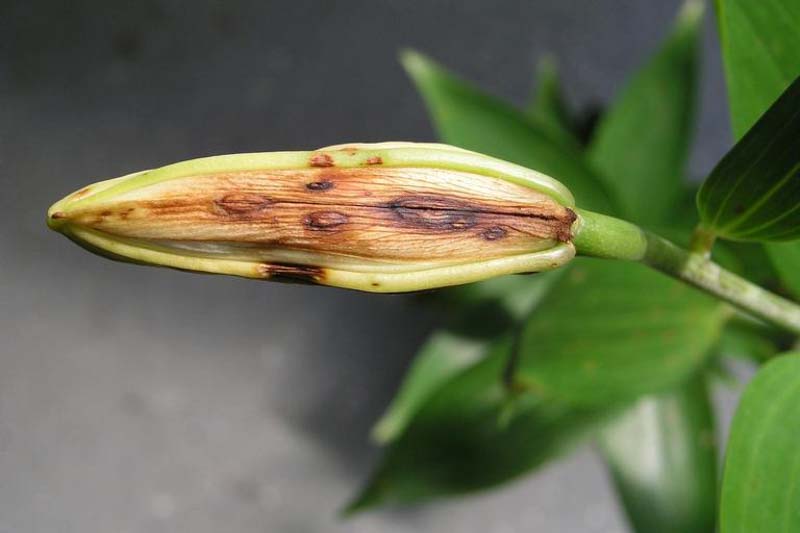
Early symptoms often begin as small brown, tan, or water-soaked spots. Lesions enlarge as disease develops and may merge until large areas of a leaf turn brown. Buds and flowers can also become spotted or blighted, while heavily affected foliage may collapse prematurely.
Infected plant remains can carry the disease from one season to the next. Persistent moisture is especially important: crowded lilies, frequent overhead watering, prolonged rain, and poor air circulation give spores more opportunity to infect susceptible foliage.
A badly spotted lily is not necessarily a dead lily. Botrytis mainly attacks aboveground growth. If the bulb remains firm and healthy, the plant may return normally the following year even after substantial foliage damage.
Fusarium basal rot is more threatening because the disease develops underground. It is caused by Fusarium oxysporum f. sp. lilii, a pathogen specialized for lilies that can arrive on infected bulbs or persist in contaminated soil.
The first visible symptom may simply be premature yellowing. Plants lose vigor, remain shorter than expected, flower poorly, or die back unusually early. When the bulb is dug, the real problem becomes much clearer.
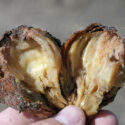
Decay typically develops around the basal plate where the roots arise. Tissue becomes brown, chocolate-colored, or gray-brown, roots deteriorate, and infected bulb scales may loosen from the base. Advanced decay can eventually destroy the bulb.
Premature yellowing plus basal-plate decay is a major warning sign. Badly infected bulbs should be discarded rather than divided, replanted, or used for propagation.
Lily roots and bulbs can also be attacked by several other soil-borne pathogens. Rhizoctonia solani, Pythium species, Fusarium, and related organisms may occur alone or as part of a root-rot complex.
The symptoms above ground can be frustratingly nonspecific. A lily may yellow, stop growing, produce fewer flowers, or collapse early simply because diseased roots can no longer supply the plant normally. Inspecting the root system is therefore an important diagnostic step.
Persistently wet soil increases the risk of many root and bulb problems. Lilies need moisture while actively growing, but the bulb should not remain in saturated, poorly aerated soil. Raised beds, improved drainage, and well-draining container mixes can make a substantial difference where rot recurs.
If Fusarium or Rhizoctonia disease has been confirmed, do not immediately replace the affected lilies in the same soil. Avoid growing susceptible lilies in that site for at least five years, since the pathogens can persist and infect new bulbs.
Virus diseases are fundamentally different from fungal infections. Once a lily becomes systemically infected, there is no fungicide or pruning treatment that will remove the virus from the plant.
Lilies can be infected by Tulip breaking virus and other viruses capable of producing mosaic, streaking, flecking, distortion, stunting, and abnormal flowering. Symptoms are highly variable, and some infected plants may initially show only subtle discoloration.
Possible symptoms include:
Several lily viruses can be transmitted by aphids as the insects move between plants. Tulip breaking virus is particularly important because it can infect both lilies and tulips. Where the virus is a concern, growing susceptible lilies and tulips together can increase disease-management challenges.
Uniform yellowing does not automatically mean virus infection. Mosaic patterns, irregular streaks, flecking, twisting, stunting, and malformed flowers are more suspicious, particularly when the pattern appears unevenly within a planting.
A single yellow leaf or brown spot is rarely enough for a confident diagnosis. Look at the pattern of symptoms, recent weather, the speed of decline, and – when necessary – the condition of the roots and bulb.
Environmental problems can complicate diagnosis. Drought, excessive heat, frost, herbicide injury, nutrient deficiencies, and waterlogged soil may all cause discoloration or dieback. When a valuable lily is deteriorating rapidly and the cause is uncertain, professional or laboratory diagnosis can prevent unnecessary treatment.
There is no single treatment for every lily disease. Successful management starts by matching the response to the part of the plant that is infected.
Fungicides are not a universal solution. They cannot repair foliage already killed by Botrytis, rebuild a rotted basal plate, or eliminate a systemic virus.
Commercial lily production may involve preventative bulb treatments or carefully timed fungicide programs for specific pathogens, but those programs depend on disease diagnosis, current product registrations, location, and production conditions.
For home gardens, begin with cultural management: improve airflow, reduce unnecessary leaf wetness, remove infected debris, correct drainage, and discard severely diseased bulbs. If a fungicide is considered for a confirmed fungal disease, choose only a product currently labeled for the plant, pathogen, and intended use in your region and follow the label exactly.
Many disease problems become much easier to manage when prevention starts before symptoms appear. Healthy planting stock and good growing conditions are particularly important because serious bulb diseases can arrive with infected material or persist in contaminated soil.
Do not treat every sick lily the same way. Brown-spotted foliage after wet weather suggests Botrytis; premature yellowing with bulb or root decay points underground; mosaic, streaking, and distortion raise concern about viruses. Correct diagnosis, healthy bulbs, sanitation, good drainage, and appropriate watering provide the foundation for effective lily disease management.
The term lily disease commonly refers to Botrytis blight caused by Botrytis elliptica. It produces brown or water-soaked spots on lily leaves, stems, buds, and flowers and is favored by prolonged leaf wetness.
Brown spots that develop or spread during wet weather commonly suggest Botrytis blight. Spots may enlarge and merge until large portions of the foliage die, although the underground bulb may remain healthy.
Premature yellowing can indicate root or bulb disease, especially when growth is stunted or the plant declines before normal dormancy. Inspect the roots, basal plate, and bulb scales for brown, soft, or rotted tissue.
Lily bulb and root rot can be caused by Fusarium oxysporum f. sp. lilii, Rhizoctonia solani, Pythium species, and other soil-borne pathogens. Infected planting stock and poorly drained conditions can increase the risk.
Virus-infected lilies may show mosaic patterns, yellow streaks, flecking, twisted or narrowed leaves, stunting, delayed flowering, and malformed or color-broken flowers. Symptoms vary depending on the virus and lily cultivar.
Yes. Botrytis mainly affects aboveground tissues, so a lily may return the following year if its bulb remains healthy. Remove infected debris and reduce prolonged foliage wetness to lower the risk of reinfection.
No. Virus infections are systemic and cannot be removed with fungicides or pruning. Infected plants should generally be removed and destroyed to reduce the risk of spreading viruses to healthy lilies.
Plant healthy bulbs in well-drained soil, avoid prolonged leaf wetness, provide good air circulation, remove diseased debris, monitor aphids, and discard badly rotted or virus-infected plants promptly.
Updated: August 2026 – Reviewed by Gardenia Editors
Create a membership account to save your garden designs and to view them on any device.
Becoming a contributing member of Gardenia is easy and can be done in just a few minutes. If you provide us with your name, email address and the payment of a modest $25 annual membership fee, you will become a full member, enabling you to design and save up to 25 of your garden design ideas.
Join now and start creating your dream garden!
Create a membership account to save your garden designs and to view them on any device.
Becoming a contributing member of Gardenia is easy and can be done in just a few minutes. If you provide us with your name, email address and the payment of a modest $25 annual membership fee, you will become a full member, enabling you to design and save up to 25 of your garden design ideas.
Join now and start creating your dream garden!