Bring warmth to your cottage garden with apricot Dahlia 'David Howard', airy white Ammi, copper-red Rudbeckia 'Autumn Colors', and cheerful orange Zinnia 'Profusion Orange'. These flowering perennials and annuals create a beautiful, pollinator-friendly summer border, with contrasting flower shapes, dark bronze foliage, and color continuing well into autumn.
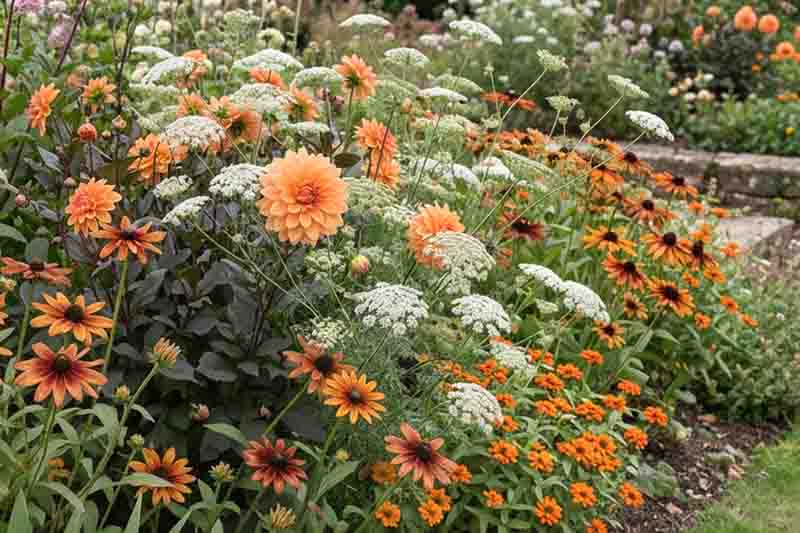


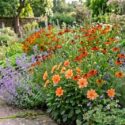
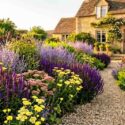
Imagine wandering beside a cottage border glowing with apricot dahlias, copper-colored daisies, and cheerful orange zinnias. Delicate white flower umbels float above the planting like fine lace, while dark bronze foliage adds richness beneath the softer blooms. This beautiful combination captures the relaxed abundance of a traditional cottage garden, with warm summer colors and just enough airy texture to keep everything feeling light.
Four plants create the display: Dahlia ‘David Howard’, Ammi visnaga (Toothpick Weed), Rudbeckia hirta ‘Autumn Colors’ (Black-Eyed Susan), and Zinnia ‘Profusion Orange’. Their contrasting flower shapes, generous bloom periods, and complementary colors create a welcoming summer border that also attracts bees, butterflies, and other pollinating insects.
Main plants used: Dahlia ‘David Howard’, Ammi visnaga, Rudbeckia hirta ‘Autumn Colors’, and Zinnia ‘Profusion Orange’.
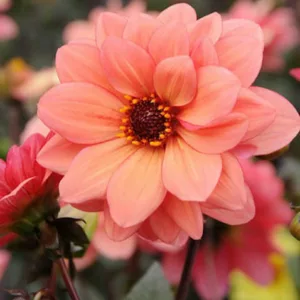
The beauty of this planting comes from its harmonious colors and contrasting flower shapes. Dahlia ‘David Howard’ produces richly colored apricot-orange flowers against distinctive dark bronze foliage. Its fully double blooms, approximately 4 inches (10 cm) across, create generous focal points from midsummer until frost.
Ammi visnaga brings a completely different texture. Its large, domed umbels of tiny white flowers rise on slender, branching stems, creating a delicate, lace-like effect. This annual softens the bolder flowers and adds a wonderful naturalistic quality to the border.
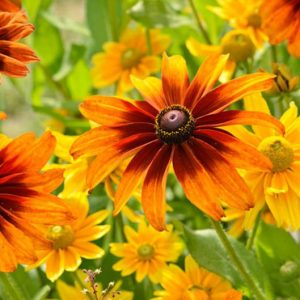
Rudbeckia hirta ‘Autumn Colors’ contributes a lively mixture of golden yellow, copper, rust, and mahogany-red daisies with dark central cones. Flowering from summer into autumn, it echoes the warm dahlia colors while introducing a more relaxed, prairie-inspired character.
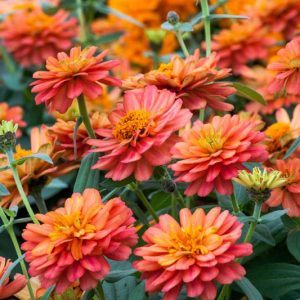
At the front, Zinnia ‘Profusion Orange’ forms compact, branching mounds covered with bright orange, daisy-like flowers. Its smaller blooms repeat the warm palette without competing with the dahlias or Rudbeckia.
The combination feels abundant without becoming overwhelming because the airy white Ammi separates the stronger colors, while the dark dahlia foliage gives the planting depth and contrast.
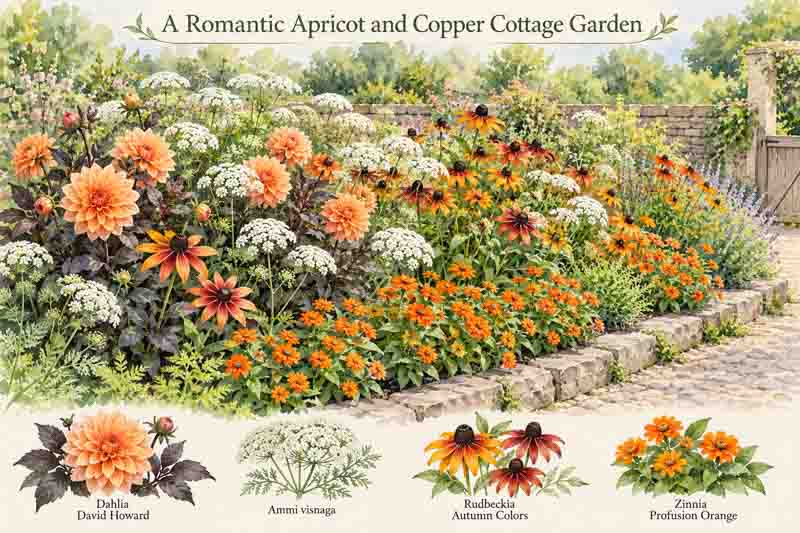
Create a romantic summer cottage border with apricot dahlias, copper-red daisies, airy white flower umbels, and cheerful orange zinnias, combining generous flowers with natural movement.
Approximate visual proportions, not exact plant quantities.
Position Dahlia ‘David Howard’ through the middle and rear of the border, allowing its apricot flowers and bronze foliage to become the focal points. Weave Ammi visnaga between the dahlias, where its white umbels can float above the warmer flowers. Add Rudbeckia ‘Autumn Colors’ in broad, irregular drifts, then bring Zinnia ‘Profusion Orange’ toward the front to create a cheerful, continuous flowering edge. Leave enough space for air circulation and discreetly support taller stems where needed.
Early summer brings the first Rudbeckia flowers and delicate white Ammi umbels, depending on sowing time. As midsummer arrives, Dahlia ‘David Howard’ adds apricot blooms above its dark foliage, while compact orange Zinnias fill the foreground. Through late summer and autumn, Dahlias, Rudbeckia, and Zinnias continue the warm-colored display, often flowering until frost. Ammi provides its finest contribution during its flowering window rather than throughout the entire season.
| Hardiness |
3 - 7 |
|---|---|
| Exposure | Full Sun |
| Season of Interest | Summer (Early, Mid, Late), Fall |
| Maintenance | Average |
| Water Needs | Average |
| Soil Type | Clay, Loam, Sand |
| Soil pH | Acid, Neutral, Alkaline |
| Soil Drainage | Moist but Well-Drained |
| Characteristics | Cut Flowers, Showy |
| Attracts | Bees, Butterflies, Birds |
| Landscaping Ideas | Beds And Borders |
| Garden Styles | Butterfly Garden, Informal and Cottage, Pollinator Garden |




| Hardiness |
3 - 7 |
|---|---|
| Exposure | Full Sun |
| Season of Interest | Summer (Early, Mid, Late), Fall |
| Maintenance | Average |
| Water Needs | Average |
| Soil Type | Clay, Loam, Sand |
| Soil pH | Acid, Neutral, Alkaline |
| Soil Drainage | Moist but Well-Drained |
| Characteristics | Cut Flowers, Showy |
| Attracts | Bees, Butterflies, Birds |
| Landscaping Ideas | Beds And Borders |
| Garden Styles | Butterfly Garden, Informal and Cottage, Pollinator Garden |
Recreate this garden. Specify the percentages you would like to have of each plant and input the dimensions of your garden space.We'll give you a shopping list so you know how many plants you need.
| Plant | Quantity | |
|---|---|---|
| Dahlia 'David Howard' | N/A | Buy Plants |
| Ammi visnaga (Toothpick Weed) | N/A | Buy Plants |
| Rudbeckia hirta 'Autumn Colors' (Black-Eyed Susan) | N/A | Buy Plants |
| Zinnia 'Profusion Orange' | N/A | Buy Plants |
Create a membership account to save your garden designs and to view them on any device.
Becoming a contributing member of Gardenia is easy and can be done in just a few minutes. If you provide us with your name, email address and the payment of a modest $25 annual membership fee, you will become a full member, enabling you to design and save up to 25 of your garden design ideas.
Join now and start creating your dream garden!