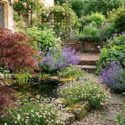
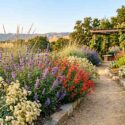
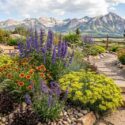
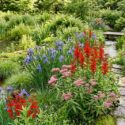
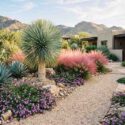
Architectural Yucca, fragrant English Lavender, silver Santolina and Salvias, glowing California Poppies, and compact Sedum ‘Blue Elf’ create a gravel garden rich in color and texture. Euphorbia and Hylotelephium add contrasting forms, while warm stone and open gravel give the planting its relaxed, sun-soaked Mediterranean character.
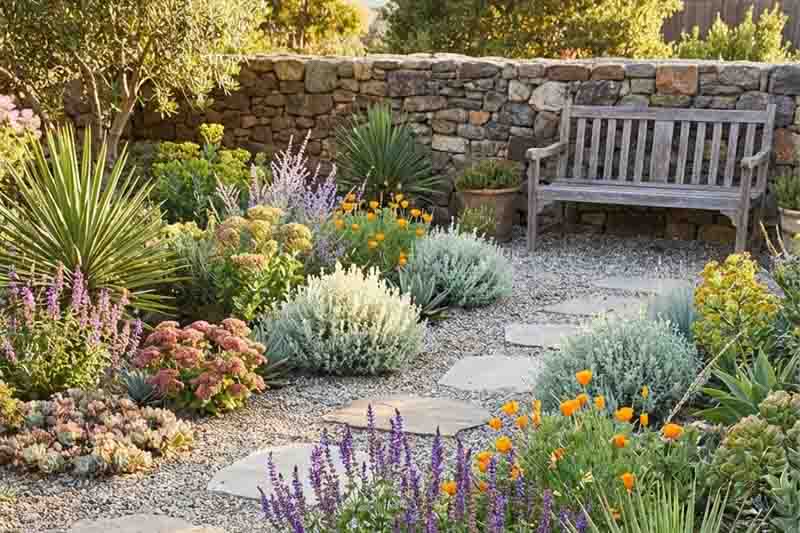


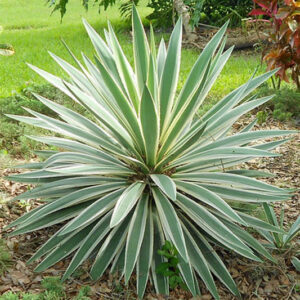
This sun-loving gravel garden combines strong architectural plants, silver foliage, and vivid seasonal flowers around a simple seating area. Yucca gloriosa provides the boldest structure with its evergreen sword-like leaves, while English Lavender (Lavandula angustifolia), Santolina chamaecyparissus, and Salvia yangii repeat cool silver and gray-green tones through the planting.
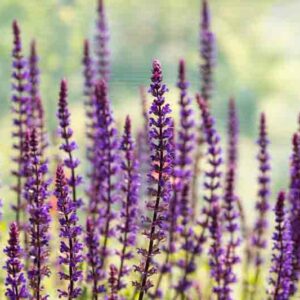
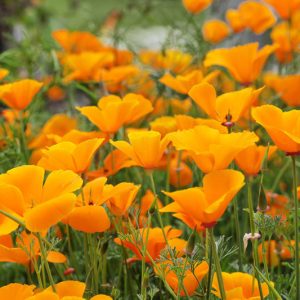
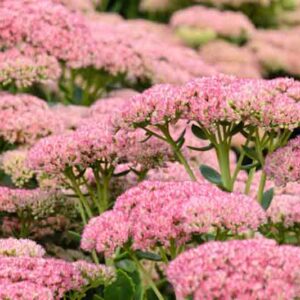
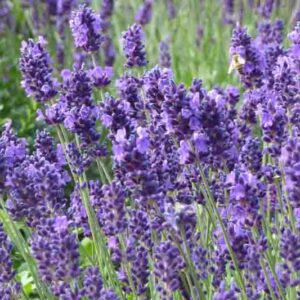
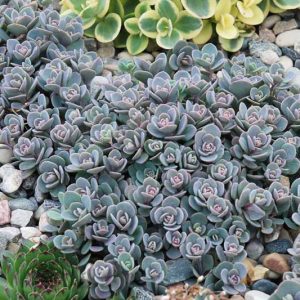
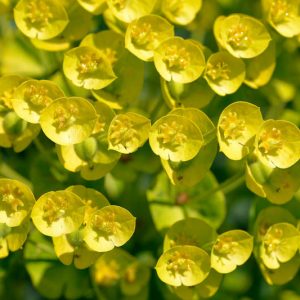
Against that restrained foliage, violet-blue Salvia nemorosa and lavender flowers bring cool summer color, while Eschscholzia californica (California Poppy) adds bright orange accents. Hylotelephium, Euphorbia characias, and compact Sedum ‘Blue Elf’ introduce contrasting shapes and textures, helping the garden remain attractive even when fewer plants are in bloom.
Main plants used: Yucca gloriosa, Lavandula angustifolia (English Lavender), Eschscholzia californica (California Poppy), Salvia nemorosa, Salvia yangii, Santolina chamaecyparissus (Lavender Cotton), Hylotelephium / Sedum, Euphorbia characias, and Sedum ‘Blue Elf’
Let silver foliage form the backbone of the garden, then use violet-blue and orange flowers as repeated seasonal accents.
The garden has a strong framework even without flowers. Yucca gloriosa provides height and drama, while Lavender, Santolina, and Salvia yangii repeat softer silver tones around it. That repetition gives the planting a calm, cohesive look and suits the pale gravel beautifully.
The flowers then bring the contrast. Violet-blue Salvia and Lavender cool the palette, while California Poppies introduce bright orange in smaller bursts. Hylotelephium and Euphorbia characias add broader shapes that prevent the planting from becoming too spiky, while Sedum ‘Blue Elf’ forms a compact blue-green mound close to the ground and adds another layer of late-season flower color.
Yucca gloriosa is the main architectural accent. Use it singly or in very small groups where its strong silhouette can be appreciated without crowding paths or seating areas.
Lavandula angustifolia, Santolina chamaecyparissus, and Salvia yangii provide most of the silver framework. Repeat them in loose groups rather than forming a continuous edging.
Salvia nemorosa adds upright violet-blue flower spikes, while Eschscholzia californica brings the brightest warm color. Let both appear in several places so the eye moves naturally through the garden.
Hylotelephium and Euphorbia characias give the planting more substantial forms. Sedum ‘Blue Elf’ stays much lower, forming a compact mound of blue-green foliage that works especially well along stepping stones, near rocks, and at the front of the border.
Create a low-water gravel garden with architectural evergreen plants, repeated silver foliage, and bright seasonal flowers around a relaxed seating area.
Use Yucca as the main focal point, then repeat Lavender, Santolina, and Salvia yangii in loose silver mounds around the garden.
Thread Salvia nemorosa between them for violet-blue vertical accents and allow California Poppies to appear in irregular orange pockets.
Place Hylotelephium and Euphorbia where broader forms are needed, then tuck Sedum ‘Blue Elf’ beside stones and along path edges to create low blue-green cushions.
Euphorbia and Yucca provide early structure, followed by the spring and early-summer color of California Poppies, Lavender, and Salvia nemorosa. As summer progresses, Salvia yangii and Hylotelephium become increasingly important. Sedum ‘Blue Elf’ adds another late-season note, while the repeated silver and blue-green foliage keeps the garden bright and cohesive between flower displays.
Excellent drainage matters more than rich soil in this garden. Avoid overwatering and leave some open gravel between plants so their individual forms remain visible. Sedum ‘Blue Elf’ is especially effective near the front, where its compact blue-green foliage provides a cool contrast to the orange poppies and warmer stone.
| Hardiness |
7 - 9 |
|---|---|
| Exposure | Full Sun |
| Season of Interest | Spring (Late), Summer (Early, Mid, Late), Fall |
| Maintenance | Low |
| Water Needs | Low |
| Soil Type | Loam, Sand |
| Soil pH | Alkaline, Neutral |
| Soil Drainage | Well-Drained |
| Characteristics | Cut Flowers, Fragrant, Showy |
| Tolerances | Drought, Deer, Rabbit, Dry Soil |
| Attracts | Bees, Butterflies, Hummingbirds, Birds |
| Landscaping Ideas | Beds And Borders |
| Garden Styles | Butterfly Garden, Coastal Garden, Gravel and Rock Garden, Informal and Cottage, Mediterranean Garden, Pollinator Garden |


| Hardiness |
7 - 9 |
|---|---|
| Exposure | Full Sun |
| Season of Interest | Spring (Late), Summer (Early, Mid, Late), Fall |
| Maintenance | Low |
| Water Needs | Low |
| Soil Type | Loam, Sand |
| Soil pH | Alkaline, Neutral |
| Soil Drainage | Well-Drained |
| Characteristics | Cut Flowers, Fragrant, Showy |
| Tolerances | Drought, Deer, Rabbit, Dry Soil |
| Attracts | Bees, Butterflies, Hummingbirds, Birds |
| Landscaping Ideas | Beds And Borders |
| Garden Styles | Butterfly Garden, Coastal Garden, Gravel and Rock Garden, Informal and Cottage, Mediterranean Garden, Pollinator Garden |
Recreate this garden. Specify the percentages you would like to have of each plant and input the dimensions of your garden space.We'll give you a shopping list so you know how many plants you need.
| Plant | Quantity | |
|---|---|---|
| Santolina chamaecyparissus (Lavender Cotton) | N/A | Buy Plants |
| Salvia yangii (Russian Sage) | N/A | Buy Plants |
| Salvia nemorosa 'Caradonna' (Woodland Sage) | N/A | Buy Plants |
| Eschscholzia californica (California Poppy) | N/A | Buy Plants |
| Sedum 'Herbstfreude' ('Autumn Joy') | N/A | Buy Plants |
| Lavandula angustifolia 'Hidcote' (Lavender) | N/A | Buy Plants |
| Sedum 'Blue Elf' (SunSparkler Series) | N/A | Buy Plants |
| Yucca gloriosa (Spanish Dagger) | N/A | Buy Plants |
| Euphorbia characias subsp. wulfenii (Mediterranean Spurge) | N/A | Buy Plants |
Create a membership account to save your garden designs and to view them on any device.
Becoming a contributing member of Gardenia is easy and can be done in just a few minutes. If you provide us with your name, email address and the payment of a modest $25 annual membership fee, you will become a full member, enabling you to design and save up to 25 of your garden design ideas.
Join now and start creating your dream garden!