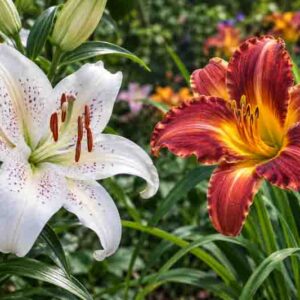
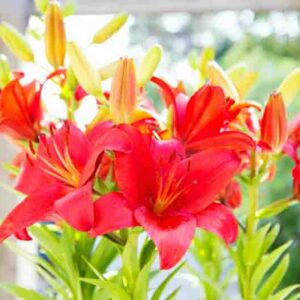
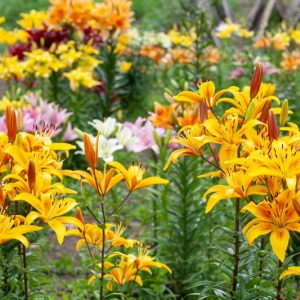
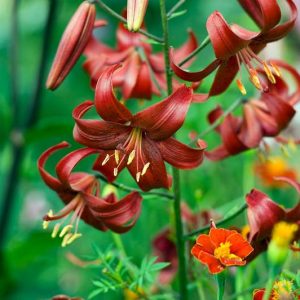
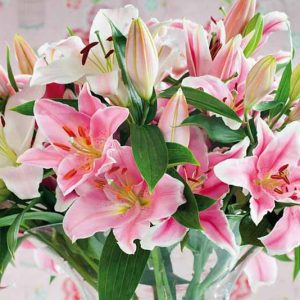
Want lilies flowering for more than a few weeks? The secret is succession. Combine early, midsummer, and late-flowering lilies, coordinate color and fragrance, layer plants by height, and add compatible companions. Discover how Asiatic, Martagon, Trumpet, Oriental, Orienpet, LA, and species lilies can create months of spectacular summer color.
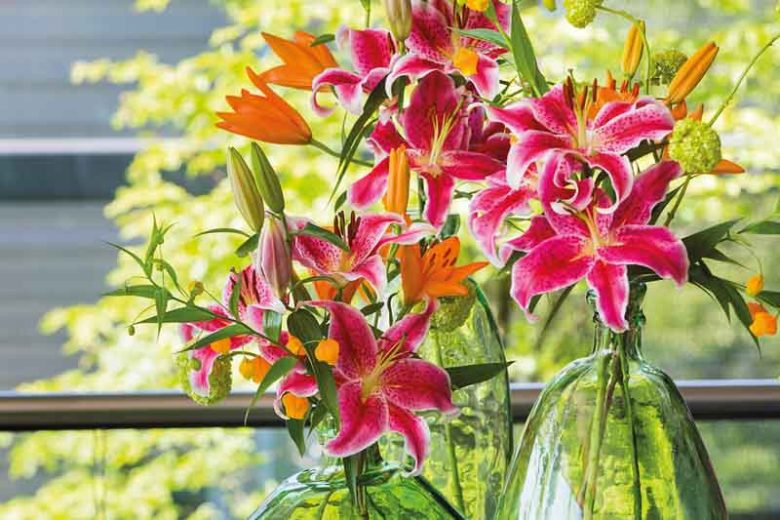


A spectacular lily garden should not peak for two weeks and then disappear. With thoughtful selection, true lilies in the genus Lilium can provide successive waves of flowers across much of the summer, moving from compact, brightly colored early hybrids to towering fragrant Trumpets and finally to the sumptuous flowers of Oriental and Orienpet lilies.
The secret is not finding one magical lily that blooms all summer. It is succession planting: choosing lilies with different flowering periods, heights, flower forms, colors, and garden roles so that one group comes into its prime as another begins to fade.
Done well, succession planting creates more than a longer season. It gives the garden rhythm. Early lilies can weave through emerging perennials, tall midsummer lilies can rise above established borders, and late-flowering lilies can revive beds just when many earlier plants are losing momentum.
This guide focuses on how to design and select lilies for the longest, most beautiful display. If you are comparing lily types more generally, see Gardenia’s How to Choose Lilies.
| Garden Role | Useful Lily Groups | What They Add |
|---|---|---|
| Start the display | Asiatic, Martagon, LA hybrids, selected species | Early color, compact choices, woodland options |
| Build the midsummer peak | Trumpet and Aurelian lilies, later early-season cultivars | Height, fragrance, architectural drama |
| Extend the season | Oriental and Orienpet lilies | Large flowers, fragrance, powerful late-summer color |
| Fill special niches | Species and tiger lilies | Naturalistic character, unusual forms, additional seasonal range |
Think in flowering waves, not isolated plants. The strongest long-season planting usually contains at least one early group, one midsummer group, and one later group. Add several cultivars within those groups and the transitions become even smoother.
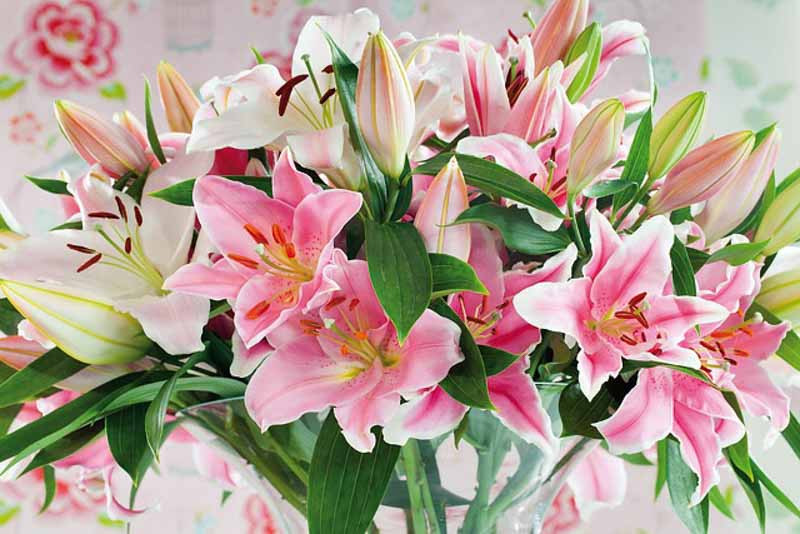
The most common mistake in a lily planting is choosing several beautiful cultivars that all belong to the same flowering group. The result can be magnificent, but brief. Ten Asiatic lilies that flower at roughly the same stage of summer do not create a longer season simply because there are ten of them.
Instead, build the planting around different lily divisions. Asiatic lilies and Martagons can start the display. Trumpet and Aurelian lilies can provide a strong midsummer transition. Oriental lilies and Orienpet lilies then extend the garden’s impact later in the season.
You do not need every division. Even three well-chosen flowering waves can transform the length of the display.
A smaller garden might use one early Asiatic cultivar, one fragrant Trumpet, and one later Oriental. A large border can repeat several cultivars from each group, allowing color and height to evolve gradually over the summer.
Selection matters more than quantity. Six carefully chosen lilies from different flowering groups can provide a longer season than twenty bulbs that all peak together.
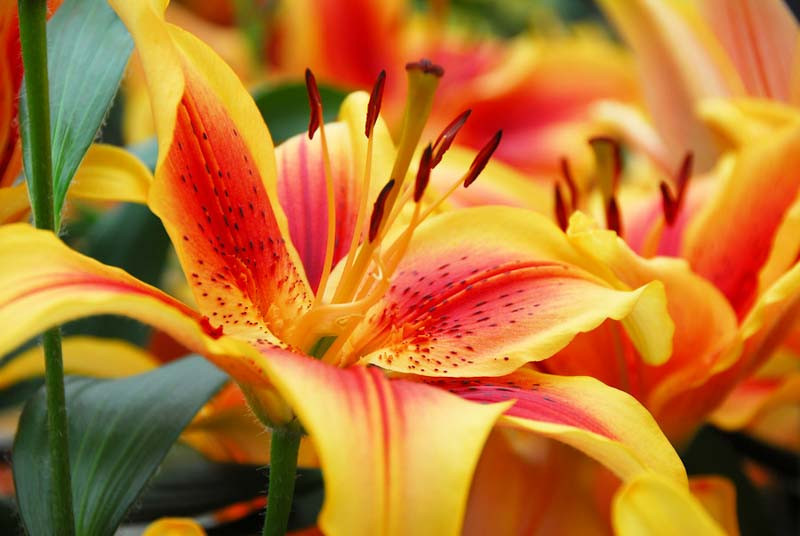
Asiatic lilies are excellent foundation plants for a long lily season. They are among the earlier major hybrid groups, come in an extraordinary range of colors, and include compact cultivars as well as taller border plants.
Their strength in a succession planting is versatility. You can begin with dwarf forms near the front of a bed or in containers and repeat taller Asiatics farther back. Reds, oranges, yellows, pinks, whites, near-black shades, speckled flowers, and bicolors make it easy to establish the color story that later lilies will continue.
Most Asiatic lilies have little or no fragrance, which can actually be useful in garden design. They provide the visual opening act without competing with scented plants nearby. Later, fragrant Trumpet, Oriental, or Orienpet lilies can change the character of the same garden space.
Within the Asiatic group, cultivars do not all open simultaneously. Using two or three cultivars rather than one can broaden the early display, although the real extension comes from combining them with later lily groups.
Asiatic lilies to try:
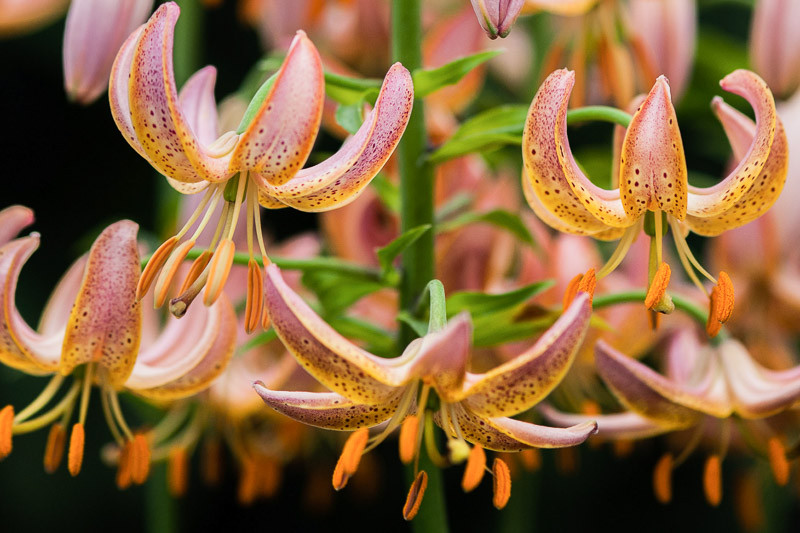
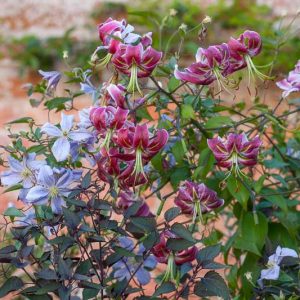
Martagon lilies bring a completely different texture to the beginning of the lily season. Rather than a few enormous flowers, established stems can carry numerous smaller, nodding Turk’s cap blooms.
They are particularly valuable in woodland-edge gardens, informal borders, and sites with light or dappled shade. Their whorled foliage and airy flowers integrate naturally with ferns, hostas, woodland perennials, and shrubs.
That makes Martagons more than an additional flowering period. They allow you to extend lily season into parts of the garden where large, upright hybrid lilies might feel out of place.
Site them carefully, because Martagons are best allowed to settle and remain undisturbed. Once established, they can become long-lived structural plants rather than bulbs you routinely move around the border.
Martagon lilies to try:
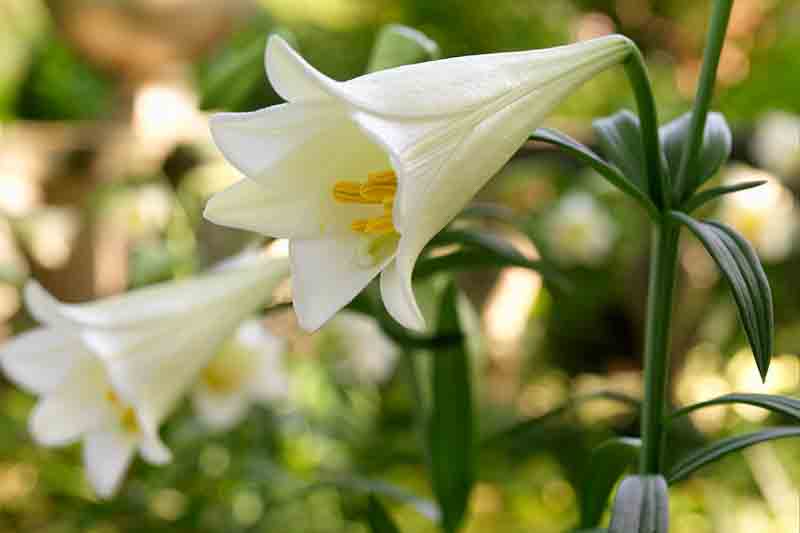
Longiflorum-Asiatic hybrids, usually called LA hybrids, are useful when you want the brightness and easy garden presence associated with Asiatic lilies combined with larger, more substantial flowers.
They fit naturally into the early part of a succession planting and help prevent the garden from feeling as though it jumps abruptly from short early lilies to towering midsummer Trumpets.
LA hybrids are especially effective in cutting gardens, mixed borders, and bold color schemes. Use them in repeated groups rather than planting single bulbs at random. A cluster of one cultivar reads as a deliberate garden feature, while another cluster farther along the border can repeat the color and visually connect the planting.
LA hybrid lilies to try:
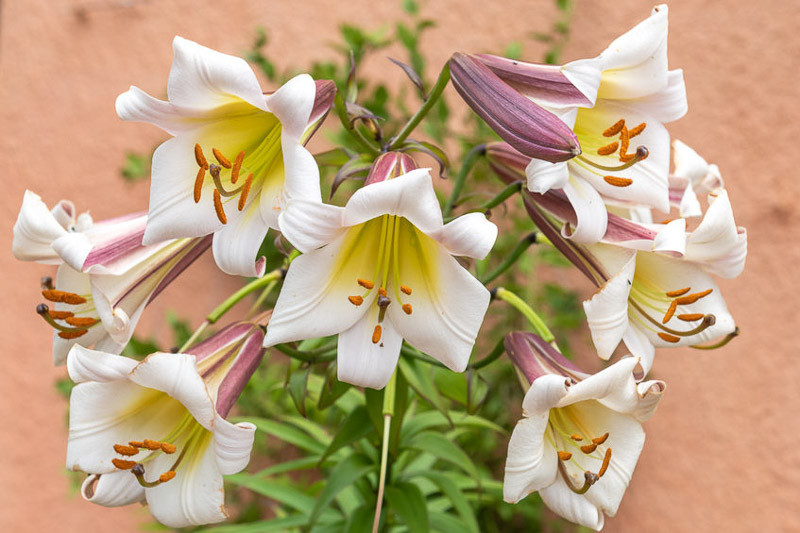
By midsummer, the garden often benefits from greater height and fragrance. This is where Trumpet and Aurelian lilies earn their place.
Their large, often strongly scented flowers sit high on substantial stems, creating an architectural layer above many surrounding perennials. A well-placed group can become the focal point of a border without occupying much ground-level space.
Rather than spreading tall Trumpet lilies evenly through a bed, use them as vertical punctuation. Repeat one cultivar two or three times through a large border, or place a dramatic group where it can be viewed from a terrace, path, or window.
Fragrance is another reason to think about location. Plant scented lilies where people naturally pass or linger. A heavily perfumed cultivar hidden at the distant end of the garden wastes one of its greatest qualities.
Design for fragrance as well as color. Place strongly scented lilies near patios, paths, seating areas, and open windows. If fragrance is a priority, explore Gardenia’s Most Fragrant Lilies.
Trumpet lilies to try:
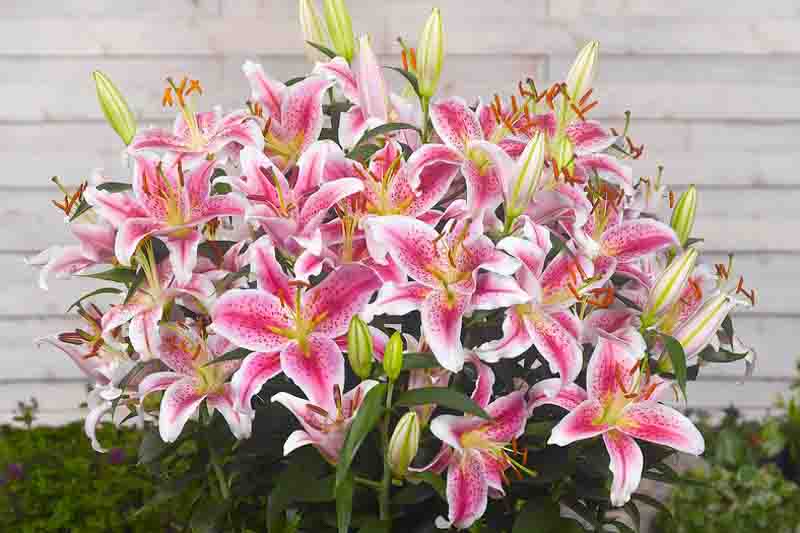
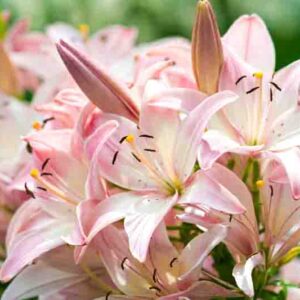
Oriental lilies are among the most useful choices for extending a lily display into the later part of summer. Their flowers are often enormous, richly patterned, and powerfully fragrant.
They also change the visual mood of the planting. Where early Asiatics may emphasize bright oranges, yellows, reds, and clean solid colors, Orientals often introduce white, pink, crimson, deep rose, picotee edges, speckles, and contrasting throats.
This shift can make a long lily season feel intentional rather than repetitive. Instead of trying to repeat exactly the same flowers for months, allow the garden to evolve.
Oriental lilies are especially effective near late-summer perennials. Their broad flowers contrast beautifully with finer textures, while low neighboring plants can disguise the lower portions of the lily stems without hiding their blooms.
If your soil conditions are not well suited to Oriental lilies, containers can provide more control over the growing medium. Gardenia’s Best Lilies for Pots and Containers offers additional options.
Oriental lilies to try:
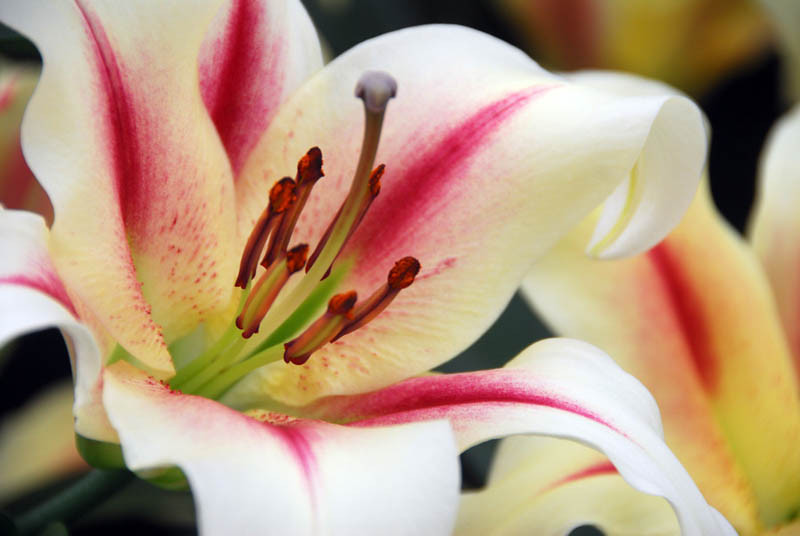
Orienpet lilies, or OT hybrids, combine Oriental and Trumpet ancestry. For gardeners designing a long lily season, they are particularly valuable because they occupy the later part of the display and often have the stature to command attention even in a mature summer border.
Many Orienpets produce large, waxy, fragrant flowers on strong stems. Well-established plants can be substantial, so they work best where their eventual size has been considered from the beginning.
Use them toward the middle or back of a border, against shrubs, along fences, or as repeated vertical accents. They can rise through lower perennials without requiring a large footprint at ground level.
Colors range from creamy white and soft yellow to pink, red, and complex bicolors. This makes Orienpets excellent transition plants when you want the final phase of a lily planting to echo colors introduced earlier while becoming taller and more dramatic.
For maximum late-season impact: Do not hide tall Orienpets one by one throughout the border. A repeated group of the same cultivar creates a far stronger focal point and makes the final wave of lily flowers look deliberate.
Orienpet lilies to try:
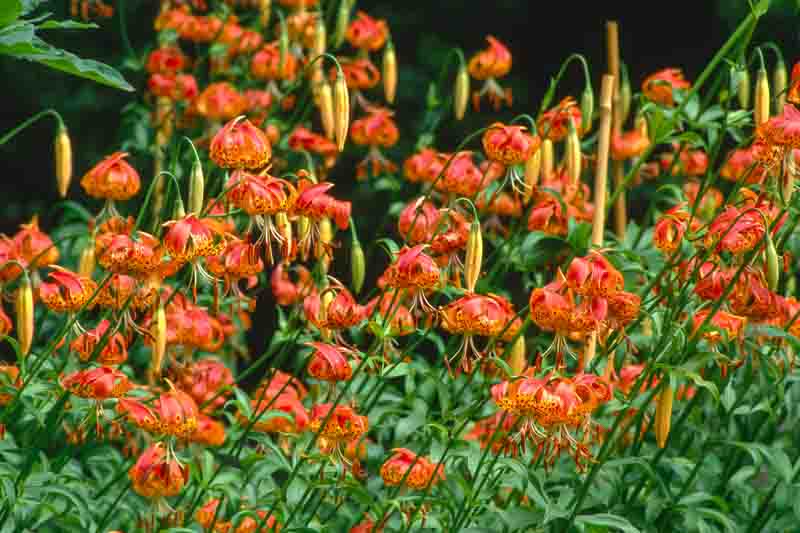
Species lilies should not be treated as one predictable flowering group. They are wild species from very different habitats, and their garden requirements and seasonal behavior vary enormously.
That variation is precisely what makes them interesting in a long-season planting. Some can supplement the beginning of the lily display, others overlap the middle, and later species can add another layer toward the end.
More importantly, species lilies introduce forms that are often very different from modern hybrids: slender trumpets, recurved Turk’s cap flowers, nodding bells, spotted petals, delicate stems, or naturalistic colonies.
Use them where their individual character makes sense rather than simply inserting them to fill a gap in the calendar. A North American woodland lily, for example, belongs in a very different design context from a towering Oriental hybrid.
Species lilies to explore:
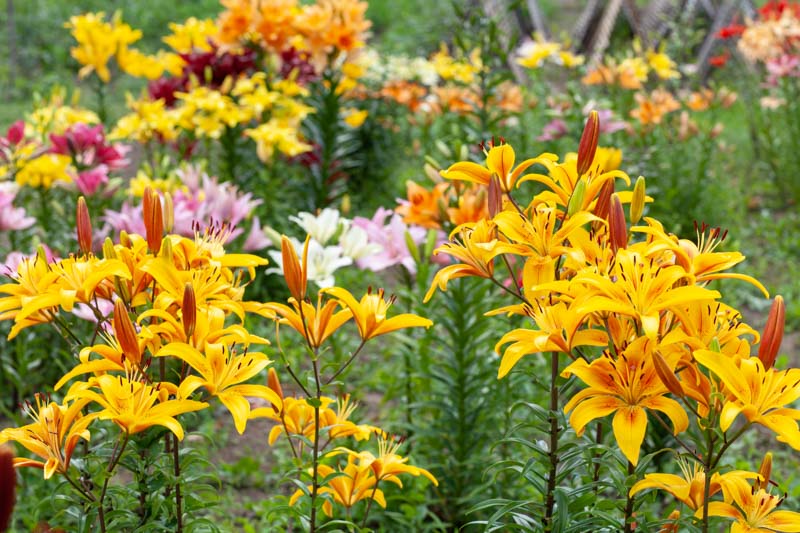
A long lily season is more convincing when the plants are arranged as a composition rather than as a collection.
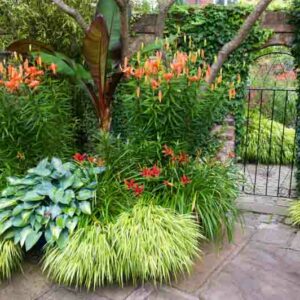
Start by thinking about height. Compact lilies belong near the front of borders or in pots. Medium-height lilies can sit among perennials. Tall Trumpets and Orienpets generally work farther back, although a dramatic vertical accent can occasionally be brought forward intentionally.
Next, think about repetition. Three bulbs of one cultivar grouped together generally make a stronger statement than three unrelated cultivars planted separately. In larger gardens, repeat the same cultivar in more than one location to pull the composition together.
Finally, consider what surrounds the lilies when they are not blooming. Lily stems emerge vertically and occupy relatively little horizontal space, which makes them excellent candidates for mixed planting. Their neighbors can provide spring interest before the lilies flower and can disguise fading lily stems later in the year.
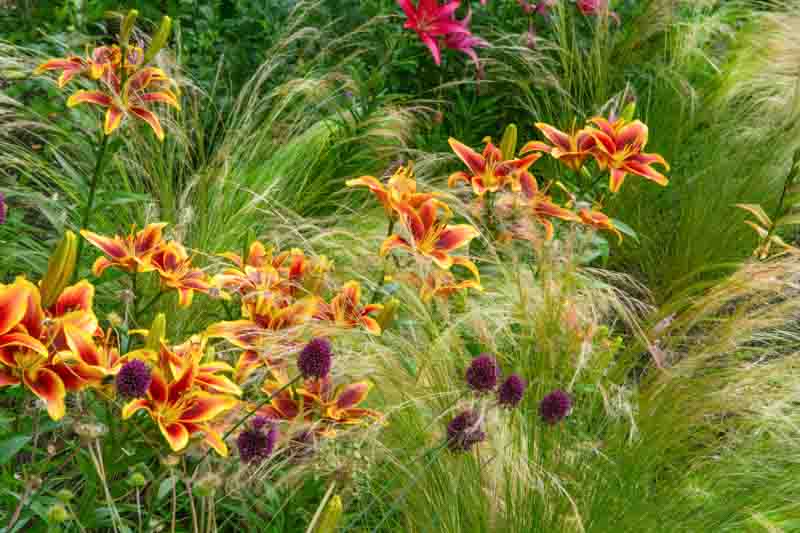
Lilies do not need to carry the entire garden by themselves. In fact, one of the best ways to make a long lily display feel natural is to combine the bulbs with plants that flower before, during, and after them.
Spring bulbs and early perennials can occupy the garden before lilies reach their peak. Summer perennials provide a lower layer around the stems. Late-flowering perennials then maintain color while the lily foliage is ripening.
Good companion planting also solves an aesthetic problem: the lower portion of a tall lily stem is rarely the most attractive part of the plant. Neighboring perennials can soften that vertical line while leaving the upper foliage and flowers in the light.
Avoid aggressive companions that compete heavily for moisture and root space, and do not pack plants so tightly that air circulation suffers.
For detailed planting combinations, see Gardenia’s Great Companion Plants for Lilies.
A border can have a longer season than any single plant. Think beyond “Which lily flowers longest?” Combine lilies with spring bulbs, summer perennials, grasses, and later-flowering companions so the planting remains attractive before, during, and after lily bloom.
A long flowering season can become visually chaotic if every new wave introduces unrelated colors. You do not need to make every lily match, but giving the succession a color strategy makes the border feel designed rather than collected.
For example, the near-black Asiatic lily ‘Landini’ can introduce a dark accent early in the season, while the crimson-and-gold Orienpet lily ‘Scheherazade’ can echo that drama later without simply repeating the same flower.
Not every lily needs to be fragrant. In fact, combining relatively unscented early lilies with highly fragrant later lilies can make the garden more interesting.
Asiatic hybrids provide abundant color without typically dominating the garden with scent. Trumpet lilies introduce fragrance around the middle of the display, while many Oriental and Orienpet lilies can create a much more intense sensory experience later.
Place fragrant lilies strategically. A scented flower has far more impact beside an evening seating area than at the back of a large property where nobody passes close enough to notice it.
Highly fragrant lilies to try:
For more scented choices, explore Gardenia’s Most Fragrant Lilies.
A succession plan should be based on relative flowering order rather than rigid national dates. Spring temperatures, latitude, elevation, exposure, and seasonal weather can move a lily’s flowering period forward or backward.
This means a combination copied from a garden in another region may still work, but its exact timing may shift. What matters is that the selected groups normally flower at different stages relative to one another.
When purchasing named cultivars, compare their stated flowering period with other lilies you already grow. Local experience is particularly valuable. After a season or two, you may discover that two cultivars overlap more than expected or that a supposedly later lily consistently begins earlier in your garden.
Treat the planting as an evolving composition. Gardeners who record flowering periods for their own plants can refine the sequence over time.
Deadheading lilies is useful, but it does not normally make true lilies produce another flowering cycle. The buds for the season are already carried on the flowering stem, so removing spent blooms should be viewed as aftercare rather than a way to force repeat bloom.
For more flowers, think succession rather than rebloom. The reliable way to extend lily season is to combine cultivars that flower at different times, not to try to make an early lily flower all over again.
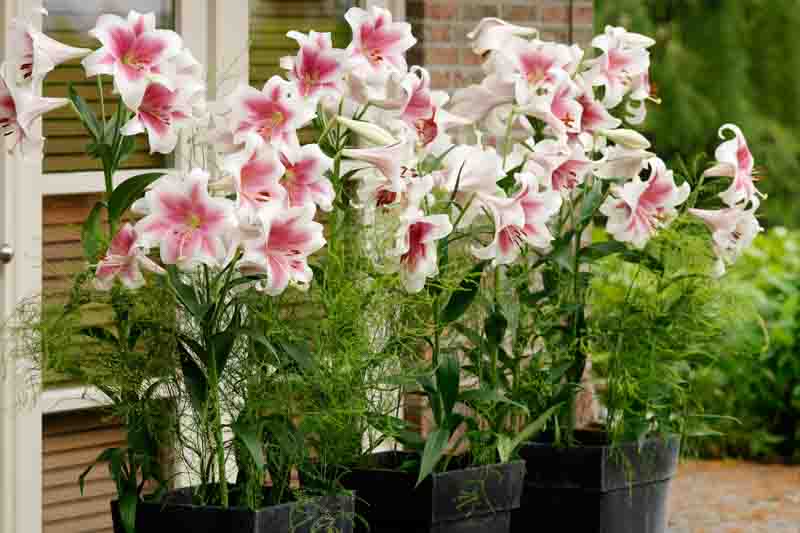
A long lily season does not require a large flower bed. Containers make it possible to grow several lily groups even in a courtyard, patio, balcony, or small garden.
Rather than filling every pot with the same cultivar, create several containers with different flowering roles. Early lilies can begin the display, while later pots remain in the background until their buds become prominent.
Containers can also be repositioned. A pot in full flower can be moved into a high-visibility position near a door or seating area, while one that has finished flowering can be moved somewhere less prominent as its foliage matures.
Choose appropriately sized cultivars and sufficiently deep pots with excellent drainage. For specific recommendations, see Gardenia’s Best Lilies for Pots and Containers.
A carefully planned succession is only useful if the plants remain healthy enough to flower. Waterlogging, severe drought, pest damage, disease, poor light, and premature foliage removal can interrupt the sequence.
Start with the right location and healthy bulbs. Provide appropriate light, good drainage, and enough room for plants to develop without excessive competition. Water during dry periods when needed, especially while stems and buds are actively developing.
Tall cultivars may need support in exposed positions. Good air circulation is also valuable, particularly where lilies are planted among dense perennial foliage.
Correct planting depth varies with bulb size, rooting habit, and species, so avoid applying one fixed depth to every lily. Gardenia’s How Deep to Plant Lily Bulbs: Depth and Spacing Guide explains these differences in detail.
For complete cultural information, see Gardenia’s How to Grow Lilies: Planting, Care & Troubleshooting.
There is no magic number. The answer depends on the size of the garden and the effect you want.
For a small border, three flowering roles may be enough: an early lily, a midsummer lily, and a later lily. Plant several bulbs of each cultivar so every stage has visual weight.
In a larger garden, five or six cultivars can create a much smoother progression. Two early selections, one or two midsummer selections, and two later cultivars allow more overlap and reduce the chance of a visible gap between flowering waves.
More cultivars are not necessarily better. A border containing twenty unrelated lilies may have a long season but little visual coherence. Repetition, grouping, and restraint usually produce a more professional result.
Avoid the collector’s trap: A long-blooming lily garden is not the same as a garden containing the largest possible number of lily cultivars. Choose enough varieties to create succession, then repeat the strongest performers so the planting looks intentional.
If you are starting from scratch, keep the first plan simple.
This approach gives you a framework rather than a rigid recipe. The exact cultivars can change with climate, color preference, garden size, and availability, while the principle remains the same.
Ready to build your own long-blooming lily display? Use Gardenia’s Plant Finder to narrow your choices by bloom season, flower color, height, hardiness, sun, soil, fragrance, garden use, and many other growing preferences.
If you would rather compare lily varieties side by side, explore Gardenia’s Compare Lilies tool to review different Lilium species and cultivars and choose the combinations that best fit your garden and flowering plan.
Tip: Start by selecting lilies from different bloom periods, then refine the list by height, fragrance, color, and growing conditions. That makes it much easier to create a succession that is both beautiful and well suited to your site.
Grow lilies from several flowering groups rather than relying on one cultivar or division. Combine earlier Asiatic, Martagon, or LA lilies with midsummer Trumpet or Aurelian lilies and later Oriental or Orienpet lilies. Overlapping cultivars creates a succession rather than one short peak.
No single lily group provides the entire season. Asiatic, Martagon, and LA lilies are useful earlier choices, Trumpet and Aurelian lilies provide a strong midsummer display, and Oriental and Orienpet lilies are valuable later. Species lilies can add further variety when matched to suitable conditions.
Deadheading does not normally make true lilies produce a second flowering cycle. Remove spent flowers if seed is not wanted, but leave the green stems and foliage intact so they can photosynthesize and replenish the bulb for the following year.
A small garden can create useful succession with three well-chosen flowering roles: early, midsummer, and late. Larger gardens can use five or six cultivars for more overlap. Plant several bulbs of each cultivar rather than using many unrelated varieties as single specimens.
Different lilies can be combined, but group bulbs of the same cultivar together rather than mixing every bulb randomly. Repeating distinct groups creates stronger color blocks and makes the planting look intentional while still allowing different cultivars to flower in succession.
Oriental and Orienpet lilies are among the most useful later-flowering hybrid groups. Many provide large, fragrant flowers when earlier Asiatic and Martagon lilies have finished. Tiger lilies and selected species can also contribute later in the season.
Yes. Grow several containers with lilies that flower at different stages of summer. Pots can be moved into prominent positions as they reach their peak and moved aside after flowering while the foliage matures. Choose appropriately sized lilies and deep containers with excellent drainage.
Combine lilies with compatible spring bulbs, summer perennials, ornamental grasses, annuals, and later-flowering perennials. Companions can provide interest before lilies bloom, soften the bases of tall stems, and maintain color while lily foliage ripens after flowering.
No. Remove spent flowers if desired, but keep green stems and leaves until they naturally yellow and die back. The foliage continues photosynthesizing after bloom and helps replenish the bulb for the following growing season.
Yes. Temperature, latitude, elevation, exposure, and seasonal weather can shift flowering earlier or later. Plan around the relative sequence of lily groups rather than relying on exact national dates, then adjust your cultivar choices after observing how they perform in your own garden.
The longest-lasting lily displays are designed around succession rather than relying on a single long-blooming variety.
Within that framework, coordinate color, height, fragrance, and planting style. Group individual cultivars for impact, repeat the best performers, and surround lilies with compatible plants that keep the border attractive before and after each flowering wave.
Most importantly, allow the garden to change. A long season does not mean making June, July, and August look identical. The appeal comes from watching the planting evolve from one kind of lily beauty to another.
The goal is not one lily that flowers forever. It is a garden in which there is always another lily preparing to take the stage.
Updated: August 2026 • Reviewed by Gardenia Editors
| Hardiness |
3 - 9 |
|---|---|
| Heat Zones |
1 - 7 |
| Climate Zones | 1, 2, 3, 4, 5, 6, 7, 8, 9, 14, 15, 16, 17, 18, 19, 20, 21, 22, 23 |
| Plant Type | Bulbs, Perennials |
| Genus | Lilium |
| Exposure | Full Sun, Partial Sun |
| Season of Interest | Spring (Late), Summer (Early, Mid, Late), Fall |
| Maintenance | Low |
| Water Needs | Average |
| Soil Type | Chalk, Clay, Loam, Sand |
| Soil pH | Acid, Alkaline, Neutral |
| Soil Drainage | Moist but Well-Drained, Well-Drained |
| Characteristics | Cut Flowers, Fragrant, Showy |
| Landscaping Ideas | Beds And Borders, Patio And Containers |
| Garden Styles | City and Courtyard, Cutting Garden, Informal and Cottage, Traditional Garden |
| Hardiness |
3 - 9 |
|---|---|
| Heat Zones |
1 - 7 |
| Climate Zones | 1, 2, 3, 4, 5, 6, 7, 8, 9, 14, 15, 16, 17, 18, 19, 20, 21, 22, 23 |
| Plant Type | Bulbs, Perennials |
| Genus | Lilium |
| Exposure | Full Sun, Partial Sun |
| Season of Interest | Spring (Late), Summer (Early, Mid, Late), Fall |
| Maintenance | Low |
| Water Needs | Average |
| Soil Type | Chalk, Clay, Loam, Sand |
| Soil pH | Acid, Alkaline, Neutral |
| Soil Drainage | Moist but Well-Drained, Well-Drained |
| Characteristics | Cut Flowers, Fragrant, Showy |
| Landscaping Ideas | Beds And Borders, Patio And Containers |
| Garden Styles | City and Courtyard, Cutting Garden, Informal and Cottage, Traditional Garden |
Create a membership account to save your garden designs and to view them on any device.
Becoming a contributing member of Gardenia is easy and can be done in just a few minutes. If you provide us with your name, email address and the payment of a modest $25 annual membership fee, you will become a full member, enabling you to design and save up to 25 of your garden design ideas.
Join now and start creating your dream garden!
Create a membership account to save your garden designs and to view them on any device.
Becoming a contributing member of Gardenia is easy and can be done in just a few minutes. If you provide us with your name, email address and the payment of a modest $25 annual membership fee, you will become a full member, enabling you to design and save up to 25 of your garden design ideas.
Join now and start creating your dream garden!