Trees - Guides
Trees reward good planning—and can be difficult and expensive to correct when the wrong tree is planted in the wrong place. Successful tree growing starts with choosing the right species, allowing for mature size, planting correctly, and giving young trees the care they need to establish.
Choose the Right Tree Before You Plant
Start with the site rather than the tree. Check climate and hardiness, sunlight, soil, drainage, available root space, and the tree’s expected mature height and spread. Then decide what you want from it—shade, flowers, fruit, privacy, fall color, wildlife value, or year-round structure.
Large trees such as oaks can be tremendous long-term assets where space allows, while maples and magnolias offer very different combinations of size, form, flowers, and seasonal interest.
Allow for Mature Size, Roots, and Nearby Structures
One of the most common tree-planting mistakes is choosing for today’s size rather than tomorrow’s. Before planting, consider the mature canopy, root zone, nearby buildings, patios, driveways, underground services, and overhead wires.
A tree such as American sycamore can become enormous, while a weeping willow needs considerable room and a site suited to its growth habit. Good spacing at planting prevents years of corrective pruning and conflicts later.
Match Fruit and Ornamental Trees to Your Goals
If you want fruit as well as ornamental value, consider trees such as apple, cherry, or almond. Check climate suitability, mature size, pollination requirements, and the level of pruning and care you are willing to provide.
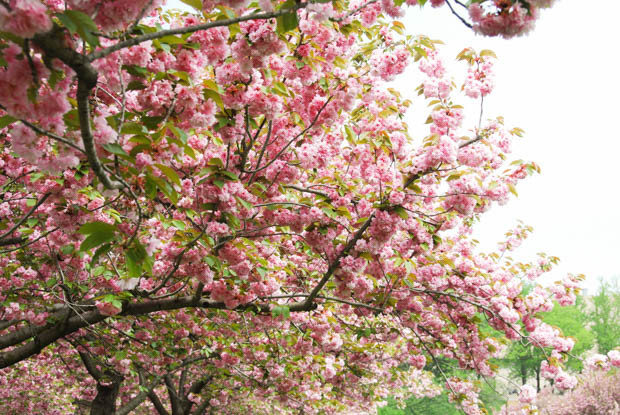
If appearance is the priority, flowering trees such as magnolias may be a better fit. Choose according to the job the tree needs to perform rather than selecting by flowers or photographs alone.
Plant for Wildlife and Long-Term Garden Value
Trees can be some of the most valuable wildlife plants in a garden, providing shelter, nesting sites, flowers, fruit, nuts, seeds, and host foliage. Where suitable, including native plants and trees can strengthen those ecological relationships.
Think beyond the first few years. A well-chosen tree can become the framework around which the rest of a garden develops, influencing shade, soil moisture, wildlife, views, and planting opportunities for decades.
Choose Trees for Special Climates and Indoor Spaces
Not every tree belongs in a traditional temperate landscape. Palms can create strong architectural effects in suitable warm climates, while plants such as the Money Tree bring tree-like form indoors.
Whatever the setting, match the plant to the environment rather than trying to force unsuitable conditions to work.
With trees, prevention is far easier than correction. Choose a tree that fits the site at maturity, establish it well, and let its natural form guide future care. A good decision at planting time can prevent decades of pruning, root conflicts, poor growth, and unnecessary expense.