Vines and Climbing Plants - Guides
Climbing plants can transform walls, fences, arches, and pergolas, but success starts with choosing the right vine for the right structure. Before planting, consider how the plant climbs, its mature size, growth rate, pruning needs, sun exposure, and the strength of its support.
Choose the Right Climber for the Right Place
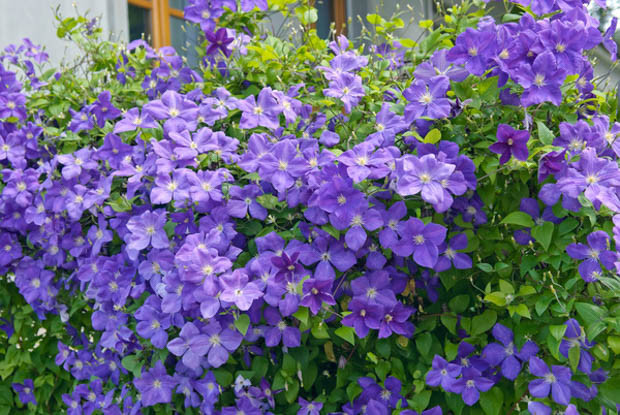
Start with the site and the job you want the plant to do. Clematis can be ideal where you want flowers without overwhelming a structure, while wisteria needs much more room and support. For screening or wall coverage, Parthenocissus can provide rapid coverage and strong seasonal foliage effects.
Give Climbers the Support They Actually Need
Different climbers attach themselves in different ways. Twining stems and tendrils need something they can wrap around, self-clinging vines may attach directly to surfaces, and climbing roses must be tied and trained. Match the support to the mature weight of the plant – especially with vigorous woody climbers such as wisteria.
Prune and Train for Better Flowers and Coverage
Pruning should follow the plant’s growth and flowering habit rather than a single rule for all vines. Training young stems early helps establish the framework you want, while selective pruning prevents tangled growth and keeps flowers where they can be enjoyed. This is especially important with Clematis, wisteria, and climbing roses, whose pruning needs differ significantly.
Control Vigorous Climbers Before They Take Over
Fast growth can be useful for privacy, but it also means more maintenance. Trumpet vine and some other vigorous climbers can spread strongly once established. Parthenocissus can also cover very large areas. Check mature size and local behavior before planting, and allow enough space so routine pruning does not become a constant battle.
Encourage Flowers, Fragrance, and Wildlife
For strong flowering, give the vine the light and growing conditions it needs rather than relying on fertilizer alone. Honeysuckles can combine fragrance with pollinator value, while trumpet vine is valued for its hummingbird-attracting flowers. Clematis, climbing roses, and wisteria can create spectacular flowering displays when properly sited, trained, and pruned.