Cilician Cyclamen, Hardy Cyclamen, Turkish Hardy Cyclamen, Sowbread, Persian Violet

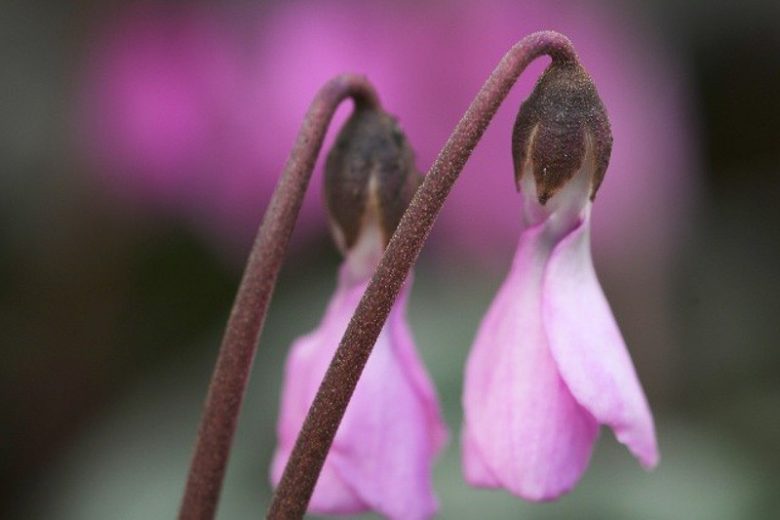


Cyclamen cilicium is one of those plants that wins people over quietly, then completely. At first glance, it looks delicate – a petite, fall-flowering cyclamen with soft pink or white blooms and beautifully patterned leaves. But spend one season with it, and you realize this little plant has real garden presence. It flowers in autumn, often just as the summer garden starts winding down, and brings a fresh wave of charm to hardy cyclamen plantings, woodland edges, rock gardens, and containers.
What makes Cyclamen cilicium especially appealing is its balance of elegance and practicality. It is a small, tuberous perennial with slightly honey-scented flowers, decorative silver-marked foliage, and a refined rather than flashy habit. It thrives in part shade and well-drained soil, and once it settles in, it asks for very little. In the right spot, it can self-seed and form a gentle colony over time, creating the kind of naturalized planting that makes shady spaces feel intentional and alive.
Cyclamen cilicium is a hardy, tuberous perennial grown for its fragrant autumn flowers and silver-patterned leaves. Plant tubers in early fall in part shade and sharply drained, moderately fertile soil, about 2 in. (5 cm) deep. Water to settle the soil, keep moisture moderate during active growth, and avoid excessive summer wet, which is the main cause of rot. Let foliage grow through the cool season, mulch lightly when leaves fade, and allow the plant to rest in summer dormancy.
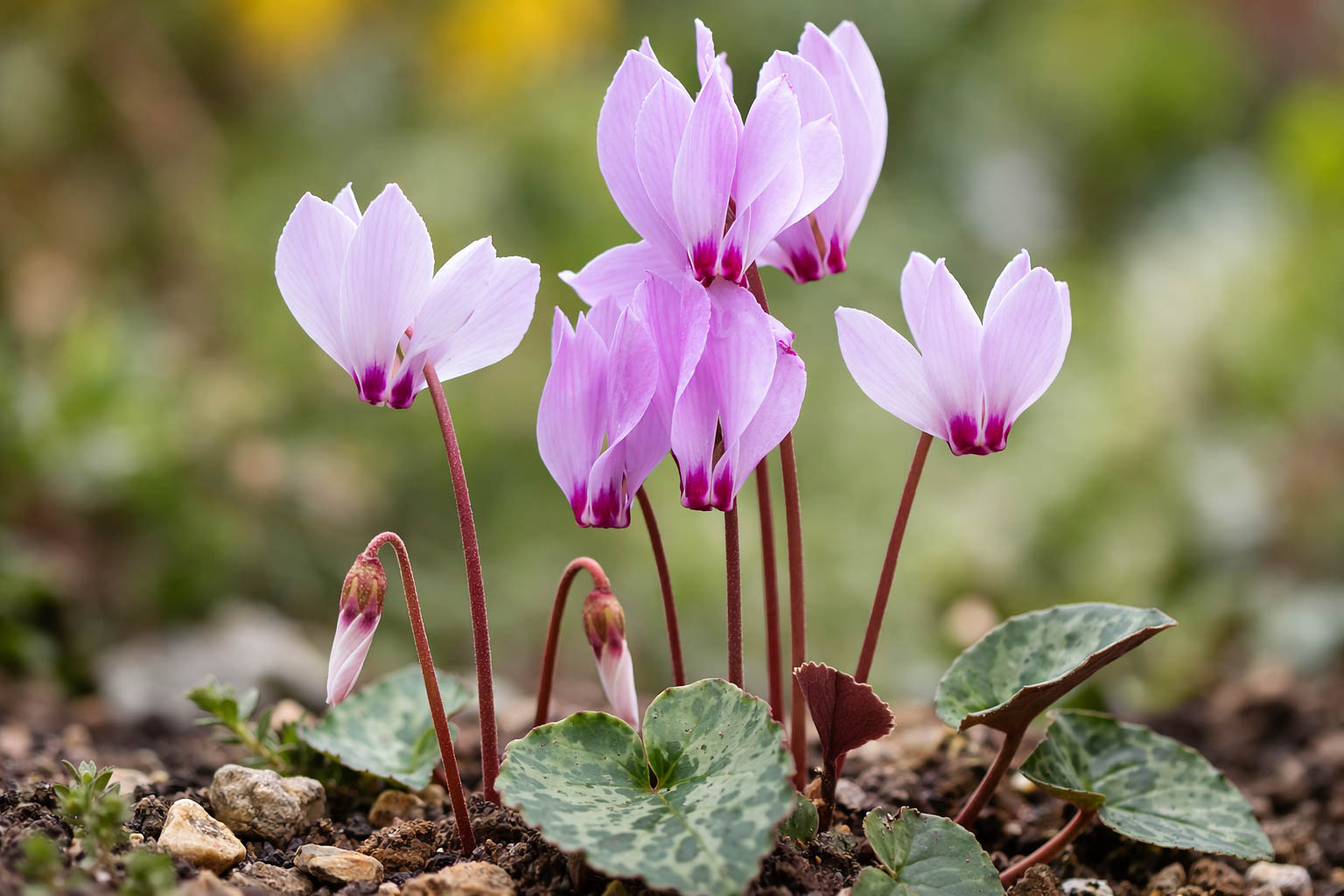
Use: Ideal for woodland gardens, rock gardens, under shrubs and trees, mixed borders, and containers.
Highlight: Sweetly scented fall flowers paired with attractive heart-shaped foliage often patterned in silver.
Design note: Plant in groups of 10-20+ for a soft, naturalized drift that looks established rather than newly planted.
| Botanical Name | Cyclamen cilicium |
|---|---|
| Family | Primrose family (Primulaceae) |
| Common Names | Cilician Cyclamen |
| Native Range |
Native context: Native to southern Turkey, especially the Taurus mountain region. Garden takeaway: It is adapted to excellent drainage, cool-season growth, and dry summer rest. |
| Plant Type and Habit | Low-growing, tuberous perennial with a neat tufted habit that may naturalize by seed |
| Hardiness (approx. USDA) | Commonly grown in USDA Zones 5-9, especially where soil stays sharply drained in winter |
| Height | 3-4 in. (7-10 cm) |
| Spread | 3-6 in. (7-15 cm) per plant, with colonies broadening gradually over time |
| Spacing | 4-6 in. (10-15 cm) apart for faster coverage |
| Sun and Exposure | Best in part shade, bright shade, or open woodland conditions |
| Soil | Prefers moderately fertile, humus-rich, well-drained soil. Sharp drainage matters more than rich feeding. |
| Seasonal Interest | Autumn – often from early to mid-fall |
| Flower Color | White to pale or rosy pink, often with a darker purple blotch at the base |
| Foliage Color | Mid-green to gray-green with silver patterning; underside often purplish |
| Fragrance | Yes – flowers are often lightly sweet or honey-scented |
| Deer / Rabbit | Often deer and rabbit-resistant once established |
| Toxicity | Toxic if ingested. Like other cyclamen, the tubers are the most toxic part and may cause vomiting, drooling, diarrhea, and gastrointestinal distress in pets and people. |
| Invasive Status | Not considered invasive; may self-seed and naturalize gently in favorable sites |
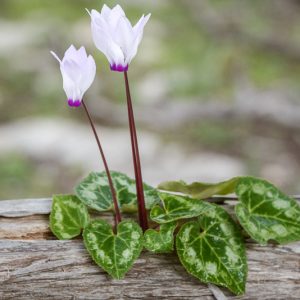
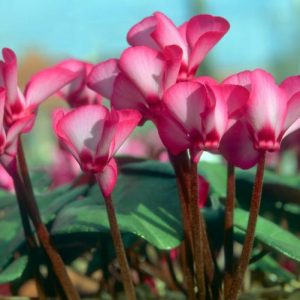
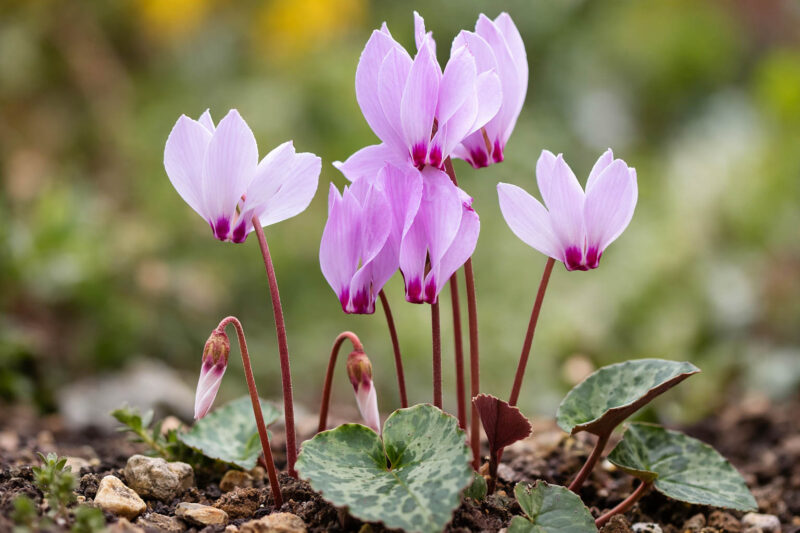
Think of Cyclamen cilicium as the sophisticated autumn cousin in the hardy cyclamen world. It stays close to the ground, rarely more than a few inches high, but every part of it feels carefully designed. The flowers are upswept and reflexed, like tiny butterflies caught mid-lift, and the leaves are broad, heart-shaped, and often marbled with silver. Even when it is not in full bloom, it still looks ornamental.
In the wild, Cyclamen cilicium comes from southern Turkey, especially mountain areas where it grows in woodland, scrub, and rocky places with excellent drainage. That background explains almost everything about how to grow it well. It likes a cool growing season, dislikes stagnant wet, and appreciates a summer period that is not overly damp.
This is a compact, tufted, tuberous perennial, generally reaching about 3-4 in. (7-10 cm) in height. It is not a plant that shouts across the garden. Instead, it rewards close viewing, especially when planted where people actually walk. Over time, it may self-seed and create small colonies, giving the space a natural, settled look.
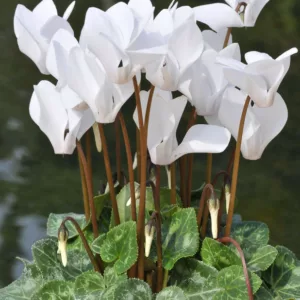
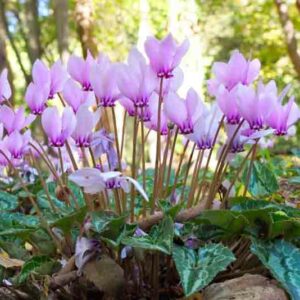
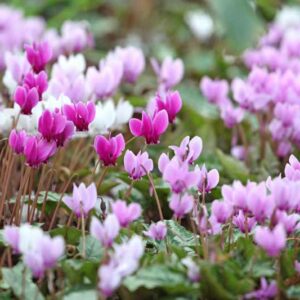
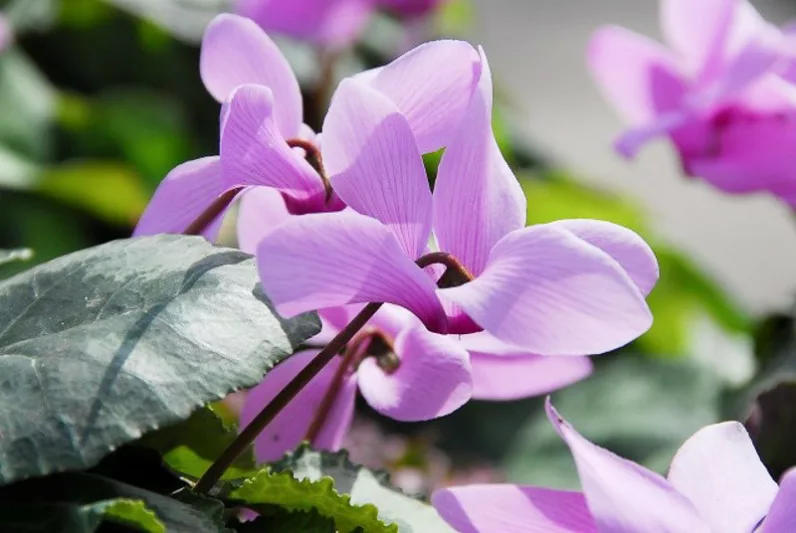
Cyclamen cilicium flowers in autumn, usually in shades from white to pale pink or rosy pink, often with a darker blotch near the base of each petal. The flowers are lightly fragrant, often described as sweet or honey-scented, which is a lovely surprise in the fall garden. In many seasons, flowers appear with or just before the foliage, depending on rainfall and local conditions.
Autumn color tip:
Plant Cyclamen cilicium near a path, entry, or seating area. Its flowers are small, fragrant, and beautifully detailed – this is a close-up plant, not a distant one.
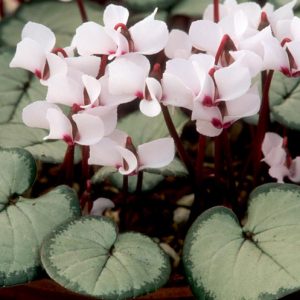
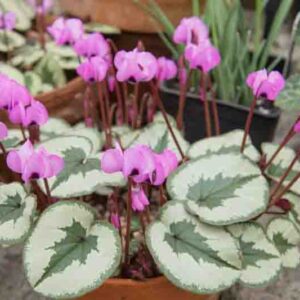
The foliage is a huge part of the appeal. Leaves are heart-shaped to oval, often marked with silver or pale gray-green patterns, and may show purplish coloring beneath. In a shady garden, that foliage reads like living ornament. It carries the display well beyond bloom and helps the plant earn its place even after the flowers have passed.
Cyclamen cilicium is reasonably hardy, but it is not the toughest cyclamen for cold, wet winters. The real issue is not low temperature by itself – it is cold combined with prolonged wet soil. In milder or well-drained gardens, it performs very well. In heavier soils, raised pockets, slopes, rock gardens, or containers often deliver better long-term results.
Cyclamen cilicium is a recipient of the Royal Horticultural Society’s Award of Garden Merit, which tells gardeners it is a plant worth making room for.
Though not usually grown as a major pollinator plant, its autumn bloom period can still offer seasonal nectar interest when conditions are mild and insects are active. In a layered shade garden, that extra seasonal resource is a bonus.
Like many hardy cyclamen, Cyclamen cilicium is often considered deer and rabbit-resistant, making it especially useful in gardens where browsing pressure limits more tender plants.
Cyclamen species are considered toxic if ingested. The tubers contain the highest concentration of toxic compounds, so pets and children should be kept from digging or chewing them. Dogs, cats, and horses are all considered sensitive.
Cyclamen cilicium is not invasive. It may self-seed gently in suitable conditions, but it does so politely. Think naturalized, not aggressive.
A light annual dressing of compost or leaf mold is usually sufficient. Heavy feeding is unnecessary and can be counterproductive.
Success rule:
Healthy Cyclamen cilicium means cool-season growth and drier summer rest. If you try to keep it lush and wet year-round, it will push back.
Cyclamen cilicium is generally trouble-free, but a few pests may show up.
The main disease problems are linked to excess moisture and poor airflow.
Prevention that works:
If you remember one thing, remember this: Cyclamen cilicium hates sitting wet. Most failures begin underground, long before the leaves tell you anything is wrong.
Cyclamen cilicium shines when planted with restraint and repetition. It works beautifully under shrubs, between stones, near mossy paths, or threaded through other woodland perennials. Because it is small, the secret is to use it as a carpet layer, not a lone specimen.
Easy design rule:
Give Cyclamen cilicium a quiet backdrop – stone, mulch, moss, or shrub roots – and let the flowers be the detail that rewards a second look.
Updated: March 2026 – Reviewed by Gardenia Editors
Cyclamen cilicium, commonly called Cilician cyclamen, is a small tuberous perennial grown for its fragrant autumn flowers and decorative silver-patterned leaves. It is a hardy cyclamen species valued for rock gardens, woodland gardens, containers, and other lightly shaded sites.
Cyclamen cilicium blooms in autumn. Its flowers usually open in early to mid-fall, adding color just as many summer perennials are fading.
The flowers are usually pale pink to rosy pink, though white forms also exist. The petals are reflexed and often marked with a darker purple blotch near the base.
Yes. Cyclamen cilicium is known for its light sweet fragrance, often described as honey-scented. That scent is one reason gardeners prize it for paths, patios, and close-up planting spots.
Cyclamen cilicium stays compact, typically reaching around 10 cm tall. It is a small-scale plant that works best where its flowers and foliage can be appreciated up close.
The leaves are broad and heart-shaped, usually green with silver mottling on top and often purplish beneath. The foliage is ornamental enough to make the plant attractive even when not in flower.
Plant Cyclamen cilicium in part shade or light dappled shade, especially in woodland settings, under shrubs, or in rock gardens. It performs best in a site with excellent drainage and some protection from harsh afternoon sun.
Cyclamen cilicium needs well-drained soil above all else. In nature it grows in sandy clay over limestone in woodland or rocky habitats, which explains why it dislikes heavy, soggy ground in gardens.
A good rule is to plant the tubers about 5 cm, or 2 inches, deep. Planting too deeply or into poorly drained soil can reduce performance and increase the risk of rot.
Plant tubers in early fall, just before or as the cool growing season begins. This gives them time to root in and establish before winter.
Yes. It grows very well in containers if the potting mix is free-draining and the tuber is not kept wet during dormancy. Containers are often a smart choice in wetter climates because they make drainage easier to control. This is a gardening inference supported by the species’ drainage needs.
That is usually normal. Cyclamen cilicium is a tuberous perennial with a seasonal cycle that includes summer dormancy. The top growth dies back, but the tuber remains alive underground and re-emerges in the cool season. This is an inference from its growth pattern and native habitat.
Rot is usually caused by poor drainage, heavy soil, or too much moisture while the plant is dormant. If Cyclamen cilicium struggles, soggy soil is the first thing to check.
Yes. Cyclamen is toxic to dogs, cats, and horses. ASPCA lists salivation, vomiting, and diarrhea among the common signs, and says large ingestions of tubers can cause severe symptoms.
Updated: March 2026 • Reviewed by Gardenia Editors
| Hardiness |
5 - 9 |
|---|---|
| Heat Zones |
3 - 9 |
| Climate Zones | 3, 4, 5, 6, 7, 8, 9, 14, 15, 16, 17, 18, 19, 20, 21, 22, 23, 24 |
| Plant Type | Bulbs, Perennials |
| Plant Family | Primulaceae |
| Genus | Cyclamen |
| Common names | Cyclamen |
| Exposure | Partial Sun |
| Season of Interest | Fall |
| Height | 3" - 4" (8cm - 10cm) |
| Spread | 4" - 6" (10cm - 15cm) |
| Spacing | 4" - 6" (10cm - 15cm) |
| Depth | 2" (5cm) |
| Maintenance | Low |
| Water Needs | Average |
| Soil Type | Chalk, Clay, Loam, Sand |
| Soil pH | Acid, Alkaline, Neutral |
| Soil Drainage | Well-Drained |
| Characteristics | Fragrant, Plant of Merit, Showy |
| Tolerances | Deer, Clay Soil, Rabbit |
| Attracts | Bees |
| Garden Uses | Beds And Borders, Patio And Containers, Underplanting Roses And Shrubs |
| Garden Styles | Gravel and Rock Garden, Pollinator Garden, Prairie and Meadow, Woodland Garden |
| Toxic to Humans | Low severity |
| Toxic to Cats | Toxic |
| Toxic to Dogs | Toxic |
| Toxic to Horses | Toxic |


| Hardiness |
5 - 9 |
|---|---|
| Heat Zones |
3 - 9 |
| Climate Zones | 3, 4, 5, 6, 7, 8, 9, 14, 15, 16, 17, 18, 19, 20, 21, 22, 23, 24 |
| Plant Type | Bulbs, Perennials |
| Plant Family | Primulaceae |
| Genus | Cyclamen |
| Common names | Cyclamen |
| Exposure | Partial Sun |
| Season of Interest | Fall |
| Height | 3" - 4" (8cm - 10cm) |
| Spread | 4" - 6" (10cm - 15cm) |
| Spacing | 4" - 6" (10cm - 15cm) |
| Depth | 2" (5cm) |
| Maintenance | Low |
| Water Needs | Average |
| Soil Type | Chalk, Clay, Loam, Sand |
| Soil pH | Acid, Alkaline, Neutral |
| Soil Drainage | Well-Drained |
| Characteristics | Fragrant, Plant of Merit, Showy |
| Tolerances | Deer, Clay Soil, Rabbit |
| Attracts | Bees |
| Garden Uses | Beds And Borders, Patio And Containers, Underplanting Roses And Shrubs |
| Garden Styles | Gravel and Rock Garden, Pollinator Garden, Prairie and Meadow, Woodland Garden |
| Toxic to Humans | Low severity |
| Toxic to Cats | Toxic |
| Toxic to Dogs | Toxic |
| Toxic to Horses | Toxic |
How many Cyclamen cilicium (Cilician Cyclamen) do I need for my garden?
| Plant | Quantity | |
|---|---|---|
| Cyclamen cilicium (Cilician Cyclamen) | N/A | Buy Plants |
Create a membership account to save your garden designs and to view them on any device.
Becoming a contributing member of Gardenia is easy and can be done in just a few minutes. If you provide us with your name, email address and the payment of a modest $25 annual membership fee, you will become a full member, enabling you to design and save up to 25 of your garden design ideas.
Join now and start creating your dream garden!
Create a membership account to save your garden designs and to view them on any device.
Becoming a contributing member of Gardenia is easy and can be done in just a few minutes. If you provide us with your name, email address and the payment of a modest $25 annual membership fee, you will become a full member, enabling you to design and save up to 25 of your garden design ideas.
Join now and start creating your dream garden!