Persian Violet, Sowbread, Eastern Cyclamen, Round-Leaved Cyclamen

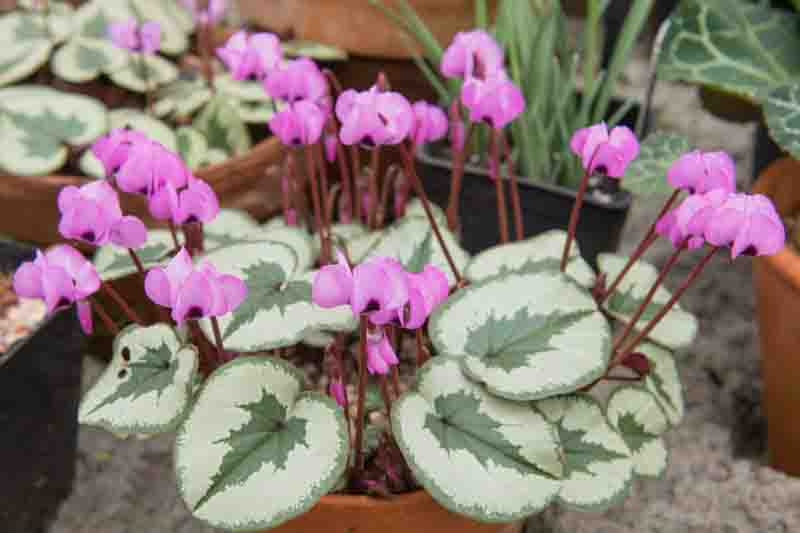

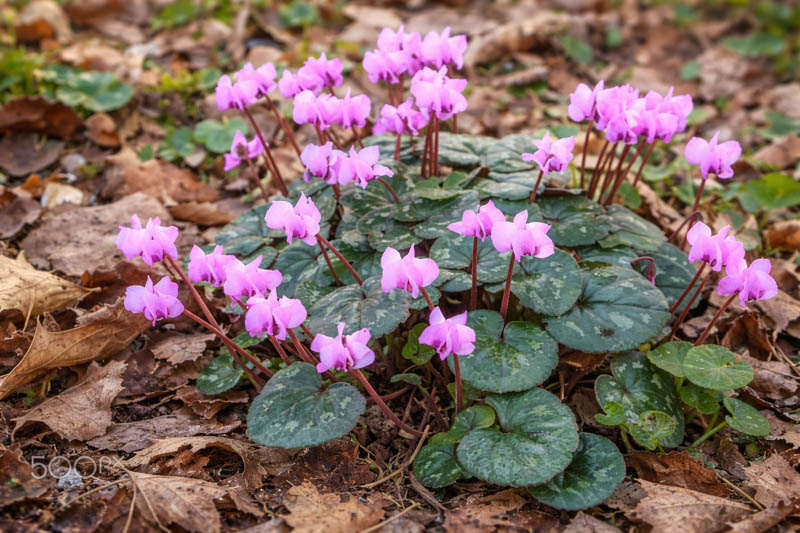


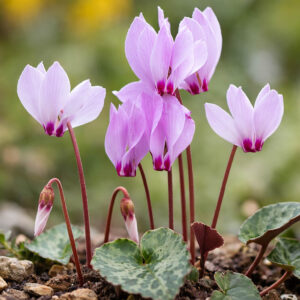
Cyclamen coum is the little winter hero that makes gardeners fall in love with their shady spots again. When most beds look sleepy, this hardy cyclamen pops up with glossy, heart-shaped leaves (often marbled in silver) and a confetti of nodding flowers in white, shell pink, rosy-purple, and rich magenta. It blooms in late winter – early spring, right when you are most desperate for color – and it does it at ground level, like a secret you only notice once you lean in.
What makes Persian Violet so lovable is the combination of high charm and low effort. It is a small, tuberous perennial that thrives in part shade, settles happily beneath shrubs and deciduous trees, and can self-seed to create those dreamy, naturalized drifts gardeners chase for years. If you want a plant that looks delicate but is surprisingly tough, Cyclamen coum is your answer.
Cyclamen coum is a hardy, tuberous perennial that flowers in late winter – early spring and thrives in part shade and well-drained, humus-rich soil. Plant tubers in late summer – early fall (shallow, about 1-2 in. / 2-5 cm deep), water to settle, then keep the soil lightly moist in the cool season. Keep the crown out of soggy ground – winter wet is the main cause of failure. Allow foliage to grow through winter, mulch lightly, and let the plant go dormant in late spring as the weather warms.
Use: Perfect for woodland gardens, under shrubs and trees, rock gardens, mixed borders, and containers.
Highlight: Cheerful, butterfly-like blooms in late winter – early spring with decorative marbled foliage.
Design note: Plant in groups of 10-25+ for that “carpet of bloom” effect that looks natural, not spotty.
| Botanical Name | Cyclamen coum |
|---|---|
| Family | Primrose family (Primulaceae) |
| Common Names | Persian Violet, Eastern Cyclamen, Round-leaved Cyclamen |
| Native Range |
Native context: Native around the Black Sea region and parts of the eastern Mediterranean. Garden takeaway: It is built for cool-season growth, woodland edges, and soils that drain well. |
| Plant Type and Habit | Low-growing, tuberous perennial that forms a spreading clump and can naturalize by seed |
| Hardiness (approx. USDA) | Commonly grown in USDA Zones 4-8 (hardy where winter soil is not waterlogged) |
| Height | 3-6 in. (7-15 cm) |
| Spread | 3-6 in. (7-15 cm) per plant – colonies expand over time by self-seeding |
| Spacing | 4-6 in. (10-15 cm) for quick coverage; wider spacing for a scattered, natural look |
| Sun and Exposure | Best in part shade or dappled shade (morning sun is great; avoid hot, dry afternoon sun) |
| Soil | Prefers humus-rich, moist, well-drained soil. Think woodland soil – fertile, crumbly, and never swampy. |
| Seasonal Interest | Late winter – early spring |
| Flower Color | White, pink, rosy-purple (often with a darker blotch at the base) |
| Foliage Color | Dark green, often marbled with silver; attractive through winter |
| Drought Tolerant | Moderately once dormant – avoid drought during active winter growth |
| Attracts | Early pollinators when weather allows (a welcome nectar moment in late winter) |
| Deer / Rabbit | Often deer and rabbit-resistant (not a favorite browse) |
| Toxicity | Toxic if ingested. All parts contain cyclamine, with the tubers the most toxic. Can cause vomiting, diarrhea, drooling, and gastrointestinal distress in humans and pets. Skin contact may cause mild irritation in sensitive individuals. |
| Invasive Status | Not considered invasive; may self-seed and naturalize politely in good conditions |
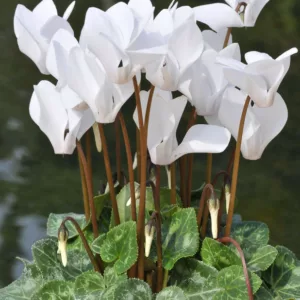
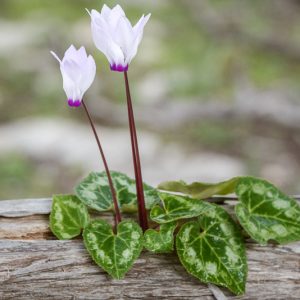
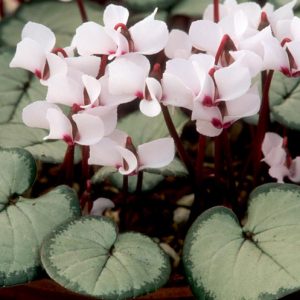
Think of Cyclamen coum as a tiny, elegant groundcover that shows up precisely when the garden needs a morale boost. It grows from a tuber, sending up rounded to heart-shaped leaves that sit close to the soil like little glossy coins. Many forms have silver marbling that looks hand-painted. Then come the flowers – small, upswept, and fluttery, like miniature butterflies hovering just above the foliage.
In nature, Cyclamen coum grows in regions with cool winters and well-drained soils. That background explains its rhythm: it likes to grow and bloom in the cool season and then rest when heat arrives. In the garden, it behaves like a woodland plant – happiest in filtered light with organic matter, especially in places where summer soil is not constantly irrigated.
This is a compact perennial, typically 3-6 in. (7-15 cm) tall and wide, but it has a wonderful trick: it can naturalize. In the right conditions, seedlings appear nearby and, over time, you get a soft drift rather than a single “dot” of plant. It is not aggressive – it is more like a polite guest who brings friends if you make them comfortable.
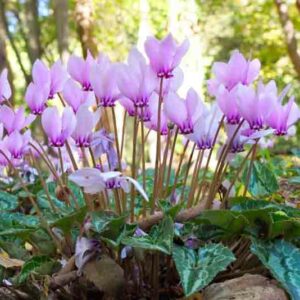
Cyclamen coum blooms in late winter – early spring. Flowers are usually 3/4-1 in. (2-2.5 cm) across, in shades from white through pink to deeper rosy-purple, often with a darker blotch at the base of each petal. On mild days you will see surprising abundance – blooms can be so thick they nearly cover the leaves.
Winter color tip:
Plant Cyclamen coum where you actually walk in winter – along a path, near the door, or under a window. This is a close-up plant, and the silver leaves are half the show.
The foliage often appears in fall and holds through winter, making Cyclamen coum valuable even before the first bloom. Leaves can be plain dark green or patterned with silver – and because they sit low, they look especially crisp against mulch, mossy stones, and woodland duff. As spring warms into early summer, both flowers and foliage gradually die back and the plant slips into dormancy.
Cyclamen coum is cold-hardy in many gardens, especially when planted in well-drained soil. The number one rule is simple: cold is fine – cold plus wet is not. If you have clay or winter puddling, plant on a slight mound, in a rock garden pocket, or in raised woodland soil with added grit.
Cyclamen coum is a recipient of the Royal Horticultural Society’s Award of Garden Merit, a strong signal that it performs well in gardens and is worth growing.
Because it blooms so early, Cyclamen coum can be a helpful nectar source when the weather is mild enough for insects to fly. In late winter gardens, “something blooming” matters. Even if pollinator activity is sporadic, the plant still earns its spot as a seasonal bridge between winter and spring.
Hardy cyclamen are often described as deer and rabbit-resistant. In practical terms, that means it is not usually the first choice for browsing animals – especially compared to tender new shoots nearby.
During active growth (fall through spring), Cyclamen coum appreciates consistent moisture. Once it goes dormant, it tolerates drier conditions better – and in fact, many gardeners get the best long-term results when summer soil is not constantly irrigated.
Cyclamen contains the compound cyclamine and is considered toxic if ingested. The tubers (roots/bulbs) are the most toxic part, though leaves and stems can also cause symptoms. In humans and pets, ingestion may lead to vomiting, diarrhea, drooling, and gastrointestinal distress. Large amounts can cause more serious symptoms. Contact with sap may cause mild skin irritation in sensitive individuals. Keep away from pets and small children who may dig or chew.
Cyclamen coum is not considered invasive, but it can self-seed and naturalize. If you love the look of a woodland carpet, let it seed. If you want strict borders, remove spent flowers before the seed develops and pull seedlings while they are tiny.
Cyclamen coum is not a heavy feeder. A thin top-dress of leaf mold or compost in autumn is usually plenty. Avoid high-nitrogen fertilizer – you want balanced growth, not lush softness.
Success rule:
With Cyclamen coum, “healthy” looks like cool-season growth and summer rest. Let it go dormant when it wants to – that is not decline, it is the plan.
Cyclamen coum is generally low-maintenance, but a few pests can show up, especially in stressed plants or crowded, humid conditions.
First step:
Most cyclamen problems trace back to conditions – too wet, too crowded, or not enough airflow. Fix the site first before reaching for treatments.
Good drainage prevents most disease issues.
Prevention that works:
If you remember one thing: keep Cyclamen coum out of soggy soil. Drainage is the difference between “permanent garden resident” and “one-season disappointment.”
Cyclamen coum is a designer’s gift because it works at the exact moment most borders are quiet. It pairs beautifully with other early bloomers and with plants that provide structure above it – shrubs, ferns, ornamental grasses, and woodland perennials. The trick is to treat it like a carpet, not a single specimen. Repeat it. Drift it. Let it thread through rocks and roots.
Easy design rule:
Give Cyclamen coum an overhead “ceiling” (shrubs, small trees, or taller perennials) and let it be the floor. That layered look makes small flowers feel intentional and abundant.
Grow Cyclamen coum in part shade with humus-rich, well-drained soil. Plant tubers in late summer – early fall about 1–2 inches deep. Keep soil lightly moist during cool-season growth and avoid winter waterlogging. Let foliage die back naturally in late spring as the plant goes dormant.
Cyclamen coum blooms in late winter – early spring, often flowering for several weeks. In mild climates, blooms can begin as early as January and create a dense carpet of color close to the ground.
Yes. Cyclamen coum self-seeds in suitable conditions and gradually forms naturalized colonies. It is not invasive, but it will gently expand over time if you allow seedlings to mature.
Plant Cyclamen coum in dappled or part shade, especially under deciduous trees and shrubs where winter light reaches the soil. Good drainage is essential – avoid heavy, waterlogged ground.
Cyclamen coum naturally goes dormant in late spring to early summer. Leaves yellow and fade as temperatures rise. The tuber rests underground through summer and regrows in fall. Disappearance in summer is normal, not a sign of death.
Yes. Cyclamen is toxic to dogs, cats, and horses, especially the tubers. Keep plants out of reach of pets that dig or chew.
Plant tubers shallowly, about 1–2 inches (2–5 cm) below the soil surface. Planting too deep can reduce flowering and increase the risk of rot.
Yes. Cyclamen coum grows well in containers if the pot drains freely. Use a gritty, well-drained mix and avoid keeping the soil constantly wet, especially during dormancy.
Deadheading is optional. Remove spent flowers if you want to limit self-seeding. Leave them in place if you prefer naturalized drifts.
Yellowing in late spring is normal and signals dormancy. If yellowing happens in winter, check for poor drainage or overwatering.
Updated: February 2026 – Reviewed by Gardenia Editors
| Hardiness |
4 - 8 |
|---|---|
| Heat Zones |
5 - 9 |
| Climate Zones | 2, 2A, 2B, 3, 3A, 3B, 4, 5, 6, 7, 8, 9, 14, 15, 16, 17, 18, 19, 20, 21, 22, 23, 24 |
| Plant Type | Perennials |
| Plant Family | Primulaceae |
| Genus | Cyclamen |
| Common names | Cyclamen |
| Exposure | Partial Sun |
| Season of Interest | Spring (Early), Winter |
| Height | 3" - 6" (8cm - 15cm) |
| Spread | 7" - 8" (18cm - 20cm) |
| Spacing | 4" - 6" (10cm - 15cm) |
| Depth | 1" - 2" (3cm - 5cm) |
| Maintenance | Low |
| Water Needs | Average |
| Soil Type | Chalk, Clay, Loam, Sand |
| Soil pH | Acid, Alkaline, Neutral |
| Soil Drainage | Well-Drained |
| Characteristics | Plant of Merit, Showy |
| Tolerance | Deer, Clay Soil, Rabbit |
| Attracts | Bees |
| Garden Uses | Beds And Borders, Ground Covers, Patio And Containers, Underplanting Roses And Shrubs |
| Garden Styles | Gravel and Rock Garden, Informal and Cottage, Prairie and Meadow |


| Hardiness |
4 - 8 |
|---|---|
| Heat Zones |
5 - 9 |
| Climate Zones | 2, 2A, 2B, 3, 3A, 3B, 4, 5, 6, 7, 8, 9, 14, 15, 16, 17, 18, 19, 20, 21, 22, 23, 24 |
| Plant Type | Perennials |
| Plant Family | Primulaceae |
| Genus | Cyclamen |
| Common names | Cyclamen |
| Exposure | Partial Sun |
| Season of Interest | Spring (Early), Winter |
| Height | 3" - 6" (8cm - 15cm) |
| Spread | 7" - 8" (18cm - 20cm) |
| Spacing | 4" - 6" (10cm - 15cm) |
| Depth | 1" - 2" (3cm - 5cm) |
| Maintenance | Low |
| Water Needs | Average |
| Soil Type | Chalk, Clay, Loam, Sand |
| Soil pH | Acid, Alkaline, Neutral |
| Soil Drainage | Well-Drained |
| Characteristics | Plant of Merit, Showy |
| Tolerance | Deer, Clay Soil, Rabbit |
| Attracts | Bees |
| Garden Uses | Beds And Borders, Ground Covers, Patio And Containers, Underplanting Roses And Shrubs |
| Garden Styles | Gravel and Rock Garden, Informal and Cottage, Prairie and Meadow |
How many Cyclamen coum (Persian Violet) do I need for my garden?
| Plant | Quantity | |
|---|---|---|
| Cyclamen coum (Persian Violet) | N/A | Buy Plants |
Create a membership account to save your garden designs and to view them on any device.
Becoming a contributing member of Gardenia is easy and can be done in just a few minutes. If you provide us with your name, email address and the payment of a modest $25 annual membership fee, you will become a full member, enabling you to design and save up to 25 of your garden design ideas.
Join now and start creating your dream garden!
Create a membership account to save your garden designs and to view them on any device.
Becoming a contributing member of Gardenia is easy and can be done in just a few minutes. If you provide us with your name, email address and the payment of a modest $25 annual membership fee, you will become a full member, enabling you to design and save up to 25 of your garden design ideas.
Join now and start creating your dream garden!