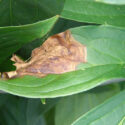
Hosta Virus X can hide for years before causing ink-bleed markings, mottling, puckering, distorted leaves, or tissue collapse. Learn how HVX spreads through infected sap, how to distinguish it from other hosta problems, when to test, how to remove infected plants safely, and how to protect healthy hostas.



A hosta develops strange dark streaks along its veins. Another suddenly looks mottled, puckered, or oddly variegated. Is it an unusual sport, weather damage – or Hosta Virus X?
Hosta Virus X (HVX) is one of the most important viral diseases of hostas (Hosta). Once infected, a hosta remains infected for life. There is no fungicide, spray, fertilizer, or pruning technique that will cure it, and an infected plant may carry the virus even while looking healthy.
HVX spreads primarily when virus-containing sap from an infected hosta enters wounded tissue on another. That makes correct diagnosis, sanitation, and careful handling far more important than trying to treat affected leaves.
Use Gardenia’s symptom guide, diagnostic decision path, and HVX Risk Matrix below to decide whether a suspicious hosta needs closer observation, testing, or removal.
Cause: Hosta virus X (HVX), a plant virus in the genus Potexvirus.
Host: HVX is considered hosta-specific and infects Hosta.
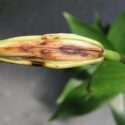
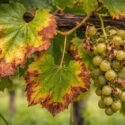
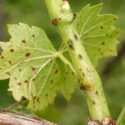
Classic symptoms: Vein-associated dark or light discoloration, “ink-bleed” patterns, mottling, puckering, ringspots, distortion, sunken tissue, and sometimes tissue collapse or necrosis.
Important complication: Infected hostas may remain symptomless for years.
Main route of spread: Infected hosta sap entering wounded hosta tissue, especially through contaminated knives, pruners, shovels, machinery, hands, propagation equipment, or string trimmers.
Other vectors: Controlled research has not demonstrated insects, mites, fungi, nematodes, seed, or pollen as normal HVX transmission routes.
Cure: None.
What to do: Stop cutting or dividing suspect plants, prevent sap transfer, test uncertain cases when useful, remove confirmed infections, and decontaminate tools and equipment.
Do not cut or divide a hosta you suspect of having HVX and then move directly to another hosta. Cutting infected tissue releases virus-containing sap and creates ideal conditions for mechanical transmission.
Hosta Virus X was identified in hostas in the 1990s and later became an important problem in commercial production and home gardens. Infected plants were propagated and distributed before the disease was widely recognized, helping HVX spread through the hosta trade.
HVX belongs to the Potexvirus group. It can occur at high concentrations in infected hosta tissues, so sap transferred from one plant to a fresh wound on another can transmit the virus.
HVX is systemic. Removing a symptomatic leaf does not remove the infection from the plant. An infected hosta may also remain alive and reasonably vigorous for years, allowing the virus to go unnoticed.
Gardenia diagnostic principle: With HVX, the danger is not determined by how sick the plant looks. A mildly affected or symptomless hosta can still be infected and infectious.
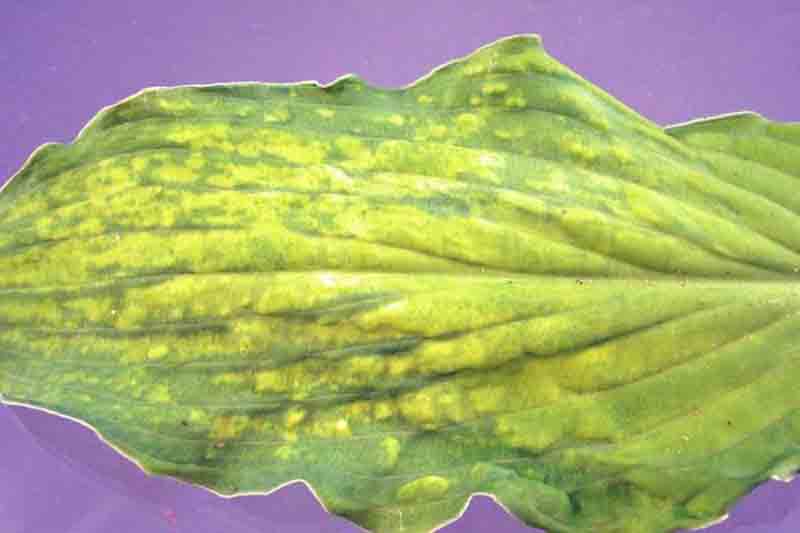
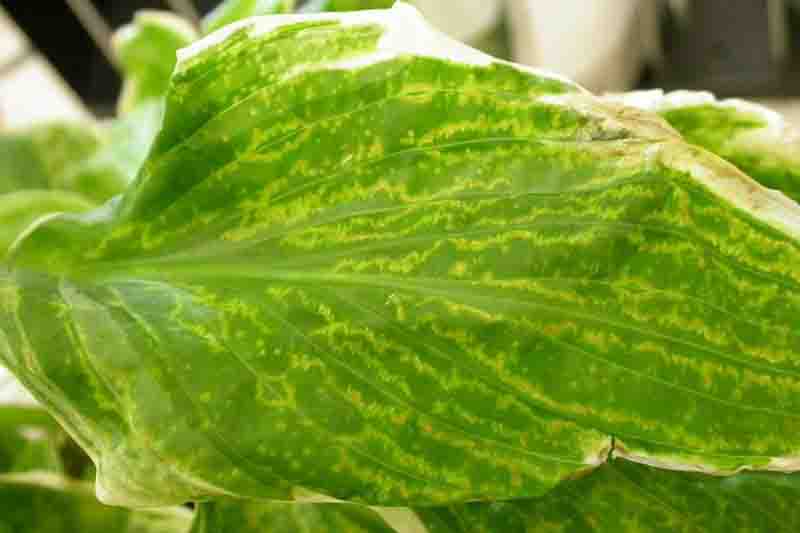
HVX does not produce one universal appearance. Symptoms vary among cultivars, and some infected plants display few visible signs.
Typical symptoms include:
Symptoms can be especially conspicuous on gold or yellow hostas because dark green markings contrast strongly with the surrounding foliage. On dark green cultivars, infection may be much harder to recognize.
Hold a suspicious leaf up to transmitted light and compare it with a normal leaf from the same cultivar. Uneven tissue thickness, mottling, sunken areas, or vein-associated discoloration may become easier to see – but appearance alone cannot confirm HVX.
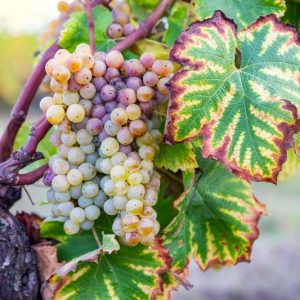
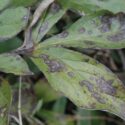
The ink-bleed pattern is one of the signs most closely associated with HVX. Darker or lighter coloring follows a vein and blurs outward into surrounding tissue, rather like wet ink spreading through paper.
This can be highly suggestive of a virus, especially when combined with puckering, mottling, or sunken tissue. It is not, however, a laboratory diagnosis. Hostas naturally display enormous variation in color, venation, corrugation, and variegation, and viruses other than HVX can also infect them.
Visible symptoms may be delayed for years after infection. Some hostas test positive without displaying obvious disease symptoms, making visual inspection useful but imperfect.
This means a healthy-looking hosta may already be infected, a symptomless plant may be divided and shared, and contaminated tools may spread virus from a plant nobody realizes is diseased.
No symptoms does not equal virus-free. This is why tool sanitation between individual hostas matters even when every plant appears healthy.
HVX is primarily a mechanically transmitted virus. The basic sequence is:
Activities that can create this opportunity include dividing hostas, cutting flower scapes, trimming leaves, digging and transplanting, cutting roots, using contaminated propagation equipment, and running mowers or string trimmers through foliage.
Gardenia’s HVX transmission rule: Think sap + wound = transmission opportunity. Any gardening task that can move fresh hosta sap into damaged tissue on another hosta deserves careful sanitation.
Controlled research has not demonstrated insects, mites, fungi, nematodes, seeds, or pollen as normal HVX transmission routes. The primary documented pathways are infected vegetative material and mechanical transfer of virus-containing sap into wounded hosta tissue.
Some literature discusses the possibility that feeding damage from insects or animals could create wounds that contribute indirectly under particular circumstances. That should not be confused with insects acting as established biological vectors of HVX.
Slugs and snails damage hosta foliage but should not be treated as the primary HVX vector. For slug control, see Gardenia’s guide to protecting hostas from slugs and snails.
Tissue culture allows hostas to be multiplied rapidly, but “tissue cultured” does not mean “virus tested.” If infected source material enters propagation without effective virus elimination and testing, infected plants can be multiplied along with healthy ones.
Buy hostas from reputable suppliers with strong sanitation and virus-testing practices, particularly when adding valuable plants to an established collection.
Not every abnormal hosta leaf has Hosta Virus X. Cold injury, herbicide exposure, foliar nematodes, natural variegation, physical injury, nutritional stress, and other viruses can produce similar symptoms.
Other documented viruses of hostas include Tomato ringspot virus, Tomato spotted wilt virus, Impatiens necrotic spot virus, and Arabis mosaic virus, another reason visual symptoms alone may not provide a definitive diagnosis.
| Symptom Pattern | What It May Suggest | Useful Clue |
|---|---|---|
| Color bleeding along veins | HVX or another virus | More suspicious with mottling, puckering, or tissue collapse |
| Puckered or distorted leaves with unusual color patterns | Virus | Testing may be needed to identify the virus |
| Puckering after late frost followed by normal growth | Cold injury | Linked to a weather event rather than persistent viral patterns |
| Twisting or cupping on exposed foliage | Possible herbicide injury | Consider recent herbicide use or drift |
| Yellow-to-brown areas bounded by veins | Foliar nematodes | Often forms interveinal wedges or stripes |
| Stable variegation typical of the cultivar | Normal genetics | Compare with reliable descriptions of the same cultivar |
Unusual coloring is a reason to investigate, not proof of infection. If symptoms are ambiguous or the plant is valuable, testing is safer than relying solely on appearance.
Not Sure HVX Is the Problem?
Review Gardenia’s complete Hosta growing and troubleshooting guide to compare virus-like symptoms with environmental stress, cultural problems, pests, and other causes of declining hostas.
HVX can be detected with virus-specific diagnostic tests, including immunological test strips and laboratory assays.
Testing is especially useful when symptoms are ambiguous, a valuable plant might otherwise be discarded, a hosta may simply be showing normal cultivar traits, or apparently healthy plants have been exposed to confirmed infected stock.
Use clean or disposable sampling equipment for each plant and follow test instructions carefully. A negative HVX result means HVX was not detected in that sample; it does not prove the plant is free from every other hosta virus.
Do not immediately begin cutting off suspicious leaves. Instead:
Gardenia’s HVX Decision Path: See suspicious symptoms → stop creating wounds → prevent sap transfer → test if uncertain → remove confirmed infections → sanitize → monitor exposed hostas. The goal is not to rescue infected foliage. It is to prevent one infected hosta from becoming several.
No. Fungicides do not work because HVX is a virus. Insecticides, fertilizer, and pruning cannot eliminate an infection either.
Symptoms may become less conspicuous in a later season, but this does not mean the hosta has recovered. A confirmed infected plant should not be divided, shared, sold, or used for propagation.
Removal itself can cut infected roots and contaminate tools, so work carefully.
For container-grown hostas, discard the infected plant and debris, then thoroughly clean reusable pots and tools before using them with another hosta.
Use a virus-effective sanitation protocol with a defined disinfectant concentration and adequate contact time. University recommendations may include trisodium phosphate or laboratory-detergent-based treatments, while hosta organizations have also recommended bleach-based sanitation.
Because effectiveness varies with concentration, contact time, contamination, and product formulation, Gardenia favors following a current university-extension or product-label protocol rather than relying on a quick wipe with an unspecified bleach solution.
Remember that contamination can involve knives, spades, pruners, scissors, pots, propagation trays, work surfaces, mower or string-trimmer parts, hands, and gloves.
The sanitation habit that matters most: Clean tools between individual hostas, not simply at the end of the day’s work.
HVX does not independently live and multiply in ordinary garden soil like a soil-borne fungus. However, infected hosta roots or plant debris left behind can remain a source of inoculum.
The American Hosta Society takes a conservative approach: remove as much of the infected root system as practical, allow residual hosta tissue to die and decompose, and wait at least about three years before planting another hosta in the same location.
The three-year interval is a conservative management recommendation, not an exact biological deadline. The practical issue is how long infected hosta tissue remains viable. Because HVX is considered specific to hostas, unrelated ornamentals can generally occupy the space meanwhile.
The concern is not that ordinary soil has permanently become “infected.” The risk comes from living or incompletely decomposed infected hosta tissue remaining in the site.
A confirmed infected plant does not mean every nearby hosta is infected. Risk is greater where plants were divided or trimmed with the same tools, struck by the same mower or string trimmer, handled with contaminated equipment, or propagated from the same suspect stock.
Do not distribute divisions from exposed plants while their status is uncertain. Monitor them over subsequent growing seasons, remembering that symptoms can be delayed. Testing is the most dependable way to investigate apparently healthy plants when certainty matters.
Prevention begins before a new hosta enters the garden.
For valuable collections, isolating new hostas for observation before placing them among established plants can provide another layer of caution.
Explore Hostas for Your Garden
Browse Gardenia’s Hosta collection and use the Hosta Comparison Tool to compare varieties by size, foliage, light requirements, water needs, and other garden characteristics.
These habits matter because an infected plant may carry HVX long before anyone recognizes it.
Gardenia’s HVX Risk Matrix ranks common activities according to two factors supported by transmission research: how likely the activity is to release or carry infected sap, and how likely it is to create a fresh wound on another hosta.
| Activity | Practical HVX Concern | Gardenia Response |
|---|---|---|
| Dividing several hostas with one knife | High | Decontaminate between every plant |
| Cutting flower scapes from several hostas | High | Treat each hosta as a separate sanitation step |
| String trimming through foliage | High | Keep trimmers away from hosta leaves |
| Digging and transplanting | Moderate to high | Clean shovels and tools between plants |
| Handling freshly wounded tissue | Moderate to high | Wash hands or change gloves before handling another wounded hosta |
| Touching intact, dry foliage | Much lower | Main concern is fresh sap reaching fresh wounds |
| Sharing a division from a suspect plant | Very high | Do not share, sell, or propagate it |
The more strongly an activity combines sap movement with fresh wounds, the greater the practical need for sanitation.
Plan a Healthier Shade Garden
Use Gardenia’s Plant Finder to discover plants suited to your shade, soil, moisture, climate, and available space, or explore hosta plant combination ideas for compatible shade-garden designs.
Professional or laboratory diagnosis is especially worthwhile when a hosta is rare or valuable, several plants show unusual symptoms, you propagate or sell hostas, symptoms could be environmental injury, or an HVX-specific test is negative despite persistent virus-like symptoms.
University plant disease diagnostic clinics can help distinguish HVX from other viruses and noninfectious disorders.
Keep Exploring Hostas With Gardenia
Read Gardenia’s complete Hosta planting and care guide, compare cultivars with the Hosta Comparison Tool, find compatible plants in the Plant Finder, or bring your selections together with Gardenia’s Garden Design Tool.
Hosta Virus X is serious because infection is permanent, symptoms can remain hidden for years, and routine gardening can move contaminated sap between plants.
Remember three things:
Gardenia’s practical rule is simple: when fresh hosta sap can move into a fresh hosta wound, HVX transmission becomes possible.
Hosta Virus X can cause dark or light discoloration along leaf veins, ink-bleed patterns, mottling, puckering, ringspots, distorted or sunken leaves, and sometimes tissue death. Symptoms vary by cultivar, and some infected hostas remain symptomless.
HVX spreads primarily when sap from an infected hosta enters wounded tissue on a healthy hosta. Contaminated knives, pruners, shovels, hands, machinery, propagation equipment, and infected divisions can move the virus between plants.
Controlled research has not demonstrated insects or aphids as normal HVX vectors. The primary documented routes are infected propagation material and mechanical transfer of virus-containing hosta sap into wounded hosta tissue.
No. Once a hosta is infected with HVX, the infection is permanent. Fungicides, insecticides, fertilizer, and pruning will not eliminate the virus. Confirmed infected plants should be removed and discarded.
No. Infected hostas and associated plant debris should not be composted. Remove the plant carefully, bag the material, and dispose of it through an appropriate municipal or household waste route.
Do not replant another hosta immediately. Infected root remnants can remain a source of inoculum until they die and decompose. The American Hosta Society recommends removing as many roots as possible and waiting at least about three years before planting another hosta in the same location.
Yes. HVX-infected hostas may remain asymptomatic for years. A healthy-looking hosta therefore cannot be assumed to be virus-free solely from visual inspection.
HVX-specific immunological test strips and laboratory diagnostic tests are available. Testing is useful when symptoms are ambiguous, a valuable plant is involved, or apparently healthy hostas may have been exposed to infected stock.
Buy hostas from reputable sources, avoid propagating suspicious plants, clean tools between individual hostas, avoid moving fresh sap between plants, and remove confirmed infected hostas promptly.
Updated: September 2026 – Reviewed by Gardenia Editors
Create a membership account to save your garden designs and to view them on any device.
Becoming a contributing member of Gardenia is easy and can be done in just a few minutes. If you provide us with your name, email address and the payment of a modest $25 annual membership fee, you will become a full member, enabling you to design and save up to 25 of your garden design ideas.
Join now and start creating your dream garden!
Create a membership account to save your garden designs and to view them on any device.
Becoming a contributing member of Gardenia is easy and can be done in just a few minutes. If you provide us with your name, email address and the payment of a modest $25 annual membership fee, you will become a full member, enabling you to design and save up to 25 of your garden design ideas.
Join now and start creating your dream garden!