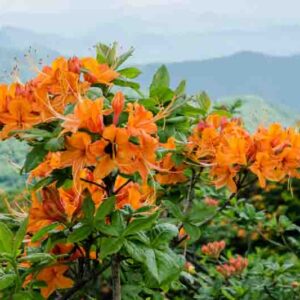
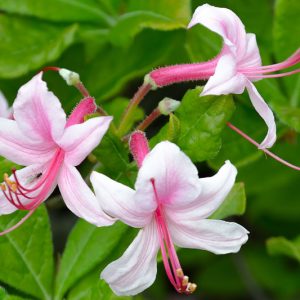
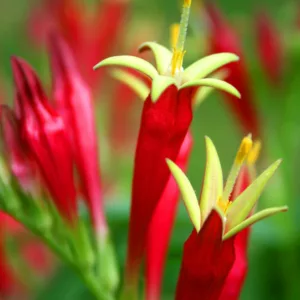
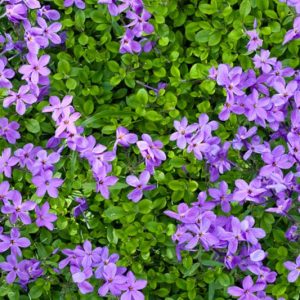
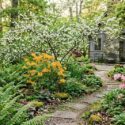
A colorful native garden featuring Florida Azalea (Rhododendron austrinum), a fragrant deciduous shrub blooming in spring, with spring-flowering Wild Columbine (Aquilegia canadensis) and Woodland Phlox (Phlox divaricata). Pennsylvania Sedge (Carex pensylvanica) forms a soft green ground layer, creating beautiful contrasts of orange, blue, red, yellow, and green.
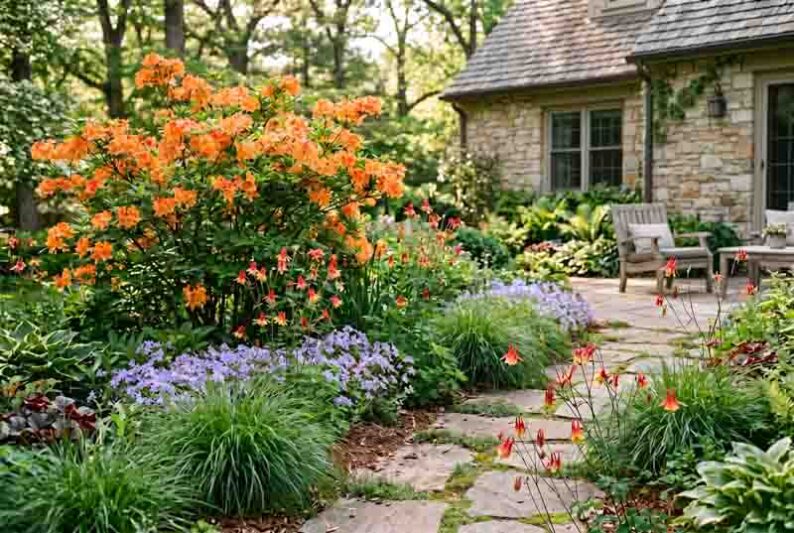


This relaxed woodland-edge garden celebrates spring with a beautiful mix of warm orange, cool blue, and flashes of red. Rhododendron austrinum provides the showpiece, its fragrant yellow-orange to orange flowers glowing against fresh green foliage. Below, Phlox divaricata spreads soft lavender-blue flowers, while the nodding red-and-yellow blooms of Aquilegia canadensis rise lightly above the ground layer.
At their feet, Carex pensylvanica forms soft, flowing mats of fine green foliage. Its low, arching leaves weave between the flowers and soften the flagstone path, giving the garden the relaxed character of a woodland floor. The result feels colorful and abundant without looking overly designed.
Main plants used: Rhododendron austrinum, Aquilegia canadensis, Phlox divaricata, and Carex pensylvanica.
The Florida Azalea immediately catches the eye, but the smaller plants make the composition feel complete. Its warm orange flowers contrast beautifully with the lavender-blue of Phlox divaricata, while the slender stems and dangling red-and-yellow flowers of Aquilegia canadensis add height and movement without competing with the shrub.
Carex pensylvanica provides the quiet element that holds everything together. Its narrow, arching leaves spread into soft colonies beneath the flowering plants, filling gaps without hiding them. Repeated along the path, it gives the planting continuity after the spring flowers fade.
Rhododendron austrinum, or Florida Azalea, is the focal point. This deciduous native shrub produces fragrant yellow, orange, or orange-red flowers in spring, often as the new foliage emerges. Give it enough light and room to develop its graceful, open habit.
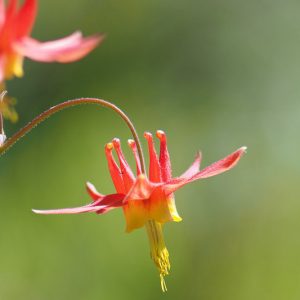
Aquilegia canadensis, or Wild Columbine, sends slender stems above attractive divided foliage, carrying distinctive nodding red-and-yellow flowers in spring. Its airy form is especially effective between denser plants and beside rocks or paths.
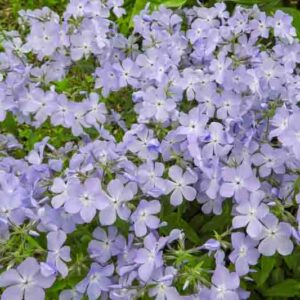
Phlox divaricata, or Woodland Phlox, forms low, spreading colonies topped with fragrant lavender-blue to violet-blue flowers in spring. Plant it in generous drifts rather than as isolated specimens.
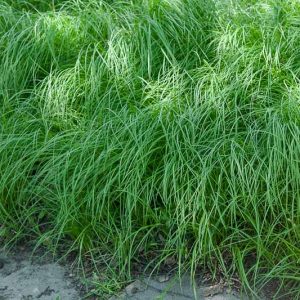
Carex pensylvanica, or Pennsylvania Sedge, is a low-growing native sedge with narrow, arching green leaves. It gradually spreads to form soft colonies, making it particularly effective beneath shrubs, between woodland perennials, and along informal path edges.
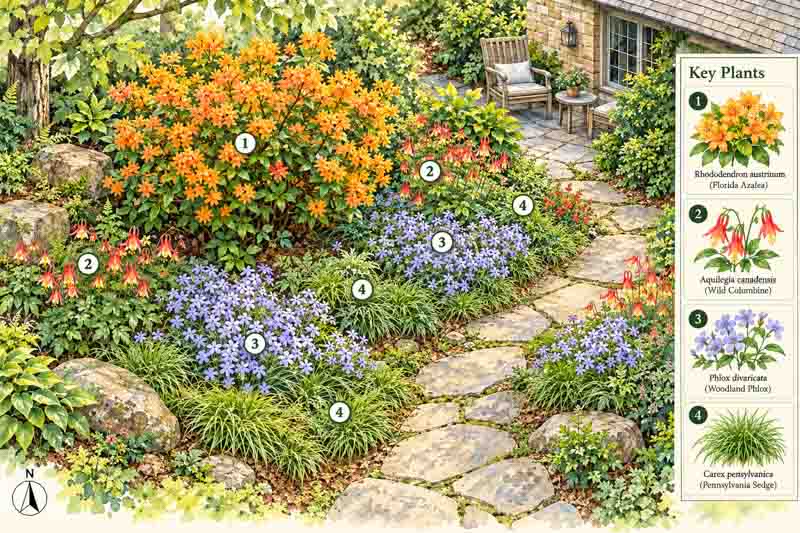
Create a naturalistic spring border with a spectacular native azalea rising above drifts of blue phlox, airy columbines, and a soft carpet of Pennsylvania Sedge.
Treat these as visual proportions rather than plant counts. The sedge and phlox should form much of the lower layer, while the azalea provides the dominant flowering structure.
Place Rhododendron austrinum toward the middle or back of the border where its flowers can rise above the lower planting. Let Phlox divaricata create broad pools of blue around it, then thread Aquilegia canadensis through the phlox so its flowers appear to float above the ground layer. Use Carex pensylvanica as the connecting carpet, allowing it to flow around the flowering plants and soften the path edges.
Spring is the high point, with lavender-blue Woodland Phlox and red-and-yellow Wild Columbine flowering around the brilliant Florida Azalea. Pennsylvania Sedge supplies fresh green foliage beneath them, keeping the display grounded rather than overly floral.
As the flowers fade, foliage takes over. Pennsylvania Sedge becomes an increasingly important part of the design, forming a soft green carpet through summer while the leafy azalea and phlox maintain the relaxed woodland character.
Pennsylvania Sedge is naturally low and spreading, so it should not appear as a series of large ornamental grass clumps. Let it form a loose, flowing ground layer through which the Woodland Phlox and Wild Columbine can emerge.
Light is also important. Florida Azalea needs enough brightness for generous flowering, while the lower woodland plants appreciate protection from intense afternoon sun. A woodland edge or high deciduous canopy provides an excellent balance.
| Hardiness |
7 - 8 |
|---|---|
| Exposure | Partial Sun |
| Season of Interest | Spring (Early, Mid, Late) |
| Maintenance | Low |
| Water Needs | Average |
| Soil Type | Loam, Sand |
| Soil pH | Acid |
| Soil Drainage | Moist but Well-Drained |
| Characteristics | Showy |
| Native Plants | Alabama, Georgia, Southeast, United States |
| Attracts | Bees, Butterflies, Hummingbirds |
| Landscaping Ideas | Beds And Borders |
| Garden Styles | Informal and Cottage, Pollinator Garden, Woodland Garden |



| Hardiness |
7 - 8 |
|---|---|
| Exposure | Partial Sun |
| Season of Interest | Spring (Early, Mid, Late) |
| Maintenance | Low |
| Water Needs | Average |
| Soil Type | Loam, Sand |
| Soil pH | Acid |
| Soil Drainage | Moist but Well-Drained |
| Characteristics | Showy |
| Native Plants | Alabama, Georgia, Southeast, United States |
| Attracts | Bees, Butterflies, Hummingbirds |
| Landscaping Ideas | Beds And Borders |
| Garden Styles | Informal and Cottage, Pollinator Garden, Woodland Garden |
Recreate this garden. Specify the percentages you would like to have of each plant and input the dimensions of your garden space.We'll give you a shopping list so you know how many plants you need.
| Plant | Quantity | |
|---|---|---|
| Rhododendron austrinum (Florida Flame Azalea) | N/A | Buy Plants |
| Aquilegia canadensis (Eastern Columbine) | N/A | Buy Plants |
| Phlox divaricata (Woodland Phlox) | N/A | Buy Plants |
| Carex pensylvanica (Pennsylvania Sedge) | N/A | Buy Plants |
Create a membership account to save your garden designs and to view them on any device.
Becoming a contributing member of Gardenia is easy and can be done in just a few minutes. If you provide us with your name, email address and the payment of a modest $25 annual membership fee, you will become a full member, enabling you to design and save up to 25 of your garden design ideas.
Join now and start creating your dream garden!