A romantic woodland garden pairing Halesia diptera, a spring-flowering deciduous tree, with two native deciduous azaleas: orange-yellow Rhododendron austrinum and pink Rhododendron periclymenoides. Their spring flowers rise above lush Dryopteris ludoviciana, an evergreen to semi-evergreen fern, creating layers of color, texture, and natural woodland charm along a winding stone path.
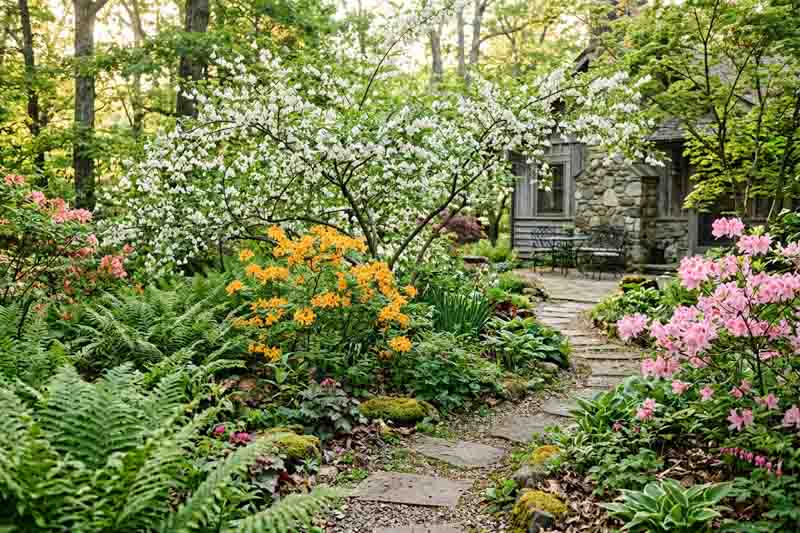


This inviting woodland garden feels as though it has grown naturally around the stone path and cottage. In spring, Halesia diptera fills the upper layer with delicate white bells, while Rhododendron austrinum brings glowing orange-yellow flowers and Rhododendron periclymenoides adds clouds of soft pink. Beneath them, Dryopteris ludoviciana spreads handsome green fronds among mossy rocks and along the path.
The combination works because every plant has a different role. The Halesia provides height and a light canopy, the native azaleas fill the middle layer with spring color, and the ferns create a lush green floor. A winding path and informal planting complete the woodland effect.
Main plants used: Halesia diptera, Rhododendron austrinum, Rhododendron periclymenoides, and Dryopteris ludoviciana.
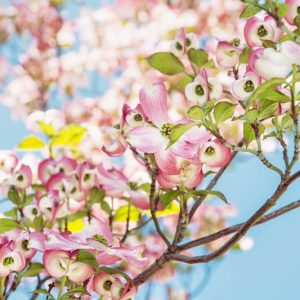
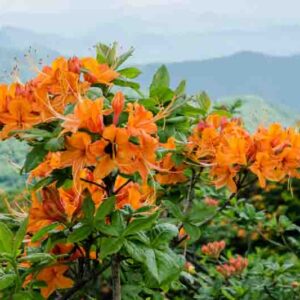
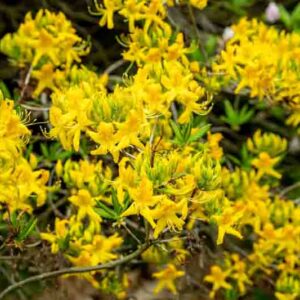
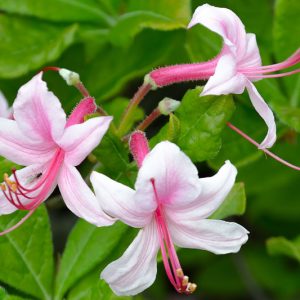
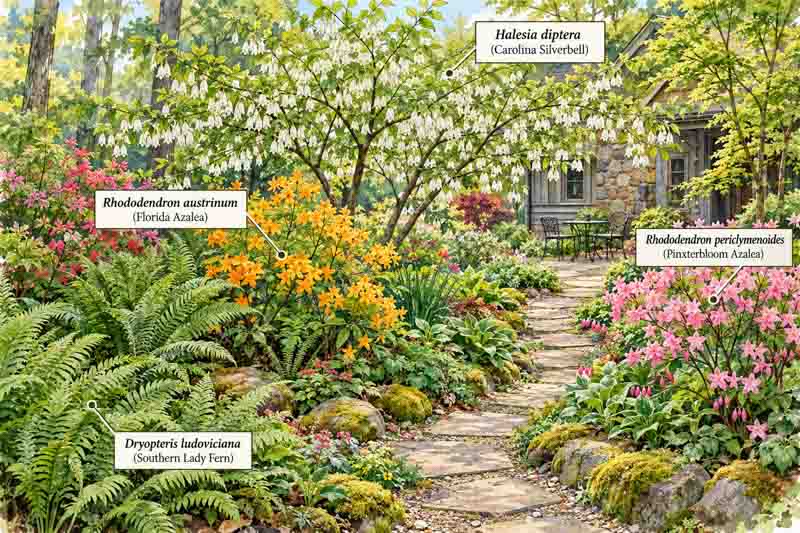
The beauty of this planting comes from its layers. Halesia diptera forms the highest level, its white bell-shaped flowers standing out against the woodland greens. Below it, the warm orange-yellow flowers of Rhododendron austrinum create the strongest splash of color, balanced by the gentler pink flowers of Rhododendron periclymenoides.
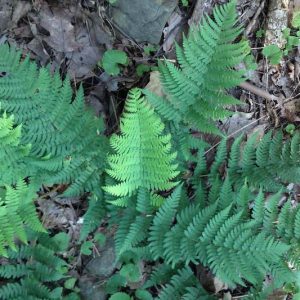
At ground level, Dryopteris ludoviciana gives the composition continuity. Repeated around the shrubs and along the path, its fronds connect the larger plants and keep the garden looking full after the spring flowers fade.
Halesia diptera is the spring focal point. This deciduous southeastern U.S. native tree produces clusters of hanging white, bell-shaped flowers. Give it room to develop its graceful branching habit.
Rhododendron austrinum, or Florida Azalea, brings warm yellow, orange, or orange-red flowers to the shrub layer. Its fragrant spring blooms are especially effective beside a path or seating area.
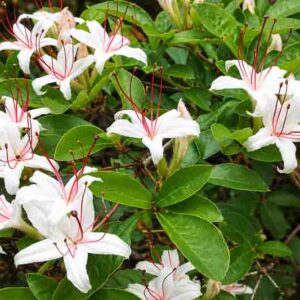
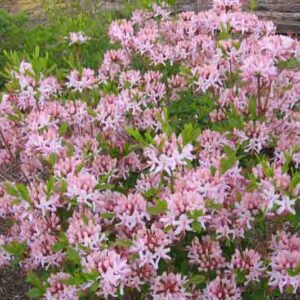
Rhododendron periclymenoides, the Pinxterbloom Azalea, contributes pink to pale pink spring flowers. Its open habit fits naturally beneath a light woodland canopy.
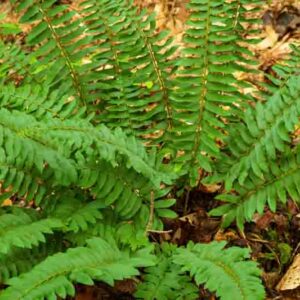
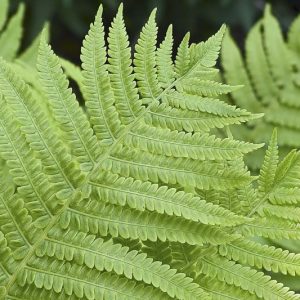
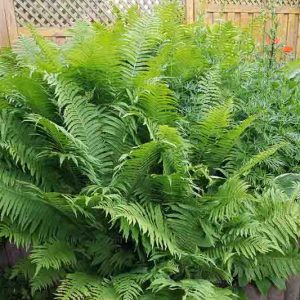
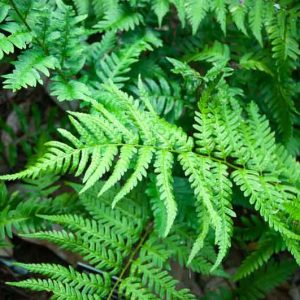
Dryopteris ludoviciana, or Southern Wood Fern, supplies the lowest layer. Its bold green fronds bring texture and help maintain the garden’s lush character after flowering is finished.
Create a relaxed woodland border with spring flowers at several heights and a generous fern layer that remains attractive long after the flowers have faded.
Avoid rows and equal spacing. Irregular groups make the planting feel much more natural.
Place Halesia diptera slightly off-center as the main focal point. Set Rhododendron austrinum beneath or near the edge of its canopy, then position Rhododendron periclymenoides across the path or farther along the border to create a second pool of color. Weave Dryopteris ludoviciana between the shrubs, stones, and path edges to tie everything together.
Spring is the star season, with white Halesia bells above orange-yellow and pink azaleas. The plants do not need to peak at exactly the same time. A slightly staggered bloom extends the display.
As spring flowers fade, foliage takes over. The tree and azaleas form a leafy framework while the ferns fill the lower layer. By summer, the garden is quieter but wonderfully lush, with texture replacing flower color as the main attraction.
Do not make this garden too tidy. Its charm comes from ferns overlapping stones, shrubs growing in loose groups, and foliage gently encroaching on the path. Bright filtered light is also preferable to very deep shade if you want generous flowering.
Most importantly, leave enough room for the woody plants to mature. The goal is a garden that feels abundant, not crowded. When the spring flowers are gone, the graceful tree canopy, layered shrubs, ferns, mossy stones, and winding path should still make the garden worth exploring.
| Hardiness |
7 - 8 |
|---|---|
| Exposure | Partial Sun |
| Season of Interest | Spring (Early, Mid, Late) |
| Maintenance | Low |
| Water Needs | Average |
| Soil Type | Clay, Loam, Sand |
| Soil pH | Acid, Neutral |
| Soil Drainage | Moist but Well-Drained |
| Characteristics | Showy |
| Native Plants | Alabama, Georgia, Southeast, United States |
| Tolerances | Clay Soil |
| Attracts | Bees, Butterflies, Hummingbirds |
| Landscaping Ideas | Beds And Borders |
| Garden Styles | Informal and Cottage, Pollinator Garden, Woodland Garden |



| Hardiness |
7 - 8 |
|---|---|
| Exposure | Partial Sun |
| Season of Interest | Spring (Early, Mid, Late) |
| Maintenance | Low |
| Water Needs | Average |
| Soil Type | Clay, Loam, Sand |
| Soil pH | Acid, Neutral |
| Soil Drainage | Moist but Well-Drained |
| Characteristics | Showy |
| Native Plants | Alabama, Georgia, Southeast, United States |
| Tolerances | Clay Soil |
| Attracts | Bees, Butterflies, Hummingbirds |
| Landscaping Ideas | Beds And Borders |
| Garden Styles | Informal and Cottage, Pollinator Garden, Woodland Garden |
Recreate this garden. Specify the percentages you would like to have of each plant and input the dimensions of your garden space.We'll give you a shopping list so you know how many plants you need.
| Plant | Quantity | |
|---|---|---|
| Halesia diptera Magniflora Group (Two-Wing Silverbell) | N/A | Buy Plants |
| Rhododendron austrinum (Florida Flame Azalea) | N/A | Buy Plants |
| Rhododendron periclymenoides (Pinxterbloom Azalea) | N/A | Buy Plants |
| Dryopteris ludoviciana (Southern Wood Fern) | N/A | Buy Plants |
Create a membership account to save your garden designs and to view them on any device.
Becoming a contributing member of Gardenia is easy and can be done in just a few minutes. If you provide us with your name, email address and the payment of a modest $25 annual membership fee, you will become a full member, enabling you to design and save up to 25 of your garden design ideas.
Join now and start creating your dream garden!