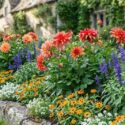
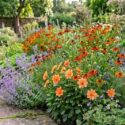
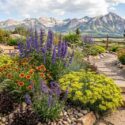
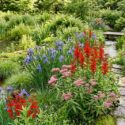
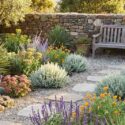
Orange Kniphofia, blue-violet Veronica and Salvia, and rounded heads of Hylotelephium combine in a border full of contrast and rhythm. This sunny planting is bright, structured, and easy to adapt, with spiky flowers rising through softer masses to create a lively display that carries beautifully through summer.


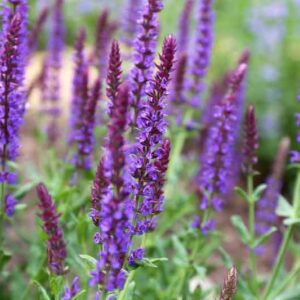
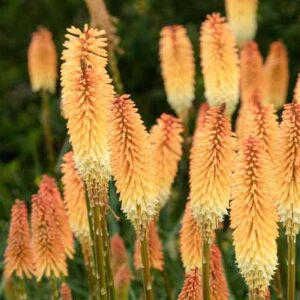
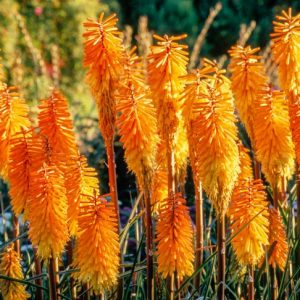
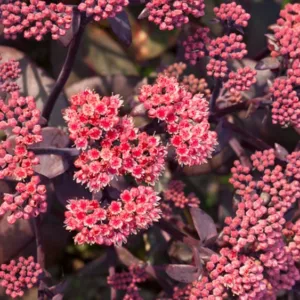
This vibrant border combines strong vertical lines, contrasting flower forms, and a clear interplay of warm and cool colors. Bright orange-red Kniphofia rises above the planting in bold torch-like spikes, while Veronica spicata and Salvia nemorosa fill the border with rich blue-violet flower spires. Between them, rounded heads of Hylotelephium (formerly Sedum) add a softer, broader note and help break up the sharper vertical shapes.
The effect is lively but well balanced. The Kniphofia provides the drama, Veronica and Salvia supply rhythm and continuity, and the Hylotelephium brings structure of a different kind with its fleshy foliage and flattened flower heads. Repeated in generous drifts, these four plants create a border that feels bright, natural, and easy to enjoy over a long summer season.
Main plants used: Kniphofia (Red Hot Poker), Veronica spicata (Spike Speedwell), Hylotelephium / Sedum (Stonecrop), and Salvia nemorosa (Sage)
Use the orange Kniphofia as the accent, then let the blue-flowered plants dominate the overall planting. The cooler colors are what make the warmer spikes stand out so effectively.
The strongest contrast comes from flower shape. Kniphofia, Veronica spicata, and Salvia nemorosa all contribute vertical spires, but they do not look the same. Kniphofia is taller and bolder, with thicker torch-like blooms, while Veronica and Salvia are finer and more numerous. Hylotelephium changes the rhythm completely by introducing broad, rounded flower heads that calm the composition.
The color contrast is equally important. The orange Kniphofia acts as a bright accent, while the blue and violet flowers create the main body of the border. The softer green flower heads of Hylotelephium provide a visual pause between the stronger hues and help keep the border from feeling too sharp or overly hot.
The planting also works because the same few plants are repeated throughout rather than used in isolated blocks. That repetition creates coherence, while the slight variation in group size and placement keeps the border from looking stiff.
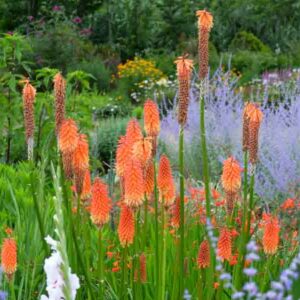
Kniphofia provides the height and warmest color. Use it in small repeated groups through the middle and back of the border so its upright flower spikes appear at different depths.
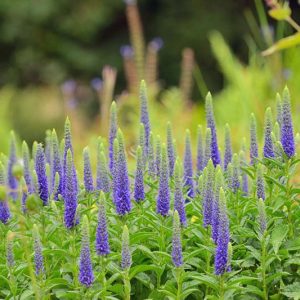
Veronica spicata brings a clear vertical rhythm and strong violet-blue color. It works especially well in generous drifts through the front and middle, where the flower spikes can be repeated in large numbers.
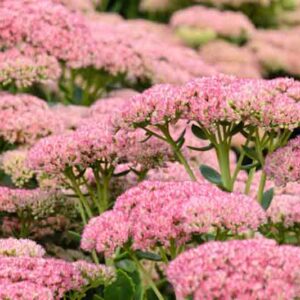
Hylotelephium adds broad, fleshy foliage and rounded flower heads. Plant it in groups through the middle layer so its flatter heads contrast with the many spikes around them.
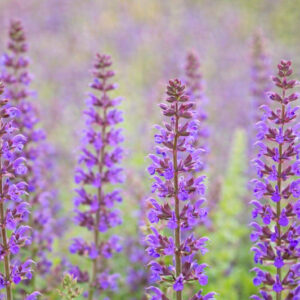
Salvia nemorosa gives the border another blue-violet layer, often flowering earlier and sometimes reblooming if cut back. Use it to reinforce the cooler color base and to tie the planting together.
Create a bright summer border with strong vertical accents, a cool blue-violet base, and repeated orange flower spikes for contrast.
Let the blue-flowered plants dominate the planting, with Kniphofia used as the brighter accent and Hylotelephium as the contrasting middle layer.
Vary the drift sizes rather than repeating identical clumps. One larger patch and a few smaller echoes usually look more natural.
Start with generous drifts of Veronica and Salvia through the front and middle, letting the blue-violet spikes create the main rhythm of the border.
Place Hylotelephium in repeated groups through the middle so its broader flower heads interrupt the spiky texture and add a softer note.
Use Kniphofia in smaller repeated groups farther back and occasionally through the middle, so the orange torches rise above the cooler planting at irregular intervals.
Salvia nemorosa often begins the display first, followed by Veronica spicata. As summer develops, the Kniphofia starts to rise above the border, and the Hylotelephium begins contributing its fleshy foliage and swelling flower heads.
By late summer, all four elements combine to create the fullest effect: upright orange torches, repeated blue-violet spikes, and rounded green flower heads that carry the border toward early fall.
This is a sunny border combination that depends on good drainage and plenty of light. Although several of the plants tolerate dry conditions once established, the border will look best if it is not allowed to dry out excessively during active growth and flowering.
Most importantly, keep the layout relaxed. The charm of this planting lies in the repeated rise and fall of spiky flowers, relieved by the rounded heads of Hylotelephium and the bright punctuation of Kniphofia.
| Hardiness |
5 - 8 |
|---|---|
| Heat Zones |
5 - 8 |
| Climate Zones | 2, 2A, 2B, 3, 3A, 3B, 4, 5, 6, 7, 8, 9, 14, 15, 16, 17, 18, 19, 20, 21 |
| Exposure | Full Sun |
| Season of Interest | Summer (Early, Mid, Late) |
| Maintenance | Low, Average |
| Water Needs | Average |
| Soil Type | Loam, Sand |
| Soil pH | Acid, Neutral, Alkaline |
| Soil Drainage | Moist but Well-Drained, Well-Drained |
| Characteristics | Cut Flowers, Showy |
| Tolerances | Deer, Rabbit |
| Attracts | Bees, Butterflies, Hummingbirds |
| Landscaping Ideas | Beds And Borders |
| Garden Styles | Butterfly Garden, Coastal Garden, Informal and Cottage, Pollinator Garden |

| Hardiness |
5 - 8 |
|---|---|
| Heat Zones |
5 - 8 |
| Climate Zones | 2, 2A, 2B, 3, 3A, 3B, 4, 5, 6, 7, 8, 9, 14, 15, 16, 17, 18, 19, 20, 21 |
| Exposure | Full Sun |
| Season of Interest | Summer (Early, Mid, Late) |
| Maintenance | Low, Average |
| Water Needs | Average |
| Soil Type | Loam, Sand |
| Soil pH | Acid, Neutral, Alkaline |
| Soil Drainage | Moist but Well-Drained, Well-Drained |
| Characteristics | Cut Flowers, Showy |
| Tolerances | Deer, Rabbit |
| Attracts | Bees, Butterflies, Hummingbirds |
| Landscaping Ideas | Beds And Borders |
| Garden Styles | Butterfly Garden, Coastal Garden, Informal and Cottage, Pollinator Garden |
Recreate this garden. Specify the percentages you would like to have of each plant and input the dimensions of your garden space.We'll give you a shopping list so you know how many plants you need.
| Plant | Quantity | |
|---|---|---|
| Salvia nemorosa 'Ostfriesland' (Woodland Sage) | N/A | Buy Plants |
| Kniphofia uvaria (Red Hot Poker) | N/A | Buy Plants |
| Veronica spicata 'Royal Candles' (Spike Speedwell) | N/A | Buy Plants |
| Sedum 'Herbstfreude' ('Autumn Joy') | N/A | Buy Plants |
Create a membership account to save your garden designs and to view them on any device.
Becoming a contributing member of Gardenia is easy and can be done in just a few minutes. If you provide us with your name, email address and the payment of a modest $25 annual membership fee, you will become a full member, enabling you to design and save up to 25 of your garden design ideas.
Join now and start creating your dream garden!