Do deer eat arborvitae? American arborvitae and Emerald Green are highly vulnerable, while Green Giant has better resistance. Learn how to recognize browsing, whether stripped plants can recover, how to protect existing hedges, and which lower-browse evergreens can provide privacy without repeating the same costly screening mistake.


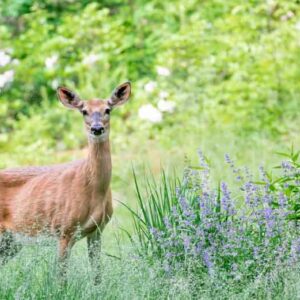
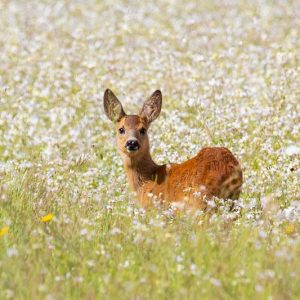
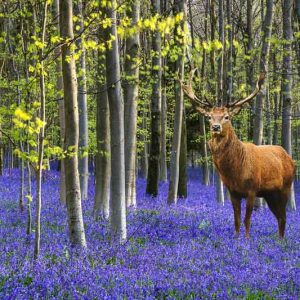
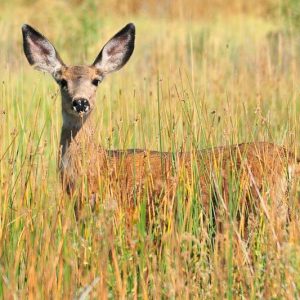
Yes. Deer readily eat American arborvitae (Thuja occidentalis), especially during winter when other food is scarce. American arborvitae is considered highly vulnerable to deer browsing, and popular cultivars such as ‘Emerald Green’ can be badly damaged. ‘Green Giant’ has much better deer resistance, but its larger mature size means it is not a direct replacement for every narrow hedge.
The answer depends on which arborvitae you are growing.
American arborvitae (Thuja occidentalis) is one of the more vulnerable evergreen screening plants. Rutgers places American arborvitae in its most deer-susceptible category, while Iowa State identifies arborvitae among the evergreens most likely to be browsed during winter.
NC State also warns that deer browsing can be a serious problem on Thuja occidentalis.
This matters because several extremely popular privacy plants belong to this species, including ‘Emerald Green’ or ‘Smaragd‘. The University of Maryland specifically lists Emerald arborvitae as not deer resistant.
Winter is often when the problem becomes obvious. When snow covers lower-growing food or natural forage becomes scarce, deer may turn to evergreen foliage. Arborvitae can remain untouched for much of the growing season and then lose a large portion of its lower foliage over winter.
The result is often a hedge that remains green and full at the top but becomes increasingly bare from the bottom upward.
For a privacy screen, that distinction matters. A living tree is not necessarily a successful screen if deer have removed the foliage at exactly the height where privacy is needed most.
‘Green Giant’ arborvitae is significantly more deer resistant than American arborvitae.
It is also botanically different. ‘Green Giant’ is a hybrid between Japanese arborvitae and western redcedar rather than a cultivar of Thuja occidentalis.
NC State lists ‘Green Giant’ as resistant to deer, and the University of Maryland also includes it among deer-resistant privacy-screen plants.
That makes it a much stronger choice where deer pressure is a recurring concern.
However, there is an important tradeoff: ‘Green Giant’ is much larger than ‘Emerald Green’.
It typically reaches around 40-60 feet tall and 12-18 feet wide. Its rapid growth and dense evergreen habit make it excellent for tall screens and larger properties, but it may overwhelm narrow suburban planting strips.
There is another limitation that is easy to overlook. NC State notes that ‘Green Giant’ does not tolerate salt spray or salty soils. That can make it a poor choice beside heavily salted roads, driveways, or exposed coastal sites.
Do not treat all arborvitae as equally deer resistant. American arborvitae and ‘Emerald Green’ are high-risk choices, while ‘Green Giant’ has substantially better deer resistance – but its mature size and salt sensitivity still have to fit the site.
Deer damage on arborvitae often has a distinctive appearance.
Look for:
Winter snow can make the browse line higher because deer can stand on accumulated snow and reach foliage that would normally be above browsing height.
Do not confuse deer damage with ordinary arborvitae browning.
Winter burn usually leaves the foliage in place but turns it brown or bronze. Salt injury can cause similar browning near roads and driveways. Drought, root stress, bagworms, mites, and disease can also thin or discolor foliage.
The first diagnostic question is therefore simple:
Is the foliage missing, or is it still attached but brown or declining?
Gardenia’s Arborvitae Damage Check: missing lower foliage, ragged twig ends, and a distinct browse line strongly suggest deer. Browning without missing foliage points more toward winter burn, salt, drought, or another plant-health problem.
Sometimes, but severely damaged arborvitae may never regain their former density.
Iowa State explains that recovery depends on whether buds, or growing points, remain on the browsed branches.
If buds survive, new growth may appear in spring and should become visible by early summer.
If deer have stripped a branch so severely that no viable buds remain, the bare portion may never fill back in.
This is especially important for privacy hedges. The trees can remain alive and continue growing upward while the lower portions stay thin or completely bare.
That means the real question is not simply: “Will my arborvitae survive?” It is: “Will it recover enough foliage to continue functioning as a privacy screen?”
Wait until active spring growth is underway before deciding how much of the damage is permanent. If no new growth appears from badly stripped lower branches by early summer, recovery there becomes much less likely.
Antler rubbing is different from browsing. Bucks can strip bark from young trunks, disrupting the tissues that transport water and nutrients. If a trunk is badly girdled, the damage can kill the growth above the injured area.
If deer repeatedly damage American arborvitae, replacing them with another narrow evergreen simply because it looks similar can lead to another expensive mistake.
Instead, first define the privacy problem you are trying to solve.
Several extension sources identify the following plants as lower-browse or deer-resistant privacy choices. Local deer pressure still varies, so these should be treated as better-risk options rather than deer-proof plants.
| Plant | Approx. Size | Best Privacy Role | Why Consider It? |
|---|---|---|---|
| Thuja ‘Green Giant’ | 40-60 ft tall × 12-18 ft wide | Fast, tall evergreen screens with plenty of room | Much better deer resistance than American arborvitae; fast and dense. Avoid salty sites. |
| Eastern Redcedar (Juniperus virginiana) | About 40-50 ft tall × 8-20 ft wide | Native evergreen screens, windbreaks, tougher sites | Deer resistant, drought tolerant, salt tolerant, and valuable to wildlife |
| American Holly (Ilex opaca) | About 15-30 ft tall × 10-20 ft wide | Native evergreen screens and informal hedges | Deer resistant, evergreen, and valuable to birds; useful where a broader, slower screen is acceptable |
| Dragon Lady Holly | About 10-20 ft tall × 4-6 ft wide | Narrow evergreen screens in tighter spaces | A relatively narrow, deer-resistant holly that fits smaller planting widths better than large screening trees |
| Japanese Plum Yew ‘Fastigiata’ Cephalotaxus harringtonia ‘Fastigiata’ |
About 10-12 ft tall × 6-8 ft wide | Medium-height screening, including sites with shade | Strong deer resistance and greater shade tolerance than many needled evergreens |
| Japanese Cryptomeria (Cryptomeria japonica) | About 50-60 ft tall × 20-30 ft wide | Large-property evergreen screens | Deer-resistant option with attractive evergreen texture, but far too large for many narrow residential sites |
There is no universal replacement for ‘Emerald Green’.
A 4-foot-wide planting strip cannot comfortably accommodate an evergreen that ultimately spreads 18 feet. A 50-foot tree is unnecessary if the only goal is to screen a 6-foot fence. And a plant that performs beautifully in full sun may fail along a shaded woodland edge.
The best replacement is the lower-browse plant that matches the required screening height, available width, evergreen need, and growing conditions.
Often, yes.
The University of Maryland recommends using a variety of plants in privacy screens rather than planting a long row of one species. Mixed screens are more resilient to pests, diseases, drought, flooding, and other stresses.
The same principle is useful in deer-prone landscapes. If every plant is identical and equally attractive to deer, one winter can damage the entire screen at once.
A mixed screen can combine taller evergreens, narrower columnar plants, and larger shrubs while adapting to changes in light and soil along the property line.
Each plant still needs to be evaluated individually for deer resistance and site compatibility, but diversity reduces the risk of one problem compromising the entire planting.
If you already have vulnerable arborvitae, prevention is much easier than repairing a hedge after severe winter browsing.
Physical barriers provide the most dependable protection. Iowa State recommends tubes, sturdy wire fencing, or cylinders around susceptible trees and shrubs. Seasonal barriers are especially useful around younger plants.
Install protection before winter browsing begins. Damage becomes more likely when snow cover limits other food sources.
Protect young trunks from antler rubbing. Stakes or appropriate guards can prevent bucks from stripping bark and damaging the trunk.
Repellents may help under moderate pressure, but results vary and repeated applications may be needed according to the product label.
If a long hedge must be fenced every winter indefinitely, however, replacing highly vulnerable arborvitae with better-adapted screening plants may be the more practical long-term solution.
Before replacing deer-damaged arborvitae, define what the new planting actually needs to do.
Think in terms of:
Gardenia’s Deer-Smart Privacy Strategy: choose a replacement using screening height + available width + evergreen requirement + site conditions + deer pressure. Replace the function of the arborvitae rather than simply looking for another narrow evergreen that resembles it.
Use the Gardenia Plant Finder to combine deer resistance with evergreen foliage, mature height, mature spread, hardiness, sun exposure, soil, drainage, water needs, salt tolerance, native goals, and other requirements.
For more options, see Best Plants for Privacy and Gardenia’s What Plants Do Deer Eat? guide.
Then use the Gardenia Design Tool to check whether the trees and shrubs in your proposed screen share compatible growing conditions before planting them together.
Yes. American arborvitae (Thuja occidentalis) is particularly vulnerable, and deer often browse its lower foliage during winter when other food is scarce.
No. ‘Emerald Green’, also called ‘Smaragd’, is a cultivar of Thuja occidentalis, a species highly susceptible to deer browsing. It should not be relied on where deer pressure is high.
‘Green Giant’ has much better deer resistance than American arborvitae and is listed as deer resistant by NC State and the University of Maryland. It grows much larger than ‘Emerald Green’ and does not tolerate salt spray or salty soils.
It depends on whether viable buds remain on the damaged branches. If buds survive, new growth may appear in spring. Severely stripped branches without growing points may remain permanently bare.
Typical damage includes missing lower foliage, ragged twig ends, and a distinct browse line with green foliage above and bare branches below. Deer may also damage young trunks through antler rubbing.
There is no universal replacement. ‘Green Giant’ works for larger sites, while Dragon Lady holly or Japanese plum yew ‘Fastigiata’ may better suit narrower or smaller spaces. Choose by required height, width, light, soil, hardiness, and deer pressure.
Physical barriers such as sturdy wire cylinders or fencing provide the most dependable protection. Install them before winter browsing begins, particularly around younger plants. Repellents may help under moderate pressure but require maintenance.
A mixed screen can be more resilient to deer, pests, diseases, drought, flooding, and other stresses. Choose each component for compatible growing conditions, mature size, and deer resistance.
Updated: September 2026 – Reviewed by Gardenia Editors
| Genus | Thuja |
|---|
| Genus | Thuja |
|---|
Create a membership account to save your garden designs and to view them on any device.
Becoming a contributing member of Gardenia is easy and can be done in just a few minutes. If you provide us with your name, email address and the payment of a modest $25 annual membership fee, you will become a full member, enabling you to design and save up to 25 of your garden design ideas.
Join now and start creating your dream garden!