Create Your Garden

The Ultimate Guide to Deer-Resistant Plants for a Beautiful Garden

Ready to outsmart browsing? Explore proven deer-resistant plants - from aromatic lavender to sturdy boxwoods - plus smart layout ideas, zone-wise picks, and quick care tips. Build structure, add color, and keep your most delicious plants close to the house. A safer, prettier garden starts here.
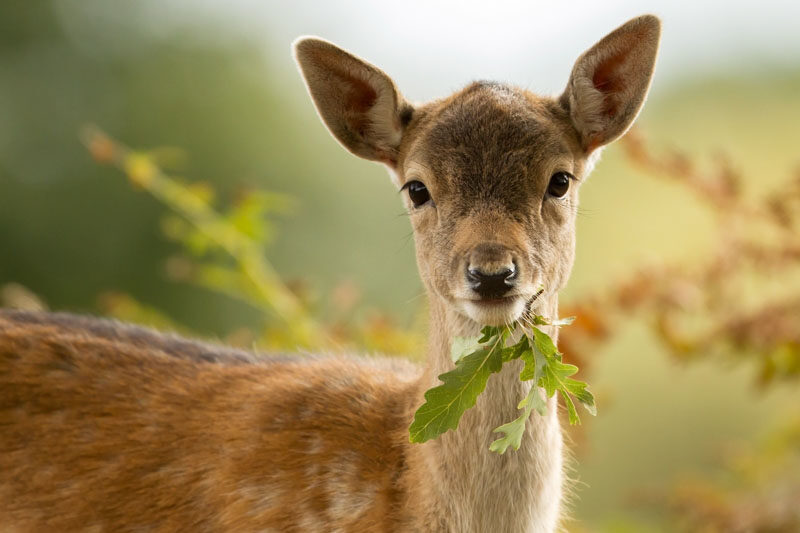
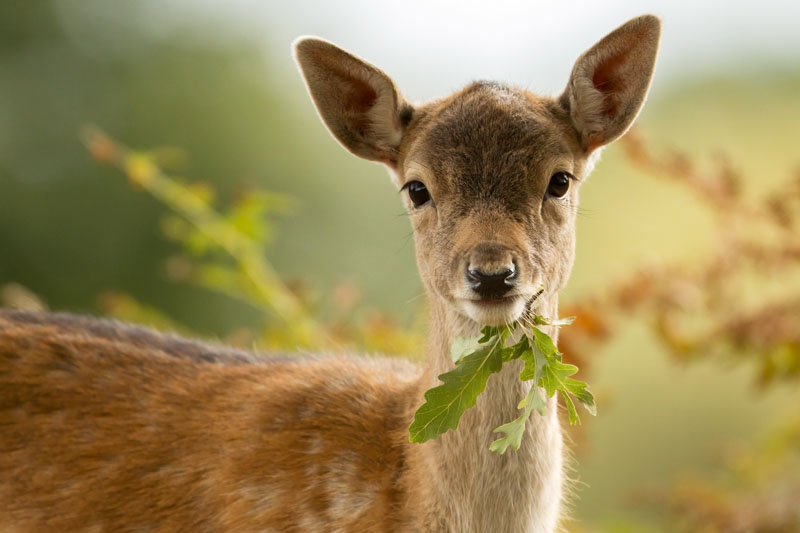
Deer, Oak Tree, Oak

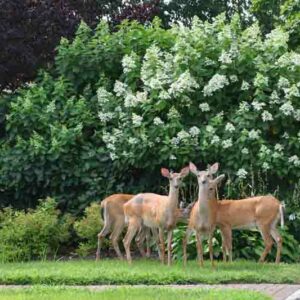
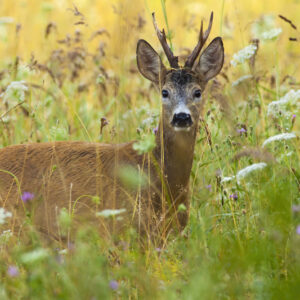
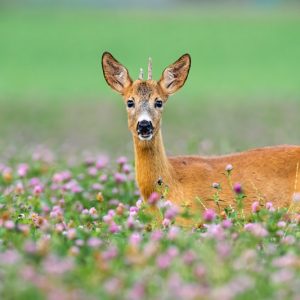
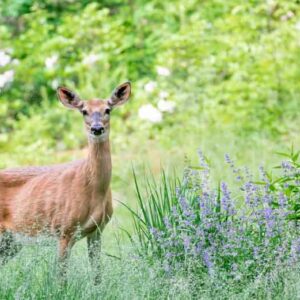
If deer treat your garden like an all-you-can-eat buffet, you’re not alone. Deer are graceful to watch, but their browsing can be devastating to plants. One morning, you have lush hydrangeas and vibrant perennials; the next, flower buds and tender shoots may be gone. The good news is that deer do not find every plant equally appealing. Many are browsed less often because of their strong scent, tough or fuzzy foliage, prickles, bitter taste, or naturally irritating compounds.

Deer-resistant plants are species that deer are less likely to browse than other available plants. They are not deer-proof. Browsing varies with season, local deer populations, weather, food availability, and the habits of individual herds. The best strategy is to favor less-palatable plants that suit your garden, protect vulnerable new plantings, and use physical barriers or repellents where deer pressure is high.

This guide highlights deer-resistant plants for different parts of the garden, including shrubs, perennials, trees, grasses, bulbs, and annuals. You’ll also find choices for shade, sun, clay soil, native-focused plantings, and different USDA zones – plus ways to use Gardenia’s tools to narrow thousands of possibilities to plants that actually fit your site.
Quick Facts – Deer-Resistant Plants

Deer-resistant garden plants

Summary: No plant is truly “deer-proof,” but some are passed over much more consistently than others. Deer often avoid plants that are strongly aromatic, fuzzy, prickly, leathery, or fibrous, or contain bitter, irritating, or toxic compounds. During drought, winter food shortages, or periods of unusually high deer pressure, however, they may sample plants they normally ignore.

Why do deer avoid some plants? Strong scent, bitter taste, tough/fuzzy/prickly texture, or irritating compounds
Useful starting points Many aromatic perennials, ornamental grasses, ferns, tough evergreens, and toxic or strongly scented bulbs
Caution In winter, drought, or high pressure, deer may sample almost anything, especially tender new growth
Best strategy Choose less-palatable plants suited to your site and protect valuable or vulnerable plants where necessary

What “Deer-Resistant” Really Means

“Deer-resistant” means deer are less likely to browse a plant – not that they never will. Resistance is better understood as a spectrum. Some plants are rarely damaged, others are usually avoided but occasionally sampled, and some are highly variable from one garden to another.

  • Highly resistant: rarely browsed under normal conditions.
  • Generally resistant: usually passed over, although occasional damage can occur.
  • Variable: ignored in some gardens and damaged in others.
  • Frequently browsed: plants that commonly need protection where deer are abundant.

Season matters too. Tender spring growth can be more appealing than mature foliage, while winter food shortages may push deer toward plants they normally leave alone.

Regionality matters: deer preferences vary. Use local extension resources alongside national deer-resistance lists, and pay attention to what deer consistently browse – or ignore – in your own neighborhood.

Designer’s tip: If you love deer favorites such as roses, hostas, or tulips, grow them where they are easy to monitor and protect. Aromatic plants such as lavender and thyme are attractive, low-browse companions, but they should not be relied on as a protective barrier.

Why Deer Skip Some Plants

  • Texture: Fuzzy plants such as lamb’s ear, mullein, and Russian sage, or spiny plants such as barberry and some hollies, can be less pleasant to browse.
  • Fragrance & taste: Aromatic plants such as salvia, lavender, thyme, and nepeta are often lower on the menu.
  • Toxicity or irritation: Daffodils, foxgloves, and hellebores contain compounds that make them comparatively unattractive to browsing deer.
  • Milky or latex-like sap: Some plants, including milkweeds and euphorbias, contain sap or defensive compounds that reduce palatability.
  • Learning & local diet: Deer learn what is edible, and regional preferences differ. A plant that goes untouched for years in one garden may be sampled regularly in another.

Deer-Resistant Shrubs (Structure, privacy, and all-season interest)

Shrubs anchor borders and provide screening, flowers, berries, and fall color. Evergreen shrubs can provide year-round structure, while deciduous shrubs add seasonal interest. Choose by climate, light, soil, and mature size first – then use deer resistance to narrow the list.
  1. 1
    Buxus sempervirens (Boxwood): Evergreen backbone with dense, formal texture.
  2. 2
    Ceanothus repens (California Lilac): Vivid blue spring flowers; excellent for dry, sunny climates.
  3. 3
    Cistus ladanifer (Rock Rose): Papery white flowers and resinous foliage for hot, lean soils.
  4. 4
    Daphne cneorum (Garland Flower): Intensely fragrant spring clusters on a low mound.
  5. 5
    Lindera benzoin (Spice Bush): Yellow spring flowers, fragrant foliage, and red berries for birds.
  6. 6
    Viburnum dentatum (Arrowwood Viburnum): White spring flowers, blue-black berries, and fall color; local browsing can vary.
  7. 7
    Mahonia aquifolium (Oregon Grape): Tough evergreen foliage, yellow flowers, and blue fruit.
  8. 8
    Aronia melanocarpa (Chokeberry): Spring flowers, dark fruit, and brilliant autumn foliage.
  9. 9
    Spiraea japonica (Japanese Spirea): Compact habit with generous summer color; browsing may vary locally.
  10. 10
    Ilex crenata (Japanese Holly): Fine evergreen texture and a neat, formal habit.
Pro tip: Use deer-resistant evergreens and aromatic perennials because they are attractive, useful plants in their own right – not because they form an invisible barrier. Where deer pressure is intense, protect highly palatable plants separately.

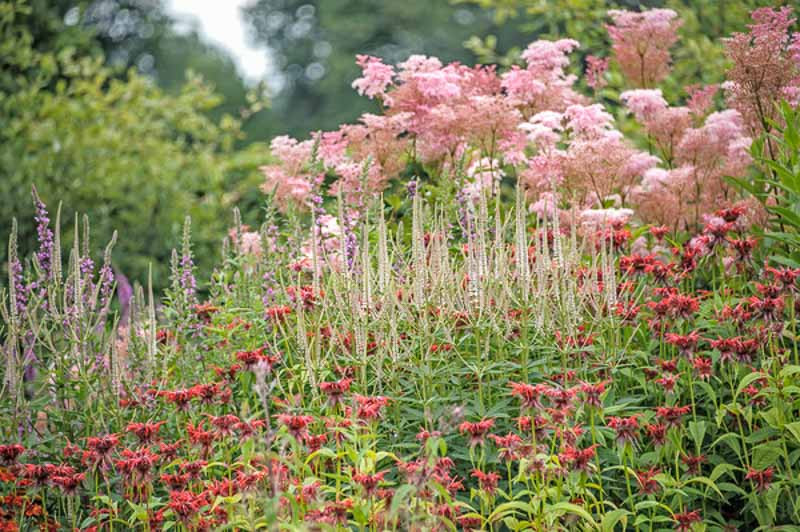
Garden Ideas, Border ideas, Perennial Combinations, Plant Combinations, Prairie Planting Ideas, Summer Borders, Filipendula Rubra Venusta, Veronicastrum Virginicum Fascination, Monarda Squaw, Lythrum Slicaria, Queen of the Prairie, Bee Balm, Culver's RootBee Balm, Culver’s Root, Queen of the Prairie

Deer-Resistant Perennials (Color, pollinators, and seasonal rhythm)

Perennials offer some of the best choices for deer-prone gardens. Aromatic foliage, coarse textures, and unpalatable compounds make many less attractive than soft, tender plants. Resistance still varies, so treat every list as a starting point rather than a guarantee.

  1. 1
    Salvia nemorosa (Woodland Sage): Aromatic foliage, upright flower spikes, and a long bloom season.
  2. 2
    Nepeta (Catmint): Airy, aromatic, drought-tolerant, and valuable to pollinators.
  3. 3
    Lavandula angustifolia (Lavender): Fragrant silver foliage; requires full sun and excellent drainage.
  4. 4
    Echinacea purpurea (Coneflower): Bold summer flowers and sculptural seedheads; browsing can occur in some gardens.
  5. 5
    Rudbeckia fulgida (Black-Eyed Susan): Tough summer-to-fall color; resistance varies with local pressure.
  6. 6
    Gaillardia (Blanket Flower): Sun-loving, long-blooming, and well suited to lean, dry soils.
  7. 7
    Achillea (Yarrow): Aromatic, ferny foliage; flat flower heads and low water needs.
  8. 8
    Perovskia (Russian Sage): Aromatic silver foliage and airy blue flowers for hot, dry borders.
  9. 9
    Armeria maritima (Sea Thrift): Compact evergreen mounds with pink flower heads; thrives in lean, sandy soil.
  10. 10
    Aurinia saxatilis (Basket of Gold): Brilliant spring carpets of yellow for rock gardens and sunny walls.

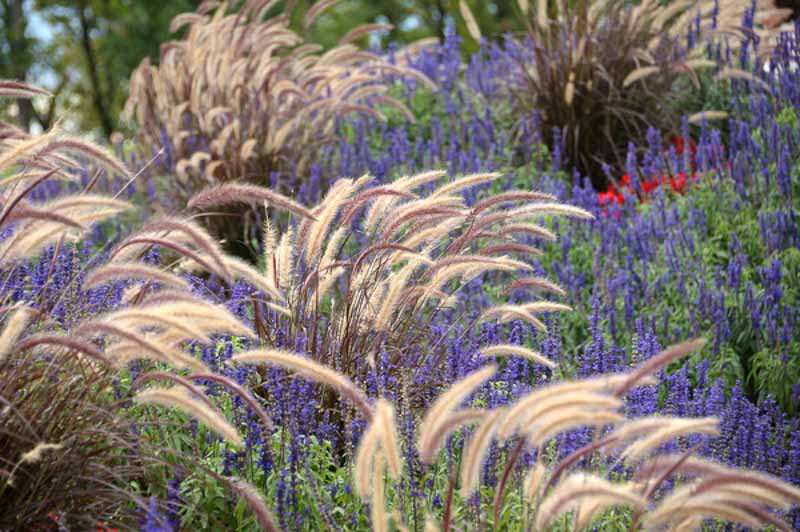
Garden Ideas, Border ideas, Perennial Planting, Perennial combination, Summer Border, Pennisetum Setaceum Rubrum, Salvia farinacea, Purple Fountain Grass,Mealy Cup SageSage and Fountain Grass

Deer-Resistant Ornamental Grasses (Movement, texture, and winter form)

Many ornamental grasses are less appealing to deer than tender broad-leaved plants. They also add movement, fine texture, seedheads, and winter structure. Favor regionally appropriate, non-invasive selections.

  1. 1
    Calamagrostis × acutiflora ‘Karl Foerster’: Upright accent, early plumes, and a neat habit.
  2. 2
    Panicum virgatum (Switchgrass): Native vertical form with strong autumn color.
  3. 3
    Festuca glauca (Blue Fescue): Compact blue-gray tufts for sunny edging.
  4. 4
    Helictotrichon sempervirens (Blue Oat Grass): Steel-blue mounds for crisp contrast.
  5. 5
    Carex testacea (New Zealand Sedge): Copper-amber arching foliage for mild climates.
  6. 6
    Schizachyrium scoparium (Little Bluestem): Fine-textured native grass with coppery fall color.
  7. 7
    Sporobolus heterolepis (Prairie Dropseed): Elegant domes topped by airy, fragrant flower panicles.
  8. 8
    Deschampsia cespitosa (Tufted Hairgrass): Shimmering panicles for cooler sites and part sun.
  9. 9
    Hakonechloa (Hakone Grass): Cascading foliage for shaded gardens.
  10. 10
    Stipa gigantea (Golden Oats): Tall, airy golden panicles with a dramatic silhouette.
Eco note: Some ornamental grasses can become invasive in certain regions. Always verify local guidance and choose regionally appropriate species and cultivars.

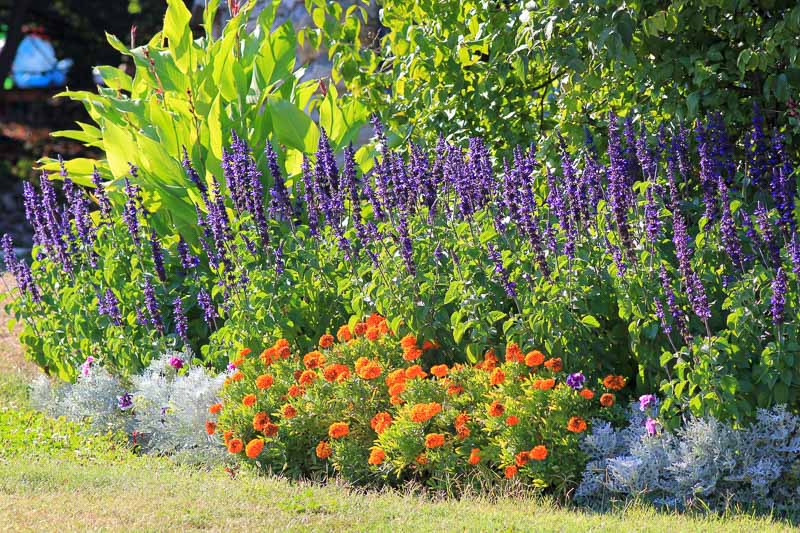
Plant Combinations, Summer Gardens, Marigold, Sage, Canna Lily, Dusty MillerSage, Marigold, Dusty Miller

Deer-Resistant Annuals (Pop of color and seasonal sparkle)

Annuals are useful for filling gaps, containers, and seasonal borders. Strong fragrance, fuzzy foliage, or coarse texture can make some less attractive to deer, although local browsing patterns still vary.

  1. 1
    Tagetes (Marigolds): Strongly scented foliage and months of yellow, orange, or red flowers.
  2. 2
    Jacobaea maritima (Dusty Miller): Silvery, densely felted foliage and excellent heat tolerance.
  3. 3
    Calendula: Cheerful cool-season flowers; resistance can vary from garden to garden.
  4. 4
    Borago officinalis (Borage): Coarse, bristly foliage and star-shaped blue flowers loved by bees.
  5. 5
    Capsicum annuum (Peppers): Glossy fruit and upright structure; young plants may still be browsed.
  6. 6
    Eschscholzia californica (California Poppy): Satiny flowers that thrive in sunny, lean soils.
  7. 7
    Gomphrena (Globe Amaranth): Papery flowers for heat, drought, and cutting gardens.
  8. 8
    Coreopsis tinctoria (Tickseed): Long-blooming, sun-loving, and attractive to pollinators.
  9. 9
    Ageratum (Floss Flower): Soft blue or lavender flower clusters for borders and containers.
  10. 10
    Antirrhinum (Snapdragon): Cool-season flower spikes and an excellent cut flower.

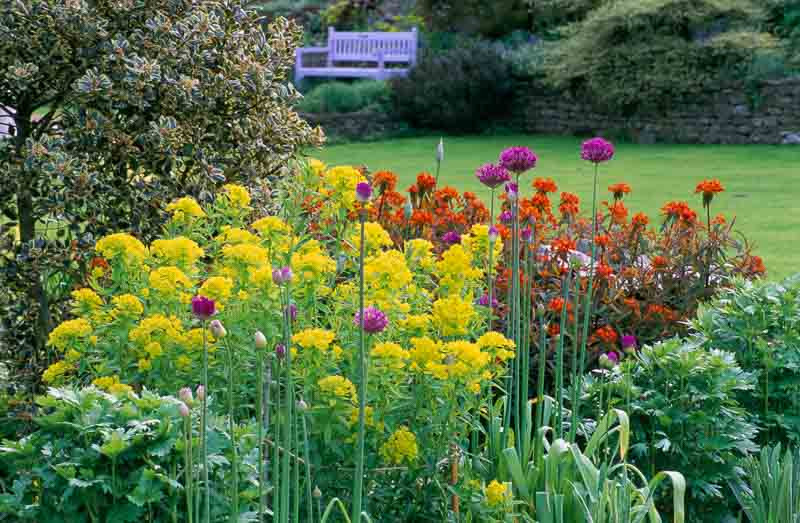
Spring Combination Ideas, Bulb Combinations, Plant Combinations, Flowerbeds Ideas, Spring Borders, Summer Borders, Euphorbia Palustris, Euphorbia Griffithii, Allium, Purple sensation, Euphorbia Fern Cottage,Allium, Spurge, Holly

Deer-Resistant Bulbs (Spring sparks and summer drama)

Tulips are famous deer favorites, but many other bulbs are much less appealing. Some contain toxic compounds; others have strong odors or flavors that deer tend to avoid.

  1. 1
    Narcissus (Daffodils): Among the most dependable spring bulbs for deer-prone gardens.
  2. 2
    Alliums: Onion-scented foliage and globe-shaped flowers with strong vertical impact.
  3. 3
    Fritillaria: Distinctive spring bulbs, several with a musky scent.
  4. 4
    Galanthus (Snowdrops): Delicate-looking early spring flowers that are generally avoided by deer.
  5. 5
    Amaryllis belladonna (Belladonna Lily): Leafless summer stalks topped with fragrant flowers.
  6. 6
    Muscari (Grape Hyacinth): Small blue or white spring flowers that naturalize readily.
  7. 7
    Camassia (Camas): Tall blue or white spring flower spikes for moisture-retentive soils.
  8. 8
    Colchicum (Autumn Crocus): Toxic fall-flowering bulbs with large crocus-like flowers.
  9. 9
    Colocasia (Elephant Ear): Dramatic tropical foliage; irritating if eaten, although browsing can still occur.
  10. 10
    Crocosmia (Montbretia): Fiery midsummer flowers that are also valuable to hummingbirds.

Deer-Resistant Trees (Canopy with a fighting chance)

Even a relatively deer-resistant tree can be vulnerable when young. Deer can browse shoots and lower branches, while bucks may rub antlers against trunks. Protect newly planted trees until their canopies and bark are less vulnerable.

  1. 1
    Ginkgo biloba: Tough, distinctive, and valued for its fan-shaped foliage.
  2. 2
    Ilex opaca (American Holly): Evergreen native tree with spiny foliage and red berries on female plants.
  3. 3
    Betula (Birch): Attractive bark and graceful foliage; protect young trees from browsing and rubbing.
  4. 4
    Cercis (Redbud): Spring flowers on bare branches followed by heart-shaped leaves.
  5. 5
    Cornus (Dogwood): Spring bloom, summer foliage, fruit, and fall color; resistance varies by species.
  6. 6
    Hamamelis (Witch Hazel): Fragrant ribbon-petal flowers in fall, winter, or early spring, depending on species.
  7. 7
    Lagerstroemia (Crape Myrtle): Heat-loving summer flowers, decorative bark, and fall color.
  8. 8
    Liquidambar styraciflua (Sweetgum): Star-shaped leaves with brilliant autumn color.
  9. 9
    Oxydendrum arboreum (Sourwood): Summer flower panicles and vivid scarlet fall foliage.
  10. 10
    Ostrya virginiana (Hop Hornbeam): Hop-like seed clusters and yellow fall foliage.

Quick Compare: Deer-Resistant Choices by Role

Garden Role Top Picks Notes
Hedges & structure Boxwood, inkberry holly,
Japanese holly
Useful evergreen choices; select according to mature size, climate, soil, disease pressure, and the hedge height you need.
Pollinator color Sage, catmint, echinacea, yarrow Excellent wildlife value. Salvia and catmint are generally more dependable under deer pressure than echinacea.
Groundcover edges Lamb’s ear, thyme, bergenia, barrenwort Choose by sun, soil moisture, and mature spread; spacing varies substantially by species.
Movement & winter form Switchgrass, Karl Foerster grass, blue fescue Many ornamental grasses are relatively low-browse and provide valuable structure beyond the flowering season.
Shade & woodland edges Hellebores, ferns, bergenia, barrenwort Useful alternatives where hostas suffer repeated browsing; match each plant to the moisture level of your shade garden.
Containers & front-door color lavender, marigolds, dusty miller, calendula Useful for pots and entry gardens; containers near the house are also easier to monitor or protect if browsing begins.

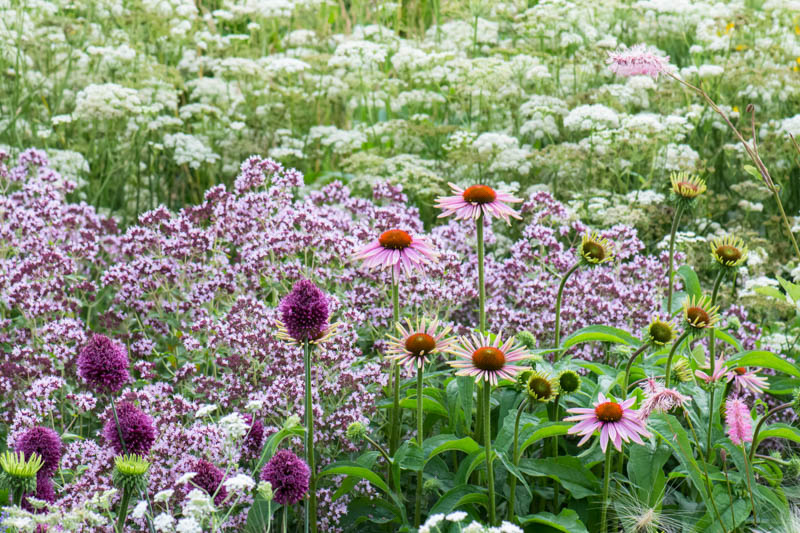
Anise, Aniseed, Common Anise, Sweet Cumin, Anis, Anis Vert, Anise PlantEchinacea, Allium, Anise, Oregano

Designing a Deer-Smart Garden

  • Start with the site: Match plants to your USDA zone, sunlight, soil, drainage, moisture, and available space before considering deer resistance.
  • Reduce highly palatable plants: Where deer pressure is heavy, rely more heavily on plants deer usually avoid and use favorites such as roses selectively.
  • Use resistant plants for structure and repetition: Aromatic plants such as lavender, thyme, catmint, and sage can be repeated throughout a planting for fragrance, color, and a lower-browse palette.
  • Add contrasting textures: Fuzzy, spiny, or leathery foliage such as lamb’s ear, mahonia, and holly adds visual interest while also tending to be less appealing to deer.
  • Protect young plants: Newly planted trees and shrubs are especially vulnerable because all of their growth is within reach.
  • Expect seasonal changes: Browsing often increases during winter, drought, or periods when natural forage is scarce.
  • Protect prized plants: If damage would be unacceptable, use fencing, cages, netting, or a suitable repellent rather than relying on companion planting.
  • Remember antler damage: Bucks can rub young tree trunks even when they do not eat the foliage.
  • Use fencing where pressure is severe: Properly installed fencing remains the most dependable physical protection when deer browsing is persistent.

Repellents: What to Know

Deer repellents generally work through odor, taste, or a combination of the two. They are most useful when applied before heavy browsing becomes established.

  • Odor-based repellents: discourage deer from approaching or feeding.
  • Taste-based repellents: make treated foliage unpleasant after deer sample it.

Effectiveness varies with the product, rainfall, new plant growth, deer pressure, and food availability. Follow the product label for application and reapplication intervals, and check whether the product is approved for use on edible plants.

Design tip: Deer resistance works best as one criterion in a well-designed planting. Combine it with climate, light, soil, water needs, mature size, bloom season, wildlife value, and garden style.

Quick Protection Guide

  • Young trees and shrubs: Use sturdy cages tall and wide enough to keep foliage beyond a deer’s reach.
  • Tree trunks: Protect young trunks from antler rubbing as well as browsing.
  • Repellents: Apply according to the product label and renew treatment after weathering or new growth when directed.
  • Mulch: Maintain a 2–3 inches (5–7.5 cm) layer over the root zone, keeping mulch away from direct contact with the trunk.

The Gardenia Deer-Smart Selection Method

Choosing a plant simply because deer tend to avoid it is not enough. It still has to thrive in your garden, fit the space you have, and play the role you need it to play. That is the idea behind Gardenia’s Deer-Smart Selection Method: start with deer resistance, then keep narrowing until the plants work together as a garden.

  • Start with deer resistance. Use Gardenia’s Plant Finder to focus on plants that deer are less likely to browse.
  • Match the plant to the site. Refine your choices by hardiness zone, sunlight, soil, drainage, moisture, and other conditions that determine whether a plant will actually thrive.
  • Check size, purpose, and season. Look beyond the flower. Consider mature height and spread, habit, bloom season, wildlife value, and whether the plant belongs at the front, middle, or back of the planting.
  • Build the garden, not just the plant list. Move your shortlist into Gardenia’s Garden Design Tool to combine compatible plants, review growing requirements and bloom times, and estimate how many plants your space needs.

The goal is not simply to find plants deer dislike. It is to create a garden that fits your site, works as a whole, and still looks the way you want it to look.


Deer-Resistant by Conditions

Shade

Shade gardens do not have to depend on hostas. These choices offer foliage, flowers, or movement while generally attracting less deer browsing.

  1. 1
    Epimedium (Barrenwort): Delicate spring flowers and excellent performance in dry shade once established.
  2. 2
    Hellebores: Late-winter to spring flowers and leathery foliage.
  3. 3
    Bergenia: Bold glossy foliage and spring flower spikes.
  4. 4
    Astilbe: Feathery plumes for rich, moisture-retentive shade.
  5. 5
    Hakonechloa (Hakone Grass): Cascading foliage that brings movement to shade.
  6. 6
    Pulmonaria (Lungwort): Spotted foliage and early flowers for pollinators.
  7. 7
    Athyrium (Lady Fern): Lacy fronds and soft woodland texture.
  8. 8
    Heuchera (Coral Bells): Colorful foliage and airy flowers; deer resistance can be more variable than with hellebores or epimedium.

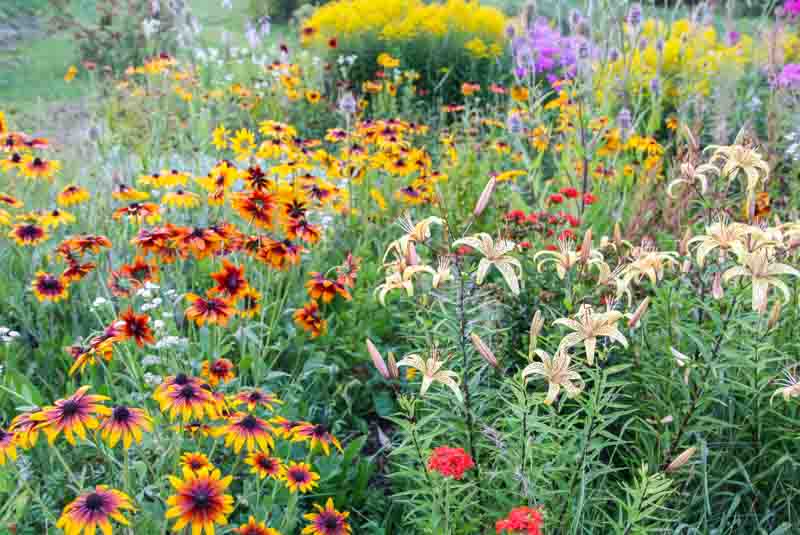
Black Eyed Susan, Rudbeckia, Lily, Tiger Lily, Summer GardenBlack-Eyed Susan, Lily

Full Sun

Sunny gardens offer a wide range of aromatic herbs, prairie plants, drought-tolerant perennials, and ornamental grasses.

  1. 1
    Agastache: Aromatic foliage and long-lasting flower spikes.
  2. 2
    Alstroemeria (Peruvian Lily): Long-lasting flowers for cutting; resistance can vary locally.
  3. 3
    Andropogon (Big Bluestem): Tall native prairie grass with strong autumn color.
  4. 4
    Asclepias (Milkweed): Important monarch host plants with defensive compounds that discourage many browsers.
  5. 5
    Aster: Valuable late-season flowers; deer resistance varies among species and locations.
  6. 6
    Campanula (Bellflowers): Bell-shaped flowers in blue, purple, and white; resistance varies by species.
  7. 7
    Canna: Bold tropical foliage and summer flowers; not among the most dependable choices under severe deer pressure.
  8. 8
    Artemisia (Wormwood): Silvery, strongly aromatic foliage and excellent drought tolerance.

Native-Forward

Native status does not automatically mean deer resistance. Some native plants are browsed readily; others are seldom damaged. These are useful starting points, but always combine native status with your growing conditions and local deer pressure.

  1. 1
    Aquilegia canadensis (Columbine): Nodding red-and-yellow flowers and early nectar for hummingbirds.
  2. 2
    Aronia arbutifolia (Chokeberry): White spring flowers, fruit, and vivid fall color.
  3. 3
    Bouteloua curtipendula (Sideoats Grama): Warm-season grass with distinctive oat-like seed spikes.
  4. 4
    Calycanthus floridus (Carolina Allspice): Aromatic native shrub with unusual maroon flowers.
  5. 5
    Monarda (Bee Balm): Aromatic foliage and nectar-rich summer flowers.
  6. 6
    Eryngium yuccifolium (Rattlesnake Master): Architectural foliage and spherical flowers.
  7. 7
    Amsonia (Bluestar): Blue spring flowers and brilliant golden fall foliage.
  8. 8
    Baptisia (False Indigo): Long-lived clumps with pea-like flowers and ornamental pods.

Clay Soils

Clay soils are often dense and slow-draining, but their moisture level varies considerably. Choose plants that tolerate your site’s actual drainage and moisture conditions rather than assuming every clay soil stays wet.

  1. 1
    Abies koreana (Korean Fir): Compact conifer with showy cones; requires adequate drainage.
  2. 2
    Actaea (Bugbane): Fragrant flower wands for moisture-retentive shade.
  3. 3
    Carex: A diverse group; choose a species suited to your particular light and moisture conditions.
  4. 4
    Aesculus parviflora (Bottlebrush Buckeye): Broad, shade-tolerant shrub with white summer flower spikes.
  5. 5
    Convallaria majalis (Lily of the Valley): Fragrant spring flowers; toxic and generally unattractive to deer, but potentially aggressive in some gardens.
  6. 6
    Eutrochium (Joe Pye Weed): Tall, pollinator-rich flower clusters; best with consistent moisture.
  7. 7
    Iris sibirica (Siberian Iris): Slender foliage and elegant late-spring flowers; tolerates moisture-retentive soils.
  8. 8
    Forsythia: Tough early-spring shrub; local deer browsing can vary.

By USDA Zone (Quick-Start Ideas)

Hardiness is only the first filter. Match plants to your USDA zone, then refine by light, soil, moisture, mature size, and local deer pressure.

🔎 Find more with our Plant Finder


Explore More Deer-Resistant Guides


Frequently Asked Questions

Are any plants truly deer-proof?

No. Deer-resistant means less likely to be browsed, not impossible for deer to eat. Local pressure, season, drought, and food availability can all affect browsing.

Do deer eat salvia?

Salvias are generally among the better choices for deer-prone gardens because many have strongly aromatic foliage. No salvia is completely deer-proof, but established plants are often passed over.

Is lavender deer resistant?

Lavender is one of the more reliably deer-resistant garden plants because of its strongly aromatic foliage. It also needs full sun and excellent drainage to thrive.

Are ferns deer resistant?

Many garden ferns are relatively deer resistant and make excellent alternatives to hostas in shade. Resistance varies by species and local conditions.

Do deer eat astilbe?

Astilbe is generally considered deer resistant and is especially useful for moist shade, although hungry deer may still sample it.

Do deer eat marigolds?

Marigolds are often avoided because of their strongly scented foliage, but they are not completely deer-proof and browsing varies locally.

Do deer eat hydrangeas?

Yes. Hydrangeas can be browsed, particularly tender shoots and flower buds. See Do Deer Eat Hydrangea Plants?

Which bulbs are most deer resistant?

Daffodils and ornamental alliums are among the most dependable choices. Fritillaria and snowdrops are also usually avoided.

Final Takeaway

A deer-resistant garden is not about finding plants deer will never touch. It is about improving the odds. Choose plants deer usually find less appealing, match them to your growing conditions, and pay attention to what your local herd consistently leaves alone.

Use Gardenia’s Plant Finder to combine deer resistance with your zone, sunlight, soil, moisture, mature size, wildlife goals, and other requirements. Once you have your shortlist, use the Garden Design Tool to bring compatible plants together and turn that list into a workable garden.

Updated and reviewed by Gardenia: September 2026

Guide Information

Hardiness 3 - 10
Plant Type Annuals, Bulbs, Ferns, Herbs, Ornamental Grasses, Perennials, Shrubs, Trees
Exposure Full Sun, Partial Sun, Shade
Season of Interest Spring (Early, Mid, Late), Summer (Early, Mid, Late), Fall, Winter
Tolerance Deer

Recommended Guides

Do Deer Eat Hydrangea?
Do Deer Eat Hibiscus?
18 Best Deer-Resistant Shrubs That Look Stunning
12 Best Deer-Resistant Annual Flowers
36 Best Deer-Resistant Perennial Plants
27 Beautiful Flower Bulbs Deer Don’t Like to Eat
30 Best Deer-Resistant Flowers and Plants for Your Garden
15 Top Deer-Resistant Ornamental Grasses for Any Garden
45 Plants That Repel Rabbits
18 Plants That Voles Will Avoid
Top Companion Plants for Marigolds: Boost Growth and Control Pests
Grow the Best Lavender: 25 Top-Rated Flowers for Your Garden
While every effort has been made to describe these plants accurately, please keep in mind that height, bloom time, and color may differ in various climates. The description of these plants has been written based on numerous outside resources.

Guide Information

Hardiness 3 - 10
Plant Type Annuals, Bulbs, Ferns, Herbs, Ornamental Grasses, Perennials, Shrubs, Trees
Exposure Full Sun, Partial Sun, Shade
Season of Interest Spring (Early, Mid, Late), Summer (Early, Mid, Late), Fall, Winter
Tolerance Deer

Related Items

Please Login to Proceed

You Have Reached The Free Limit, Please Subscribe to Proceed

Subscribe to Gardenia

To create additional collections, you must be a paid member of Gardenia
  • Add as many plants as you wish
  • Create and save up to 25 garden collections
Become a Member

Plant Added Successfully

You have Reached Your Limit

To add more plants, you must be a paid member of our site Become a Member

Update Your Credit
Card Information

Cancel

Create a New Collection

Sign Up to Our Newsletter

    You have been subscribed successfully

    Join Gardenia.net

    Create a membership account to save your garden designs and to view them on any device.

    Becoming a contributing member of Gardenia is easy and can be done in just a few minutes. If you provide us with your name, email address and the payment of a modest $25 annual membership fee, you will become a full member, enabling you to design and save up to 25 of your garden design ideas.

    Join now and start creating your dream garden!

    Join Gardenia.net

    Create a membership account to save your garden designs and to view them on any device.

    Becoming a contributing member of Gardenia is easy and can be done in just a few minutes. If you provide us with your name, email address and the payment of a modest $25 annual membership fee, you will become a full member, enabling you to design and save up to 25 of your garden design ideas.

    Join now and start creating your dream garden!
    Find your Hardiness Zone

    Find your Heat Zone

    Find your Climate Zone