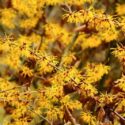
Discover evergreen trees such as Arborvitae, Leyland Cypress, Holly, and Fir for privacy with long-lasting interest, perfect for creating serene, green spaces in your garden all year round.


Evergreen trees are among the best choices for creating year-round privacy, structure, and shelter in the garden. Unlike deciduous trees, they retain foliage through winter, helping to screen neighboring properties, soften boundaries, reduce exposure, and create a more enclosed, peaceful outdoor space.
The best privacy trees do more than simply grow tall. They need to suit the available space, remain dense enough to provide screening, and thrive in your climate, soil, light, and wind conditions. Choosing the right tree from the start can help you create an attractive living screen without constant pruning or overcrowding.
An evergreen tree retains functional foliage throughout the year rather than shedding all its leaves seasonally. Evergreens include both needle-leaved conifers and broadleaf trees, and they vary enormously in height, width, growth rate, texture, and density.
In garden design, they are especially valuable for privacy because they provide cover in every season. They can also act as windbreaks, create a backdrop for flowering plants, define property boundaries, and provide shelter for wildlife.
Mature size: Check both height and spread. A narrow upright evergreen may fit beautifully along a boundary, while a broad-growing tree can quickly overwhelm a small garden.
Growth rate: Fast-growing trees can provide screening sooner, but they may also require more pruning and space. Slower-growing trees often need more patience but can be easier to manage long term.
Foliage density: For effective privacy, choose plants that remain reasonably dense from top to bottom rather than becoming bare at the base as they mature.
Climate and exposure: Match the tree to your hardiness zone, summer heat, winter cold, wind exposure, and local rainfall. A tree that grows quickly in one region may struggle in another.
Soil and drainage: Consider soil type, pH, drainage, and moisture. Even drought-tolerant evergreens usually need regular watering while establishing.
Maintenance: Some evergreens naturally maintain a narrow or compact form, while others require regular pruning to keep them within bounds.
Choosing the right privacy plants is about more than height – this complete guide covers the best screening plants, privacy hedges, and design strategies for creating a dense, long-lasting living screen.
Evergreen trees can provide valuable shelter, nesting cover, and food for birds while also creating an effective privacy screen.
Arborvitae and Leyland Cypress are widely used for screening because their dense foliage creates strong visual barriers and sheltered cover.
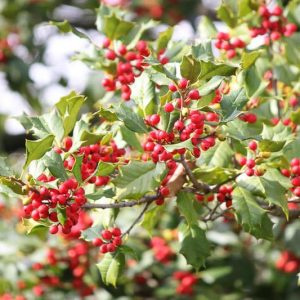
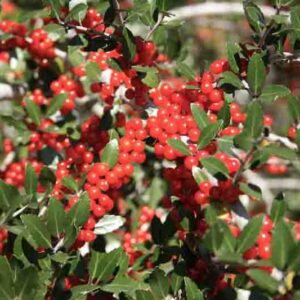
Hollies can combine dense evergreen foliage with berries that provide winter food for birds, depending on the species and whether fruiting plants are present.
Eastern Red Cedar offers dense cover and berry-like cones eaten by many birds, while Pine Trees provide shelter, nesting sites, and seeds for a variety of wildlife.
By choosing evergreens that suit both your site and local wildlife, you can create a privacy screen that is functional, attractive, and ecologically valuable.
Here are 47 of the best evergreen trees for creating privacy while adding year-round structure and beauty to the landscape.













Choosing and buying an evergreen tree for privacy involves several key considerations to ensure that your garden benefits from year-round greenery and seclusion. Here are essential steps to guide your selection:

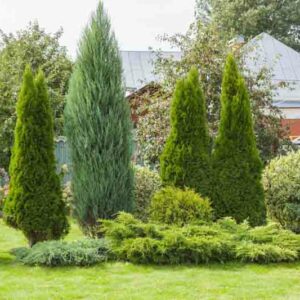
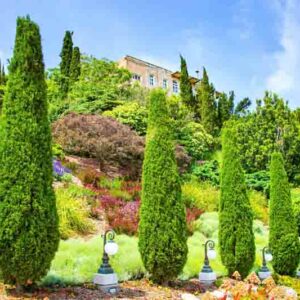
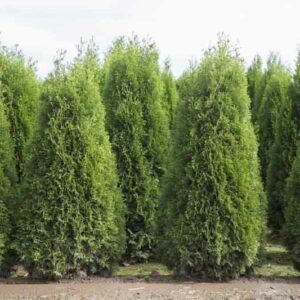
Emerald cedar evergreen trees (Thuja occidentals ‘Smaragd’), provide year round privacy along a driveway.
What is the most beautiful evergreen tree?
The “most beautiful” evergreen tree often depends on personal taste and the specific landscape, but the Blue Spruce (Picea pungens) is frequently celebrated for its stunning silvery-blue needles and classic conical shape, making it a visually striking choice for many gardeners.
What is the easiest evergreen tree to grow?
The Arborvitae (Thuja spp.) is known as one of the easiest evergreen trees to grow. It’s hardy, adaptable to a range of soil types, requires minimal care once established, and provides dense foliage that’s perfect for privacy screens.
What is the best evergreen tree to block neighbors?
For blocking views from neighbors, the Leyland Cypress (x Cupressocyparis leylandii) is highly recommended. It grows quickly, has a dense habit, and can reach significant heights, offering an effective natural barrier for privacy.
What is the best evergreen to plant near a house?
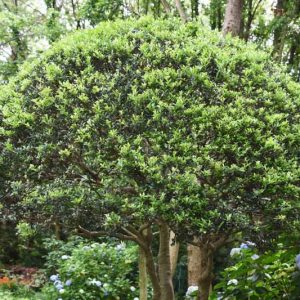
When planting near a house, the Japanese Holly (Ilex crenata) is an excellent evergreen option due to its moderate growth rate and manageable size, reducing the risk of damage to foundations. Its small, dense leaves and the ability to be shaped make it ideal for foundation plantings or as a decorative element in the landscape.

Create a membership account to save your garden designs and to view them on any device.
Becoming a contributing member of Gardenia is easy and can be done in just a few minutes. If you provide us with your name, email address and the payment of a modest $25 annual membership fee, you will become a full member, enabling you to design and save up to 25 of your garden design ideas.
Join now and start creating your dream garden!