Looking to create real privacy in your garden? Discover the best plants for screening, hedges, and natural barriers. Learn how to choose plants that thrive in your conditions, reduce maintenance, and build a beautiful, long-lasting privacy solution that transforms your outdoor space into a calm, secluded retreat.
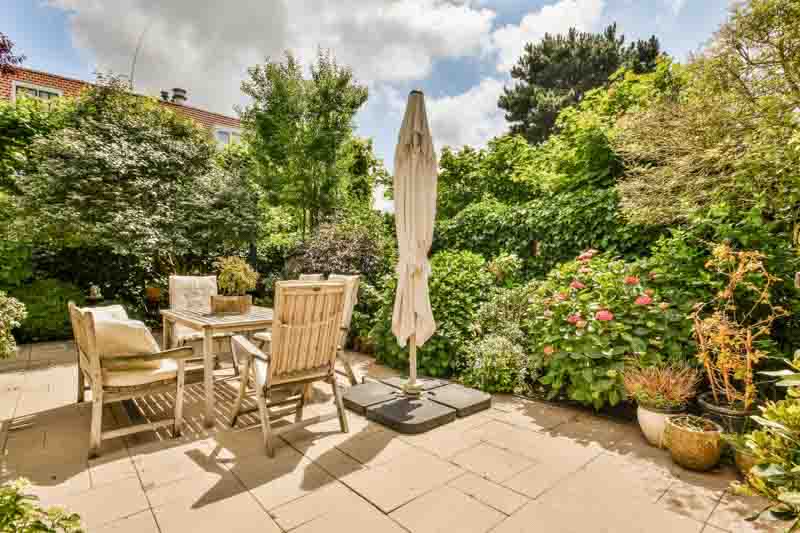


Privacy changes the way a garden feels. It can turn an exposed yard into a calmer retreat, soften traffic noise, block unwanted views, and create the sense of enclosure that makes outdoor space more comfortable and more usable. But choosing the best plants for privacy is not as simple as picking the tallest shrub or the fastest-growing hedge.
Many privacy planting projects disappoint after only a few years. Some plants grow too aggressively and become high-maintenance. Others shoot upward but thin out below, leaving gaps at eye level. Some are planted too closely and decline from overcrowding. Others never perform well because they were not suited to the site’s sun, soil, drainage, exposure, or climate.
The best privacy screen is not the one that grows fastest. It is the one that stays dense, healthy, and in scale with the space over time.
If you want to choose plants with more confidence from the start, the Gardenia Plant Finder is one of the smartest ways to narrow your options. It helps you filter by height, spread, evergreen habit, sun exposure, moisture, and other practical criteria – so you can focus on screening plants that can realistically succeed in your garden.
Best Privacy Plants at a Glance
For narrow spaces: Sky Pencil Holly, Italian Cypress, upright Junipers.
For evergreen hedges: Arborvitae, Cherry Laurel, Portuguese Laurel, Yew, Holly.
For upper-level screening: Italian Cypress, Southern Magnolia, Clumping Bamboo, Columnar Hornbeam.
For shade: Yew, Cherry Laurel, Aucuba, certain Hollies.
For dry, sunny sites: Italian Cypress, Junipers, Pittosporum, Mediterranean shrubs.
For a softer, natural look: Ornamental grasses, mixed shrub borders, climbers layered with evergreen structure.
Why most privacy screens fail
The most common mistake is choosing for speed alone. Fast growth can help, but lasting privacy depends on density, structure, mature size, and site fit.
| Plant | Type | Evergreen Deciduous | Typical Height | Best Use | Light | Notes |
|---|---|---|---|---|---|---|
| Arborvitae (Thuja) | Conifer hedge | Evergreen | 10-50 ft | Classic privacy hedge | Full sun to part shade | Dense, popular, reliable when well-sited |
| Cherry Laurel (Prunus laurocerasus) | Broadleaf shrub | Evergreen | 15-30 ft | Lush hedge, mild climates | Full sun to part shade | Full, dense look |
| Yew (Taxus) | Needled shrub | Evergreen | 8-20 ft | Formal hedge, shade tolerance | Part shade to sun | Excellent for clipping and structure |
| Italian Cypress (Cupressus sempervirens) | Columnar tree | Evergreen | 40-70 ft | Tall, narrow screening | Full sun | Best in suitable warm, well-drained sites |
| Sky Pencil Holly (Ilex crenata ‘Sky Pencil’) | Narrow shrub | Evergreen | 6-10 ft | Tight spaces | Full sun to part shade | Very narrow vertical accent |
| Southern Magnolia (Magnolia grandiflora) | Broadleaf tree | Evergreen | 60-80 ft | Large-scale screening | Full sun | Luxurious foliage, needs room |
| Columnar Hornbeam (Carpinus betulus) | Upright deciduous tree | Deciduous | 40-60 ft | Formal narrow screening | Sun to part shade | Strong structure, useful in classic designs |
| Star Jasmine (Trachelospermum jasminoides) | Climber | Evergreen in mild climates | 10-20 ft | Vertical privacy on trellis or fence | Sun to part shade | Fragrant, useful in compact gardens |
Not every tall plant makes a good privacy plant. To function as a reliable living fence or backyard privacy screen, a plant needs more than height. It also needs density, strong branching, a suitable growth habit, and long-term stability.
Height matters because the plant needs to block the line of sight you are trying to screen – whether that is a neighboring window, a street, a patio edge, or a second-story overlook. But height alone is not enough. A tall plant with open branching will not provide real privacy. For readers specifically looking for quicker results, Gardenia’s guide to Fast-Growing Trees for Privacy and Beauty is a useful companion resource.
Density is what creates effective visual blockage. The best privacy hedges and screening shrubs carry foliage well from top to bottom and maintain enough branching to reduce gaps. A plant that becomes bare at the base often fails as a true screen, even if it grows very tall.
Growth habit determines whether a plant fits the available space. Columnar plants work well in narrow side yards and tight boundaries. Broader shrubs and layered mixed borders are often better for deeper spaces where a softer, more natural look is preferred.
Evergreen habit is often essential when year-round privacy matters. If you need to block neighboring views in winter as well as summer, evergreen shrubs and evergreen privacy trees are usually the strongest choice. Gardenia’s Evergreen Trees for Privacy and Year-Round Interest can help readers who want to focus specifically on evergreen structure.
Maintenance profile matters more than many gardeners expect. Some plants provide quick screening but need frequent pruning to stay within bounds. Others grow more steadily and require less intervention over time. A privacy screen should match not only the site, but also the amount of upkeep you are realistically willing to do.
Key rule
A great privacy plant blocks views, stays dense, suits the site, and remains manageable at maturity.
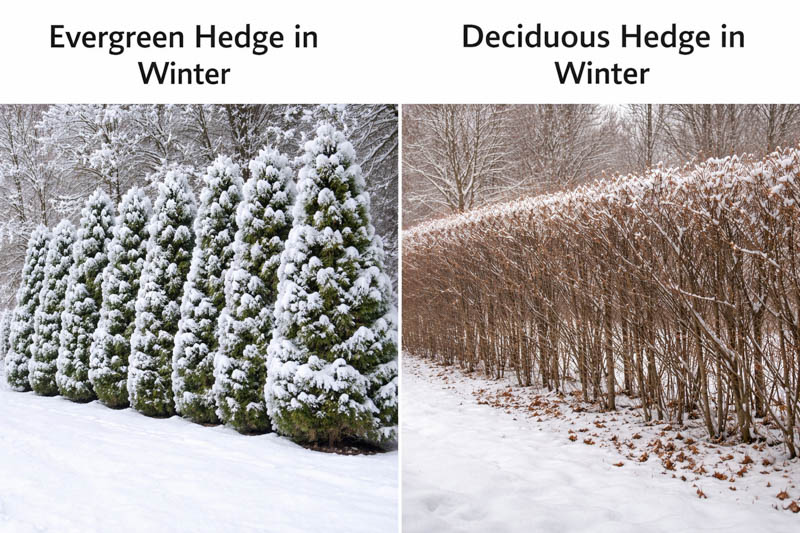
One of the first decisions is whether you need year-round screening or seasonal privacy. Evergreen and deciduous plants solve different problems, so the right answer depends on how the space is used and what you need to block.
Evergreen privacy plants hold their foliage through the year, making them the most dependable choice for screening houses, roads, fences, patios, and neighboring gardens. If your goal is consistent coverage in every season, evergreen hedges, evergreen shrubs, and evergreen trees should form the backbone of the design.
Deciduous privacy plants lose their leaves in fall or winter, but they can still be valuable. During the growing season, many deciduous shrubs and small trees provide dense cover, flowers, fall color, and a softer appearance. In colder climates, they can also allow welcome winter light into the garden.
In many landscapes, the most effective solution is a layered combination. Evergreen plants provide year-round structure, while deciduous shrubs, ornamental grasses, and flowering plants add seasonal beauty, movement, and depth.
There is no single best privacy plant for every garden. The right choice depends on whether you need a formal hedge, a natural screen, overhead privacy, screening for a small yard, or a windbreak planting with multiple layers.
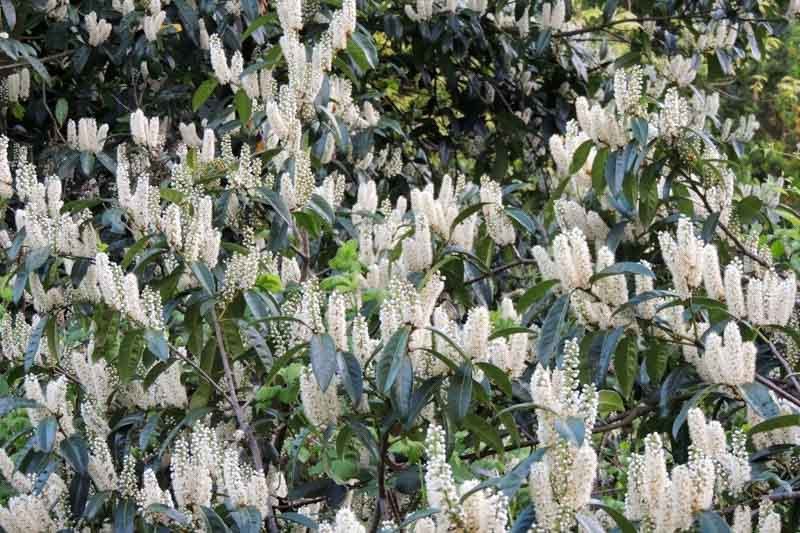
Evergreen hedges are the classic solution for privacy because they provide structure, visual consistency, and dependable coverage. They work especially well along boundaries, fences, driveways, and patios.
Some of the best evergreen shrubs and hedge plants for privacy include:
Arborvitae (Thuja) – A popular privacy hedge plant because many varieties grow densely and respond well to clipping. Reliable screening cultivars include Thuja occidentalis ‘Emerald Green’ for a narrower look and Thuja plicata ‘Green Giant’ for faster, larger-scale screening where there is more room.
Cherry Laurel (Prunus laurocerasus) – Excellent for broadleaf evergreen screening in mild climates. It creates a lush, dense hedge and works well where a fuller, greener look is preferred over conifer textures.
Portuguese Laurel (Prunus lusitanica) – A refined evergreen hedge with smaller leaves and a more elegant appearance than cherry laurel. It is especially useful for a formal privacy screen.
Yew (Taxus) – A classic hedge plant valued for deep green foliage, longevity, and tolerance of pruning. It is often chosen for traditional and formal gardens.
Pittosporum – Useful in mild climates for dense evergreen privacy, particularly in contemporary and coastal-style gardens.
Boxwood (Buxus) – More often used for lower structure than tall screening, but in layered privacy design it can anchor the front of a planting and add depth.
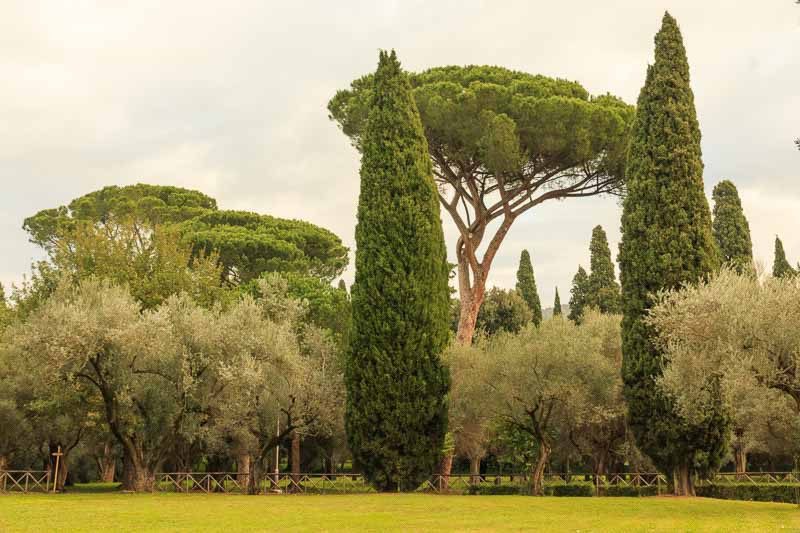
When the issue is not just a fence-level view but a neighboring upstairs window or a building looking down into the garden, shrubs alone may not be enough. This is where privacy trees become essential.
Some of the best privacy trees and screening trees include:
Italian Cypress (Cupressus sempervirens) – Tall, narrow, and architectural. It is ideal for vertical emphasis and screening in tight spaces, especially in Mediterranean-style and formal landscapes.
Holly (Ilex) – Many holly species and cultivars make excellent evergreen screening trees or large shrubs, especially where dense foliage and strong winter structure are desired. Good screening choices may include Ilex aquifolium in traditional settings and Ilex × meserveae ‘Blue Princess’ or Castle Spire for cold-winter gardens.
Southern Magnolia (Magnolia grandiflora) – In suitable climates, this broadleaf evergreen tree can create a beautiful, luxurious privacy screen with large leaves and year-round presence.
Clumping Bamboo – In the right setting, clumping bamboo can create a fast, elegant vertical screen. It is often a strong option for modern gardens, but plant selection matters greatly because clumping types behave very differently from running bamboos.
Columnar Hornbeam (Carpinus betulus) or Beech (Fagus sylvatica) – Useful where a narrow deciduous screen is wanted with strong structure and a more formal look. Columnar forms are especially effective in classic landscapes and tighter side boundaries.
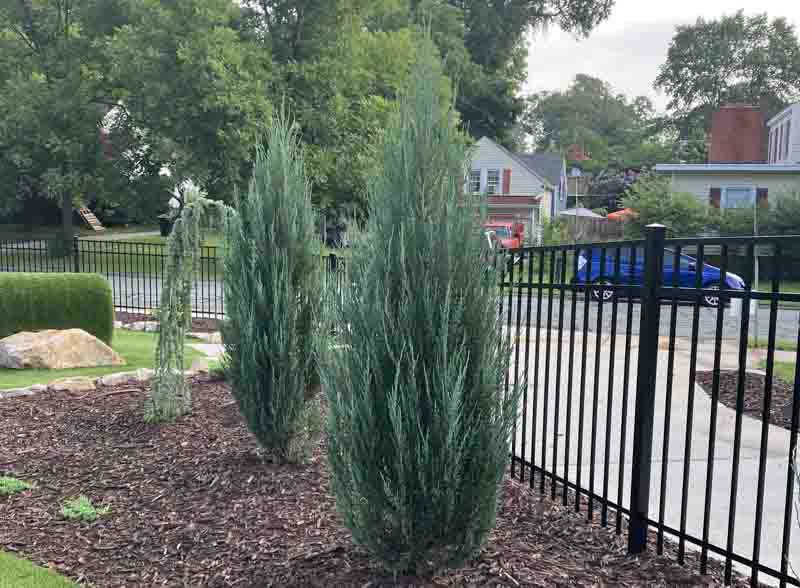
Small gardens need privacy too, but oversized hedges often make compact spaces feel even tighter. In smaller yards, the best screening plants are usually upright, narrow, and easy to shape.
Strong options for narrow privacy planting include:
Sky Pencil Holly (Ilex crenata ‘Sky Pencil’) – Extremely narrow and upright, useful where width is limited.
Italian Cypress (Cupressus sempervirens) – Best where climate allows and strong vertical screening is needed.
Upright Junipers (Juniperus) – Helpful for columnar evergreen screening in narrower spaces. Cultivars such as Juniperus scopulorum ‘Blue Arrow’ and Juniperus communis ‘Compressa’ are often used where a narrow vertical accent is needed.
Trellised Climbers – Excellent for adding vertical privacy where planting depth is minimal.
Espaliered Evergreens – A sophisticated option for tight spaces, walls, and courtyard gardens.
Small-space strategy
In a compact garden, choose plants that grow upward more than outward. The goal is privacy without swallowing the usable space.
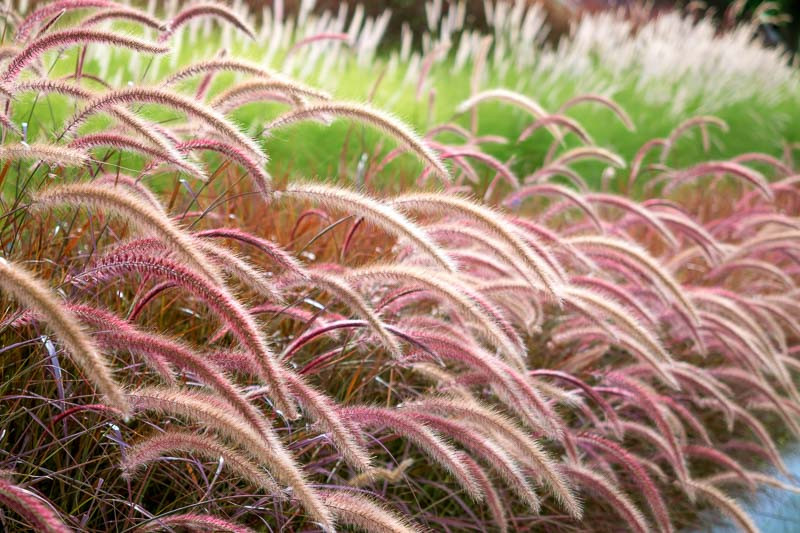
Ornamental grasses do not usually create the same year-round visual blockage as dense evergreen hedges, but they can be highly effective for seasonal privacy, movement, and soft screening. They are especially useful in contemporary gardens and naturalistic planting schemes.
Good screening grasses may include:
Maiden Grass (Miscanthus) – Tall, graceful, and effective for seasonal screening and soft enclosure.
Feather Reed Grass (Calamagrostis x acutiflora) – Upright and structured, often a good choice for modern designs.
Fountain Grass (Pennisetum) – Adds texture and softness in suitable climates.
Grasses are often best used in combination with shrubs or fences rather than as the only privacy layer.
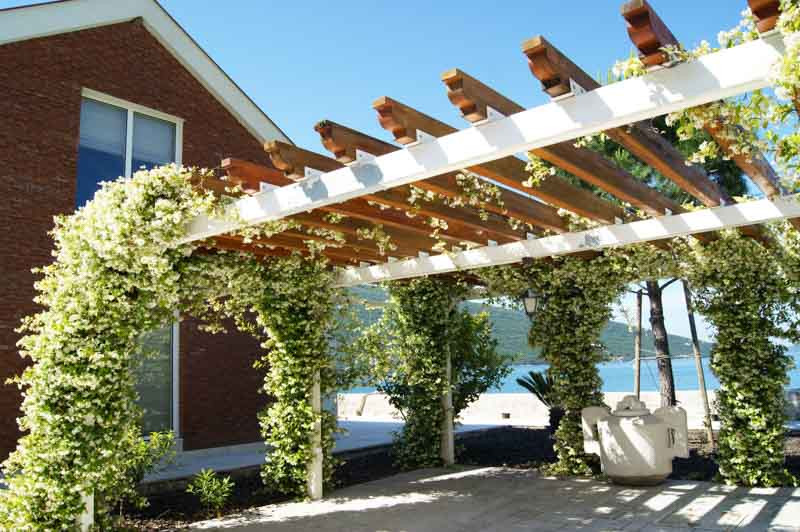
When floor space is limited, climbing plants can provide excellent privacy with minimal footprint. They are ideal for screening along fences, pergolas, trellises, and walls.
Popular privacy climbers include:
Star Jasmine (Trachelospermum jasminoides) – Evergreen in suitable climates and valued for fragrance as well as coverage.
Clematis – Best used for seasonal privacy and ornamental effect.
Climbing Roses – Not a full visual barrier on their own, but beautiful when layered with structure.
Honeysuckle (Lonicera) – Can create a soft, natural screen with wildlife value, depending on species and region.
Ivy (Hedera) – Effective for rapid cover, but should be used carefully because of maintenance and invasiveness concerns in some areas.
Choosing by use case is often the easiest way to find the right plant. Instead of asking, “What is the best privacy plant?” ask, “What is the best privacy plant for my exact problem?”
If you need faster coverage, look for vigorous but manageable plants. Good options may include clumping bamboo, certain arborvitae varieties, cherry laurel, or photinia, depending on climate and site conditions. Fast growth can be valuable, but only if you are prepared for the extra pruning and monitoring it often requires.
For lower maintenance, choose plants that naturally fit the site and do not need constant clipping to stay in bounds. Yew, some hollies, well-sited arborvitae, and carefully chosen laurel hedges can all be strong options where the environment suits them.
Shade changes the plant palette significantly. In shaded conditions, many sun-loving screening plants become thin and weak. Shade-tolerant choices may include yew, cherry laurel, aucuba, certain hollies, and other shrubs adapted to lower light levels.
Full sun with dry soil often calls for tougher plants with better drought tolerance. Italian cypress, some junipers, certain pittosporums, and Mediterranean-climate shrubs can be effective in the right regions.
No plant can completely block sound the way a solid wall can, but dense, layered plantings can help soften and absorb noise. The most effective strategy is usually a mixed planting of evergreen shrubs, taller screening trees, and understory layers rather than a single row of one species.
If you want privacy landscaping that feels soft and layered rather than clipped and formal, combine multiple plant types. Mix evergreen shrubs, small trees, ornamental grasses, and seasonal plants. This type of planting often looks more natural and is more resilient over time than a rigid monoculture hedge.
Best design move for real privacy
A layered planting almost always performs better than a single flat row. It hides gaps, increases depth, and looks far more natural as it matures.
Even the best privacy hedge plant will fail if it is planted in the wrong place. Site matching is not a minor detail – it is the foundation of long-term success.
Sun exposure is one of the biggest factors. A plant that wants full sun may grow thin and disease-prone in deep shade. A shrub adapted to shade may scorch in intense reflected heat.
Soil drainage matters just as much. Some privacy plants tolerate heavy, moisture-retentive soils. Others need sharp drainage and will struggle or decline if their roots stay wet.
Climate determines whether a plant can survive winter cold, summer heat, humidity, dry winds, or coastal exposure. A hedge that looks perfect in one region may perform poorly in another.
Available width is often overlooked. Many privacy plants are bought small and planted in tight lines, but their mature spread may be much broader than expected. Always design for mature size, not nursery size.
This is exactly where the Gardenia Plant Finder becomes especially useful. Instead of guessing, you can filter by height, spread, evergreen habit, moisture, and light needs to build a shortlist that truly suits your garden.
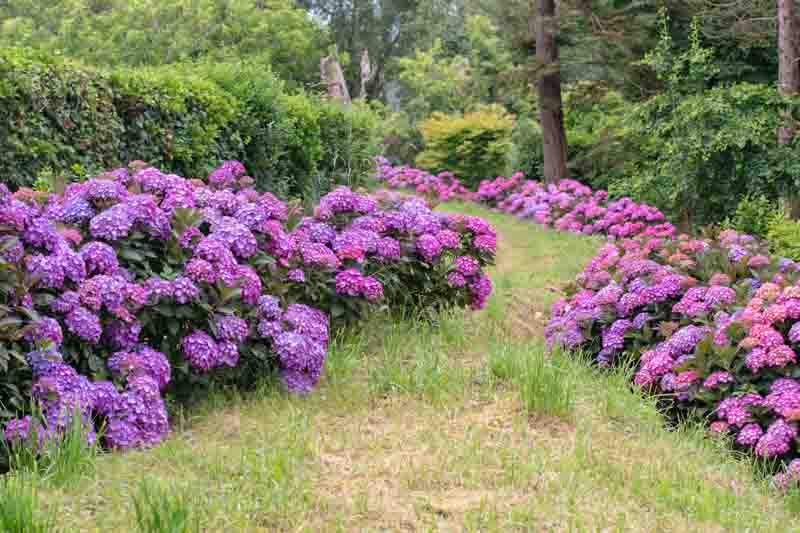
Plant choice matters, but design is what turns a collection of plants into an effective privacy screen. A well-designed planting provides better coverage, better health, and a more polished appearance over time.
A single row of identical plants is often the default approach, but it is not always the best one. It can look rigid, develop gaps, and create a visually flat edge. Layering plants of different heights and textures creates deeper screening and a more natural garden feel.
A strong layered privacy planting might include:
Spacing is one of the most important and most misunderstood parts of privacy planting. Plants placed too close together may provide a fast early result, but they often compete for light, water, and airflow as they mature. That can lead to thinning, disease, and decline.
Plants spaced too far apart leave open gaps for too long. The goal is not maximum immediate fullness. The goal is healthy long-term density at maturity.
Not every privacy problem starts at the same height or from the same angle. If you are screening a low fence, dense shrubs may be enough. If you need to block a second-story window or an overlooking balcony, taller trees or narrow upright evergreens may be more effective. If the goal is to create privacy around a patio, dining area, or lounge space, it often makes more sense to think about seated sightlines and layered planting rather than relying on a single tall hedge.
That is why comparison matters as much as layout. Before planting, it helps to evaluate possible privacy plants not just by looks, but by practical characteristics such as mature height, spread, hardiness, light needs, and water requirements.
The Gardenia Design Tool can be especially useful here. It allows you to add plants to your garden collection, visualize the overall look of the collection, and compare important growing requirements such as hardiness, light, and water needs. For anyone deciding between several possible screening plants, this makes it easier to compare options and build a planting combination that is both attractive and realistic for the site.
Design tip
Think in terms of sightlines, plant size, and growing needs together. The best privacy planting is not just visually effective – it is made of plants that can thrive side by side in your conditions.
Most privacy planting failures are not random. They usually come from a few repeat mistakes.
Fast-growing hedges can be tempting, especially when privacy is urgent. But rapid growth often comes with trade-offs such as weaker structure, more pruning, larger mature size, and a greater risk of becoming unruly.
A plant that looks neat in a nursery pot may become far too large for the boundary where it is planted. This leads to constant pruning, poor form, and stress on the plant.
A monoculture hedge can look clean at first, but it can also become vulnerable to pests, disease, storm damage, or seasonal gaps. Mixed planting is often more resilient and visually richer.
This is one of the most common privacy hedge mistakes. Overcrowded planting can reduce airflow, increase maintenance, and weaken plants over time.
Sun, shade, drainage, exposure, and climate all matter. A plant that is wrong for the site will never become the best version of itself, no matter how carefully it is planted.
Every privacy planting needs some level of maintenance, but the right plant choices can reduce that workload dramatically.
Formal hedges usually need more regular trimming to maintain crisp lines and density. They suit gardens where a structured look is desired and ongoing pruning is acceptable.
Naturalistic privacy screens often need less frequent shaping, but they still require monitoring, selective pruning, and occasional thinning to stay healthy and balanced.
Fast growers generally need more control. Moderate growers often provide the best balance between establishment speed and long-term manageability.
Healthy plants that suit the site always require less intervention than stressed plants fighting the wrong conditions. That is another reason why filtering your options carefully at the beginning is so important.
If you want a simple decision-making process, use this framework before choosing your privacy plants:
The best plants for privacy are not just tall. They are well-matched, well-placed, and well-designed. A successful privacy screen should solve the real problem in your garden while still looking good and staying healthy as it matures.
The strongest privacy landscapes are rarely built from impulse buying or one-size-fits-all plant lists. They come from matching the right screening plants, privacy hedges, privacy trees, climbers, and layered planting combinations to the exact conditions of the site.
If you want a privacy screen that feels professional, performs reliably, and adds long-term value to the garden, start by filtering plants intelligently and comparing them before planting. The Gardenia Plant Finder can help you identify realistic plant options, and the Gardenia Design Tool can help you compare plant collections and growing requirements so you can make stronger design decisions from the start.
Final takeaway
Choose for density, site fit, and mature scale – not just speed. That is how you create a living privacy screen that improves with time instead of becoming a problem.
What are the best plants for privacy?
The best privacy plants depend on your climate, space, and goals, but some of the most widely used options include arborvitae, cherry laurel, yew, holly, Italian cypress, clumping bamboo, and screening climbers such as star jasmine. Evergreen plants are usually the best choice when you need year-round privacy.
What is the best evergreen hedge for privacy?
Popular evergreen privacy hedges include arborvitae, cherry laurel, Portuguese laurel, yew, holly, and some pittosporum varieties. The best choice depends on sun exposure, soil, mature size, and regional climate.
What are the best privacy plants for small gardens?
For small gardens, narrow and upright plants are usually best. Sky Pencil holly, Italian cypress, upright junipers, and climbers trained on trellises can all provide privacy without taking up too much width.
Are fast-growing privacy plants a good idea?
Fast-growing privacy plants can be useful when screening is needed quickly, but they often require more pruning and closer long-term management. They are best used when you understand their mature size and maintenance needs before planting.
How can I create privacy in a shaded garden?
In shaded gardens, choose shade-tolerant privacy shrubs such as yew, cherry laurel, aucuba, or suitable hollies. Avoid relying on sun-loving screening plants in shade, because they often become sparse and ineffective.
What is better for privacy – evergreen or deciduous plants?
Evergreen plants are usually better for year-round privacy because they keep their foliage in all seasons. Deciduous plants are valuable for seasonal screening, flowers, fall color, and layered designs, but they do not provide the same winter coverage.
How far apart should privacy plants be planted?
Privacy plant spacing depends on the mature width of each plant and the speed at which you want the screen to fill in. Plants should be spaced close enough to knit together over time, but not so close that they become overcrowded and decline as they mature.
How do I choose the right privacy plants for my yard?
Start by identifying what you need to screen, how much height and width you have, and what your site conditions are. Then filter by evergreen habit, mature size, light, and moisture needs. The Gardenia Plant Finder is especially useful for building a shortlist, and the Gardenia Design Tool can help you compare plants and visualize the overall collection before planting.
Create a membership account to save your garden designs and to view them on any device.
Becoming a contributing member of Gardenia is easy and can be done in just a few minutes. If you provide us with your name, email address and the payment of a modest $25 annual membership fee, you will become a full member, enabling you to design and save up to 25 of your garden design ideas.
Join now and start creating your dream garden!
Create a membership account to save your garden designs and to view them on any device.
Becoming a contributing member of Gardenia is easy and can be done in just a few minutes. If you provide us with your name, email address and the payment of a modest $25 annual membership fee, you will become a full member, enabling you to design and save up to 25 of your garden design ideas.
Join now and start creating your dream garden!