Hydrangea or snowball viburnum? These look-alike shrubs both produce big, beautiful blooms, but they suit different gardens. Hydrangeas offer colorful summer flowers and container appeal, while Chinese snowball viburnum delivers huge white spring blooms on a large shrub. Use this guide to choose the right plant with confidence.
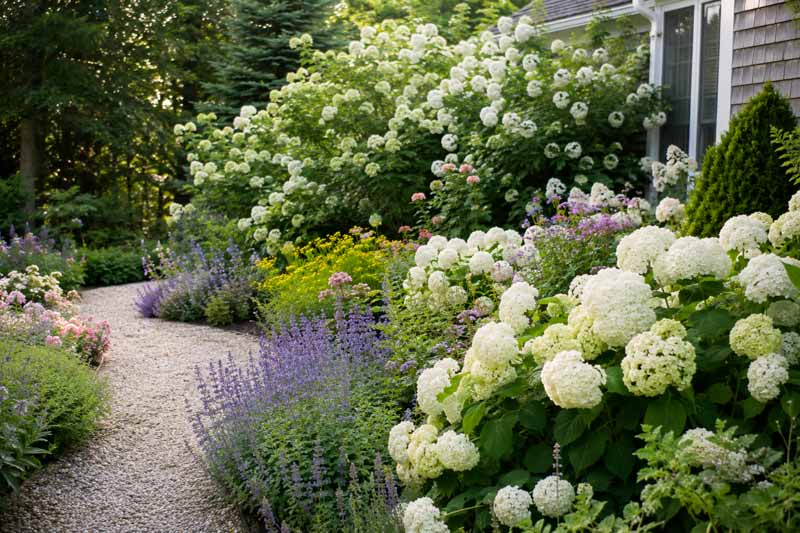


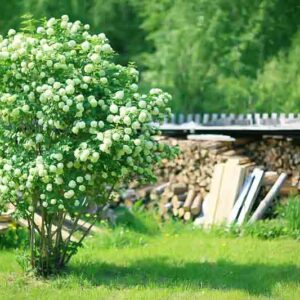
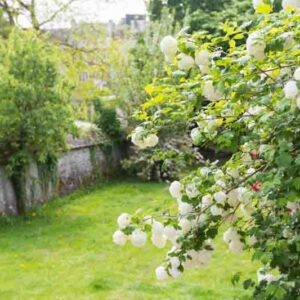
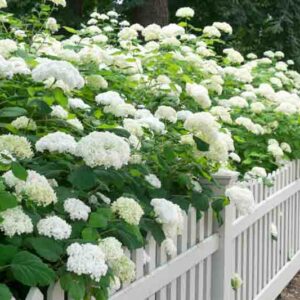
Hydrangeas and viburnums are often confused because both can produce big, round, snowball-like flowers. From a distance, a white mophead hydrangea and a Chinese snowball viburnum can look surprisingly similar. Both are lush, flowering shrubs. Both create a classic garden look. Both can stop visitors in their tracks when covered in bloom.
But they are not the same plant, and they are not used the same way in the garden. If you are comparing hydrangea vs viburnum, you are probably really comparing hydrangea vs Chinese snowball viburnum, also known as Viburnum macrocephalum.
The choice comes down to season, color, and space: hydrangea gives you colorful summer flowers in smaller gardens, while Chinese snowball viburnum gives you huge white spring blooms on a much larger shrub.
Quick decision: Choose hydrangea for blue, pink, or long-lasting summer flowers, containers, patios, smaller gardens, and part shade. Choose Chinese snowball viburnum for huge white spring blooms, large spaces, specimen planting, and informal screening. Choose another fruiting viburnum if you want berries for birds.
This guide focuses on the real look-alike question: Hydrangea macrophylla and other snowball-type hydrangeas vs Viburnum macrocephalum. It will help you decide quickly, avoid common mistakes, and choose the shrub that actually fits your space, climate, and garden style. Use it as a practical decision guide, then refine your choice with the Gardenia Plant Finder and test your layout in the Gardenia Design Tool.
Before choosing, make sure you know which plant you are comparing. The name snowball bush is used for more than one shrub, which is why hydrangeas and viburnums are so often confused.
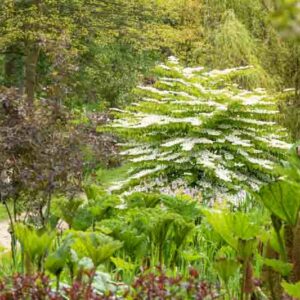
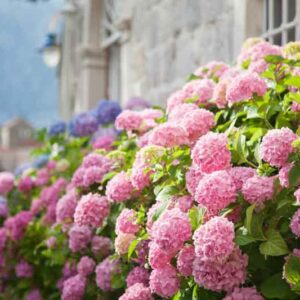
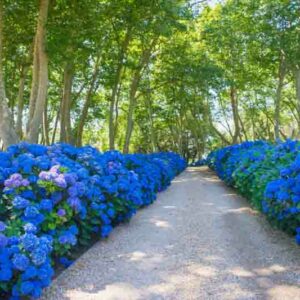
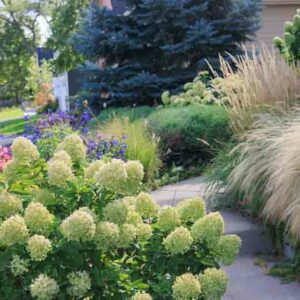
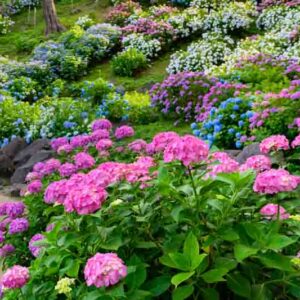
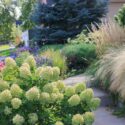
A bigleaf hydrangea often has rounded mophead flowers in blue, pink, purple, or white and usually blooms in summer. A smooth hydrangea can also produce white snowball-like flowers, usually on a smaller shrub. A panicle hydrangea is another common comparison, but its flowers are typically cone-shaped rather than round.
Chinese snowball viburnum, or Viburnum macrocephalum, is different. It is usually a much larger shrub with huge white spring flowers that open greenish and mature to white. The common ornamental form has sterile flowers, so it does not produce berries.
Easy way to choose: Pick hydrangea for colorful or long-lasting summer flowers and smaller spaces. Pick Chinese snowball viburnum for a large shrub with a spectacular white spring display.
This table compares the plants most gardeners are actually trying to choose between: bigleaf or snowball-type hydrangeas and Chinese snowball viburnum.
| Feature | Hydrangea | Chinese Snowball Viburnum | Best Choice |
|---|---|---|---|
| Botanical name | Often Hydrangea macrophylla, Hydrangea arborescens, or Hydrangea paniculata | Viburnum macrocephalum | Depends on the plant being compared |
| Flower shape | Mopheads, lacecaps, rounded snowball types, or cone-shaped panicles | Large round white snowball clusters | Hydrangea for variety, viburnum for giant white snowballs |
| Main bloom season | Late spring to summer, often into fall depending on type | Spring to early summer | Hydrangea for summer, viburnum for spring |
| Flower color | Blue, pink, purple, white, green, red, cream, or antique tones | Greenish buds aging to white | Hydrangea |
| Mature size | Often 2-8 ft. tall, depending on type and cultivar | Often 10-20 ft. or more in favorable climates | Hydrangea for small spaces, viburnum for large spaces |
| Sun exposure | Part shade to full sun, depending on type; bigleaf hydrangea often prefers protection from afternoon sun | Full sun to part shade | Hydrangea for protected part shade, viburnum for brighter open sites |
| Water needs | Needs consistent moisture, especially in heat and containers | Prefers moist, well-drained soil; once established, it is usually less container-sensitive than hydrangea but should not be allowed to suffer prolonged drought | Hydrangea for watered beds, viburnum for larger landscapes |
| Pruning | Depends on type; some bloom on old wood, some on new wood, some on both | Usually prune after flowering if shaping is needed | Viburnum for simplicity |
| Berries | Not grown for berries | The common ornamental Chinese snowball viburnum has sterile flowers and does not fruit | Neither – choose a fruiting viburnum for birds |
| Best use | Containers, patios, cottage gardens, foundation beds, shade borders, cutting gardens | Specimen shrub, large border, loose screen, lawn accent, spring focal point | Depends on space and season desired |
| Pet safety | Hydrangea is toxic to dogs, cats, and horses if ingested | Pets should not be allowed to eat ornamental shrubs | Use caution with both; extra caution with hydrangea |
If you want flowers in summer, choose hydrangea. Bigleaf, smooth, and panicle hydrangeas can provide a long display from late spring or summer into fall, depending on the type and cultivar.
If you want a dramatic spring show, choose Chinese snowball viburnum. It blooms earlier, usually in spring to early summer, with large greenish-white flower balls that mature to bright white.
Seasonal rule: Hydrangea extends the garden into summer. Chinese snowball viburnum makes spring unforgettable.
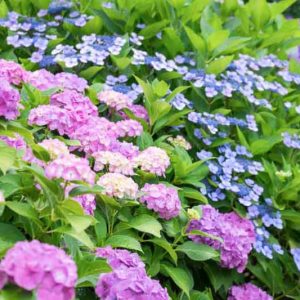
Hydrangea wins for color. Bigleaf hydrangeas can be blue, pink, purple, white, or blended. Panicle hydrangeas often begin white or lime green, then age to pink, rose, tan, or antique shades. Smooth hydrangeas usually offer white or pink rounded blooms.
Chinese snowball viburnum has a simpler palette. Its flower clusters usually open greenish or chartreuse and mature to white. That white spring display is beautiful, but it does not offer the blue, pink, or purple colors many gardeners want from hydrangeas.
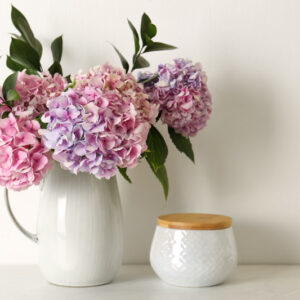
If you want blue hydrangeas, pink hydrangeas, purple hydrangeas, or antique hydrangea flowers for arrangements, choose hydrangea. If you want giant white spring snowballs, choose Chinese snowball viburnum.
Size is the biggest practical difference. Many hydrangeas are medium shrubs, and compact cultivars can fit into foundation beds, patio borders, entry gardens, and containers.
Chinese snowball viburnum is usually much larger. In favorable climates, it can become a broad shrub or small-tree-like specimen. That makes it impressive in the right place and overwhelming in the wrong one.
Spacing rule: If the space is small, choose hydrangea. If the space is wide, open, and can handle a large shrub, Chinese snowball viburnum can be spectacular.
Bigleaf hydrangeas usually perform best with morning sun and afternoon shade, especially in hot climates. Too much afternoon sun can cause wilting, scorched leaves, and stressed flowers unless moisture is very consistent.
Panicle hydrangeas are usually more sun tolerant than bigleaf hydrangeas. Smooth hydrangeas can handle part shade, and oakleaf hydrangeas are excellent for woodland edges and filtered light.
Chinese snowball viburnum grows in full sun to part shade and usually flowers best with good light. In hot climates, a little afternoon protection can still help it look fresher.
Hydrangeas like moist, fertile, well-drained soil rich in organic matter. They do not like drying out severely, especially in hot weather or containers. Mulch helps keep the root zone cool and evenly moist.
Chinese snowball viburnum also prefers moist, well-drained soil, especially while establishing. Once mature, it behaves more like a large landscape shrub than a moisture-sensitive patio accent, but it still performs best when not allowed to suffer prolonged drought.
Hydrangea pruning depends on the type. Some hydrangeas bloom on old wood, some on new wood, and some on both. This matters because pruning at the wrong time can remove the flower buds. Before cutting, identify whether your hydrangea blooms on old wood, new wood, or both.
Chinese snowball viburnum is usually simpler. If it needs shaping, prune it shortly after flowering. Avoid heavy shearing, which can spoil its natural form and reduce the next spring display.
Pruning warning: Never prune a hydrangea until you know the type. Never shear Chinese snowball viburnum into a tight box if you want its graceful shape and full spring bloom.
This is a common source of confusion. Many viburnums are excellent berry shrubs for birds, but Chinese snowball viburnum is different. The common ornamental form of Viburnum macrocephalum has sterile flowers and does not produce fruit.
Hydrangeas are also not grown for berries. Their value is mainly flowers, foliage, form, and dried flower heads.
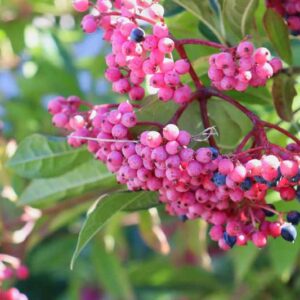
If your goal is berries for birds, do not choose hydrangea or Chinese snowball viburnum. Instead, use a fruiting viburnum such as arrowwood viburnum, black haw viburnum, nannyberry viburnum, or another species suited to your region.
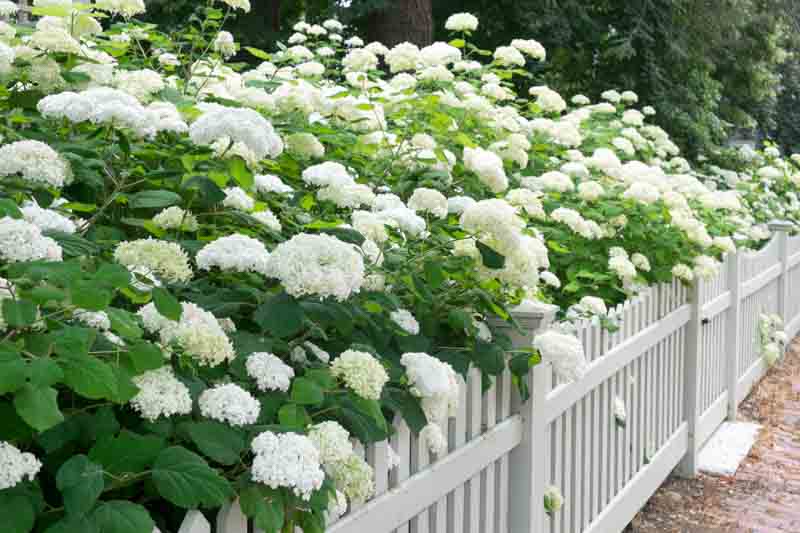
Hydrangea is the better choice if your garden needs visible summer flowers, more color choices, or a shrub that can fit near a patio, entry, porch, walkway, or small foundation bed.
Hydrangeas also make excellent container plants when compact varieties are grown in large pots with drainage holes, quality potting mix, consistent water, and the right light exposure. If you want a decorative flowering shrub for a terrace or courtyard, hydrangea is usually the safer choice.
Use hydrangeas in cottage gardens, shade gardens, foundation beds, mixed borders, woodland edges, cutting gardens, and container displays. They pair beautifully with hostas, ferns, coral bells, astilbe, boxwood, holly, ornamental grasses, and shade-tolerant groundcovers.
You want blue, pink, purple, or long-lasting summer flowers; you garden in part shade; you need a shrub for a smaller space; or you want a container-friendly flowering plant.
You need a large privacy screen, a low-water shrub for a hot exposed site, berries for birds, or a plant that can be pruned anytime without affecting bloom.
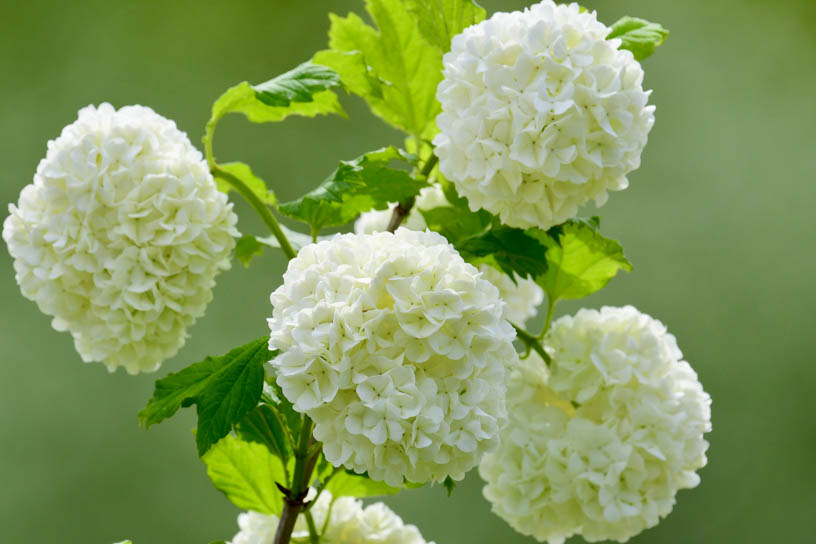
Chinese snowball viburnum is the better choice if you want a large, dramatic shrub with enormous white spring flower clusters. At peak bloom, a mature plant can look covered in snowballs, creating a bold display that is hard to miss.
This is not a small accent plant. It needs space. Use Chinese snowball viburnum as a specimen shrub, large border anchor, loose privacy screen, lawn accent, spring focal point, or backdrop for perennials. It works beautifully in classic Southern gardens, large cottage gardens, mixed shrub borders, and informal landscapes where it can grow naturally.
It pairs beautifully with spring bulbs, evergreen shrubs, dogwoods, redbuds, azaleas, camellias, ferns, hostas, ornamental grasses, and later-blooming hydrangeas.
You want huge white spring flowers, have room for a large shrub, need a loose screen, or want a dramatic specimen for a lawn or large border.
You need blue or pink flowers, a compact container plant, a shrub for a tight foundation bed, or berries for birds.
The fastest way to tell them apart is to look at flower color, bloom time, and plant size.
The phrase snowball bush can refer to more than one plant. A snowball hydrangea usually means a hydrangea with rounded white blooms, often a smooth hydrangea type. A snowball viburnum usually means a viburnum with rounded white flowers, such as Chinese snowball viburnum or European snowball viburnum. The easiest way to tell them apart is to look at bloom season, plant size, leaf shape, and flower color.
If you want the snowball look but are not sure which plant to choose, these related options can help.
If the goal is a hydrangea-like white flower ball, Chinese snowball viburnum is usually the most dramatic viburnum choice. If the goal is fragrance, berries, or wildlife, another viburnum may be better.
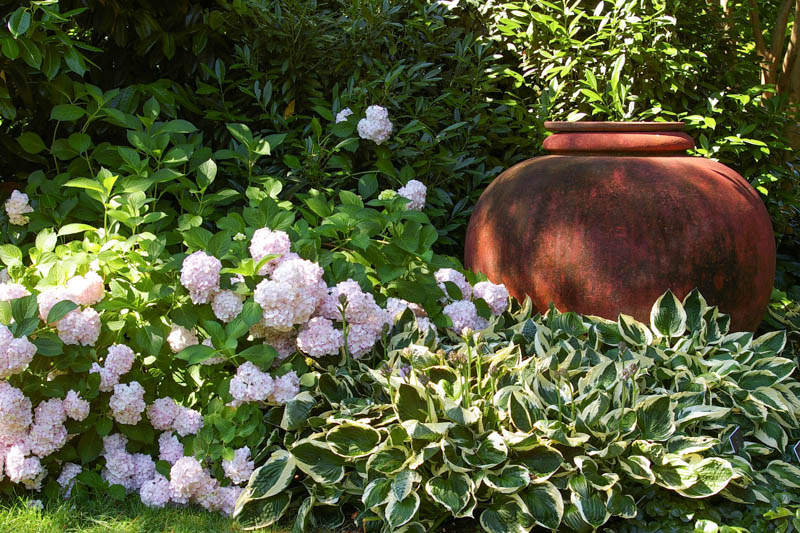
Hydrangea is most effective when used as a flowering focal point. The flowers are large enough to carry a garden scene, so give the plant enough room and avoid crowding it with too many equally bold plants at the same height.
In a cottage garden, combine hydrangeas with roses, foxgloves, hardy geraniums, catmint, phlox, and salvias. In a shade garden, pair hydrangeas with hostas, ferns, heucheras, astilbes, brunnera, hellebores, and Japanese forest grass. For a polished foundation planting, use hydrangeas with boxwood, holly, yew, inkberry, ornamental grasses, and low evergreen groundcovers.
Browse Garden Design Ideas with Hydrangeas
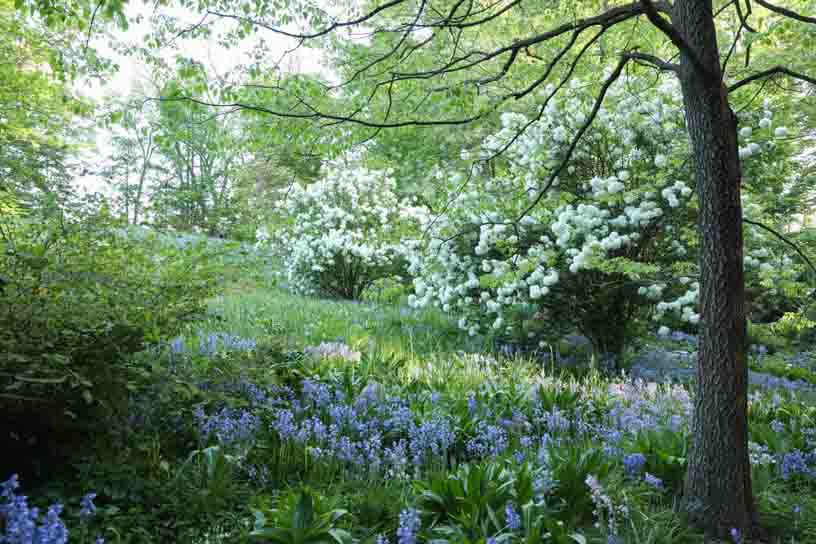
Chinese snowball viburnum is best treated as a major shrub, not a small accent. Place it where it can mature into its rounded, arching form and where the spring flowers can be appreciated from a distance.
Because it blooms mainly in spring, companion planting is important. After the snowball flowers fade, nearby perennials, hydrangeas, summer shrubs, and evergreens can keep the area interesting.
Browse Garden Design Ideas with Viburnum
Design upgrade: Plant Chinese snowball viburnum as the spring showpiece, then use hydrangeas nearby for summer color. This gives you the snowball look across more of the gardening year.
The best shrub is the one that fits your garden. Before choosing, use the Gardenia Plant Finder to compare hydrangeas, Chinese snowball viburnum, and other look-alike flowering shrubs by hardiness zone, sun exposure, soil type, water needs, bloom time, height, spread, deer resistance, wildlife value, and garden style.
Once you have a shortlist, use the Gardenia Design Tool to test spacing, placement, repetition, seasonal color, and companion plants. This is especially useful if you are deciding whether a hydrangea belongs near the patio, Chinese snowball viburnum belongs in the background, or both should be layered together for a spring-to-summer flower display.
For more design inspiration, explore Gardenia Plant Combinations. You can build a planting plan that layers shrubs, perennials, bulbs, groundcovers, and evergreens for a garden that looks good beyond one bloom season.
Gardenia workflow: Use Plant Finder to choose the right shrub for your zone and conditions. Use the Design Tool to place it correctly. Then explore Plant Combinations to create a border with flowers, foliage, structure, and seasonal rhythm.
Choose hydrangea if you want colorful summer flowers, blue or pink blooms, containers, smaller-space options, cutting stems, and a lush cottage garden look.
Choose Chinese snowball viburnum if you want a large spring-blooming shrub with enormous white flower balls, strong landscape presence, and a dramatic specimen effect.
Choose both only if you have enough room and want a longer season of large, romantic blooms: Chinese snowball viburnum for spring, hydrangea for summer.
No. Hydrangea and snowball viburnum are different plants. Hydrangeas belong to the genus Hydrangea, while Chinese snowball viburnum is Viburnum macrocephalum. They can look similar because both may produce large rounded flower clusters, but they differ in bloom time, mature size, flower color, pruning, and landscape use.
Hydrangea macrophylla, or bigleaf hydrangea, is usually a smaller shrub grown for blue, pink, purple, or white summer flowers. Viburnum macrocephalum, or Chinese snowball viburnum, is usually a larger shrub grown for huge white spring flower balls. Bigleaf hydrangea often prefers morning sun and afternoon shade, while Chinese snowball viburnum grows in full sun to part shade.
People confuse them because some hydrangeas and some viburnums produce large, round, snowball-like flower clusters. The common name snowball bush can also refer to different plants, including snowball hydrangeas and snowball viburnums.
Hydrangea usually blooms longer. Many hydrangeas flower from late spring or summer into fall, depending on type and cultivar. Chinese snowball viburnum usually has a spectacular but shorter spring to early-summer bloom period.
Both can have very large flowers. Chinese snowball viburnum is famous for enormous white flower balls, while hydrangeas offer large mopheads, smooth rounded flower heads, or panicles in a wider range of colors. Viburnum macrocephalum often wins for giant white snowball effect, while hydrangea wins for flower color variety.
The common ornamental Chinese snowball viburnum, Viburnum macrocephalum, has sterile flowers and does not produce fruit. This is different from many other viburnums, which can produce berries for birds when properly pollinated.
Neither is the best choice if berries for birds are the main goal. Chinese snowball viburnum has sterile flowers and does not fruit, while hydrangeas are not grown for berries. For bird-friendly fruit, choose fruiting viburnums such as arrowwood viburnum, black haw viburnum, nannyberry viburnum, or other suitable regional species.
Bigleaf hydrangea is often better for protected part shade, especially morning sun with afternoon shade. Chinese snowball viburnum grows in full sun to part shade and usually flowers best with good light. In hot climates, both may appreciate some afternoon protection.
Chinese snowball viburnum is often better for full sun if soil moisture is adequate and the climate is suitable. Among hydrangeas, panicle hydrangeas usually handle sun better than bigleaf hydrangeas. Bigleaf hydrangeas may wilt or scorch in strong afternoon sun, especially in hot regions.
Chinese snowball viburnum is usually easier to prune. It is typically shaped after flowering. Hydrangea pruning depends on the species because some bloom on old wood, some on new wood, and some on both. Pruning the wrong hydrangea at the wrong time can remove flower buds.
Hydrangea is usually better for containers, especially compact varieties. Chinese snowball viburnum becomes too large for most long-term container plantings and is generally better in the ground.
Chinese snowball viburnum is better for a loose privacy screen because it becomes a large shrub. Hydrangeas can be planted in groups, but they are usually better for flowers than for privacy, especially in winter when many types are leafless.
Neither is completely deer-proof. Hydrangeas are often browsed by deer, especially tender shoots and flower buds. Viburnum resistance varies by species, region, and deer pressure. Protect young shrubs if deer are common in your area.
Hydrangeas are toxic to dogs, cats, and horses if ingested. Pets should also be discouraged from chewing Chinese snowball viburnum or any ornamental shrub, even when a plant is considered lower concern.
Yes, if you have enough space. Chinese snowball viburnum provides a dramatic spring display, while hydrangeas extend the flower season into summer and fall. Use viburnum as the larger background shrub and hydrangea as the colorful foreground or mid-border feature.
Use the Gardenia Plant Finder to compare hydrangeias, Chinese snowball viburnum, and related shrubs by zone, sun, soil, water needs, bloom time, height, spread, deer resistance, and garden style. Then use the Gardenia Design Tool to test spacing, placement, and companion plants before planting.
Updated: June 2026 – Reviewed by Gardenia Editors
| Hardiness |
6 - 9 |
|---|---|
| Plant Type | Shrubs |
| Genus | Hydrangea, Viburnum |
| Exposure | Partial Sun |
| Soil Type | Clay, Loam, Sand |
| Soil pH | Acid, Alkaline, Neutral |
| Soil Drainage | Moist but Well-Drained, Well-Drained |
| Hardiness |
6 - 9 |
|---|---|
| Plant Type | Shrubs |
| Genus | Hydrangea, Viburnum |
| Exposure | Partial Sun |
| Soil Type | Clay, Loam, Sand |
| Soil pH | Acid, Alkaline, Neutral |
| Soil Drainage | Moist but Well-Drained, Well-Drained |
Create a membership account to save your garden designs and to view them on any device.
Becoming a contributing member of Gardenia is easy and can be done in just a few minutes. If you provide us with your name, email address and the payment of a modest $25 annual membership fee, you will become a full member, enabling you to design and save up to 25 of your garden design ideas.
Join now and start creating your dream garden!
Create a membership account to save your garden designs and to view them on any device.
Becoming a contributing member of Gardenia is easy and can be done in just a few minutes. If you provide us with your name, email address and the payment of a modest $25 annual membership fee, you will become a full member, enabling you to design and save up to 25 of your garden design ideas.
Join now and start creating your dream garden!