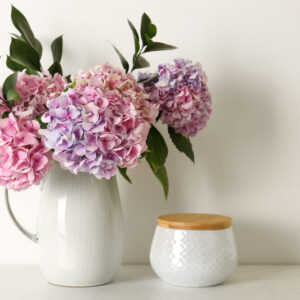
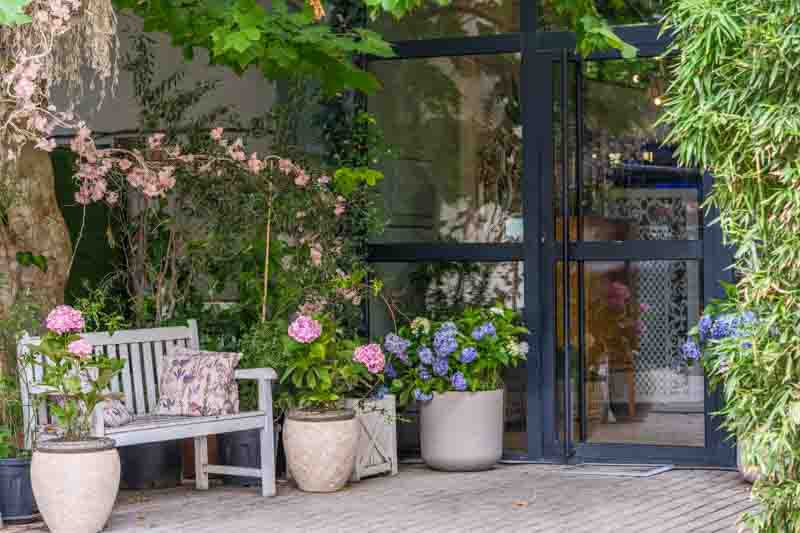
Transform your patio or balcony with beautiful potted hydrangeas. Discover compact varieties that thrive in containers, choose the right pot and growing mix, and learn when to water, fertilize, prune, and repot. Find practical winter protection advice to safeguard roots and flower buds for years of colorful summer blooms.
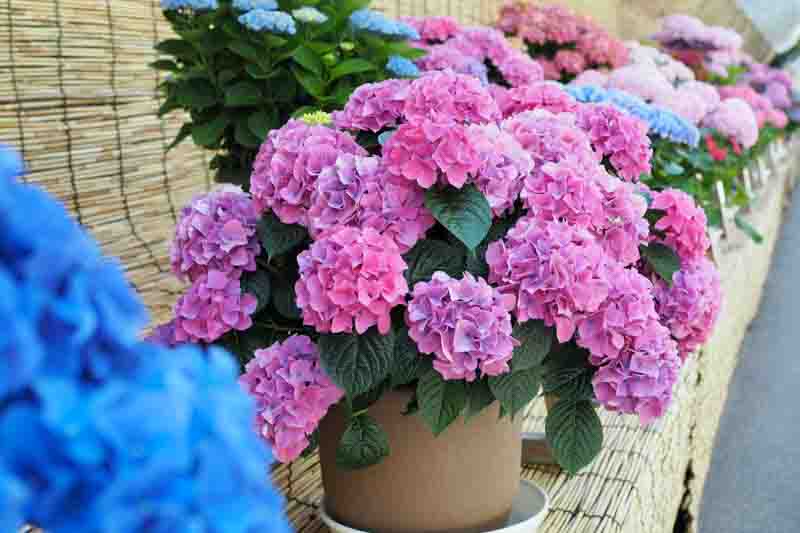


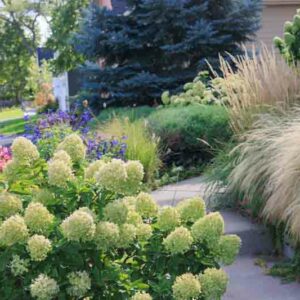
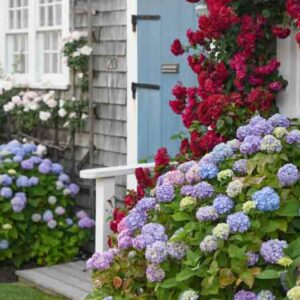
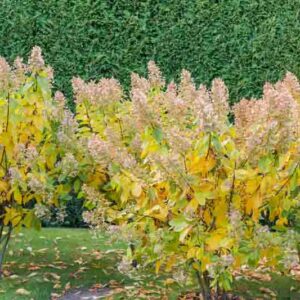
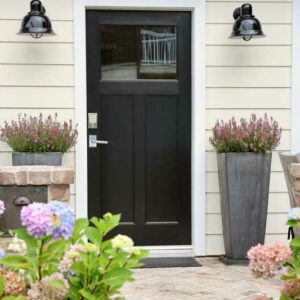
A hydrangea covered in flowers can transform a patio, terrace, or small courtyard. Imagine deep red mopheads beside a front door, clouds of white blooms on a sunny terrace, or an oakleaf hydrangea whose foliage turns burgundy in autumn.
You don’t need a large garden to enjoy them. Many hydrangeas grow beautifully in containers for years, provided you choose a suitable variety and understand how container growing changes their needs.
Potted hydrangeas dry out faster than those in the ground, their roots have less room to grow, and winter cold can damage a container plant that would survive comfortably in garden soil. But with the right pot, growing mix, and seasonal care, these beautiful shrubs can thrive for years.
Can hydrangeas grow permanently in pots? Yes. Compact Bigleaf, Mountain, Panicle, and selected Oakleaf Hydrangeas make excellent container plants.
For cold climates: Dwarf Panicle Hydrangeas are especially useful because they bloom on new growth, although their container roots still require protection.
Choosing the right cultivar is the most important decision. A hydrangea that eventually reaches eight feet tall may look charming in its nursery pot, but it won’t remain a practical balcony plant.
Look for compact growth, manageable mature width, suitable sunlight requirements, and a flowering habit that works in your climate.
| Hydrangea | Mature size (H x W) | USDA zones* | Why grow it in a pot? |
|---|---|---|---|
| Cityline Paris | 1-2 x 1-3 ft | 5-9 | Very compact; rich red mopheads with relatively stable color |
| Tuff Stuff | 2-3 x 2-3 ft | 5-9 | Delicate lacecaps, compact growth, reblooming potential |
| ‘Bobo’ | 2-3 x 3-4 ft | 3-8 | White-to-pink panicles, new-wood flowering, sunny patios |
| Little Lime | 3-5 x 3-5 ft | 3-8 | Generous lime-to-pink flowers for large terraces |
| BloomStruck | 3-4 x 4-5 ft | 4-9 | Reblooming blue, pink, or purple mopheads |
| ‘Ruby Slippers’ | 3-4 x 4-5 ft | 5-9 | White flowers aging ruby red; striking autumn foliage |
*USDA zones refer to plants growing in the ground. Exposed container roots may need considerably more winter protection.
For a small, partially shaded patio: Cityline Paris is an excellent choice. Its deep red flowers largely retain their color regardless of soil acidity, unlike many blue-and-pink Bigleaf varieties. Tuff Stuff offers a softer effect with delicate lacecaps and potential reblooming.
For a sunnier terrace: ‘Bobo’ produces masses of white flowers that gradually turn pink. Because it blooms on new wood, winter damage to old stems is less likely to prevent flowering. Little Lime offers a similar effect on a larger shrub.
For a spacious patio: BloomStruck provides colorful reblooming mopheads, while ‘Ruby Slippers’ combines summer flowers and outstanding autumn foliage. Both need substantial containers.
Compare mature size, hardiness, flower characteristics, and sunlight needs in Gardenia’s plant profiles before choosing a cultivar and its pot.
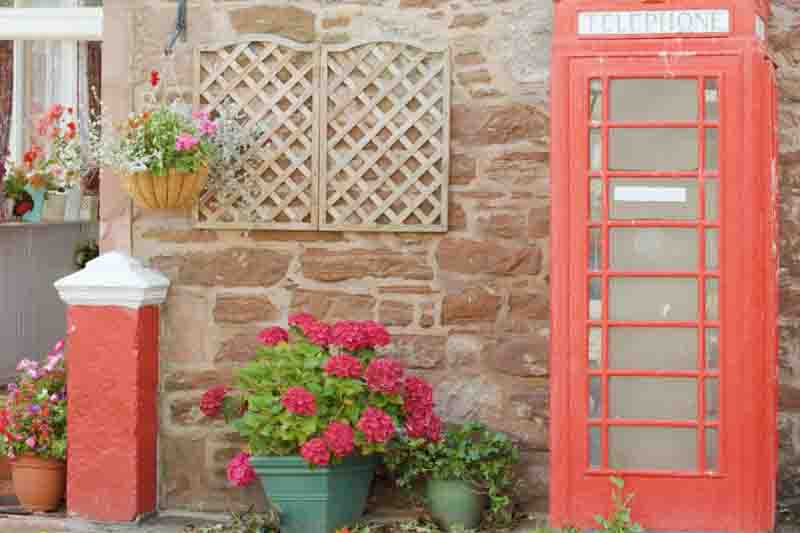
A generous container holds more moisture, gives roots room to grow, and moderates temperature changes. But putting a tiny nursery plant straight into an enormous pot can leave too much surrounding compost wet for too long.
When potting on, choose a container approximately 2-4 inches (5-10 cm) wider than the root ball. Increase the size gradually. Established compact hydrangeas often benefit from containers around 18-24 inches (45-60 cm) across, while larger cultivars may need considerably more room.
Choose a sturdy, sufficiently deep pot with drainage holes. Broad containers are particularly helpful for top-heavy shrubs and windy balconies.
Terracotta has a traditional appearance but dries quickly and may crack during freezing weather unless frost-resistant. Glazed ceramic retains moisture better but can be heavy. Resin or plastic is practical when pots need moving, although dark-colored containers can heat up in direct sun. Wooden planters offer generous space and some insulation when properly constructed.
Avoid gravel drainage layers. Stones at the bottom of a pot do not improve drainage through the potting mix and reduce usable root space. Use a freely draining mix and unobstructed drainage holes instead.
Hydrangeas need a growing medium that retains moisture without becoming waterlogged. Ordinary garden soil can compact inside containers, so choose quality outdoor potting mix containing ingredients such as composted bark, coir or peat, and perlite.
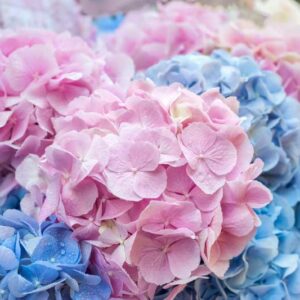
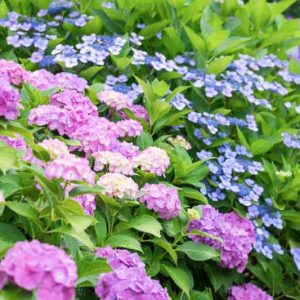
Some Bigleaf and Mountain Hydrangeas produce blue or pink flowers depending on growing-medium acidity and aluminum availability. However, white and genetically fixed-colored varieties generally do not change color in the same way. See Gardenia’s Hydrangea Flower Color Guide for details.
Spring or early fall usually provides comfortable planting conditions. A thin layer of fine bark mulch helps reduce evaporation, but keep mulch away from the woody stems.
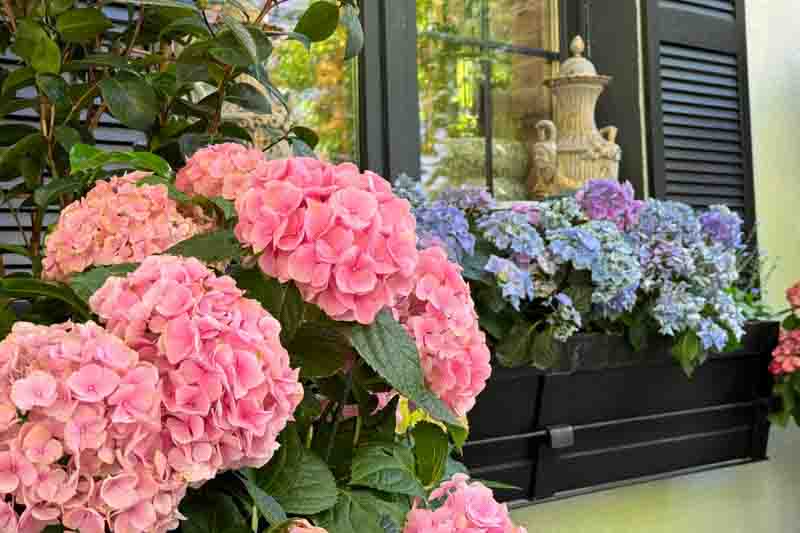
Hydrangeas growing in containers respond quickly to heat and moisture changes because their roots cannot reach beyond the pot.
Bigleaf and Mountain Hydrangeas generally appreciate morning sunshine and afternoon shade, particularly in hot regions. Panicle Hydrangeas such as ‘Bobo’ tolerate more sun, provided their roots receive adequate moisture. Oakleaf Hydrangeas often perform well in partial shade.
A west-facing terrace can become extremely hot when paving and walls reflect afternoon sunshine. Moving a sensitive hydrangea to a more sheltered position may work better than simply increasing watering.
There is no universal schedule. A small terracotta pot may need daily watering during a heatwave, while a large container in a cool courtyard can remain moist for several days.
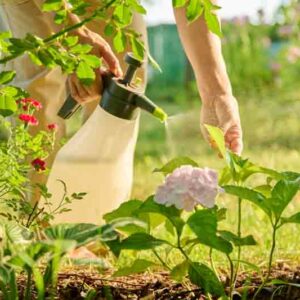
Check the growing medium an inch or two below the surface. When the upper layer begins drying, water slowly and thoroughly until excess water drains from the bottom. Never leave the pot standing permanently in water.
Temporary afternoon wilting does not always indicate dry roots. If leaves recover in the evening and the potting mix remains moist, additional water may not be necessary. Persistent wilting in wet soil can indicate root damage or drainage problems.
Gardenia’s watering rule: Water according to moisture inside the container, not the calendar. Check more frequently during hot, windy weather and reduce watering during cool or rainy periods.
Container hydrangeas may need occasional feeding as nutrients in the potting mix become depleted. If the compost already contains slow-release fertilizer, take that into account before applying more.
Feed modestly during active spring or early-summer growth when necessary, following the product label. Avoid excess nitrogen, which encourages foliage, and don’t assume high-phosphorus bloom boosters will correct poor flowering.
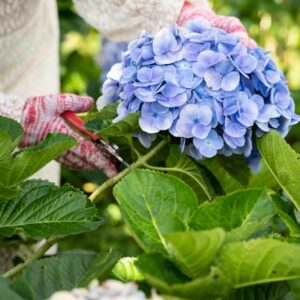
Pruning depends on the hydrangea’s flowering habit, not whether it grows in a pot.
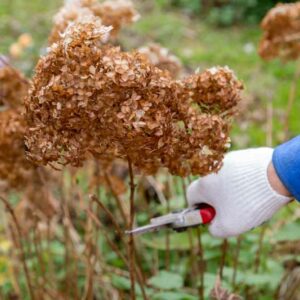
Panicle and Smooth Hydrangeas bloom on new wood and can generally be pruned in late winter or early spring. Traditional Bigleaf, Mountain, and Oakleaf Hydrangeas flower mainly on old wood, so avoid removing healthy stems in fall or early spring.
Deadheading can improve appearance, especially on patios, but does not make a once-flowering variety bloom repeatedly.
For detailed instructions, see Gardenia’s Hydrangea Pruning Guide.
Repot when roots fill the container, water passes rapidly through a dense root ball, or the growing mix deteriorates. Early spring is often convenient.
Move into a moderately larger pot with fresh growing medium. Mature plants may tolerate careful root maintenance, but if a hydrangea has outgrown the available space, planting it in the ground may be more practical than continually restricting its roots.
Yes, but a hydrangea’s USDA hardiness rating does not guarantee survival in an exposed container.
Roots growing underground benefit from insulation provided by surrounding soil. In a pot, they face much greater temperature fluctuations, particularly on raised decks, windy balconies, and during prolonged freezes.
For unprotected outdoor containers, choosing a variety rated roughly two USDA hardiness zones colder than your location is a useful conservative guideline. However, even a very hardy cultivar may need insulation during severe winter weather.
Winter protection involves two separate concerns: keeping the roots alive and preserving the flower buds needed for next summer.
Panicle Hydrangeas bloom on new growth, making them comparatively forgiving of winter stem damage. Traditional Bigleaf and Oakleaf Hydrangeas rely mainly on buds formed the previous season. Their roots may survive while freezing weather destroys the coming year’s flowers.
| Cultivar | Flowering wood | Winter priority | Flowering implication |
|---|---|---|---|
| ‘Bobo’ | New | Protect roots | Flowers develop on new shoots in summer |
| Little Lime | New | Protect roots; allow adequate pot space | Relatively forgiving of winter stem-tip injury |
| Cityline Paris | Mainly old | Protect roots and flower buds | Bud loss may prevent the main flowering display |
| BloomStruck | Old and new | Protect roots and older buds | Later flowers possible even after some bud loss |
| Tuff Stuff | Old and new | Protect roots and flowering stems | Reblooming depends on growing conditions |
| ‘Ruby Slippers’ | Old | Protect roots and established stems | Damaged buds can mean a flowerless season |
For cold-climate container gardeners: A compact new-wood flowering Panicle Hydrangea is often the simplest choice, provided its roots receive adequate winter protection. Bigleaf, Mountain, and Oakleaf varieties can be equally rewarding, but some require more attention to overwintered buds.
1. Move dormant plants into an unheated garage. A cool, protected location near freezing to approximately 40°F (4°C) often works well. This is a practical target, not a precise biological threshold. Avoid prolonged severe root freezing and excessive warmth that triggers early growth. Check moisture periodically; dormant plants must not dry out completely.
2. Insulate pots outdoors. Group containers in a sheltered location, protect their sides, and keep drainage holes unobstructed. In colder regions, burying pots in the ground and mulching around them can provide better insulation than leaving them exposed on a deck.
3. Leave suitable varieties outdoors in mild climates. Protect against exceptional freezes and ensure winter rain does not leave the potting mix saturated.
Important: Don’t overwinter dormant garden hydrangeas in a heated living room. They need a cool dormant period. For more detailed guidance, see Gardenia’s Hydrangea Winter Care Guide.
Return sheltered plants outdoors gradually, beginning in a protected location. Watch for late frosts, especially after buds begin swelling. Resume watering as growth increases, inspect the roots before fertilizing, and wait until spring growth reveals which stems survived before pruning questionable wood.
Container problems often develop quickly, but the growing conditions are usually easier to inspect and correct than those of a shrub planted in the ground.
| Symptom | Possible cause | What to check first |
|---|---|---|
| Frequent wilting | Dry roots, excessive heat, root damage | Root-zone moisture and sunlight |
| Yellow leaves | Poor drainage, nutrient imbalance, unsuitable pH | Moisture, roots, and water quality |
| Brown leaf edges | Heat, drought, excess fertilizer salts | Pot temperature and feeding history |
| Healthy leaves, no flowers | Pruning, winter bud injury, insufficient light | Flowering wood and winter exposure |
| Water runs straight through | Root-bound plant or dried, water-repellent mix | Root ball and repotting needs |
For leaf spots, fungal problems, and unexplained stem dieback, consult Gardenia’s Hydrangea Pests and Diseases Guide.
If your shrub looks healthy but doesn’t flower, the Why Is My Hydrangea Not Blooming? guide provides a detailed symptom-based diagnosis.
Find hydrangeas and companion plants suited to your hardiness zone, sunlight, soil moisture, and available space. Then organize your selections and check their growing requirements and mature spacing in Gardenia’s Garden Design Tool.
Yes. Compact hydrangeas can thrive in containers for years when provided with suitable potting mix, adequate root space, consistent watering, and winter protection. Periodic repotting or root maintenance may be necessary.
Naturally compact cultivars such as Cityline Paris, Tuff Stuff, and ‘Bobo’ are particularly useful. Little Lime, BloomStruck, and ‘Ruby Slippers’ also work in large containers where their mature dimensions can be accommodated.
For a young plant, choose a pot approximately 2-4 inches wider than the existing root ball. Established compact hydrangeas often benefit from containers 18-24 inches across or larger, depending on their size and root development.
Check the growing mix regularly and water thoroughly when its upper layer begins drying. Small pots may need daily watering during hot weather, while larger containers in sheltered conditions require less. Avoid permanently saturated soil.
In mild climates, many can remain outdoors. In colder areas, container roots need protection from severe freezing. Insulate the pot, bury it where practical, or overwinter dormant plants in a suitable unheated, sheltered location.
Yes, provided the garage remains cool enough for dormancy while protecting roots from prolonged severe freezing. Temperatures near freezing to around 40°F (4°C) are often useful. Check moisture periodically and avoid warm conditions that trigger early growth.
It depends on the variety and climate. Bigleaf and Mountain Hydrangeas often prefer morning sun and afternoon shade. Panicle Hydrangeas tolerate more sunlight but still need adequate root moisture, particularly during hot weather.
Common causes include pruning at the wrong time, winter flower-bud damage, insufficient sunlight, inconsistent watering, or excess nitrogen. Identify whether your cultivar blooms on old or new wood before choosing a remedy.
A beautiful potted hydrangea starts with the right variety. Match its mature size to your space, give its roots adequate room and moisture, and protect the plant appropriately through winter. With these essentials in place, hydrangeas can bring years of flowers and seasonal beauty to patios, terraces, and small gardens.
Updated and reviewed by Gardenia: October 2026
| Hardiness |
3 - 9 |
|---|---|
| Heat Zones |
1 - 9 |
| Plant Type | Shrubs |
| Plant Family | Hydrangeaceae |
| Genus | Hydrangea |
| Exposure | Full Sun, Partial Sun |
| Season of Interest | Spring (Late), Summer (Early, Mid, Late), Fall |
| Maintenance | Low |
| Water Needs | Average |
| Soil Type | Clay, Loam, Sand |
| Soil pH | Acid, Alkaline, Neutral |
| Soil Drainage | Moist but Well-Drained |
| Characteristics | Dried Arrangements, Cut Flowers, Showy |
| Attracts | Butterflies, Hummingbirds |
| Landscaping Ideas | Patio And Containers |
Create a membership account to save your garden designs and to view them on any device.
Becoming a contributing member of Gardenia is easy and can be done in just a few minutes. If you provide us with your name, email address and the payment of a modest $25 annual membership fee, you will become a full member, enabling you to design and save up to 25 of your garden design ideas.
Join now and start creating your dream garden!