What grows beautifully with dahlias? Discover 24 companion plants, from airy cosmos and colorful salvias to late-blooming perennials and ornamental grasses. Learn which combinations share similar growing conditions, how to arrange plants by height and season, and how to create stunning dahlia borders without overcrowding or competing roots.
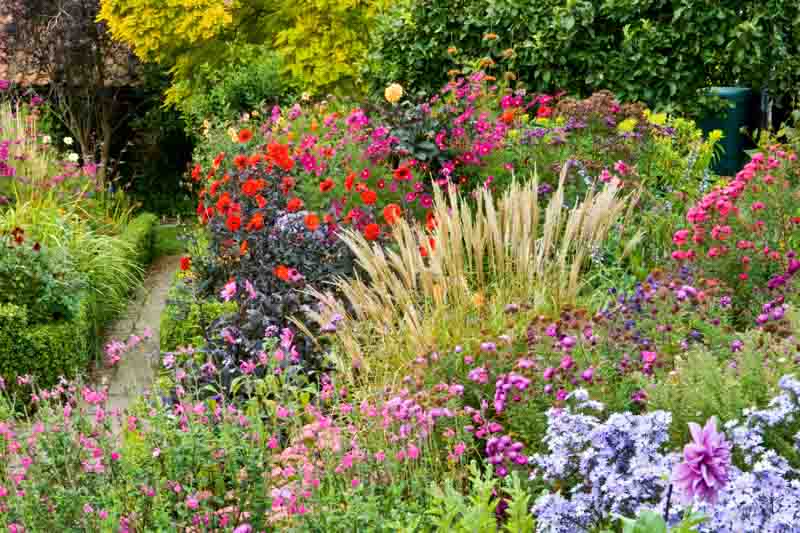


A single dinnerplate dahlia can dominate a flower border. Surround it with equally large blooms, and the planting may feel crowded. Pair it with airy cosmos, purple salvias, or fine-textured ornamental grasses, and suddenly the dahlia has room to shine.
Choosing the best companion plants for dahlias involves more than matching flower colors. The right neighbors should complement their generous blooms, flower at useful times, and grow comfortably alongside them without competing for sunlight, water, or space.
Some companions provide color while dahlia shoots are still developing. Others come into their own in late summer and fall, when dahlias are at their peak. And while a beautiful planting combination may look effortless, good spacing and compatible growing conditions make all the difference.
Explore 24 attractive dahlia companions, from annual flowers and perennials to ornamental grasses and compact border plants. Discover which pairings work best, what to avoid, and how to turn your favorite combination into a practical garden plan.
What are the best companion plants for dahlias?
Some of the most attractive companions include cosmos, zinnias, salvias, heleniums, echinaceas, asters, Verbena bonariensis, and selected ornamental grasses. They complement the bold flowers of dahlias with contrasting shapes, textures, and seasonal color.
For successful planting, match sunlight, drainage, moisture requirements, and mature sizes. Some visually attractive combinations need separate watering zones to thrive.
Dahlias generally grow best in full sun, fertile but well-drained soil, and consistent moisture during active growth. Although individual varieties differ, these requirements should guide your companion choices.
The best combinations balance three things: compatible growing conditions, complementary flower shapes, and enough space for every plant to develop.
For example, heleniums can work beautifully with dahlias in a sunny border receiving regular moisture. Lavender offers an attractive contrast but prefers considerably drier conditions, making it better suited to a separate section of the garden.
Before recreating a beautiful planting combination, use these six checks to decide whether the plants will work in your own garden.
| What to check | Why it matters | What to do |
|---|---|---|
| Sunlight | Dahlias flower best with plenty of direct sun. | Avoid companions that will eventually cast dense shade. |
| Soil drainage | Dahlia tubers can decay in persistently saturated soil. | Choose well-drained planting sites and avoid bog-loving companions. |
| Water needs | Some attractive partners prefer much drier conditions. | Group plants with similar irrigation requirements. |
| Mature size | Crowding reduces airflow and makes maintenance difficult. | Allow for mature height and spread, not planting size. |
| Flowering season | Not every companion blooms at the same time as dahlias. | Choose overlapping bloom periods or deliberate succession. |
| Regional suitability | Hardiness, heat tolerance, and invasive behavior vary. | Check local growing conditions and restrictions. |
Will Your Dahlia Companions Grow Well Together?
A beautiful pairing isn’t always a compatible one. Find plants for your sunlight, soil, and water needs, then check their compatibility, mature sizes, and seasonal interest before planting.
Annuals are particularly useful in dahlia gardens because they offer flexibility. You can experiment with different color combinations each year, fill gaps while dahlias establish, and enjoy flowers well into fall.
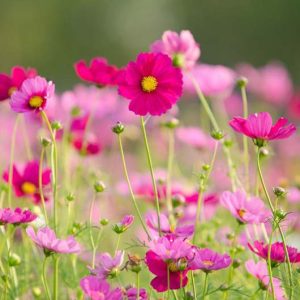
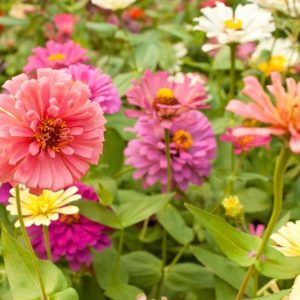
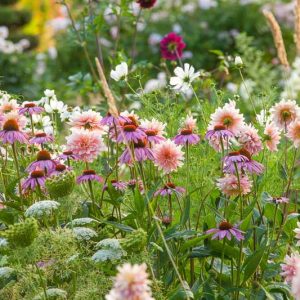
For a relaxed cottage garden, the feathery foliage of cosmos and delicate white umbels of Ammi majus provide contrast with large dahlia flowers. Zinnias and globe amaranth bring stronger blocks of color, while flowering tobacco and cleome add a different silhouette.
Explore these annuals for sunny mixed borders and cutting gardens. Check their mature heights carefully: cosmos and cleome can become much taller than their young plants suggest, while Ammi majus requires local screening for self-seeding and weed concerns.
| Hardiness |
8 - 11 |
|---|---|
| Heat Zones |
1 - 11 |
| Climate Zones | 1, 1A, 1B, 2, 2A, 2B, 3, 3A, 3B, 4, 5, 6, 7, 8, 9, 10, 11, 12, 13, 14, 15, 16, 17, 18, 19, 20, 21, 22, 23, 24 |
| Plant Type | Bulbs, Perennials |
| Plant Family | Asteraceae |
| Genus | Dahlia |
| Exposure | Full Sun |
| Season of Interest | Summer (Early, Mid, Late), Fall |
| Maintenance | Average |
| Water Needs | Average |
| Soil Type | Clay, Loam, Sand |
| Soil pH | Acid, Alkaline, Neutral |
| Soil Drainage | Moist but Well-Drained |
| Characteristics | Cut Flowers, Showy |
| Attracts | Butterflies |
| Landscaping Ideas | Beds And Borders, Patio And Containers |
| Garden Styles | City and Courtyard, Cutting Garden, Informal and Cottage |
✓ Design tip: Use airy annuals between groups of dahlias rather than packing them tightly around each tuber. Cosmos can rise between taller cultivars, while lower-growing zinnias and gomphrena provide color closer to the front of the border.
For a cutting garden, combine dahlias with annuals that provide complementary flower shapes and usable stems. Explore Gardenia’s Best Dahlias for Cutting to choose varieties for bouquets and arrangements.
Perennials bring continuity to a dahlia border. Their established clumps provide structure and often flower before the first dahlias open, carrying the display from early summer into autumn.
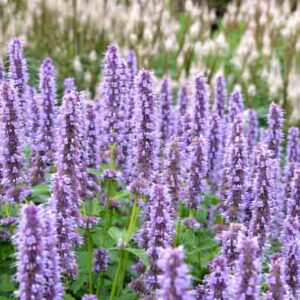
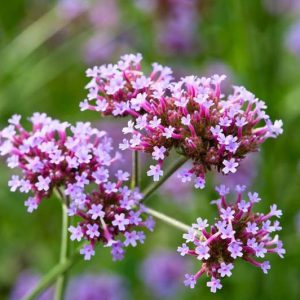
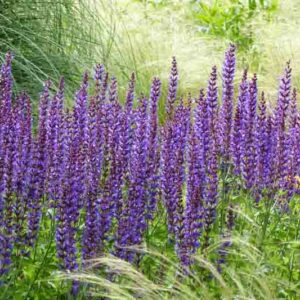
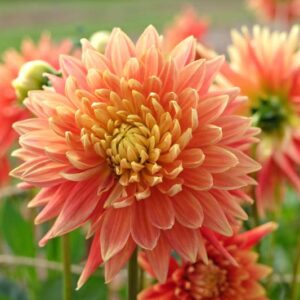
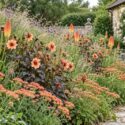
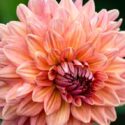
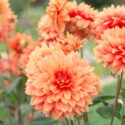
One particularly effective combination is a warm apricot dahlia surrounded by purple salvia and airy Verbena bonariensis. The cool flower colors highlight the dahlia’s warmth, while the smaller blooms prevent the design from feeling heavy.
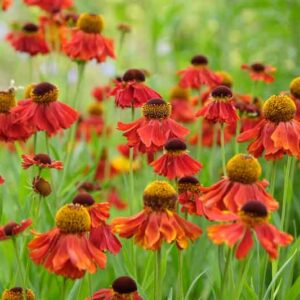
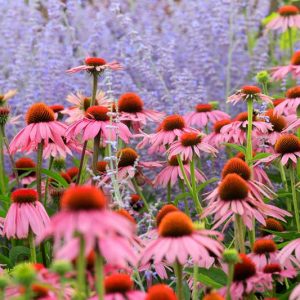
Not every perennial has identical moisture needs. Heleniums appreciate consistent moisture, while echinaceas and agastache generally tolerate somewhat drier conditions once established.
These selections offer contrasting flower shapes, long seasonal interest, and attractive planting possibilities. Choose specific cultivars for the mature sizes and watering conditions of your border.
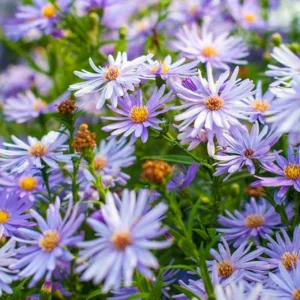
One combination worth trying: Helenium ‘Moerheim Beauty’ with orange-red dahlias creates a rich late-summer display, while lavender-blue asters can soften the effect as autumn approaches.
Allow enough room for clumping perennials to expand. Verbena bonariensis can also self-seed readily and may be unsuitable in certain regions.
For many more choices, visit Great Perennial Plants to Grow with Your Favorite Dahlias, which explores a wider range of flowering partners.
Do perennial companions protect dahlias from pests? A diverse garden may support beneficial insects, but no companion reliably prevents aphids, slugs, beetles, or fungal diseases. Choose plants for their proven ornamental and growing qualities, and manage pests according to the actual problem.
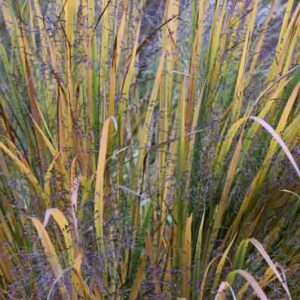
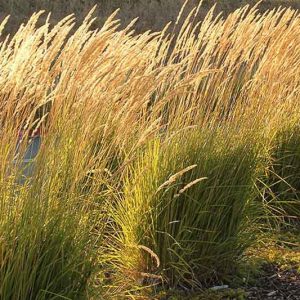
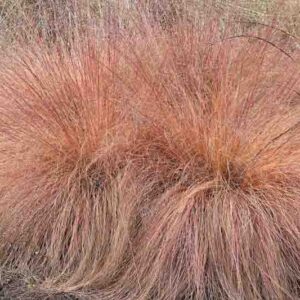
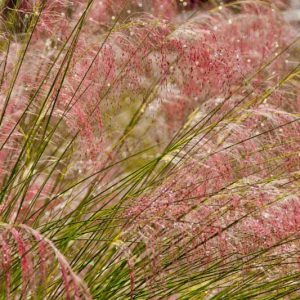
Ornamental grasses can transform a dahlia border. Their slender leaves and airy seedheads contrast with the broad, colorful blooms, while their movement brings the planting to life.
Some grasses provide architectural vertical lines; others form soft mounds or clouds of late-season flowers. The trick is choosing grasses that suit the garden’s climate and moisture conditions, rather than selecting them solely for their appearance.
The first three selections below are particularly useful starting points for sunny mixed borders in suitable climates. The remaining three are more drought-adapted and generally work best where their irrigation can be managed separately.
| Grass | Watering consideration |
|---|---|
| Panicum ‘Northwind’ | Adaptable in well-drained soil; suitable for many sunny mixed borders. |
| Calamagrostis ‘Karl Foerster’ | Appreciates regular moisture, especially in cooler climates. |
| Molinia caerulea | Prefers moist but drained conditions and performs best in suitable cooler climates. |
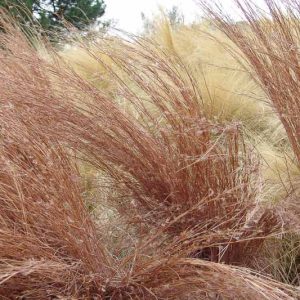
| Sporobolus, Muhlenbergia, Schizachyrium | Generally more drought-adapted once established; avoid excessive irrigation. |
Regional suitability matters. Molinia and feather reed grass may struggle in very hot climates, while little bluestem and pink muhly grass are often better suited to sunny, well-drained, relatively dry planting areas. Select appropriately sized cultivars, and check local guidance for invasive or self-seeding behavior.
For more options and planting inspiration, explore Great Ornamental Grasses to Grow with Your Favorite Dahlias.
In a small garden, restraint often produces a more beautiful result than abundance. One compact dahlia surrounded by low-growing flowers can be more effective than several large varieties competing for space.
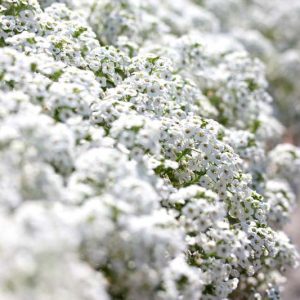
Choose companions with manageable mature dimensions, especially for narrow borders and patio containers. Blue-flowered salvias bring contrast, low zinnias add cheerful color, and sweet alyssum softens the planting edge.
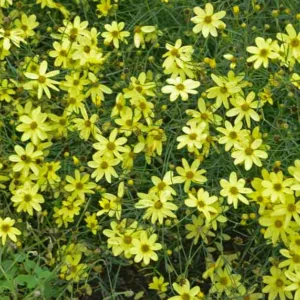
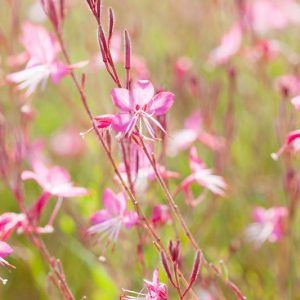
These plants offer different effects, from low floral cushions to slender, airy stems. Gaura and threadleaf coreopsis prefer particularly good drainage and often less summer irrigation than dahlias, so position them accordingly.
✓ Small-garden tip: For containers, pair one compact dahlia with one or two suitable companions instead of overcrowding the pot. Make sure the container has adequate drainage and enough root space for all its occupants.
Browse Best Dahlias for Containers and Low Borders to find compact varieties for smaller spaces.
There is no universal list of plants that must never grow near dahlias. The problems arise when neighboring plants compete too aggressively or require very different conditions.
Even a suitable companion can cause trouble when planted too closely. Mature height and spread are more useful indicators than a plant’s size at the nursery.
Begin with the dahlias you want to feature. A border with three large decorative dahlias needs a different arrangement from one filled with compact, single-flowered varieties.
For island beds viewed from several sides, position taller plants toward the center instead.
Many medium-sized dahlias need approximately 18-24 inches (45-60 cm) of spacing, while large, vigorous varieties often benefit from 24-36 inches (60-90 cm). Compact dahlias may be planted closer, depending on the cultivar.
These are general guidelines, not universal planting distances. Check individual plants and allow space for their companions, too.
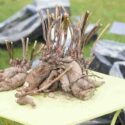
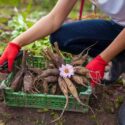
If you dig up dahlia tubers for winter storage, leave enough access to lift them without damaging established perennial roots.
Choose companions that create color before, during, and after the main dahlia display. Salvias and many annuals can begin flowering earlier, while asters and ornamental grasses often add interest into fall.
Flowering seasons vary by climate. For a more accurate plan, compare the seasonal-interest information for your specific plant selections.
Choosing companions becomes much easier when you can see complete planting schemes. The following designs show how color, flower shape, and plant height work together.
The first three are based on existing Gardenia garden combinations. The final two offer additional ideas you can adapt to your own conditions.
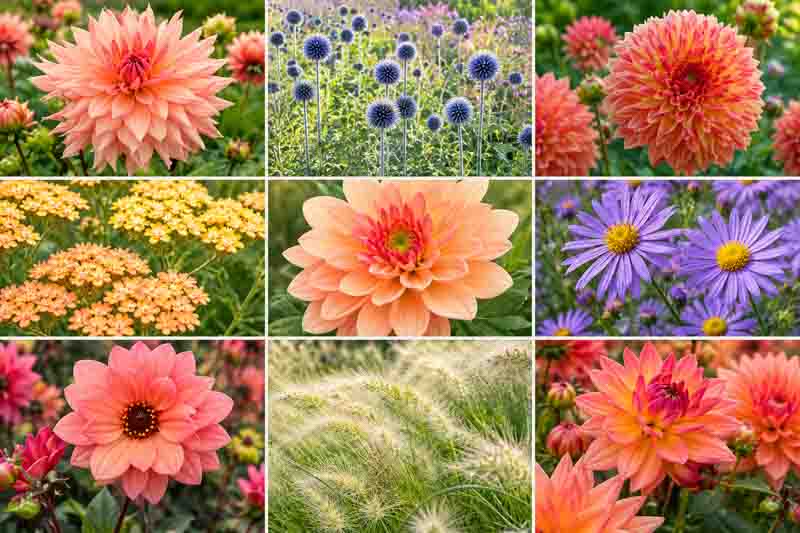
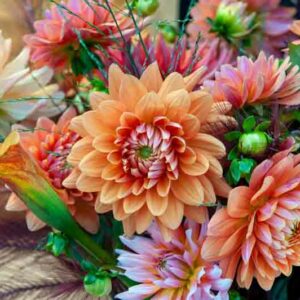
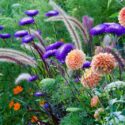
The plants: Dahlias ‘Apricot Desire’, ‘Bishop of Oxford’, ‘Melody Dora’, ‘Puerto Rico’, and ‘Surprise’, with asters, yarrow, globe thistle, and feathertop grass.
Why it works: Warm coral and apricot dahlias stand out against cool blue and violet flowers. Globe thistle contributes a striking spherical shape, while asters create a softer late-season display.
What to check: Mature spacing and moisture requirements, particularly for the grasses and globe thistle. Feathertop grass may be invasive in some regions and should not be copied automatically.
Explore Gardenia’s Coral and Blue Dahlia Garden to see the actual plant selections.
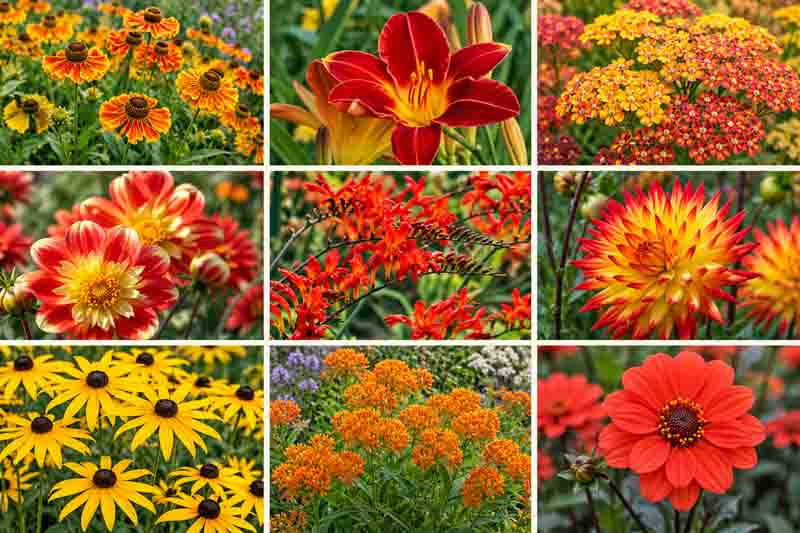
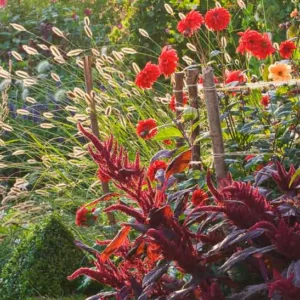
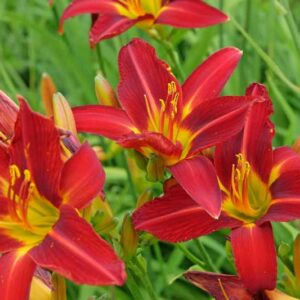
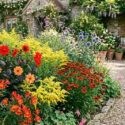
The plants: Dahlias ‘Bishop of Llandaff’, ‘Bridge View Aloha’, and ‘Pooh’, combined with yarrow, crocosmia, helenium, daylilies, rudbeckia, and wallflowers.
Why it works: Different shades of red, orange, and gold create a warm, energetic display. The flower forms provide enough variation to keep the border interesting, while the perennials contribute texture and seasonal continuity.
What to check: Allow room for clumping perennials and consider the spread of crocosmias. Some species and cultivars can become vigorous in favorable climates.
Explore Gardenia’s Hot-Color Dahlia Garden for the complete combination.
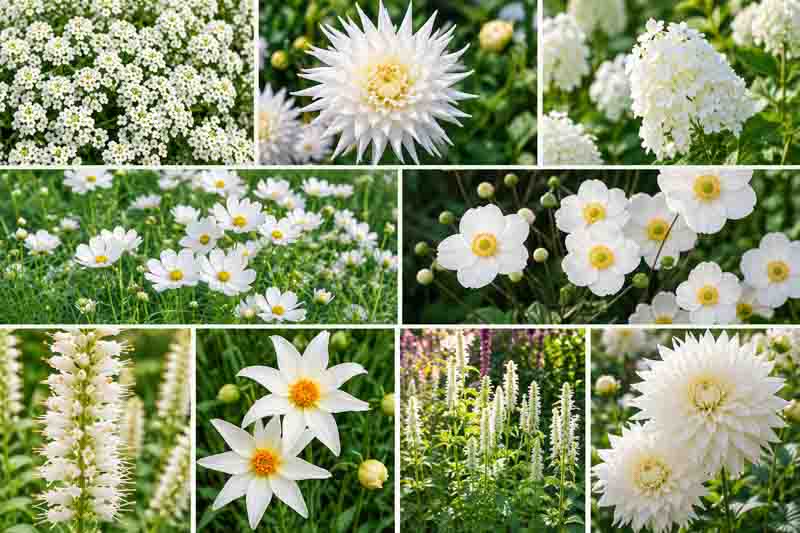
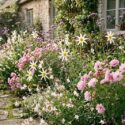
The plants: Dahlias ‘My Love’, ‘Honka White’, and ‘Verda’, with white cosmos, sweet alyssum, Korean mint, Japanese anemones, garden phlox, and Culver’s root.
Why it works: White flowers in different shapes and sizes create a rich planting without relying on contrasting colors. Fine cosmos foliage and upright Culver’s root bring structure, while the dahlias supply generous flowers.
What to check: Moisture preferences vary, and some perennial companions may need more summer water than others. Confirm suitable growing conditions before recreating the design.
See Gardenia’s White Dahlia Garden for the full plant list and planting inspiration.
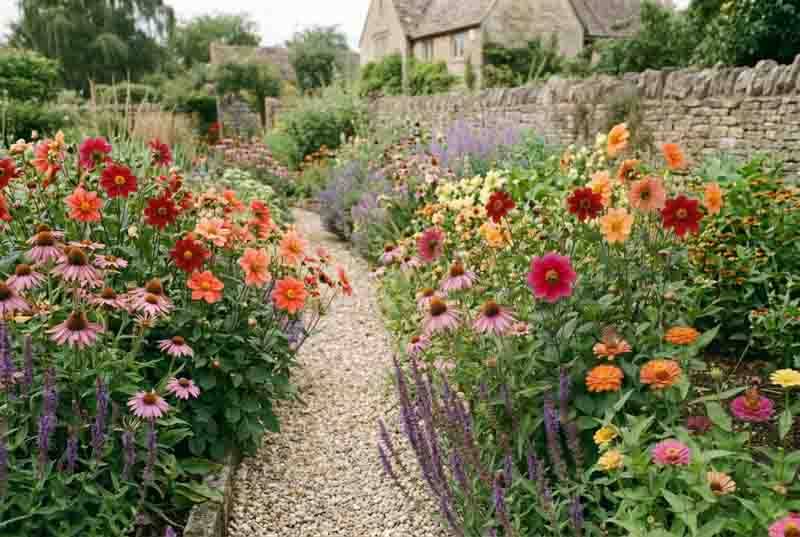
Try: Single-flowered dahlias with Echinacea purpurea, Agastache foeniculum, Salvia nemorosa, and open-centered zinnias.
Why it works: Different flower forms provide accessible feeding opportunities for pollinating insects. A succession of flowers can extend available nectar and pollen through summer and autumn.
What to check: Agastache and echinacea are generally more tolerant of dry conditions once established than actively growing dahlias. Avoid excessive irrigation around their crowns.
For dahlia choices, explore Bee-Friendly Dahlia Flowers.
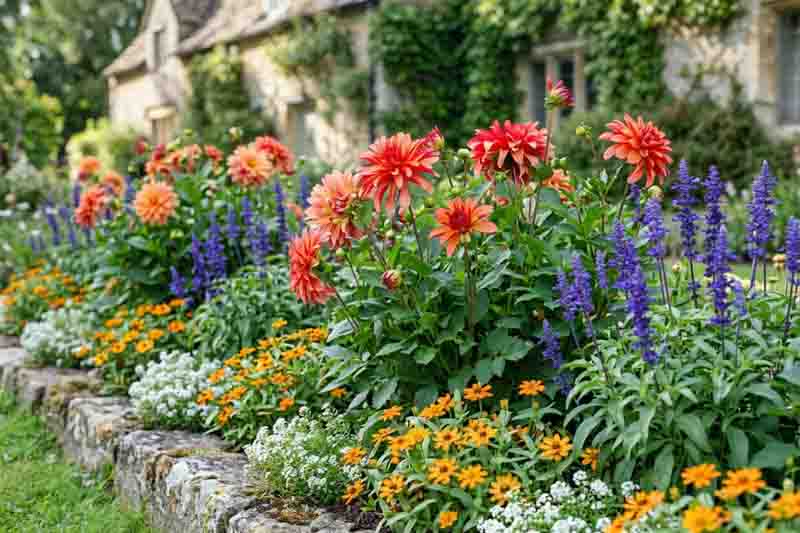
Try: Compact dahlias with Salvia farinacea ‘Victoria Blue’, Zinnia angustifolia, and sweet alyssum.
Why it works: Purple-blue spikes contrast with rounded dahlia blooms, while low-growing zinnias and alyssum fill the foreground without visually overwhelming the planting.
What to check: Choose genuinely compact dahlia cultivars and give each plant sufficient root space. In containers, simplify the combination to prevent overcrowding.
See Gardenia’s Small Cottage Garden with Dahlias, Zinnias and Alyssum for the full plant list and planting inspiration.
For more possibilities, browse Gardenia’s Dahlia Garden Combinations or compare individual dahlia varieties.
A beautiful planting combination is a starting point, not a guarantee that every plant will thrive in your own garden. Local conditions, available space, and mature growth habits all matter.
Begin with Gardenia’s Dahlia Plant Collection to select your favorite varieties, then choose companion plants that provide complementary colors, shapes, and flowering seasons.
Next, review their growing conditions and mature sizes before deciding how many plants to buy. Gardenia’s Design Tool helps you work through these decisions and prepare a practical planting plan.
A beautiful combination isn’t necessarily a compatible one. Choose your favorite dahlias and companion plants, then use Gardenia to check sunlight, soil, drainage, water requirements, mature sizes, and seasonal interest. Estimate planting quantities and prepare your shopping list. Start free with up to five plants.
For seasonal care, visit How to Grow and Care for Dahlias. For planting dates, see When to Plant Dahlia Tubers by USDA Zone. If your plants are healthy but not flowering, consult Why Are My Dahlias Not Blooming?.
Good companions include cosmos, zinnias, salvias, heleniums, echinaceas, asters, and selected ornamental grasses. Choose plants with compatible sunlight, moisture, drainage, and mature-size requirements rather than selecting by flower color alone.
Airy cosmos, tall verbena, purple salvias, and fine-textured grasses provide beautiful contrast with large dahlia blooms. Zinnias, heleniums, and asters offer stronger color combinations for sunny summer and autumn borders.
Yes, but their watering requirements differ. Lavender prefers relatively dry, sharply drained soil, while actively growing dahlias generally require more regular moisture. Place them in separate irrigation zones rather than giving both identical watering.
Yes. Dahlias can extend the summer and autumn display in a sunny rose border. Allow adequate space for airflow, root development, and maintenance, and avoid planting tubers directly against established rose crowns.
Echinacea, agastache, salvias, asters, cosmos, and open-centered zinnias are useful choices. Include single or other accessible-centered dahlias and select flowering plants that provide nectar and pollen over an extended season.
Selected switchgrass, feather reed grass, and purple moor grass cultivars can complement dahlias in suitable climates. Prairie dropseed, little bluestem, and pink muhly grass are more drought-adapted and may benefit from separate irrigation.
Compact salvias, narrowleaf zinnias, and sweet alyssum can complement smaller dahlias. Choose a generous container with adequate drainage and avoid overcrowding plants with different water and root-space requirements.
Avoid aggressive spreaders, dense plants that cast heavy shade, and species requiring permanently wet soil. Very drought-adapted plants may need separate watering. Check mature size and local suitability before planting.
Diverse plantings can support beneficial insects, but companion planting does not reliably prevent all dahlia pests. Regular inspection, suitable growing conditions, and targeted treatment remain important for aphids, mites, slugs, and other problems.
Place taller dahlias and structural plants toward the back of a one-sided border, medium-height companions through the middle, and compact plants at the front. Allow for mature dimensions, adequate airflow, and access if tubers must be lifted in fall.
Updated and reviewed by Gardenia: October 2026
| Hardiness |
8 - 11 |
|---|---|
| Heat Zones |
1 - 11 |
| Climate Zones | 1, 1A, 1B, 2, 2A, 2B, 3, 3A, 3B, 4, 5, 6, 7, 8, 9, 10, 11, 12, 13, 14, 15, 16, 17, 18, 19, 20, 21, 22, 23, 24 |
| Plant Type | Bulbs, Perennials |
| Plant Family | Asteraceae |
| Genus | Dahlia |
| Exposure | Full Sun |
| Season of Interest | Summer (Early, Mid, Late), Fall |
| Maintenance | Average |
| Water Needs | Average |
| Soil Type | Clay, Loam, Sand |
| Soil pH | Acid, Alkaline, Neutral |
| Soil Drainage | Moist but Well-Drained |
| Characteristics | Cut Flowers, Showy |
| Attracts | Butterflies |
| Landscaping Ideas | Beds And Borders, Patio And Containers |
| Garden Styles | City and Courtyard, Cutting Garden, Informal and Cottage |
Create a membership account to save your garden designs and to view them on any device.
Becoming a contributing member of Gardenia is easy and can be done in just a few minutes. If you provide us with your name, email address and the payment of a modest $25 annual membership fee, you will become a full member, enabling you to design and save up to 25 of your garden design ideas.
Join now and start creating your dream garden!