When do hydrangeas bloom, and which varieties flower the longest? Explore a month-by-month calendar for bigleaf, panicle, smooth, oakleaf, mountain, and climbing hydrangeas. Discover how climate affects flowering, compare popular cultivars, and learn to combine early, midsummer, and late-blooming varieties for a beautiful display from spring through fall.
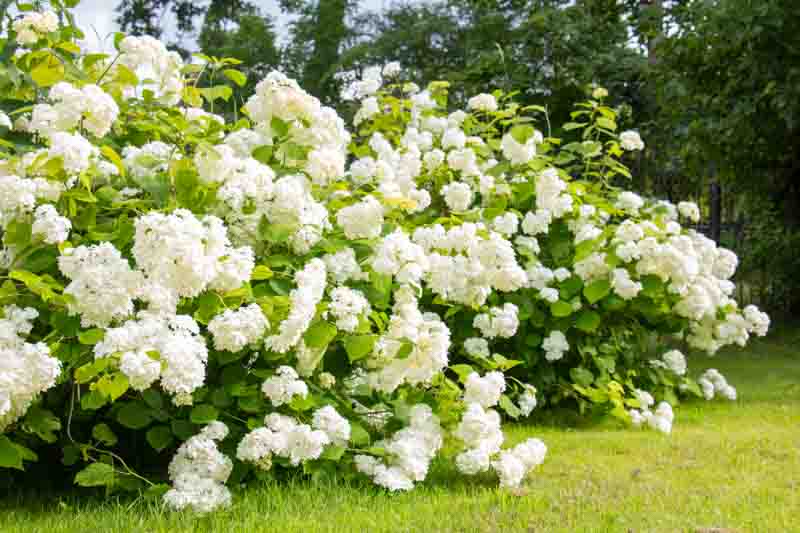


When do hydrangeas bloom? The answer might be May, June, July, or even August, depending on which hydrangea you grow and where you garden.
Some hydrangeas open their first flowers in late spring, just as the garden settles into its summer colors. Others wait until midsummer, when their enormous flower heads take center stage. And certain varieties remain attractive well into autumn, gradually changing from white or green to shades of pink, rose, and burgundy.
But there’s an important difference between a hydrangea producing fresh flowers and its existing blooms remaining colorful for months. Understanding that distinction, along with the flowering habits of the six main hydrangea types, makes it much easier to plan a beautiful, long-lasting display.
Whether you’re wondering when your own hydrangea will flower or choosing varieties for a new border, Gardenia’s bloom calendar and cultivar comparison will help you find the right plants for your climate and garden.
When is hydrangea blooming season?
Across much of the United States, hydrangeas begin flowering in late spring or early summer. Different species and cultivars extend the overall display through late summer, with some retaining colorful flower heads into fall.
Gardenia’s tip: Choose varieties by their actual flowering habits, not simply their species names. Even two Panicle Hydrangeas can begin blooming several weeks apart.
This flowering calendar shows the broad seasonal patterns of the six major hydrangea types in temperate Northern Hemisphere gardens. It is a planning reference, not a promise that every cultivar will bloom throughout the months shown.
Flowering often begins earlier in warm regions and later in northern gardens. Individual plants may have a much shorter principal bloom period than their species’ overall window.
| Hydrangea type | Apr | May | Jun | Jul | Aug | Sep | Oct |
|---|---|---|---|---|---|---|---|
| Climbing | – | ○ | ● | ● | – | – | – |
| Oakleaf | – | ○ | ● | ● | ◇ | ◇ | – |
| Mountain | – | ○ | ● | ● | ○ | ○ | – |
| Bigleaf | ○ | ○ | ● | ● | ○ | ○ | – |
| Smooth | – | ○ | ● | ● | ○ | ◇ | – |
| Panicle | – | – | ○ | ● | ● | ◇ | ◇ |
Calendar key: ● Common main flowering period across the group; ○ earlier or later flowering possible depending on climate and cultivar, including reblooming selections; ◇ mainly lingering or aging flowers that may remain ornamental; – not a usual flowering month.
How to interpret the chart: April flowering is possible for some Bigleaf Hydrangeas in very mild, warm locations, but it is not typical in most northern gardens. Similarly, colorful Panicle Hydrangeas in October are usually displaying mature flower heads rather than producing a fresh flush of blossoms.
Think of the calendar as a flowering sequence across varieties, not seven months of continuous blooms on one shrub.
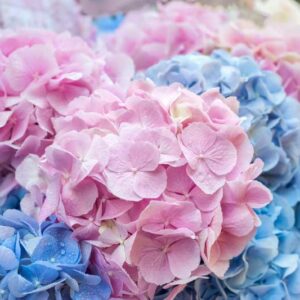
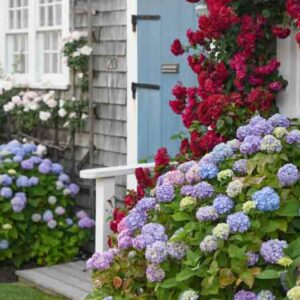
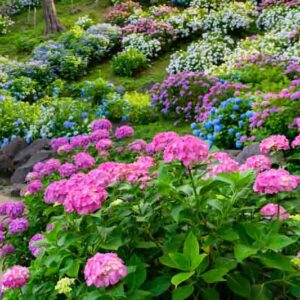
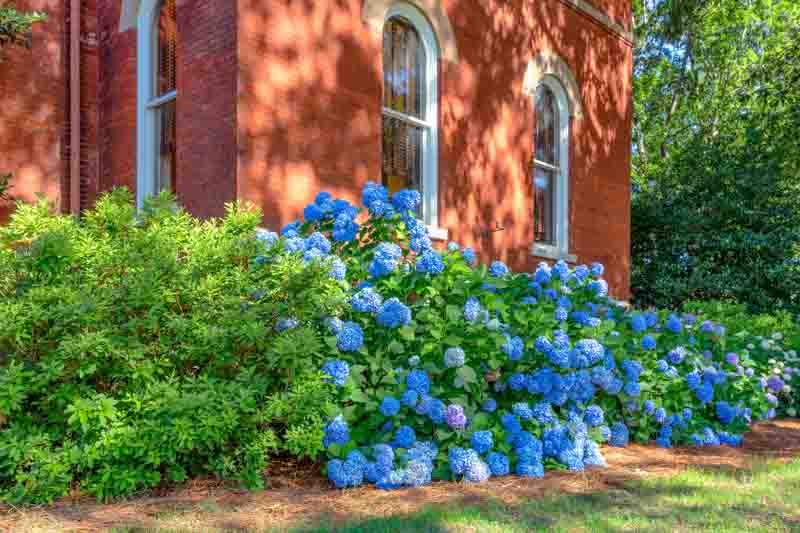
Hydrangea macrophylla produces the familiar rounded mopheads and elegant lacecaps in blue, pink, purple, red, or white. In many temperate gardens, flowers begin opening in June and reach their peak in early or midsummer. In warmer regions, flowering may begin considerably earlier.
Traditional cultivars such as ‘Nikko Blue’ bloom mainly on old wood, producing one principal annual display. Reblooming selections such as BloomStruck can develop flowers on both old and new growth, potentially extending fresh flowering later in summer.
How much rebloom occurs depends on the cultivar, the growing season, and plant health. A long period of hot weather may limit additional flowering.
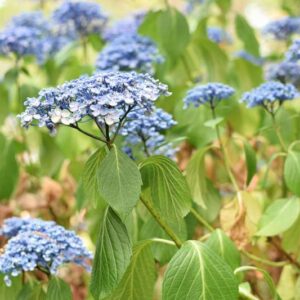
Hydrangea serrata generally flowers in early to midsummer, producing graceful lacecap flowers on compact shrubs.
‘Bluebird’ is a beautiful early-summer choice. Reblooming cultivars such as Tuff Stuff may develop additional lacecap flowers through summer and into early fall.
Mountain Hydrangeas are useful where space is limited, but cultivar-specific hardiness and exposure still matter. Some are more cold-tolerant than traditional Bigleaf Hydrangeas, although winter injury can still reduce the first flowering display.
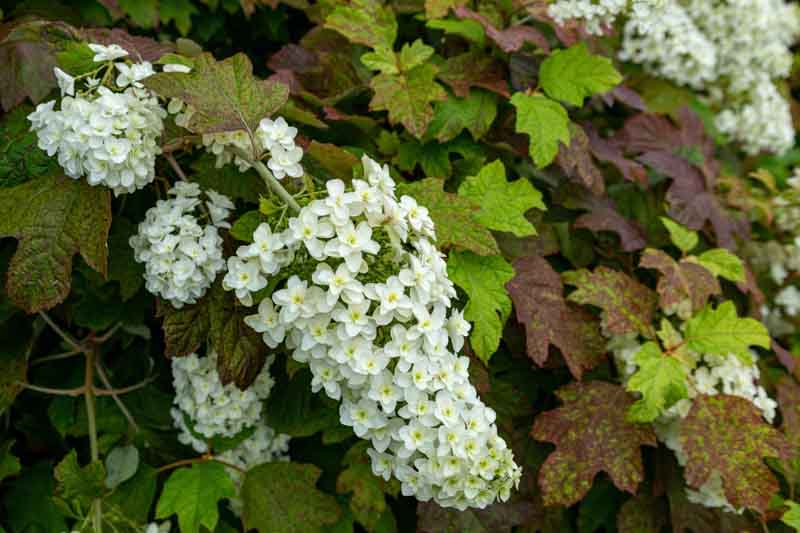
Among the earliest flowering shrub hydrangeas, Hydrangea quercifolia typically opens its elegant white flower cones in late spring or early summer.
‘Snow Queen’ produces handsome white flowers that gradually acquire pink tones. ‘Snowflake’, with its layered double florets, is particularly prized for its extended ornamental display.
Oakleaf Hydrangeas generally produce one main flush on old wood. Their later seasonal value comes from aging flowers and beautiful burgundy, crimson, or purple autumn foliage, not repeated flowering.
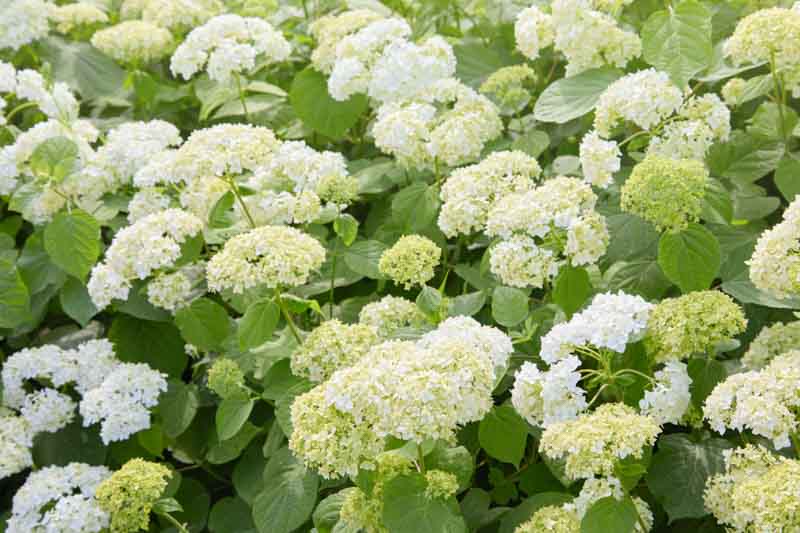
Hydrangea arborescens typically begins flowering in June or July in temperate gardens, although earlier or later flowering is possible.
‘Annabelle’ and Incrediball produce generous white flower clusters on current-season growth.
Because Smooth Hydrangeas bloom on new wood, their flowering is generally dependable in cold climates, even after severe winter temperatures. The fresh-flowering period is usually concentrated in summer, with flower heads remaining decorative as they gradually turn greenish or tan.
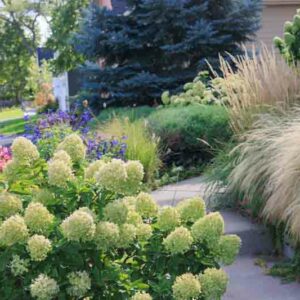
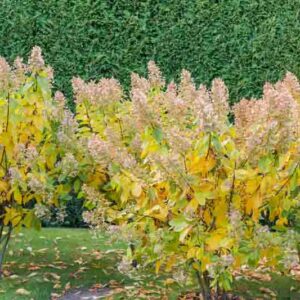
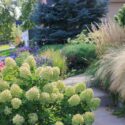
Hydrangea paniculata offers some of the best choices for later summer color. Its cone-shaped flowers generally begin creamy white, greenish white, or lime-tinted before developing pink or reddish tones.
Not all Panicle Hydrangeas start at the same time. Quick Fire is notably early and can flower weeks before later cultivars. ‘Limelight’ and compact ‘Bobo’ provide impressive displays through midsummer and late summer.
These hydrangeas bloom on new wood. Their mature flower heads often remain attractive well into fall, making the group especially useful for extending seasonal interest.
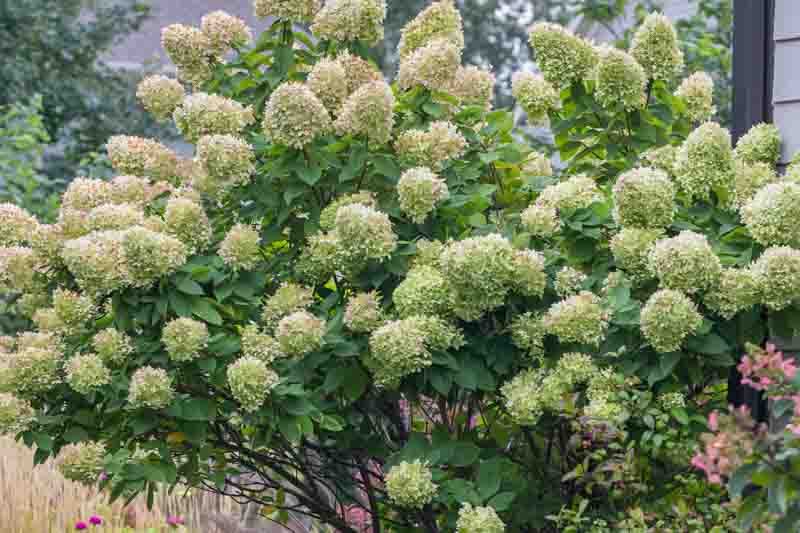 Limelight Hydrangea – Hydrangea paniculata
Hydrangea anomala subsp. petiolaris produces elegant, white lacecap flowers, commonly in June or July, although blooming may begin in May in milder regions.
Flowering is generally concentrated into one period. Young vines often take several years to establish before blooming freely, especially in heavy shade.
A mature Climbing Hydrangea can transform a substantial wall or sturdy arbor, providing flowers in early summer and attractive foliage and woody stems afterward.
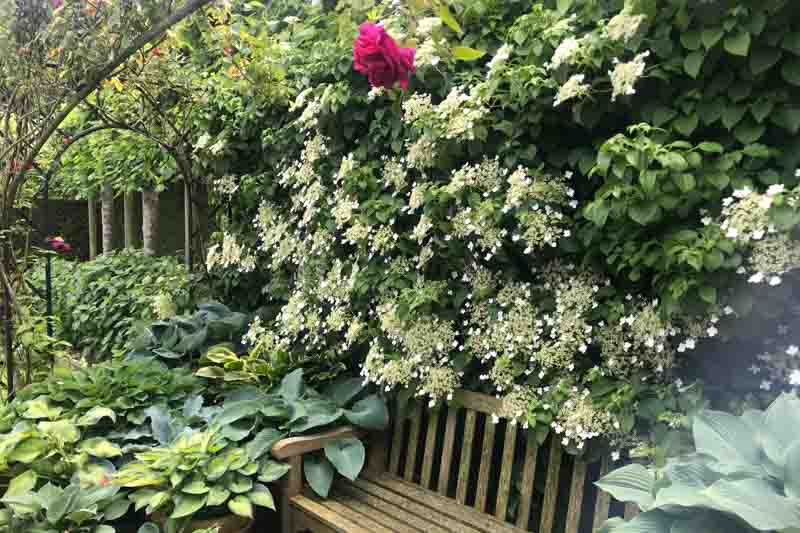 Climbing Hydrangea – Hydrangea anomala subsp. petiolaris
A hydrangea flowering in May in Georgia might not open its first flowers until July in Minnesota. Regional temperatures, spring development, exposure, and winter bud survival all influence the schedule.
USDA hardiness zones indicate average annual extreme minimum temperatures. They help determine winter survival but are not precise bloom-date calendars. Two gardens in the same zone can flower weeks apart.
| Climate or region | Typical pattern | Main consideration |
|---|---|---|
| Cold northern climates
Upper Midwest, northern New England |
Many varieties flower from June or July through late summer | Late springs and winter bud damage; Panicle and Smooth types often more reliable |
| Temperate climates
Mid-Atlantic and much of the central US |
Late May or June through summer, with later panicle color | Good opportunities for staggered flowering |
| Warm, humid climates
Southeastern US |
Early varieties may open in April or May; later types follow through summer | Summer heat, afternoon sun, and soil moisture affect flower longevity |
| Cool coastal climates
Pacific Northwest and coastal California |
Often a long ornamental season, but bloom onset can be delayed by cool springs | Fog, marine influence, and garden exposure |
| Hot inland climates
Inland California and warmer valleys |
Some varieties flower early, but extreme heat may shorten the best display | Afternoon shade, suitable cultivar choice, and consistent moisture |
Why your neighbor’s hydrangea may bloom first: Even nearby gardens can differ in sunlight, reflected heat, wind exposure, soil conditions, and cultivar selection. Compare the exact plant, not simply the local USDA zone.
Species-level calendars are useful, but choosing individual cultivars is the best way to plan a flowering sequence. Two hydrangeas of the same species can differ in bloom onset, mature size, and how long their flowers remain decorative.
This Gardenia selection reference separates the main flowering period from later seasonal interest. The dates are approximate for temperate Northern Hemisphere gardens and may shift with location.
| Variety | Typical main flowering | Later interest | Best reason to choose it |
|---|---|---|---|
| ‘Snow Queen’ | Late spring-early summer | Flowers age pink; rich autumn foliage | Early flowers and seasonal foliage |
| ‘Snowflake’ | Late spring-midsummer | Layered double flowers develop and age; autumn foliage | Extended oakleaf flower display |
| ‘Bluebird’ | Early summer | Aging lacecaps and autumn foliage | Compact, delicate flowers |
| ‘Nikko Blue’ | Early-midsummer | Existing flowers gradually fade | Classic blue mopheads in suitable soil |
| ‘Annabelle’ | Early-midsummer | Large flower heads age greenish and tan | Reliable new-wood flowering |
| Quick Fire | Early-midsummer | Flowers mature from white to pink-red | Earlier panicle flowering |
| ‘Bobo’ | Midsummer-late summer | White panicles age pink | Compact shrub for smaller sunny spaces |
| ‘Limelight’ | Midsummer-late summer | Large blooms age pink into fall | Substantial later-season display |
| BloomStruck | Summer | Potential new flower flushes on current growth | Reblooming blue, purple, or pink mopheads |
| Tuff Stuff | Summer | Potential additional lacecap flowers | Compact reblooming Mountain Hydrangea |
What makes these varieties different? Quick Fire brings the Panicle Hydrangea season forward. ‘Limelight’ provides a substantial later display. BloomStruck and Tuff Stuff can produce genuinely new flowers later in the growing season, while ‘Snow Queen’ and ‘Snowflake’ contribute aging blooms and autumn foliage after their main flowering period.
These differences matter more than simply labeling a shrub “long blooming.” They help you choose the kind of seasonal display you actually want.
Compare Gardenia’s individual Hydrangea varieties, then check hardiness, mature dimensions, sun exposure, and growing requirements before choosing plants for your border.
 Vanilla Strawberry Hydrangea – Hydrangea paniculata
Some hydrangeas appear to flower for months, but there are two very different reasons for that extended display.
Reblooming means a plant develops additional fresh flowers after its first flush. Certain Bigleaf and Mountain Hydrangeas can flower on both old and new growth, allowing later blossoms when conditions are favorable.
Long-lasting flower heads are different. Panicle and Oakleaf Hydrangeas often produce one principal flush whose flowers gradually change color, remaining attractive for many weeks afterward.
For repeated fresh flowers, consider BloomStruck, Endless Summer selections, or Tuff Stuff. For long-lasting summer-to-fall color, Panicle Hydrangeas such as ‘Limelight’, Quick Fire, and Pinky Winky are especially useful.
Oakleaf Hydrangea ‘Snowflake’ deserves mention for another reason: its intricate double flowers can develop progressively, creating a prolonged floral effect before the foliage turns colorful in autumn.
The apparent duration also depends on weather. Heat, drought, heavy rain, and strong winds may shorten the display, while moderate temperatures and consistent moisture often help flowers remain attractive longer.
Do hydrangeas bloom all summer? Some reblooming varieties can produce fresh flowers over much of the summer. Many other hydrangeas display beautiful aging flower heads for months without continuously opening new blooms. Knowing which effect you want makes cultivar selection much easier.
For a long hydrangea season, the most dependable strategy is to combine varieties with complementary bloom times instead of relying on one shrub to flower continuously.
Picture a generous border with Oakleaf Hydrangeas opening first, classic mopheads taking over in early summer, and Panicle Hydrangeas gradually turning rosy pink as autumn approaches.
Gardenia’s three-stage example provides a starting point:
| Season | Variety | What it contributes |
|---|---|---|
| Late spring-early summer | ‘Snow Queen’ | White flower clusters and striking foliage |
| Early-midsummer | ‘Nikko Blue’ | Classic blue mophead flowers where soil chemistry is suitable |
| Midsummer-fall | ‘Limelight’ | Large flower cones that gradually become pink |
One important consideration: This is a flowering sequence, not a recommendation to plant all three shrubs in identical conditions. ‘Nikko Blue’ usually appreciates afternoon shade, while ‘Limelight’ generally flowers best with more sunshine.
A spacious border with varying light exposure may accommodate both. In a small, uniformly shaded garden, a different selection may be more appropriate.
Choose your varieties based on mature size, hardiness, light, and soil moisture first. Then refine the planting for flowering succession.
For further inspiration, explore Gardenia’s Hydrangea Companion Plants guide and Hydrangea Garden Ideas.
 Pinky Winky Hydrangea – Hydrangea paniculata
Good care won’t turn a once-flowering hydrangea into a perpetual bloomer, but it can help each cultivar deliver its best possible display.
Bigleaf and Mountain Hydrangeas generally prefer morning sun and afternoon shade, especially in hot regions. Panicle Hydrangeas tolerate brighter locations, while Oakleaf and Climbing Hydrangeas can perform well in partial shade.
Too little light can reduce flowering, but intense afternoon heat may shorten the lifespan of flowers on more sensitive cultivars.
Hydrangeas need adequate moisture while developing shoots and flowers. Deep watering when necessary and organic mulch help moderate soil conditions. Avoid constantly saturated soil, which can damage roots.
Panicle and Smooth Hydrangeas bloom on new wood and are generally pruned in late winter or early spring. Traditional Bigleaf, Mountain, Oakleaf, and Climbing Hydrangeas flower mainly on old wood, so unnecessary pruning can remove next season’s buds.
For species-specific pruning instructions, see Gardenia’s Hydrangea Pruning Guide.
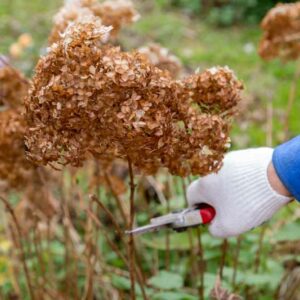
Removing faded flower heads can keep the shrub looking tidy. Some reblooming varieties may benefit from prompt, light deadheading, but cutting deeply into old-wood stems in late summer risks removing buds for the following year.
Deadheading alone cannot make a traditional once-flowering hydrangea produce another flush.
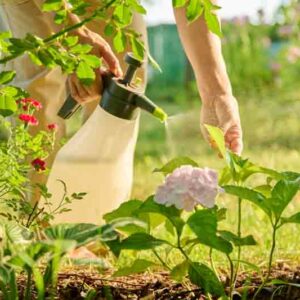
Excess nitrogen can encourage leafy growth without improving flowering. Fertilize when soil conditions justify it rather than automatically applying high-phosphorus bloom boosters.
For reliable flowering, appropriate cultivar selection, pruning, sunlight, and moisture usually matter more than specialized fertilizer.
If your hydrangea is flowering later than expected, an unusually cool spring, a sheltered microclimate, or the cultivar’s natural flowering schedule may explain the delay.
But if its normal season passes without flower buds, look more closely. Pruning at the wrong time, winter bud damage, insufficient sunlight, drought, or excess nitrogen can reduce or prevent flowering.
Old-wood hydrangeas are especially vulnerable to winter and spring frost damage. They may produce vigorous leaves even when the flower buds have been killed.
Healthy leaves but no flowers? Use Gardenia’s Why Is My Hydrangea Not Blooming? guide. Its symptom-based troubleshooting table and five-step diagnostic help identify the most likely cause and what to do next.
Choose hydrangeas and companion plants suited to your hardiness zone, sunlight, soil moisture, and available space. Then check how they’ll grow together, including mature spacing and compatibility, before planting.
Many Hydrangeas begin flowering in May or June in temperate climates. Oakleaf and some Bigleaf Hydrangeas are among the earlier types, while many Panicle Hydrangeas bloom later in summer. The exact timing depends on climate and cultivar.
Some reblooming Bigleaf and Mountain Hydrangeas can produce additional fresh flowers throughout summer. Other types usually have one main flowering period, although their flower heads can remain attractive for weeks or months as they age.
Reblooming varieties such as BloomStruck and Tuff Stuff can produce fresh flowers over an extended season. Panicle Hydrangeas such as ‘Limelight’ and Quick Fire offer a particularly long ornamental display as their flowers develop pink or red tones.
‘Limelight’ usually begins its main flowering display in midsummer, often July or August in temperate gardens. Its large flower cones age from lime-green or creamy white to pink and may remain attractive into autumn.
Quick Fire is an early-flowering Panicle Hydrangea that can begin several weeks before later cultivars. In some climates it starts flowering in June, while colder gardens may see flowers in July. White blooms gradually develop pink-red tones.
‘Annabelle’ Smooth Hydrangeas generally begin flowering in early summer, often June or July depending on climate. Their rounded white flower heads remain decorative as they gradually age to pale green or tan.
Some reblooming cultivars may produce fresh flowers in September in mild climates. Panicle Hydrangeas often remain colorful into October, although most of this later display comes from aging flower heads rather than newly opening blooms.
A cool spring, local microclimate, or naturally late-flowering variety can delay blooms. If no flower buds appear by the expected season, investigate pruning, winter injury, sunlight, and moisture stress.
Many nursery-grown Hydrangeas can flower during their first growing season, especially when purchased with established buds. Others flower less while establishing roots. Young Climbing Hydrangeas may take several years before producing a generous display.
The secret to a long hydrangea season isn’t finding one shrub that flowers forever. It’s combining varieties that bloom at different times, understanding how their flowers age, and choosing plants suited to your climate and garden conditions. With a little planning, hydrangeas can provide beauty from late spring well into autumn.
Updated and reviewed by Gardenia: October 2026
| Hardiness |
3 - 9 |
|---|---|
| Heat Zones |
1 - 9 |
| Plant Type | Shrubs |
| Plant Family | Hydrangeaceae |
| Genus | Hydrangea |
| Exposure | Full Sun, Partial Sun |
| Season of Interest | Spring (Late), Summer (Early, Mid, Late), Fall |
| Maintenance | Low |
| Water Needs | Average |
| Soil Type | Clay, Loam, Sand |
| Soil pH | Acid, Alkaline, Neutral |
| Soil Drainage | Moist but Well-Drained |
| Characteristics | Dried Arrangements, Cut Flowers, Showy |
| Attracts | Butterflies, Hummingbirds |
| Landscaping Ideas | Beds And Borders, Hedges And Screens, Patio And Containers |
Create a membership account to save your garden designs and to view them on any device.
Becoming a contributing member of Gardenia is easy and can be done in just a few minutes. If you provide us with your name, email address and the payment of a modest $25 annual membership fee, you will become a full member, enabling you to design and save up to 25 of your garden design ideas.
Join now and start creating your dream garden!


 Oakleaf Hydrangea
 Annabelle Hydrangea