Knock Out roses bring vibrant color to gardens with remarkably little fuss, but knowing when to prune, how large each variety grows, and what encourages repeat flowering makes all the difference. Discover seasonal pruning tips, compare beautiful Knock Out cultivars, solve common problems, and choose the best roses for your garden.


Knock Out® roses are famous for their abundant flowers, disease resistance, and easy-care nature. But how far should you cut them back? Why do some bushes grow much larger than expected? And why do they sometimes stop blooming in summer?
The answers depend on the season, the cultivar, and how the roses are grown. The original Knock Out rose and its relatives share many qualities, but they differ in mature size, flower form, fragrance, and growth habit.
This guide explains when and how to prune Knock Out roses, how to keep them blooming, and which varieties suit different gardens. You’ll also find practical troubleshooting advice and help choosing plants that won’t outgrow their space.
Knock Out Roses at a Glance
The original Knock Out® Rose (Rosa ‘Radrazz’), developed by Will Radler, received the All-America Rose Selections award in 2000. Its prolific flowering and exceptional resistance to black spot helped transform expectations for landscape roses.
Unlike roses grown primarily for exhibition-quality blooms, Knock Out roses are designed to perform as colorful, repeat-flowering landscape shrubs. They work well in hedges, mixed borders, foundation plantings, and mass plantings.
Their popularity rests on four advantages:
However, low maintenance doesn’t mean no maintenance. Appropriate pruning, watering, and cultivar selection make a noticeable difference to long-term performance.
Knock Out roses don’t all grow alike. Some have simple, open flowers, others produce fuller double blooms, and several newer introductions differ noticeably in size and shape.
The dimensions below are breeder-reported averages, not maximum sizes. Growth varies with climate, soil, and pruning.
| Cultivar | Flowers | Average Mature Size | Distinguishing Feature |
|---|---|---|---|
| Knock Out | Cherry red to hot pink, single to semi-double | 3-4 ft tall and wide | Original landscape rose with strong black spot resistance |
| Double Knock Out | Cherry red, double | 3-4 ft tall and wide | Fuller, more traditional rose flowers |
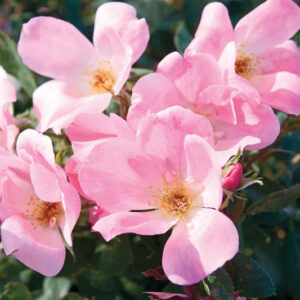
| Pink Knock Out | Bright pink, single | 3-4 ft tall and wide | Simple flowers and vibrant color |
| Pink Double Knock Out | Pink, double | 3-4 ft tall and wide | Full pink flowers with classic appeal |
| Blushing Knock Out | Soft pink, fading lighter | 3-4 ft tall and wide | Delicate coloring for pastel borders |
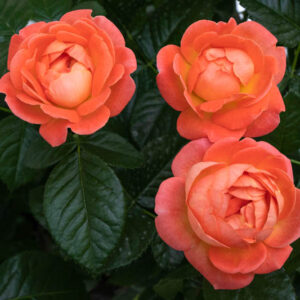
| Coral Knock Out | Orange to coral | About 4½ ft tall and wide | Larger shrub with warm, vibrant color |
| Peachy Knock Out | Shell pink with yellow centers | About 3 ft tall, 3-4 ft wide | Lower, mounding growth |
| Rainbow Knock Out | Coral pink with yellow centers | 3-4 ft tall and wide | Two-tone blooms and burgundy new growth |
| White Knock Out | White, single | About 3½ ft tall and wide | Dark foliage and light fragrance |
| Sunny Knock Out | Yellow, fading creamy white | Check individual profile | Soft yellow coloring and fragrance |
| Petite Knock Out | Fire-engine red, miniature | About 18 in tall | Containers, edging, and small gardens |
| Orange Glow Knock Out | Orange with yellow and pink tones | About 4½ ft tall, 3 ft wide | More upright growth and luminous flowers |
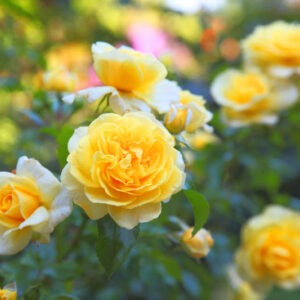
| Easy Bee-zy Knock Out | Yellow, lightly citrus-scented | 3-4 ft tall, about 3 ft wide | Fragrant flowers and rounded growth |
From the original cherry-red Knock Out to romantic pink selections and miniature Petite Knock Out, these roses offer different flower forms and growth habits. Explore their individual profiles to compare mature sizes, flowering characteristics, and growing requirements.
| Hardiness |
4 - 11 |
|---|---|
| Plant Type | Roses, Shrubs |
| Plant Family | Rosaceae |
| Genus | Rosa, Rosa - Shrub Rose |
| Exposure | Full Sun |
| Season of Interest | Spring (Late), Summer (Early, Mid, Late), Fall |
| Height | 3' - 4' (90cm - 120cm) |
| Spread | 3' - 4' (90cm - 120cm) |
| Maintenance | Low |
| Water Needs | Average |
| Soil Type | Chalk, Clay, Loam, Sand |
| Soil pH | Acid, Neutral, Alkaline |
| Soil Drainage | Moist but Well-Drained, Well-Drained |
| Characteristics | Showy, Cut Flowers |
| Landscaping Ideas | Beds And Borders, Hedges And Screens, Patio And Containers, Small Gardens |
| Garden Styles | City and Courtyard, Informal and Cottage |
Looking beyond traditional red and pink? These coral, peach, yellow, white, and multicolored Knock Out roses bring a wider palette to the garden. Compare their mature dimensions and growth habits to find the best choices for borders, flowering hedges, and containers.
Gardenia’s recommendation: Choose your rose by mature size and growth habit first, growing conditions second, and flower color third. An attractive rose that outgrows its space can become a persistent maintenance problem.
Which Knock Out Rose Fits Your Garden?
Compare roses for hardiness, sunlight, soil conditions, mature dimensions, and flower color. Then combine your favorites with compatible companion plants and create a practical planting plan.
Late winter to early spring is the best time for major pruning of established Knock Out roses. Look for new shoots beginning to emerge from the canes, and consider whether severe freezes are still likely.
The right treatment also depends on the age and size of your rose. A mature landscape shrub can tolerate much harder pruning than a newly planted rose or miniature Petite Knock Out.
| Your Rose or Season | What to Do |
|---|---|
| Established shrub, late winter or early spring | Perform major size-control pruning and remove dead or weak canes. |
| Newly planted rose already flowering | Avoid severe pruning. Remove damaged stems and allow roots to establish. |
| Missed spring pruning | Lightly or moderately trim an established shrub, generally removing no more than one-third of its growth. |
| Overgrown shrub in summer | Correct obstructing branches selectively. Save major renovation for late winter or early spring. |
| Fall in a cold climate | Avoid hard pruning that may encourage tender growth before frost. |
| Petite Knock Out | Follow its separate miniature pruning recommendations. |
For established standard-sized Knock Out roses, the breeder recommends cutting back to approximately 12 inches (30 cm) in late winter or early spring to maintain shrubs around 3-4 feet tall and wide during the growing season.
However, this isn’t a compulsory pruning height for every plant. The appropriate cut depends on its vigor, cultivar, growing conditions, and desired final size. A taller flowering hedge may be maintained differently from a compact foundation shrub.
Summer pruning: You can lightly reshape a healthy, established bush after flowering, but avoid removing more than one-third of its growth. Hard pruning during heat or drought stress can delay flowering and weaken the plant.
Fall pruning: In cold-winter regions, avoid severe cuts that stimulate vulnerable shoots before freezing weather. Remove broken or diseased growth as necessary and reserve major shaping for spring.
Important Distinction
Pruning for size maintains a manageable shrub and is usually scheduled for late winter or early spring. Pruning for plant health removes dead, damaged, or diseased wood and may be needed at other times.
Pruning should leave a balanced shrub with healthy, vigorous canes and room for new growth.
Petite Knock Out is different. To maintain its miniature size below approximately 18 inches, the breeder recommends pruning to 4-6 inches in late winter or early spring. Alternatively, it can be cut to about 6 inches every two years when less frequent pruning is preferred.
Use hand pruners rather than treating this miniature rose like a large landscape shrub.
For more detailed rose-pruning techniques, see How and When to Prune Roses by Type and Climate.
Knock Out roses are often described as blooming nonstop from spring until frost. More accurately, they repeat-flower in successive flushes, with short pauses while new shoots and buds develop.
The flowering rhythm depends on the cultivar, sunlight, temperature, and growing conditions. Extreme summer heat or drought may interrupt blooming temporarily.
No. Their self-cleaning flowers generally shed spent petals, and the bushes repeat-flower without routine deadheading. Removing faded clusters is optional if you prefer a tidier appearance.
Before adding fertilizer: Check sunlight, soil moisture, temperatures, and recent pruning. A temporary pause between flowering flushes is normal.
Sunlight and soil: Choose a location receiving approximately 6-8 hours of direct sun and provide fertile, well-drained soil. Avoid sites where water remains standing after rainfall.
Planting: Dig a hole wide enough for the roots, position the rose at the appropriate depth, backfill, and water thoroughly. Follow local nursery advice about the graft union when applicable.
Watering: Newly planted roses need consistent moisture while establishing. Established plants tolerate some dry periods, but abundant flowering still requires adequate water. Water according to soil conditions rather than a rigid schedule.
Mulching: Apply approximately 2-3 inches of organic mulch around the roots, keeping it away from the stems.
Fertilizing: Knock Out roses generally don’t require intensive feeding. Apply fertilizer only when appropriate, and avoid heavy nitrogen applications or late-season feeding in cold climates. Read Gardenia’s Rose Fertilizing Guide for detailed recommendations.
Winter care: In cold regions, protect vulnerable roses with appropriate mulch. Container-grown plants need additional root protection because their pots are exposed to freezing temperatures.
Knock Out roses are strongly disease-resistant, but they are not immune to every problem.
For accurate identification, consult Gardenia’s guides to rose black spot, powdery mildew, rust, and common rose problems.
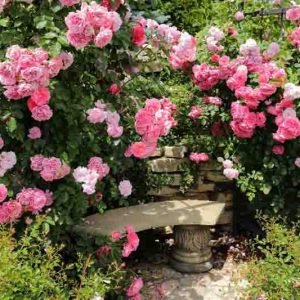
Knock Out roses look particularly attractive when repeated in a deliberate planting scheme rather than scattered individually throughout the garden.
For the best results, measure your available space and compare the mature dimensions of your chosen roses before calculating quantities.
Create a Beautiful Knock Out Rose Garden
Find varieties suited to your garden conditions, compare their mature sizes, and combine them with compatible companion plants. Use Gardenia’s tools to turn your ideas into a planting plan and shopping list.
Prune established Knock Out roses mainly in late winter or early spring, when new shoots begin emerging and severe freezing weather is becoming less likely. Light trimming can be done during the growing season if necessary.
For established standard-sized shrubs, the breeder recommends cutting back to approximately 12 inches in late winter or early spring to maintain compact growth. Adjust for the cultivar, plant health, climate, and desired size. Petite Knock Out requires different pruning heights.
Yes. Established shrubs can be lightly or moderately trimmed, generally removing no more than one-third of their growth. Avoid severe pruning during extreme heat or drought stress.
Avoid hard fall pruning in cold climates because it may stimulate tender growth before frost. Remove damaged or diseased stems as necessary, and reserve major shaping for late winter or early spring.
Many standard Knock Out roses average 3-4 feet tall and wide when regularly pruned. Coral Knock Out averages around 4½ feet tall and wide, while miniature Petite Knock Out grows to approximately 18 inches tall. Actual size varies by cultivar and growing conditions.
Knock Out roses repeat-flower in successive flushes from spring until frost in suitable climates. Flowering can slow during intense heat, drought, or other plant stress.
No. Knock Out roses are generally self-cleaning and repeat-flower without regular deadheading. Removing faded flowers is optional.
Fragrance varies by cultivar. Sunny and White Knock Out offer fragrance, while newer Easy Bee-zy Knock Out has lightly citrus-scented yellow flowers. Check individual cultivar descriptions for scent intensity.
The original Knock Out has simpler cherry-red to hot-pink flowers, while Double Knock Out produces fuller, double cherry-red blooms. Both have similar mature dimensions and strong disease resistance.
Updated and reviewed by Gardenia: October 2026
| Hardiness |
4 - 11 |
|---|---|
| Plant Type | Roses, Shrubs |
| Plant Family | Rosaceae |
| Genus | Rosa, Rosa - Shrub Rose |
| Exposure | Full Sun |
| Season of Interest | Spring (Late), Summer (Early, Mid, Late), Fall |
| Height | 3' - 4' (90cm - 120cm) |
| Spread | 3' - 4' (90cm - 120cm) |
| Maintenance | Low |
| Water Needs | Average |
| Soil Type | Chalk, Clay, Loam, Sand |
| Soil pH | Acid, Neutral, Alkaline |
| Soil Drainage | Moist but Well-Drained, Well-Drained |
| Characteristics | Showy, Cut Flowers |
| Landscaping Ideas | Beds And Borders, Hedges And Screens, Patio And Containers, Small Gardens |
| Garden Styles | City and Courtyard, Informal and Cottage |
Create a membership account to save your garden designs and to view them on any device.
Becoming a contributing member of Gardenia is easy and can be done in just a few minutes. If you provide us with your name, email address and the payment of a modest $25 annual membership fee, you will become a full member, enabling you to design and save up to 25 of your garden design ideas.
Join now and start creating your dream garden!