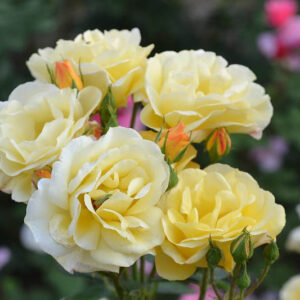
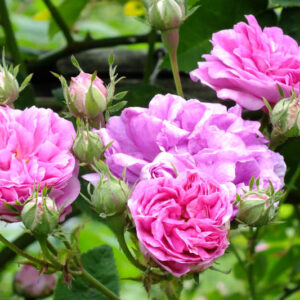
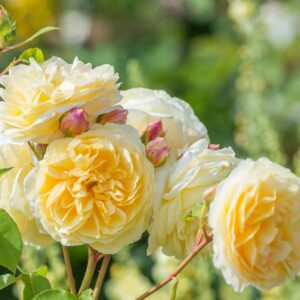
Growing beautiful roses doesn't have to be complicated. Discover how to choose, plant, water, fertilize, and prune rose bushes for healthy growth and spectacular blooms. From preventing common diseases to caring for roses through winter, this practical guide helps you grow stronger, longer-flowering roses with confidence, whatever your experience level.


A rose bush with yellow leaves, a handful of flowers, and long, awkward stems doesn’t necessarily need more fertilizer or harder pruning. Often, the problem is simpler: too little sunlight, inconsistent watering, poor drainage, or a variety that isn’t suited to the garden.
Growing healthy roses begins with understanding what your particular rose needs – and what it doesn’t. Some thrive with minimal attention, while others benefit from careful pruning, regular feeding, and disease prevention. The right approach depends on the variety, your climate, and where the rose grows.
Whether you’re planting your first rose bush or caring for an established collection, this guide explains how to plant, water, fertilize, and prune roses, encourage more flowers, recognize problems, and keep your plants healthy throughout the year.
Rose Bush Care at a Glance
The easiest roses to care for are usually those suited to your climate and garden conditions. Start with hardiness, mature size, disease resistance, and flowering habit, then choose the colors and fragrances you love. Rose classes help narrow the choices, but individual cultivars can behave differently.
Use this comparison to identify the right kind of rose. The examples link to individual Gardenia plant profiles, where you can check size, exposure, and other growing requirements.
| Rose type | Best use and care considerations | Three popular roses |
|---|---|---|
| Hybrid Tea | Large, often fragrant flowers for cutting. Usually benefit from spring pruning and careful monitoring for fungal diseases. | Peace, Mister Lincoln, Double Delight |
| Floribunda | Abundant flower clusters for colorful borders. Many repeat bloom; disease resistance varies greatly. | Iceberg, Julia Child, Scentimental |
| Grandiflora | Often tall, upright roses bearing large flowers; useful toward the back of beds and for cutting. | Queen Elizabeth, Gold Medal, Strike It Rich |
| Shrub | Highly variable shapes and sizes for hedges, borders, and mass plantings. Some need little pruning; others grow vigorously. | Knock Out, Bonica, The Fairy |
| Groundcover | Low, spreading landscape roses for edges, slopes, and repeated drifts. Allow for mature spread. | Apricot Drift, Flower Carpet Pink Supreme, The Fairy |
| English (David Austin) | Old-fashioned flower forms, often strong fragrance. Habits range from compact shrubs to large, arching plants. | Gertrude Jekyll, Graham Thomas, Golden Celebration |
| Climbing | Long canes that must be tied to supports. Train main canes laterally to encourage flowering side shoots. | New Dawn, Don Juan, Zephirine Drouhin |
Rose classes overlap. English roses may be grown as shrubs or climbers; ‘The Fairy’ is botanically a Polyantha rose commonly used as low groundcover. And most ramblers flower once on older canes, while some repeat. Explore rambling roses before choosing one for a large arbor.
For fewer problems later: Don’t choose only by bloom color or an attractive nursery label. Look for documented disease resistance in your climate and leave enough room for the rose’s mature width. A rose crowded against a wall or neighboring shrubs is harder to manage.
Which roses fit your garden? Compare hardiness, exposure, soil, drainage, water needs, and mature size with Gardenia’s Plant Finder before adding a variety to your planting plan.
Most roses flower best with at least six hours of direct sunlight daily. Morning sun helps dry dew from foliage, while some varieties appreciate afternoon shade in very hot climates.
Choose a position with good airflow and enough space for the rose’s mature spread. Avoid planting beneath large trees, where competition for water and nutrients can weaken growth.
Roses prefer fertile, well-drained soil that retains moisture without becoming waterlogged. A slightly acidic to neutral pH, approximately 6.0-7.0, suits most varieties, although many tolerate a broader range.
Add mature compost where organic matter is low, improving the surrounding planting area rather than creating an isolated pocket of amended soil. Heavy clay needs good drainage, while sandy soil benefits from increased moisture retention. Persistently saturated ground can encourage root rot.
Important: Grafted roses require different planting depths depending on climate. In cold regions, the graft union is often placed approximately 1-2 inches (2.5-5 cm) below soil level for protection. In milder climates, planting near or slightly above soil level is common. Follow reliable regional or nursery guidance. Own-root roses have no graft union.
Roses need adequate moisture during active growth, particularly while developing new shoots and flower buds. But watering should follow actual soil conditions rather than a fixed schedule.
In a dry growing week, 1-2 inches (2.5-5 cm) of total water, including rain, is a useful starting estimate for many actively growing roses, not a universal prescription. Mature plants in moisture-retentive soil may need less, while sandy soil, wind, and heat increase demand.
Water the soil, not the leaves. Apply water slowly around the root zone with drip irrigation, a soaker hose, or a watering wand. Morning irrigation helps foliage dry promptly when leaves do get wet.
Wilting does not always mean drought. If the soil is wet, investigate drainage and root health before adding more water.
Quick water test: Pull back the mulch and feel the soil 2-3 inches (5-7 cm) down. If it is still moist, wait and recheck; if drying out, water slowly enough to reach the root zone. A wilted rose standing in wet soil needs a drainage check, not another soaking.
Roses need nutrients for healthy foliage and flowers, but more fertilizer doesn’t necessarily produce more blooms. Established roses in fertile soil may need little supplemental feeding, while container-grown and repeat-flowering varieties may benefit from more regular nutrition.
Feed as active growth begins if soil fertility or plant performance indicates a need. A second application after the first flower flush can support vigorous repeat bloomers; follow label rates and reduce feeding before winter in cold regions.
Use a balanced rose fertilizer, suitable slow-release product, or appropriate organic fertilizer according to the label. Compost and well-rotted manure can also improve soil organic matter.
Avoid excess nitrogen: It may encourage lush, tender foliage at the expense of flowers. Don’t routinely apply phosphorus-rich bonemeal unless testing indicates a deficiency.
Water appropriately when fertilizing and avoid concentrated products against stems or young roots. In cold-winter regions, stop nitrogen feeding early enough for new growth to mature before freezing weather.
Not sure which fertilizer to choose, when to apply it, or how much your roses actually need? Explore our complete guide to fertilizing roses for practical feeding schedules, fertilizer comparisons, application rates, and advice for garden and container roses.
Rose care tip: If your rose produces plenty of healthy leaves but few flowers, check sunlight, pruning, and its natural flowering cycle before adding fertilizer.
Pruning removes unhealthy wood, improves structure, and encourages vigorous flowering shoots. However, the right timing depends on whether a rose flowers on new growth or older stems.
Most repeat-flowering hybrid teas, floribundas, and modern bush roses are pruned in late winter or early spring as dormancy ends. Many once-flowering roses bloom on wood produced the previous year and should be shaped after flowering.
| Rose Type | Best Approach |
|---|---|
| Hybrid Tea | Prune in late winter or spring, reducing canes according to vigor and climate. |
| Floribunda | Thin crowded growth and moderately shorten healthy stems. |
| Repeat-flowering shrub | Shape in late winter or spring and renew older canes selectively. |
| Once-flowering shrub | Prune lightly after flowering to preserve next year’s blooms. |
| Climbing rose | Preserve and train main canes; prune laterals according to flowering habit. |
| Once-flowering rambler | Prune after blooming; remove exhausted canes when replacements are available. |
| Groundcover rose | Remove damaged stems and trim to control size. |
Don’t prune every rose to the same height or remove healthy canes simply because they are several years old. Severe pruning can reduce flowering and spoil the natural shape of shrub roses.
For detailed pruning instructions, including the best time to prune roses in different climates, how far to cut back each rose type, and common mistakes to avoid, explore our complete guide to when and how to prune roses.
Grafted roses may produce vigorous shoots from the rootstock below the graft union. Trace suspicious growth to its origin and remove genuine rootstock suckers at their base. New basal shoots emerging from the desired variety are valuable replacement canes and should normally remain.
Climber tip: A climbing rose sends many flowers from short side shoots on long main canes. Tie those main canes as close to horizontal as the support allows, rather than letting them grow straight upward, to encourage more flowering laterals.
Repeat-flowering roses produce successive flushes during the growing season, although extreme heat, drought, or stress may interrupt blooming. Once-flowering roses naturally deliver one main seasonal display.
Before adding fertilizer to a rose with few blooms, check three things: six or more hours of sun for most varieties, the correct pruning season, and the rose’s natural flowering habit. A once-flowering rose will not repeat simply because it is fed more heavily.
Remove faded flowers with clean pruners, cutting above a healthy leaf or bud. For cluster-flowering roses, remove spent flowers individually or trim the finished cluster.
There’s no universal need to cut back to the first five-leaflet leaf. Some landscape roses, including many Knock Out and Drift varieties, rebloom without regular deadheading.
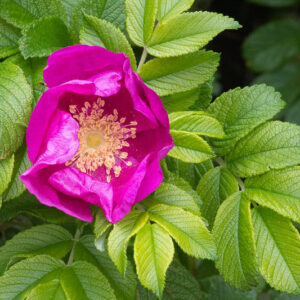
If you grow species roses or other varieties for decorative rose hips, leave the flowers to develop fruit. In cold climates, reducing late-season deadheading also avoids encouraging unnecessary tender growth.
Even healthy rose bushes encounter pests and diseases. Identify the problem before treating it, since insect damage, fungal infections, and water stress can produce similar symptoms.
Monitor infestations, encourage natural predators, and use targeted controls when necessary. Insecticidal soap or horticultural oils may be appropriate for certain pests when used according to the label. See Gardenia’s guide to neem oil for application precautions.
Removing diseased leaves and fallen debris helps reduce infection sources, but sanitation alone won’t prevent black spot. Cultivar resistance, weather, airflow, and appropriate treatment are equally important.
| Symptom | Possible Cause | What to Check |
|---|---|---|
| Yellow leaves | Water stress, black spot, nutrient problems | Soil moisture and leaf markings |
| Few flowers | Shade, incorrect pruning, excess nitrogen | Sun exposure and flowering habit |
| Brown buds | Thrips, Botrytis, heat or weather injury | Bud tissue, insects, recent weather |
| Wilting in wet soil | Poor drainage or root damage | Drainage and root health |
| White powder on leaves | Powdery mildew | New foliage and buds |
Not sure what’s causing the problem? Explore Gardenia’s complete Rose Problems Diagnosis Guide to identify yellow and brown leaves, black spots, damaged buds, insect pests, and other symptoms, with practical advice on what to do next.
Don’t treat symptoms blindly. Yellow leaves don’t always mean a nutrient deficiency, and wilted roses don’t necessarily need more water. Check the growing conditions before applying fertilizer or pesticides.
Know when to investigate: A few aphids on growing tips usually require less intervention than rapidly spreading black spot with extensive leaf loss. First identify the problem, estimate how much of the plant is affected, and decide whether treatment is actually needed.
Container roses bring flowers and fragrance to patios, balconies, and small gardens. Match the pot to the mature rose: compact patio varieties can live in smaller containers, while vigorous shrubs need larger, stable pots with adequate root space and drainage.
Use quality potting mix and a pot with drainage holes. Don’t place gravel at the bottom to improve drainage; it reduces usable growing space without solving drainage problems.
Check moisture frequently in summer, feed according to growth and the potting mix, and repot when roots become crowded. In freezing climates, protect container roots from severe temperature fluctuations.
Winter protection depends on climate, cultivar hardiness, and whether a rose is grafted or grown on its own roots.
In cold regions, stop late nitrogen feeding, avoid hard fall pruning, and secure long canes that winter winds could damage. After dormancy and cooling soil temperatures, protect vulnerable crowns or graft unions where local guidance recommends it. Keep winter coverings ventilated and remove them gradually in spring.
Hardy shrub roses may need little protection, while tender hybrid teas and exposed container roses often require more. .
Climate matters: A January pruning schedule suitable for coastal Southern California can be too early for a rose exposed to freezing winters. Use local dormancy and frost patterns, not calendar dates alone.
This calendar applies mainly to temperate gardens with winter dormancy. Adjust timing in very cold or frost-free regions.
| Season | Essential Tasks |
|---|---|
| Spring | Plant, prune appropriate varieties, refresh mulch, assess feeding needs, and inspect new growth. |
| Summer | Water during dry weather, deadhead repeat bloomers, and monitor pests and diseases. |
| Fall | Reduce late feeding in cold climates, clear infected debris, and secure vulnerable canes. |
| Winter | Protect tender roses as necessary and prepare for spring pruning. |
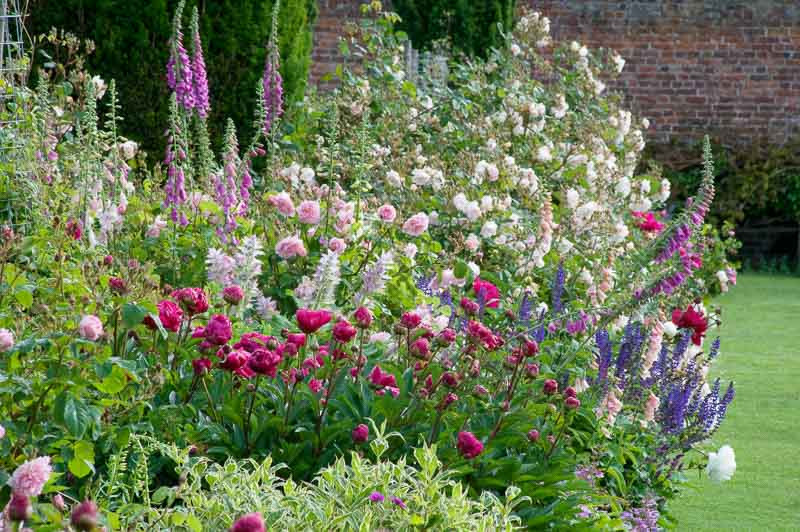 Roses, Peonies, Salvia, and Foxgloves
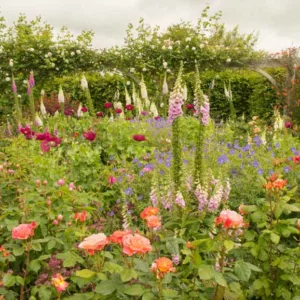
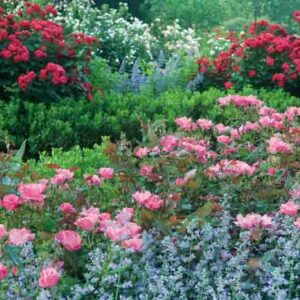
Roses combine beautifully with flowering perennials, bulbs, and ornamental grasses. Suitable companions extend seasonal color, add contrasting textures, and may provide resources for beneficial insects.
Popular choices include catmint, salvia, and lavender, hardy geraniums, and ornamental alliums. However, lavender typically prefers drier conditions than many roses, so careful placement and drainage matter.
Explore Gardenia’s 33 Best Companion Plants for Roses and rose garden design guide for more planting ideas.
Before combining plants, compare their sunlight, soil, drainage, water requirements, and mature sizes. Leave enough room for rose growth, airflow, and maintenance.
Planning a Rose Garden? Check Whether Your Plants Work Together.
Choosing beautiful roses is only the beginning. Gardenia’s Garden Design Tool helps you compare growing conditions, identify potential plant mismatches, review mature sizes and seasonal interest, estimate quantities, and prepare a shopping list.
Start a free garden collection with up to five plants and check how your roses and companions fit together before planting.
Healthy roses don’t require constant attention. Choose varieties suited to your garden, give them well-drained soil and sufficient sunlight, and adjust watering, feeding, and pruning to their needs. Knowing when to intervene – and when to leave a healthy rose alone – is often the secret to a beautiful, long-lasting display.
Plant roses in well-drained soil with adequate sunlight, water during dry periods, mulch around the roots, and fertilize when needed. Prune according to the variety’s flowering habit and monitor regularly for pests and diseases.
Watering depends on soil moisture, climate, and plant establishment. Newly planted roses need more frequent checks. Established roses may require supplemental irrigation mainly during dry periods, while container roses can need daily attention in hot weather.
Most repeat-flowering bush roses are pruned in late winter or early spring. Once-flowering roses are generally pruned after blooming to preserve flowering wood. Timing depends on the rose type and local climate.
Yellow leaves may result from water stress, black spot, nutrient problems, or normal aging. Examine the leaves for spots, check root-zone moisture and drainage, and identify the likely cause before treating.
Common causes include insufficient sunlight, incorrect pruning, excess nitrogen, and environmental stress. Some roses naturally flower only once per year. Check the variety’s normal flowering cycle before changing its care. Explore our Guide: Why Are My Roses Not Blooming? 12 Causes & Fixes
Healthy rose bushes can live for decades, although longevity depends on variety, rootstock, climate, and growing conditions. Some established old garden roses survive for many decades with appropriate care.
Updated and reviewed by Gardenia: October 2026
| Hardiness |
4 - 10 |
|---|---|
| Climate Zones | 1, 1A, 1B, 2, 2A, 2B, 3, 3A, 3B, 4, 5, 6, 7, 8, 9, 10, 11, 12, 13, 14, 15, 16, 17, 18, 19, 20, 21, 22, 23, 24, A1, A2, A3, H1, H2 |
| Plant Type | Roses, Shrubs |
| Plant Family | Rosaceae |
| Genus | Rosa, Rosa - English Rose, Rosa - Floribunda Rose, Rosa - Grandiflora Rose, Rosa - Groundcover Rose, Rosa - Hybrid Tea Rose, Rosa - Shrub Rose |
| Exposure | Full Sun, Partial Sun |
| Season of Interest | Spring (Late), Summer (Early, Mid, Late), Fall |
| Maintenance | Average |
| Water Needs | Average |
| Soil Type | Chalk, Clay, Loam, Sand |
| Soil pH | Acid, Alkaline, Neutral |
| Soil Drainage | Moist but Well-Drained, Well-Drained |
| Characteristics | Cut Flowers, Fragrant, Showy |
| Landscaping Ideas | Beds And Borders, Ground Covers, Hedges And Screens, Patio And Containers, Wall-Side Borders, Small Gardens |
| Garden Styles | City and Courtyard, Informal and Cottage |
Create a membership account to save your garden designs and to view them on any device.
Becoming a contributing member of Gardenia is easy and can be done in just a few minutes. If you provide us with your name, email address and the payment of a modest $25 annual membership fee, you will become a full member, enabling you to design and save up to 25 of your garden design ideas.
Join now and start creating your dream garden!